News Posts matching #inference

Return to Keyword Browsing

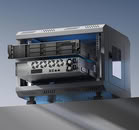
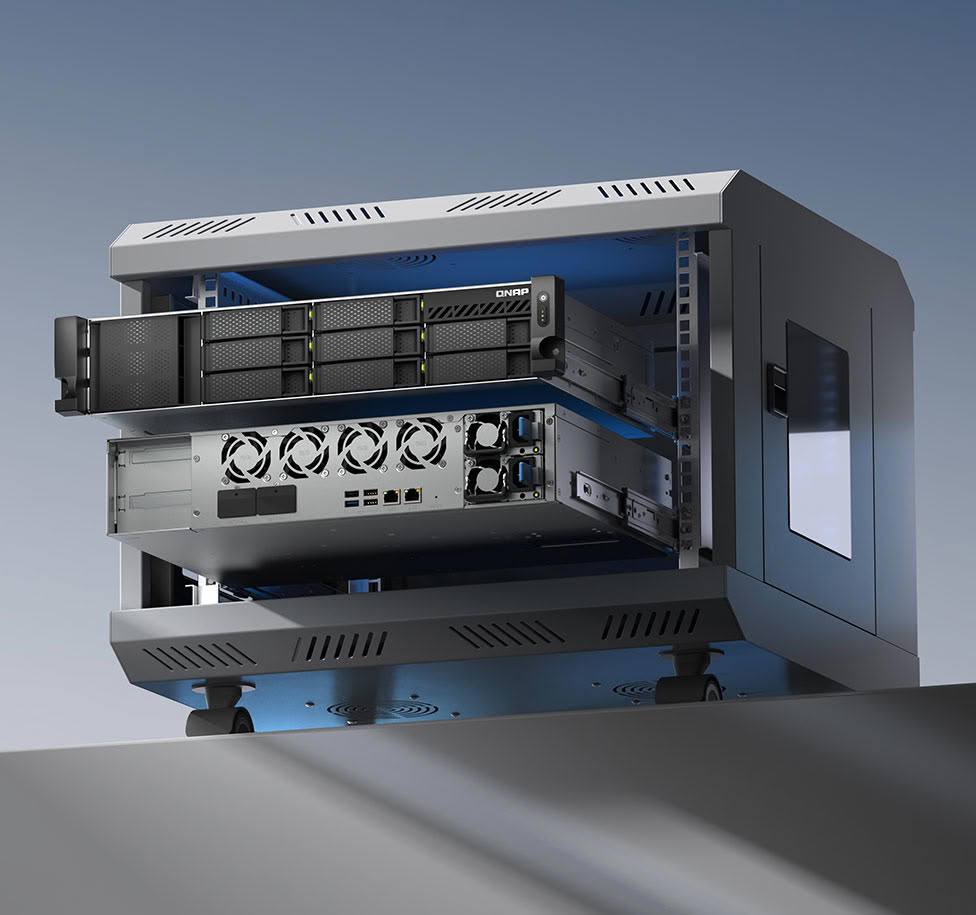
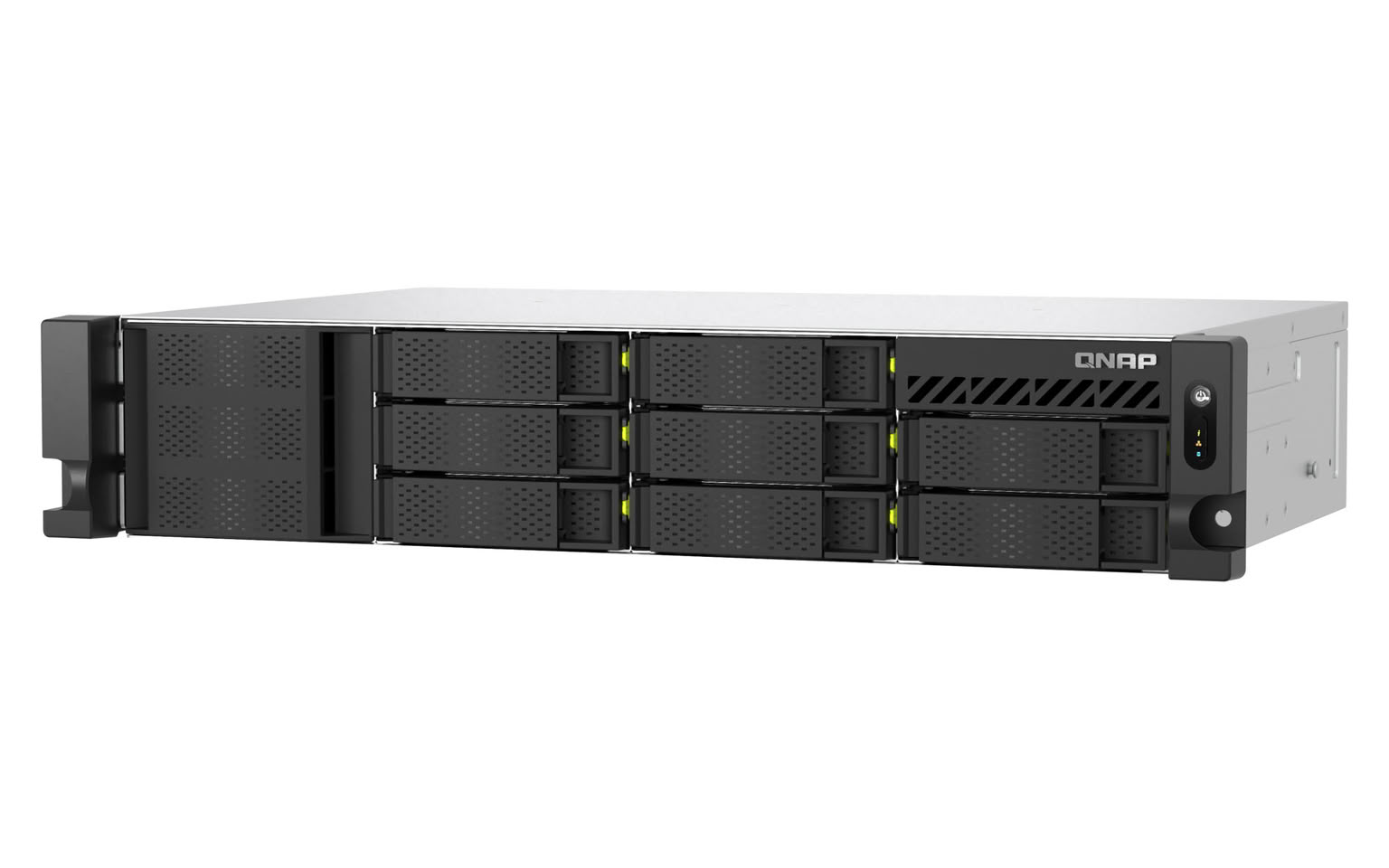
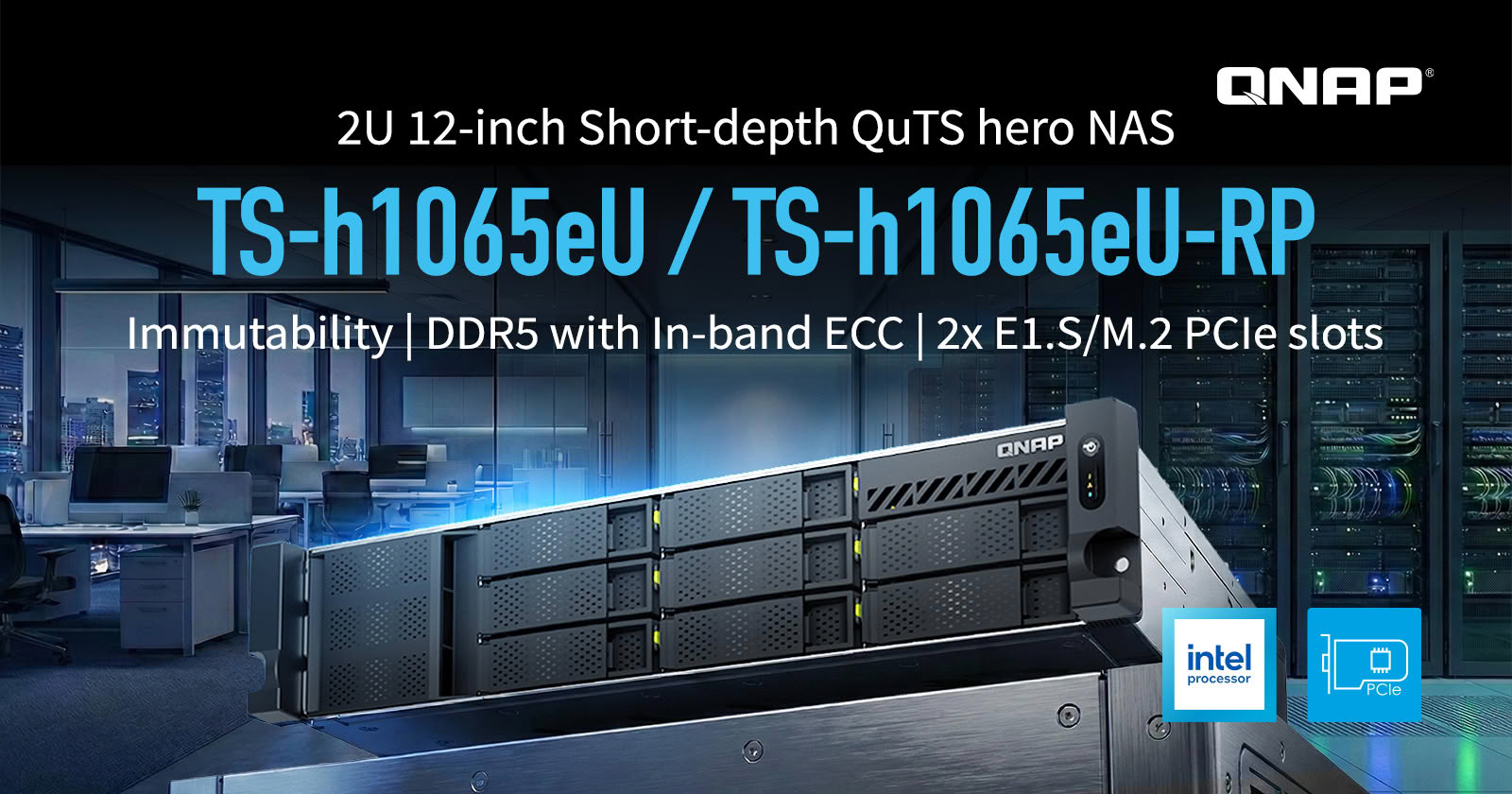
QNAP Launches 2U 12-inch Short-Depth 8-Bay HDD NAS TS-h1065eU/TS-h1065eU-RP

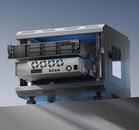
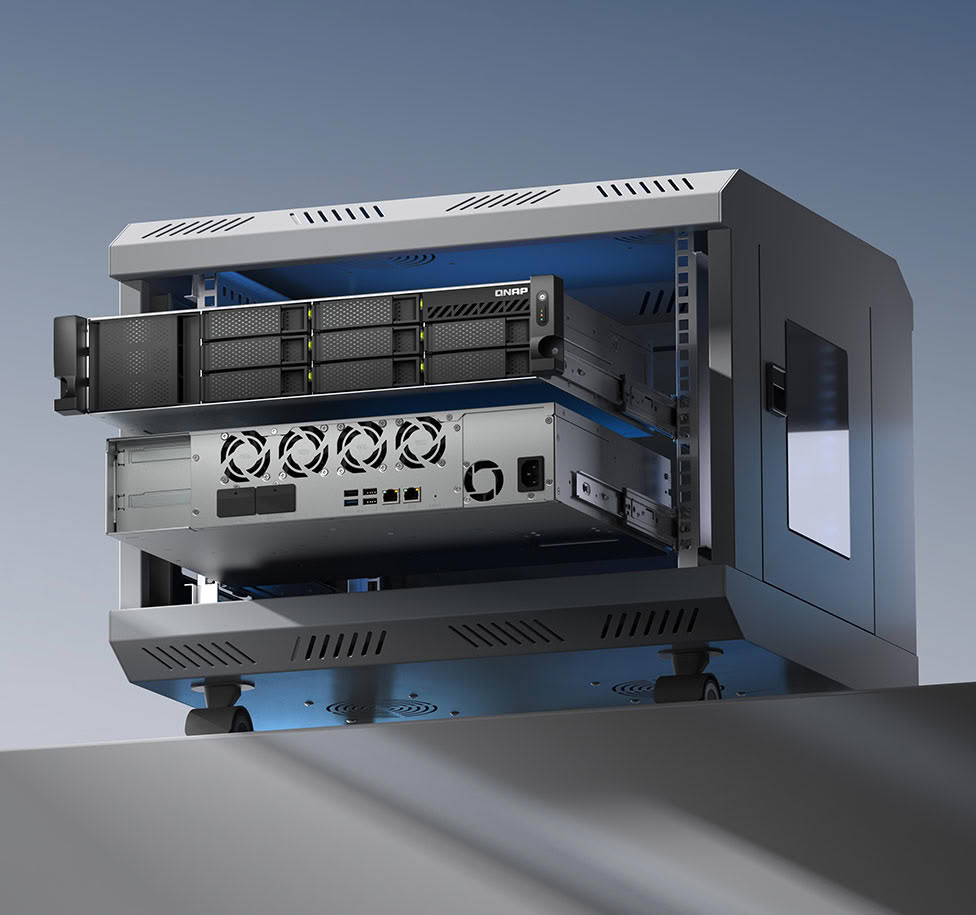
QNAP Systems, Inc., a leading innovator in storage, networking, and data protection solutions, today introduced its new 12-inch short-depth NAS series, the TS-h1065eU and TS-h1065eU-RP. Equipped with eight 3.5-inch drive bays and two highly expandable E1.S/M.2 PCIe NVMe slots, these new NAS models provide large storage capacity, high performance, and flexible expansion in a compact 2U chassis. They are ideal for small to medium-sized businesses and edge deployment scenarios where space is limited.

Sean Teng, Product Manager of QNAP,"QNAP continues to enhance its exclusive short-depth NAS series to help businesses build storage solutions that balance capacity, performance, and data protection in space-constrained environments. The TS-h1065eU series is designed for users who need high storage capacity, cache performance, and data security, providing the optimal balance between long-term stability and overall cost-effectiveness."
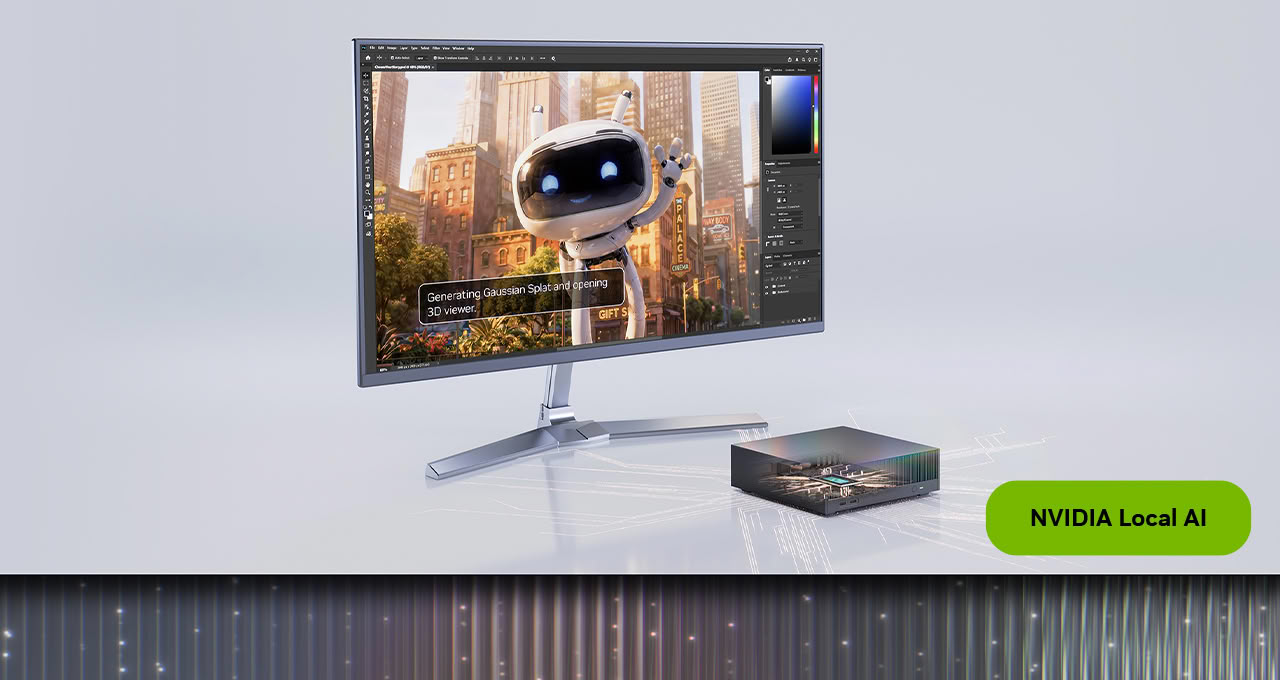
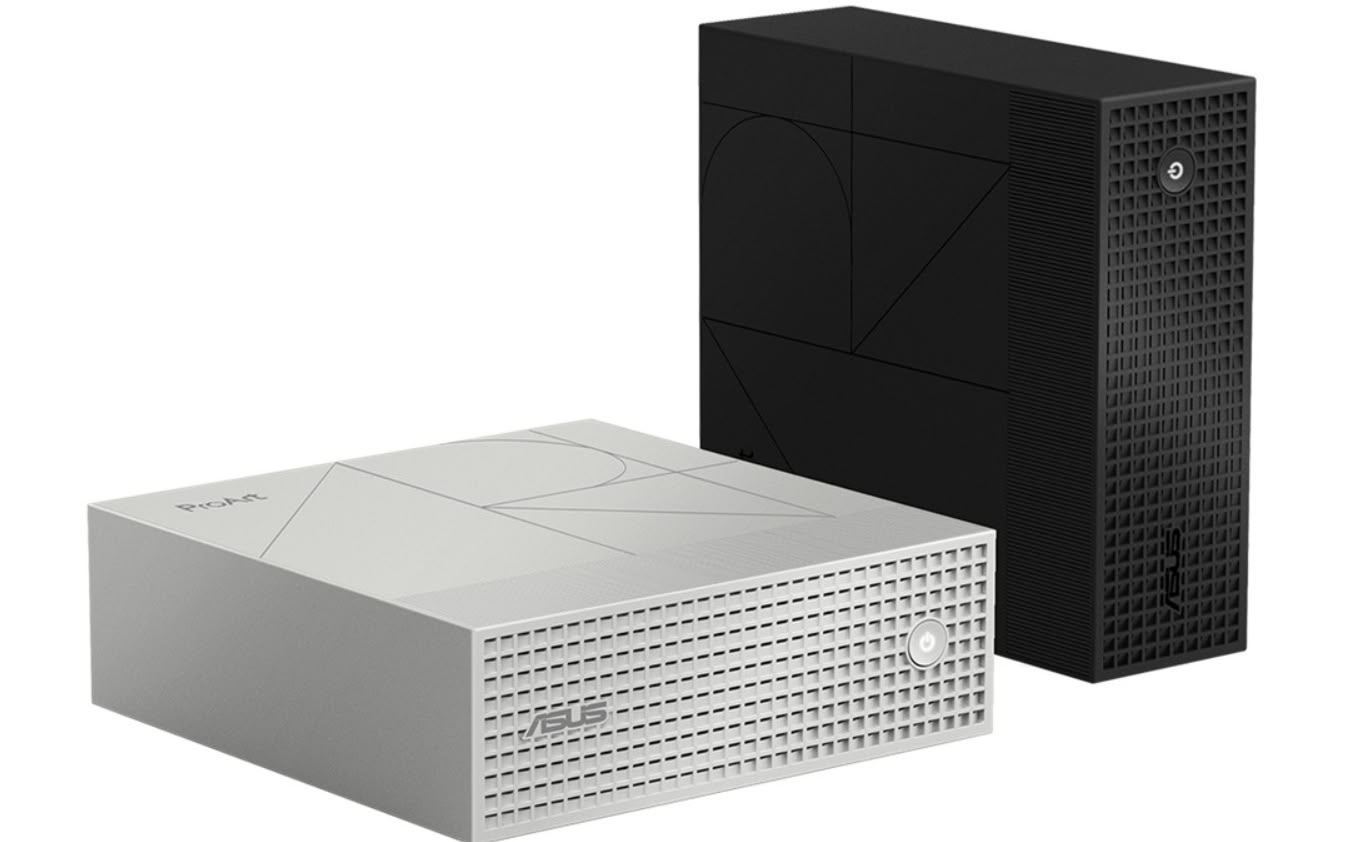
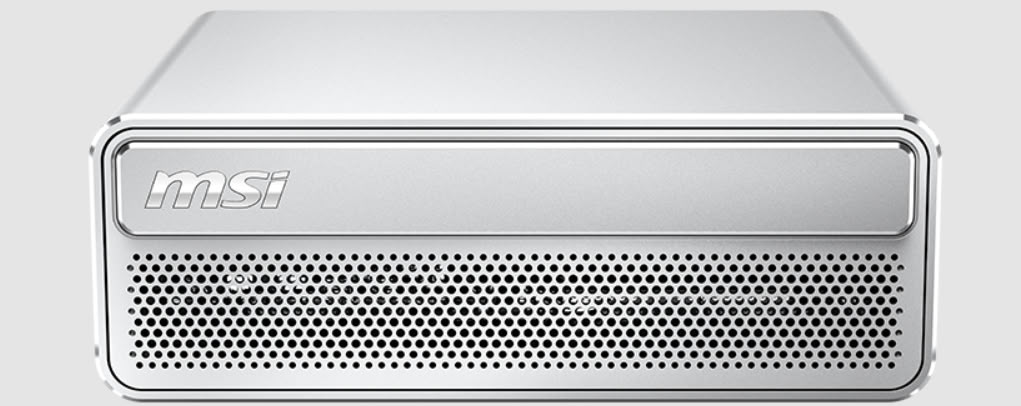
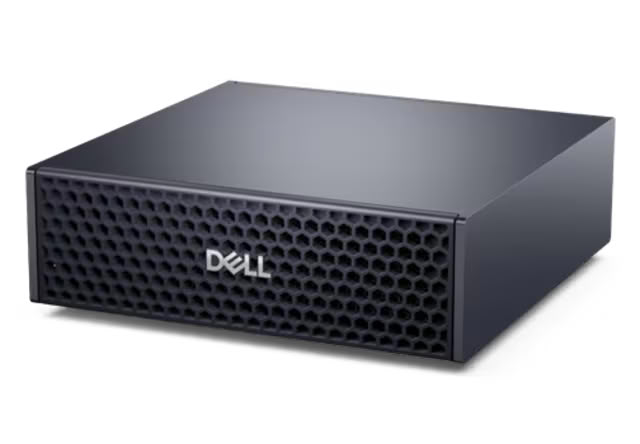
NVIDIA RTX Spark Compact Desktops Out Now

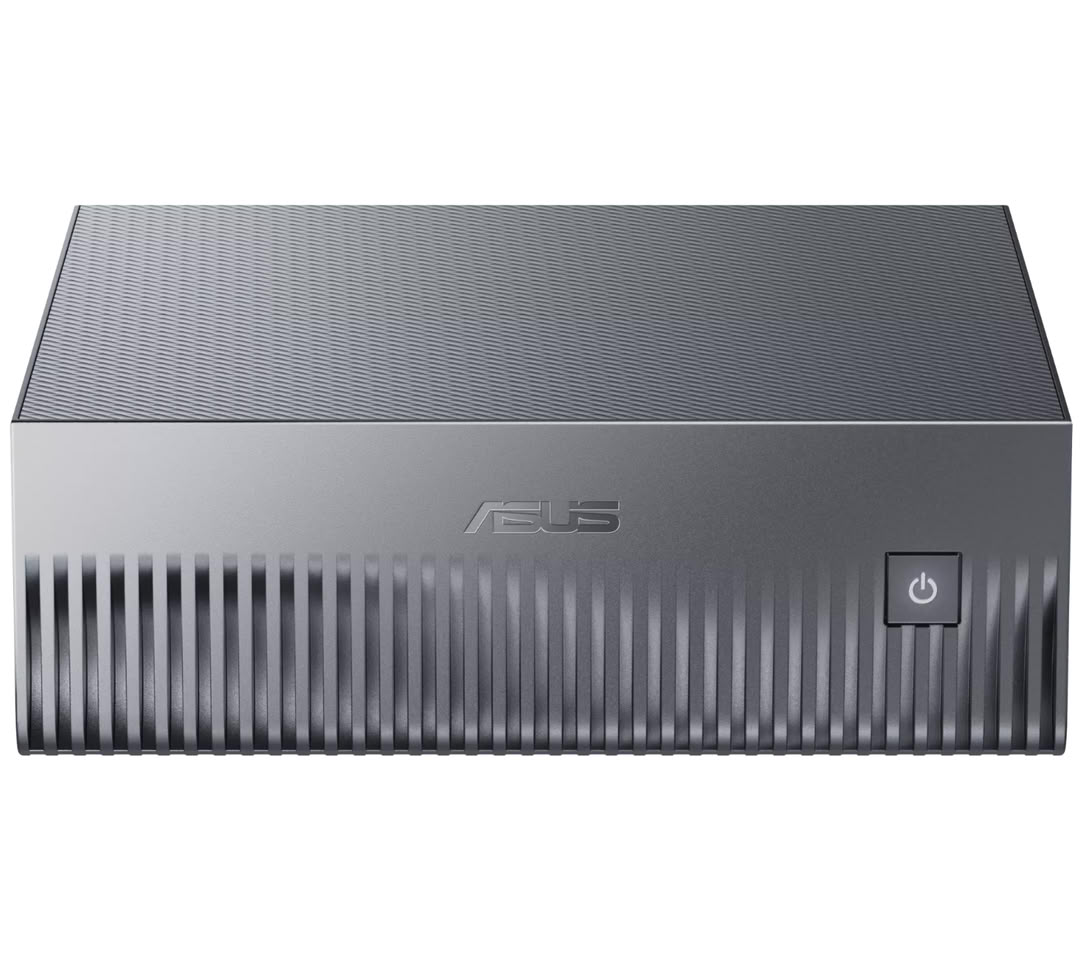
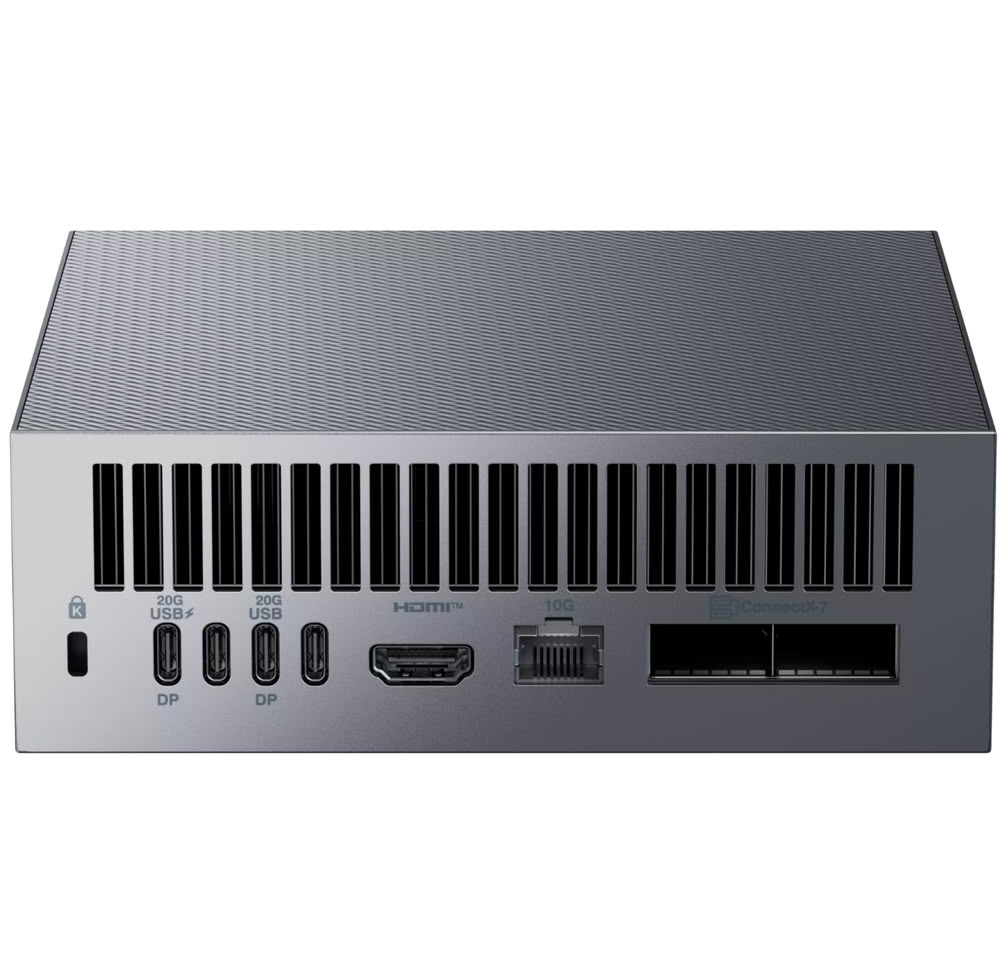
New NVIDIA RTX Spark compact desktops from ASUS, Dell and MSI are available today, bringing local AI agents, image and video generation, and model fine-tuning to a dedicated Windows PC. With up to 128 GB of unified memory and NVIDIA's AI software stack, these systems provide room for larger local models alongside RTX-accelerated creative and development tools. A dedicated desktop can keep agents and scheduled tasks running while a laptop travels or handles other work.

Alongside the new desktops, an expanding software ecosystem brings more creative and development workflows to RTX Spark laptops and compact desktops. Native Windows on Arm applications from Adobe, the NVIDIA DLSS Ray Reconstruction feature in Blender and local generation workflows in ComfyUI expand what creators and developers can do on RTX Spark—all on one Windows PC.

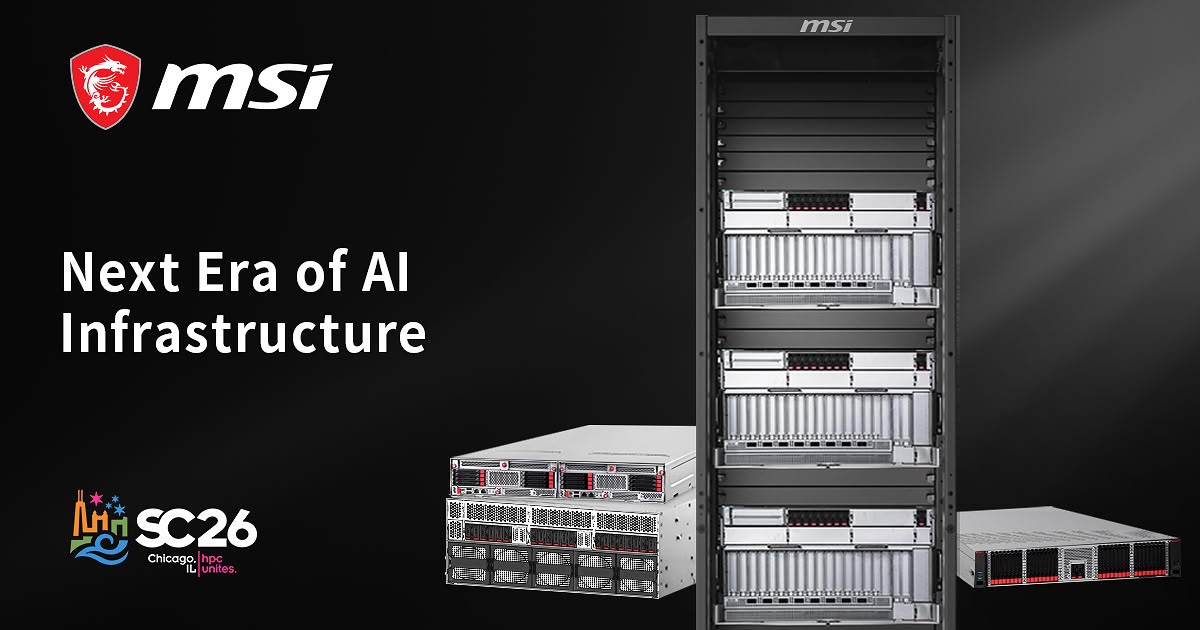
MSI Powers the Next Era of AI Infrastructure at SC26

MSI, a leading global provider of high-performance server solutions, showcases its latest AI innovations at SuperComputing 2026 (SC26), booth #5429. From liquid-cooled platforms based on NVIDIA MGX and desktop AI supercomputing based on NVIDIA DGX Station architecture to next-generation multi-node compute and enterprise servers, MSI delivers a comprehensive portfolio designed to power agentic AI and AI factory deployments. Spanning the latest AMD and Intel processor architectures, MSI's solutions combine rack-scale compute density with flexible, balanced performance to support enterprise AI workloads, from large-scale infrastructure to local AI development.
Danny Hsu, General Manager of Enterprise Platform Solutions at MSI"Building a modern data center takes more than computing power. It requires strong technology partnerships and a trusted infrastructure foundation that can turn innovation into real-world value," "Through our collaborations with AMD, Intel, and NVIDIA, we combine leading-edge technologies with MSI's system integration expertise to deliver reliable, flexible, and efficient infrastructure that helps customers maximize their investments, scale with confidence, and prepare for the next era of AI."

Otto Introduces Otto One: the Personal AI Computer for Autonomous Agents

Otto, the company building the operating system for the agentic era, today introduces Otto One, the first purpose-built agent computer: a compact, screenless computer designed for an AI agent to live and work on. Running on Otto OS, its proprietary software layer, Otto One lets people deploy, direct and monitor autonomous agents from a phone or desktop while the device works continuously in the background, even when the user closes their laptop or walks away.

AI agents are finally capable of taking on a persistent role in people's lives. The real opportunity is not a better inbox assistant; it is an agent that can keep a household organized, manage a budget and taxes, coordinate care and appointments, and keep a business moving. To do that well, it needs usable context and the authority to act across the financial, personal and work systems that make up a life.

Google Extends Tensor Processor Unit Series with TPU 8tx and 8i Max

While we've always co-designed our TPUs in partnership with Google DeepMind, we're now increasingly getting feedback from external organizations on their specific needs. With computing moving from human to agent scale, businesses are asking for accelerators that can reason across AI models' massive context windows. In addition, some highly regulated customers are asking for specialized encryption capabilities for unique workloads.

The new TPU systems we are announcing today address this new reality. Coupled with our recent PyTorch announcements, our aim is to make TPUs more easily accessible to every developer and Cloud customer. By combining modular custom silicon with an open and easy-to-use software stack, we can deliver new hardware and system configurations at the pace of the AI industry.

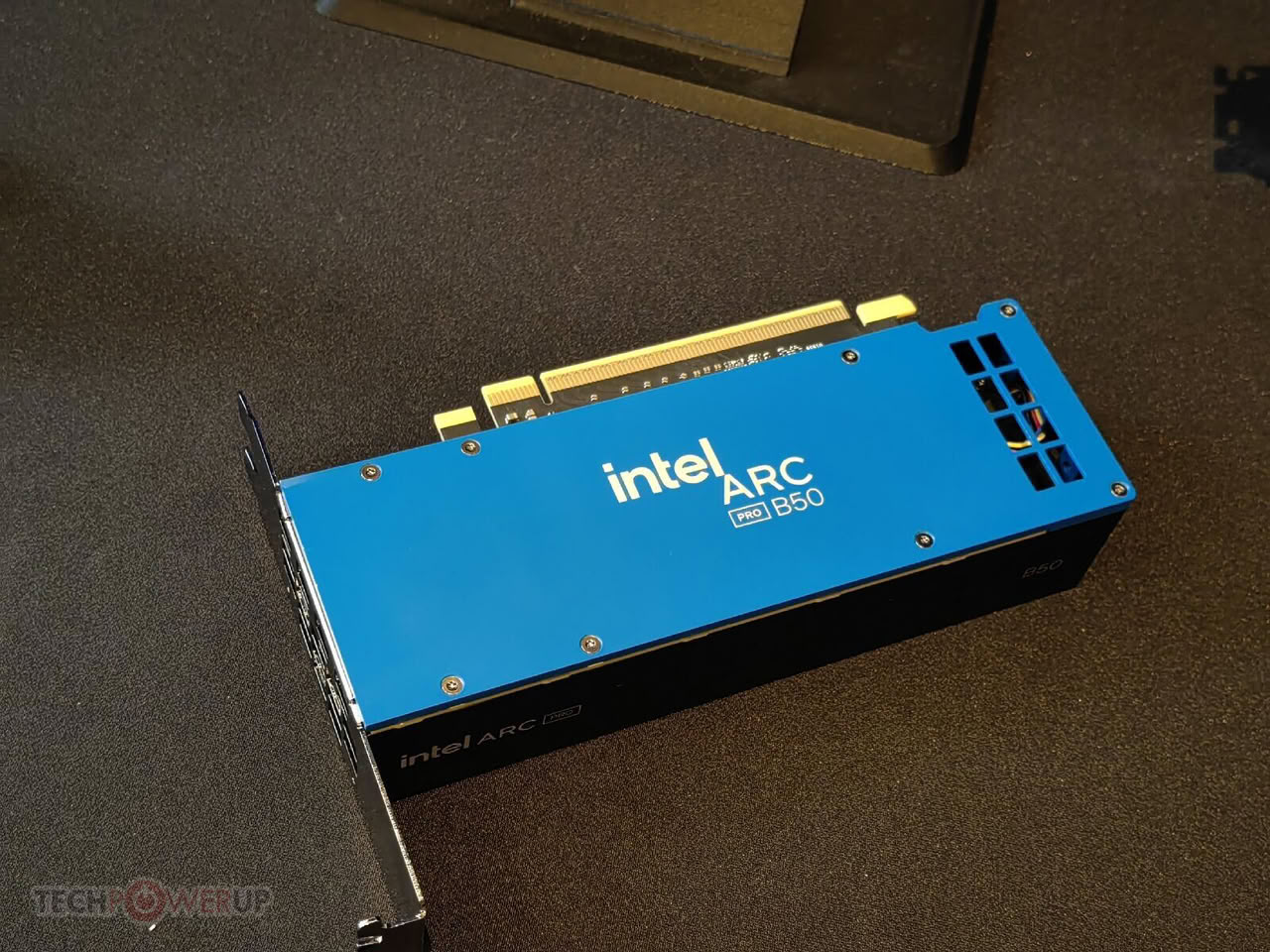
Intel Might Discontinue the Arc B580 to Prioritize Higher-Margin Arc Pro Cards

Leaker Haze2K1 says on X that Intel might put the Arc B580 on the end-of-life (EOL) list. Apparently, Intel wants to prioritize workstation and AI inference cards like the Arc Pro B50, which are reportedly selling really well and carry higher margins. Intel hasn't confirmed anything, and Haze2K1 only says the card "might" go EOL, so this is only a rumor for now. However, the logic checks out. The Arc B580 launched in December 2024 at $249 and beat the RTX 4060 in TechPowerUp's review. The Arc Pro B50 and B60 use the same BMG-G21 silicon, and the B60 pairs the same 20 Xe cores with 24 GB of memory instead of 12 GB. Intel estimated the B60 at around $500 at launch, roughly double the B580's price. Clearly, Intel stands to gain more monetary benefit from the workstation cards.

As for the consumer GPUs, their supply already looks quite thin. The B580 is reportedly out of stock at most retailers, and prices have also climbed well above MSRP. The leaker doesn't mention the Arc B570, so we don't know if Intel has similar plans for that card as well. Intel's larger BMG-G31 chip also showed up in March in the workstation-only Arc Pro B70 and B65, so the shift toward pro cards seems to be underway already. If the B580 does go away, gamers will lose one of the more affordable 12 GB cards, even though the Arc B580 was selling above its MSRP. That said, I wouldn't expect cheaper Arc cards anytime soon

Qualcomm Validates HBC Silicon, Samples Appear in First Half of 2027

Qualcomm has officially validated its High Bandwidth Compute (HBC) concept, which the company showcased this summer. Instead of using traditional HBM and compute dies, Qualcomm has developed a technology that stacks multiple LPDDR layers and embeds a base die that serves as a compute engine for AI inference. In Qualcomm's San Diego lab, the first-generation HBC has achieved silicon validation with full read-write and near-memory computation capabilities. HBC utilizes LPDDR memory, stacking it across multiple layers in a 3D vertical space and interconnecting them with through-silicon vias (TSVs). This approach provides better energy efficiency than traditional HBM, which stacks regular DDR in vertical layers, as the low-power DDR (LPDDR) chips consume less power while delivering similar bandwidth and capacity.

Qualcomm has successfully stacked multiple LPDDR layers on top of each other, with the base of the HBC being a compute die that performs near-memory computation and offloads processing to near-memory dies. This technique is similar to what HBM4 memory currently does, with the base die being a logic die to better integrate compute solutions for packet tracing and data preparation for entering and exiting HBM. However, Qualcomm aims to achieve higher efficiency and more optimized data movement, with a 6x increase in bandwidth per watt compared to the current HBM specification. The goal is to have compute directly under these memory stacks so that data travels only a few microns instead of a few centimeters.

OpenAI CEO Argues Home PCs Waste the World's Limited DRAM Supply

OpenAI CEO Sam Altman thinks the DRAM sitting inside personal computers would be better used in data centers. He made the comments on the Cheeky Pint podcast, hosted by Stripe co-founder John Collison, in an episode released on October 29. The two were discussing the memory supply chain when the topic turned to local inference, meaning running AI models on your own hardware instead of the cloud. Here's what Altman said, at roughly the 29-minute mark:
Sam Altman, OpenAI CEOA lot of people want local inference. And somehow, they assume that the problem is solved now. Because, we are going to have open-source models. We're going to be able to run them on our computers. And so we're not going to need all the stuff in the data center. But from a global allocation perspective, actually, it's quite terrible to have everybody have a bunch of the world's limited supply of DRAM sitting in their own computer. And, being used 5% of the time. You want maximum utilization in the cloud if you're trying to deal with this very supply constrained environment. And somehow everyone's... many people's intuition is the opposite of that.

NVIDIA Eyes Software Revenue With a $2,000 per GPU Yearly Figure From Huang

NVIDIA CEO Jensen Huang has put a rough price on the software side of the company's AI business. During a Q&A session at GTC Berlin last week, Huang said software licensing will become a growing part of NVIDIA's business, and that it costs about $2,000 per GPU per year to run all the NVIDIA software that powers agents in AI factories. The Register was first to report it, and Huang seems to have offered it as an example rather than a formal price.

The number is a bit confusing, since NVIDIA already sells its AI Enterprise suite on a per-GPU basis. The company's own licensing guide lists it at $4,500 per GPU for a one-year subscription with support, or $18,000 per GPU for five years. NVIDIA hasn't said whether Huang's $2,000 figure covers the same software, a narrower agent-focused bundle, or a future licensing model, so it probably shouldn't be read as a price cut. There's also no word on timing.

Server CPU Shipments Projected to Grow Over 40% YoY in 2027, with Arm-Based Products Continuing to Gain Market Share

TrendForce's latest AI server industry research indicates that demand for server CPUs has grown steadily since the second half of 2025 as AI server providers actively introduce AI agent applications. Server CPU shipments are projected to increase 31% YoY in 2026.

In 2027, continued growth in AI inference demand and rising adoption of agentic AI services are expected to drive server CPU shipments up by more than 40% YoY, potentially reshaping a market landscape traditionally dominated by x86 processors.

Leaker Hints at 512 GB Partner Versions of Intel's GPU D-Series

A leaker going by Haze on X claims that some partner-built versions of Intel's new GPU D-Series accelerator will come with as much as 512 GB of memory. The October 13 post, spotted by VideoCardz, names no board partners and gives no other specs, so take it with a pinch of salt for now. Intel hasn't confirmed anything like this either. Officially, Intel's own D-Series card, formerly known as "Crescent Island", ships with 160 GB of LPDDR5X, and the company allows partners to go as high as 480 GB. The 512 GB figure is a bit odd when you look at the hardware. The leaked "Crescent Island" PCB from May showed 20 LPDDR5X sites, 12 on the front and eight on the back, each with an 8 GB package for 160 GB in total. Moving to 24 GB packages gets you neatly to 480 GB, while 512 GB doesn't divide evenly across 20 sites.

The D-Series itself is an inference-focused accelerator built on Xe3P with 32 cores, 1.5 TB/s of memory bandwidth and up to 1.3 PFLOPS of FP8 compute. It's a 350 W, air-cooled PCIe 5.0 x16 card with no display or 3D graphics hardware, so gamers shouldn't get their hopes up, and earlier leaks already suggested Xe3P would skip Arc gaming cards altogether. Customer sampling is underway, but pricing and availability are still unknown. A 512 GB partner card, if it exists, would likely cost a small fortune. It would probably take a different board layout or a mix of package densities, and there's no word on whether any partner is actually doing that.

FADU Reveals World's First "File-Semantic SSD" (FS-SSD) at OCP 2026

Data center semiconductor company FADU (CEO: Ehyun Nam) announced on the 15th that it revealed the world's first 'File-Semantic SSD' (FS-SSD) at '2026 OCP Global Summit' currently being held in San Jose Convention Center, California, U.S. and showcased storage solutions optimized for AI data centers along with the company's vision.

'OCP Global Summit' is an official annual conference of Open Compute Project (OCP), world's largest open data center technology community founded in 2011. As an event where major global big tech companies, semiconductor companies along with server and infrastructure manufacturers gather, this year's event featured 'Scaling Innovation for the AI Era' as the theme.

Marvell Unveils Second-generation Structera X, Industry-first Six-channel CXL 3.2 Memory Expanders for AI Inference

Marvell Technology, Inc. , a leader in data infrastructure semiconductor solutions, today announced the second-generation Marvell Structera X 3406 and Marvell Structera X 3506 CXL memory expanders, designed to help cloud, enterprise and AI infrastructure providers build more efficient, scalable and higher-performance systems for the next era of AI and computing. Designed to address the evolving needs of leading hyperscale datacenters, Structera X addresses the most demanding data center workload requirements.

AI and ML workloads are rewriting the rules of data center design. Growing LLM sizes, expanding context windows and growing KV-cache requirements are driving unprecedented memory demands that traditional server architectures simply cannot meet. Memory is a critical constraint of AI performance and infrastructure efficiency.

Astera Labs Unveils Orion: A Compute-Agnostic Rack-Scale Architecture

Astera Labs, Inc. (Nasdaq: ALAB), a leader in semiconductor-based connectivity solutions for rack-scale AI infrastructure, today announced Orion: a modular rack-scale reference design with production-grade connectivity that allows customers to choose their own GPU and CPU. To be offered through Astera Labs' ODM and OEM partners, the Orion production-grade reference designs are expected to help enable neocloud and enterprise customers to deploy AI infrastructure faster and run it more efficiently, turning racks built on open standards into token-efficient AI factories.

For neoclouds and enterprises to economically serve inference at scale, they must secure sufficient accelerator and CPU capacity while delivering predictable, low-latency performance across increasingly complex AI infrastructure. But because they must commit to that capacity long before they know which accelerator will be available or affordable for their workloads, tying early investment to a single platform carries unnecessary cost and risk. At the same time, ODMs and OEMs are forced to repeatedly solve complex integration, validation, and software challenges for every new accelerator platform—slowing deployments when inference capacity is in critical demand.

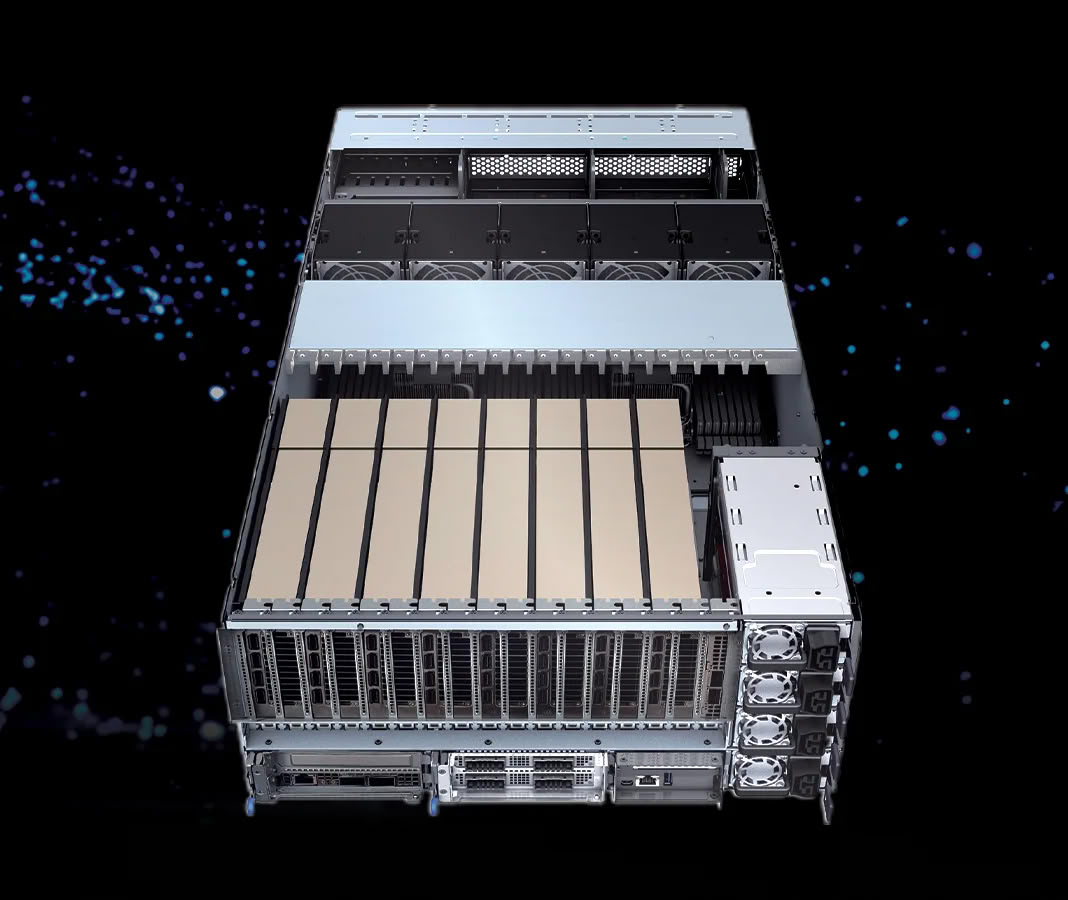
INNO3D Announces AGS-4UMGX-R1 4U GPU Server With NVIDIA MGX

INNO3D announces the AGS-4UMGX-R1 NVIDIA MGX 4U GPU Server, a high-performance platform built for AI training, AI inference, large language models (LLMs), digital twins, and high-performance computing (HPC) workloads.

Powered by dual Intel Xeon 6 processors and supporting up to 32 DDR5 RDIMMs, the AGS-4UMGX-R1 delivers the scalability required for modern AI deployments. The system supports up to eight NVIDIA RTX PRO 6000 Blackwell Server Edition GPUs and features the NVIDIA ConnectX -8 SuperNIC with eight 400 Gbps QSFP ports for ultra-fast AI networking.

AMD Introduces Its Next Ryzen AI Halo Developer Platform With Ryzen AI Max+ PRO 495

Today, AMD is introducing the next AMD Ryzen AI Halo Developer Platform, powered by the AMD Ryzen AI Max+ PRO 495 processor.

With up to 192 GB of unified memory, support for 300-billion-parameter and larger models, and a curated software experience, the new platform gives developers and creators the freedom to build, experiment, and run more AI locally. Choose your models, frameworks, operating system, and workflows, then put them to work on your terms.

Senao Networks Releases x86 Enterprise Server Series

Senao Networks Inc. today announced the launch of its new x86 enterprise server portfolio, featured on the company's Senao computing website at www.senaocomputing.com. The portfolio includes the SR810, SR710, SR610, SE210, and SE110 and is designed to support a broad range of enterprise computing and AI workloads, including generative AI, AI inference, model fine-tuning, data analytics, visualization, and intelligent edge computing. NVIDIA RTX GPU support is available in selected configurations.

Bringing AI Closer to Enterprise Data
As enterprises accelerate AI adoption, organizations increasingly need computing infrastructure that can address different workload requirements while maintaining greater control over sensitive corporate data.

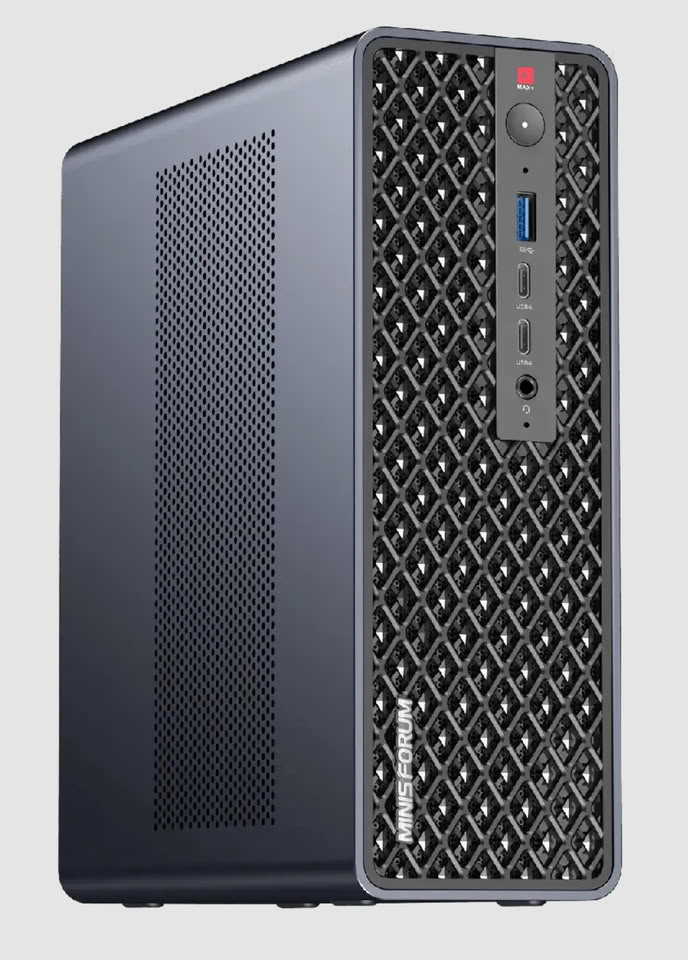
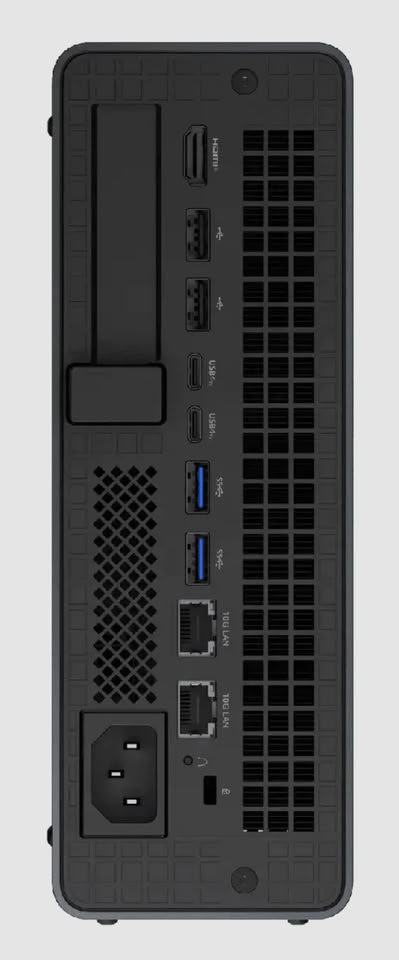
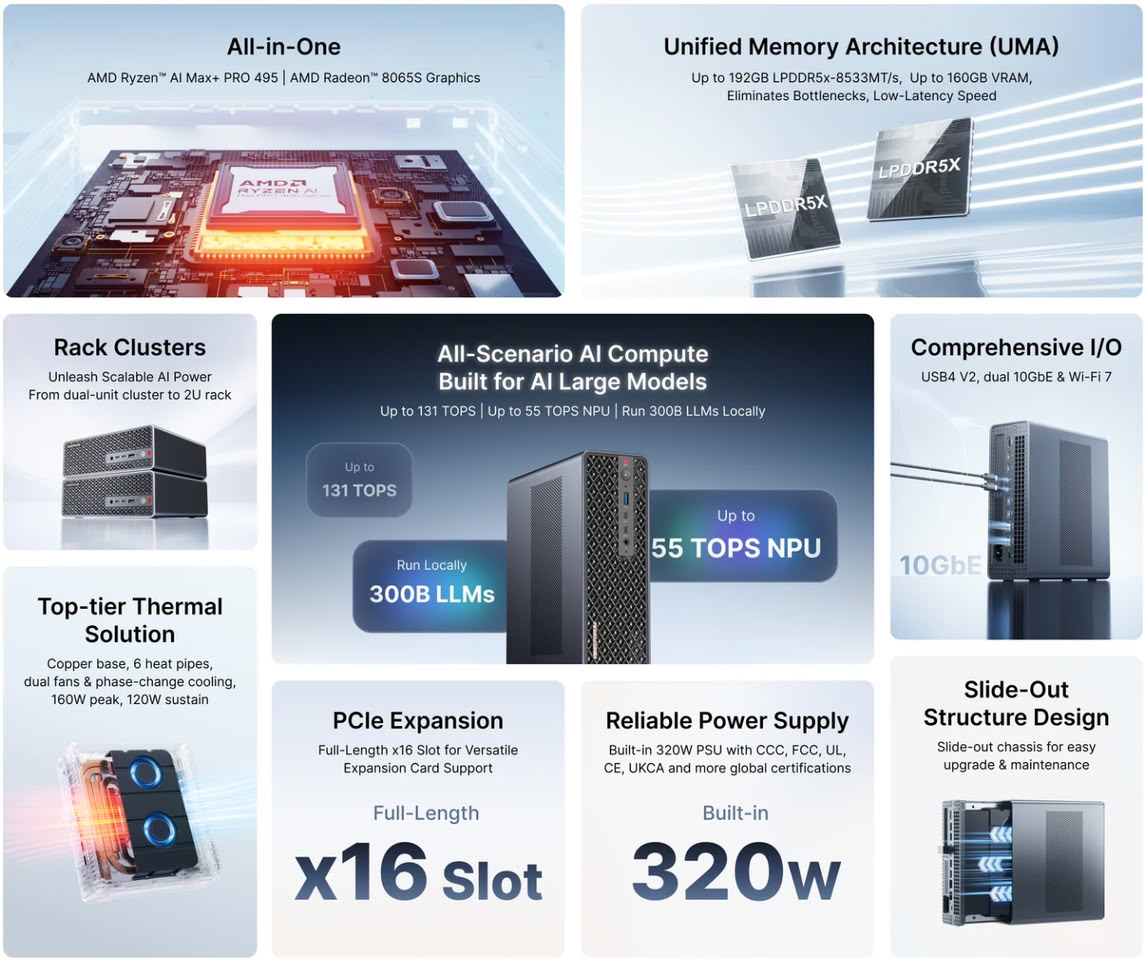
Minisforum Launches the MS-S1 MAX-P495 with 192GB Unified Memory, Expanding Its Local AI Computing Strategy

As Artificial Intelligence (AI) evolves toward Super Intelligence (SI), intelligent computing is entering a new phase—one in which increasingly capable AI is moving closer to endpoints and edge environments. This shift is accelerating demand for local large-model processing, data privacy, low-latency performance, and greater control over AI workloads. In response, Minisforum is advancing its Local AI strategy from high-performance AI systems toward scalable local computing platforms. The new MS-S1 MAX-P495 is the latest step in this evolution, bringing powerful local AI computing to the edge and helping bridge today's AI era with the emerging era of Super Intelligence.

From 395 to P495: More Headroom for Local AI
Following the MS-S1 MAX powered by the AMD Ryzen AI Max+ 395, Minisforum is introducing the MS-S1 MAX-P495, powered by the AMD Ryzen AI Max+ PRO 495. Built on the Zen 5 architecture, the processor features 16 cores and 32 threads, with clock speeds of up to 5.2 GHz, and integrates Radeon 8065S Graphics. It delivers up to 55 TOPS of NPU performance and 131 TOPS of total AI compute, targeting AI enthusiasts, developers, geeks, and professional creators with higher demands for local high-performance computing.

HPE Announces ProLiant Gen13 Servers Powered by 6th Gen AMD EPYC CPUs

HPE (NYSE: HPE) today announced the first four of its HPE ProLiant Gen13 Servers powered by 6th Generation AMD EPYC Server processors. The new systems expand compute, memory, and I/O capabilities to help enterprises accelerate agentic AI and inference, analytics, virtualization, simulation, and modeling while strengthening security, simplifying operations, and providing reliability across distributed IT environments.

As AI systems evolve from generating insights to taking autonomous action, trust becomes a prerequisite for scale. McKinsey's 2026 AI Trust Maturity Survey found that nearly two-thirds of respondents cited security and risk concerns as the top barrier to fully scaling agentic AI. Within this evolving landscape, HPE ProLiant Gen13 helps customers address security and operational barriers with a trusted infrastructure foundation that combines HPE iLO 8 innovations for automatic protection, infrastructure trust, and post-quantum readiness with enhanced visibility and control from HPE Compute Ops Management.

ASUS Announces New 64GB Configuration of the Ascent GX10

ASUS today announced a new 64 GB configuration of ASUS Ascent GX10, expanding the lineup alongside the existing 128 GB model. This compact AI supercomputer is designed to bring local agentic AI development within reach of more developers, researchers and data scientists. Based on the NVIDIA DGX Spark platform and powered by the full NVIDIA AI software stack, ASUS Ascent GX10 64 GB delivers the same petaflop-scale architecture found on ASUS Ascent GX10 128 GB in a memory configuration built for today's efficient open-source models—enough to build and run today's most capable 30-35B class models and autonomous agents. When workloads grow, two systems can be clustered with the NVIDIA Sync Cluster Assistant for 128 GB of pooled memory and around 1.7X the throughput.

Ubiquitous AI, engineered for more builders
Guided by its Ubiquitous AI. Incredible Possibilities. strategy, ASUS is working to put agentic AI within reach of every builder, empowering not only the early professional AI teams already running frontier-scale models locally, but the much larger early-majority audience of developers, researchers and AI-curious teams who are ready to start experimenting hands-on.

NVIDIA Launches DGX Spark 64 GB Desktop AI Systems

Local AI is becoming more useful by the token. As AI agents move from experiments into everyday development, increasingly capable open models are shrinking to fit on more devices, giving builders more to run locally.

Coming this month, NVIDIA DGX Spark will be available with 64 GB of unified memory from top manufacturer partners—Acer, ASUS, Dell, Gigabyte, HP and MSI—giving developers, researchers and AI enthusiasts a new configuration with DGX OS and the NVIDIA AI software stack ready to use from day one.

Gigabyte AI TOP ATOM 64GB Unified Memory Version Expands Possibilities for Desktop AI Development

Gigabyte today announced the launch of a new 64 GB unified memory version of Gigabyte AI TOP ATOM, expanding its existing 128 GB offering. Available starting October 23, the new configuration retains the hardware design of AI TOP ATOM, based on the NVIDIA DGX Spark platform, giving developers, researchers, and enterprise teams greater flexibility to select the configuration that best fits their AI workloads and memory requirements, while enabling dedicated on-premises AI development environments.

As generative AI and agentic AI applications continue to evolve, model testing, data processing, and application validation are becoming increasingly integral to everyday development workflows. Gigabyte AI TOP ATOM integrates AI computing capabilities into a compact desktop form factor, enabling users to perform model inference, prototype development, and data analysis in offices, laboratories, and educational environments. By running models and processing data locally, users can maintain greater control over development resources and project data while reducing reliance on cloud computing resources.

NVIDIA Could Account for 37% of 2027 HBM Capacity, Worth $279 Billion

NVIDIA's supply commitments climbed to $279 billion in the quarter ended July 26, up from $119 billion the quarter before. The company says the increase is primarily related to memory procurement. Morgan Stanley estimates that NVIDIA has claimed about 37.3% of global high-bandwidth memory (HBM) supply for 2027, with Alphabet at 36% and AMD at 12.1%. That adds up to roughly 85%, leaving everyone else to split the rest. These are Morgan Stanley's estimates, as reported by The Inference.

About $267 billion of the commitments come due by the end of fiscal 2029, according to the filing. NVIDIA reported record revenue of $96.2 billion for the quarter, but memory costs are weighing on margins. Gross margin was 75% and is guided to 74% this quarter, with a trough of 71% to 72% expected in the January quarter. CFO Colette Kress tied that pressure to memory pricing. Operating cash flow also fell to $24.1 billion from $50.3 billion the quarter before. Jensen Huang said on September 17 that he expects NVIDIA to sell twice as many chips next year, and the company's formal guidance is about 70% revenue growth.

Synopsys and Amazon Announce Strategic, Multi-year IP Agreement for Custom Silicon

Synopsys, Inc. (Nasdaq: SNPS) today announced a strategic agreement with Amazon to accelerate Amazon's custom silicon innovation and advance the development of increasingly complex AI-powered products and cloud infrastructure. The multi-year agreement marks the expansion of Synopsys' silicon IP business to serve increasing demand for application-optimized IP with Amazon as its lead customer.

Amazon continues to build on its leadership and longstanding investment in a broad portfolio of purpose-built chips, including Nitro for cloud security, network and storage, Graviton for general-purpose computing, and Trainium for AI training and inference workloads. Building on more than 15 years of collaboration, the agreement expands Amazon's use of Synopsys' IP to include application-optimized silicon IP. The agreement also expands Amazon's use of Synopsys EDA, simulation and analysis (S&A), and agentic AI technologies. Synopsys and Amazon will work to accelerate multiphysics solutions on Trainium and Graviton.

MSI IPC Unveils MS-C9ZA Edge AI Box PC Powered by NVIDIA Jetson Orin Nano

MSI IPC introduces the MS-C9ZA, a compact fanless Edge AI Box PC powered by NVIDIA Jetson Orin Nano 8 GB for machine vision, robotics, and embedded edge AI applications. It integrates local AI inference, industrial I/O, dual Gigabit Ethernet, M.2 expansion, and 12-24 V DC input.

Powered by a 6-core Arm Cortex -A78AE CPU, NVIDIA Ampere GPU, and 8 GB LPDDR5 memory, the MS-C9ZA enables AI inference and computer vision processing at the edge, helping reduce cloud dependency, bandwidth usage, and network latency.
Return to Keyword Browsing
Nov 28th, 2026 07:32 CST change timezone

New Forum Posts

Popular Reviews

TPU on YouTube

Controversial News Posts