Monday, November 21st 2016

Intel's Skylake-EP Flagship Xeon E5-2699 V5 CPU to Harness 32 Cores, 64 Threads
Intel is preparing their Skylake-EP Xeon E5 processor lineup for launch in mid-2017. And judging by the leaks regarding their next top-of-the-line processors in the server market, the Xeon E5-2699 V5 looks like Intel's response to AMD's expected Naples server platform. The leak should, naturally, be taken with a grain of salt, since the leaked chip appears to not yet be a finalized version of Intel's silicon. If you trust the source, you can secure one of these engineering samples for the tidy sum of ¥ 26500 (around $3845).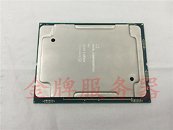
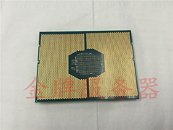
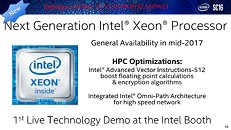 The chip that has just leaked is a trend-breaker when it comes to Intel's server parts: it carries on the V5 platforms' core count increase (with 24 and 28-core processors being already expected), stepping away from the 22-core high-end E5-2699V4A that Intel recently announced, by injecting ten extra full cores (and thus, 20 extra threads) to Intel's server chip line-up. If you find that number familiar, it's probably because AMD's Naples platform is also expected to house up to 32 processor cores per processor, alongside AMD's implementation of SMT (Simultaneous Multi Threading) for a total of 64 logical threads. Part of the Skylake-EP lineup which launches next year, the Xeon E5-2699 V5 (ES) is designed for Intel's LGA 3647 socket, and the leaked sample features a base clock of 2.10 GHz.
The Intel Xeon V5 line-up will be going up against AMD's Zen based Naples platform next year. While Intel enjoys a staggering, overwhelming presence in the server market, AMD is counting on Zen's performance and core counts as being a renaissance of sorts for the company, allowing it to claw back market share in this highly-lucrative market. Intel seems to be making an effort to at least equalizing its offers in regards to Naples' expected core counts, in a bid to ensure it is able to maintain its tight grip on the lion's share of the server market.
[/URL]
Source:
Taobao


The Intel Xeon V5 line-up will be going up against AMD's Zen based Naples platform next year. While Intel enjoys a staggering, overwhelming presence in the server market, AMD is counting on Zen's performance and core counts as being a renaissance of sorts for the company, allowing it to claw back market share in this highly-lucrative market. Intel seems to be making an effort to at least equalizing its offers in regards to Naples' expected core counts, in a bid to ensure it is able to maintain its tight grip on the lion's share of the server market.
[/URL]
56 Comments on Intel's Skylake-EP Flagship Xeon E5-2699 V5 CPU to Harness 32 Cores, 64 Threads
See here: www.servethehome.com/intel-knights-landing-details-emerge/
(the 4 empty pads on the package are for HMC stacks (Intel+Micron's competitor to HBM))
Another thing that you're ignoring is that the R&D billions also includes SSDs, networking, switches, wireless, GPUs, co-processors (Xeon Phi, QuickAssist, etc.), software, I/O (PCIe, DMI, QPI/UPI, OmniPath, protocols like NVMe) and fabrication tech, not just CPU cores.
They blew all the cpu money on fabs, which is why they're slowing it down. There's no extra cash to be made when upgrading (and wafers) cost more than the profits from increased dies per wafer.
I do think intel is holding back in more obvious ways. I think if intel had actual competition we would start seeing overclocking enabled across the line. We might also see features from the HEDT platform come into the mainstream platform. Those could be more cores, more pci lanes, or other.
...Buuuuut, it's rather strange to see locked, unoverclockable chips and "k" unlocked, overclocker friendly chips appear right after Intel gained dominance in CPU performance. But even Sandy and Ivy were overclockable +400MHz, at least. After that, they totally shut it down with Haswell (unless, of course, you bought the shiny K edition). Given the timing and the way they cut overclocking down to crap, and then nothing at all, it seems rather deliberate.
Or an IoT device nobody knows they want yet.
No honestly, it is very clear from the past five years and Intel's movements that they're still searching for the next big thing and haven't found it. They do some hardware, they do some IoT, some VR, and none of it really sticks. They did ultrabook and all we can say about that is that they're flat, weak and overpriced laptops. They retried GPU and all they could provide was a Broadwell proc that never really got traction and is mainly found in gaming systems WITH a dedicated GPU (the irony), in the meantime the regular CPUs still have slow IGP and it won't be changing anytime soon.