Sunday, February 17th 2019

Tight Squeeze Below $350 as Price of GTX 1660 Ti Revealed
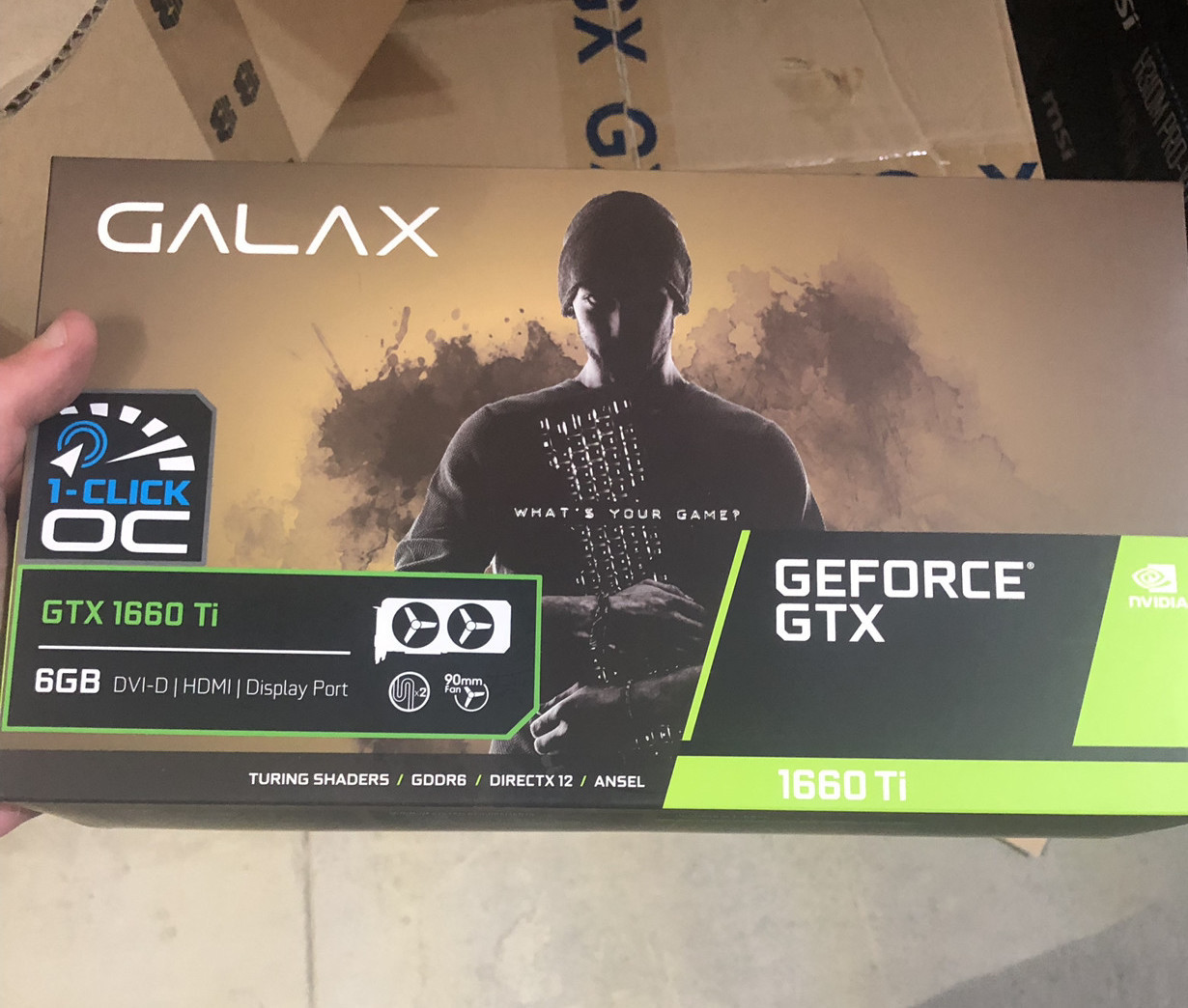
NVIDIA is reportedly pricing the GeForce GTX 1660 Ti at USD $279 (baseline pricing), which implies pricing of custom-designed and factory-overclocked cards scraping the $300-mark. The card is also spaced $70 apart from the RTX 2060, which offers not just 25% more CUDA cores, but also NVIDIA RTX and DLSS technologies. In media reporting of the card so far, it is being compared extensively to the GTX 1060 6 GB, which continues to go for under $230. Perhaps NVIDIA is planning a slower non-Ti version to replace the GTX 1060 6 GB under the $250-mark. That entry would place three SKUs within $50-70 of each other, a tight squeeze. Based on the 12 nm TU116 silicon, the GTX 1660 Ti is rumored to feature 1,536 CUDA cores, 96 TMUs, 48 ROPs, and a 192-bit wide GDDR6 memory interface, handling 6 GB of memory at 12 Gbps (288 GB/s). This GPU lacks RT cores.
Source:
VideoCardz
75 Comments on Tight Squeeze Below $350 as Price of GTX 1660 Ti Revealed
... that said, it isn't relevant to the hilarious guessing and performance math surrounding it. Give it a couple of days, gents. :)
I know full well that prices on RTX will eventually drop nvidia isn't selling enough cards they need to get more out the door
yes plz
All in all, nvidia could've simply shrunk the whole pascal stack to 12nm or sold turning with much smaller die sizes without RT cores(what we r seeing here with gtx1160) in order to aggressively push price/performance down in a linear fashion, but thats simply not nvidias philosophy. If they push price/performance down too quickly then they will make high end gpus less appealing/less needed. Instead they continue to look for ways to make older generation cards obsolete by frequently changing the way games are rendered/pushing new features. I can't imagine how useless my gtx1070 will be in a few years if ray tracing becomes something second nature to gpus in the same way we count TMUs ROPS and shader cores
Your post just goes downhill from there.
Adding controllers and functionality is one thing i get that, but then almost doubling the die size for an extra 20-25% performance even after the benefit of moving to 12nm is a bit too extreme. Gtx1080ti is 471mm2 compared to rtx2080ti at 775mm2 while offering 81% of its performance(based on tpu review). Even Rtx2080 is 541mm2 and performs on par with 1080ti. Nvidia is taking huge risks by pushing Ray Tracing at full throttle, but it must do so because If ray Tracing doesnt pick up; nvidia is practically screwed.
Mine is they pushed RTRT early, because the early adopter/implementer gets to guide things.
Neither of us can prove our stances though ;)
RTX 2080 Ti (£1,070, 2 free games)
RTX 2080 (£635, 2 free games)
RTX 2070 (£460, 1 free game)
GTX 1080 Ti
RTX 2060 (£320, 1 free game)
Radeon VII (£700, 3 free games)
GTX 1080
GTX 1070 Ti (£395)
Radeon RX Vega 64 (£370, 3 free games)
Radeon RX Vega 56 (£250, 3 free games)
GTX 1660 Ti (£260)
GTX 1070 (£270)
RX 590 (£235, 3 free games)
GTX 1060 (£195)
RX 580 (£150, 2 free games)
RX 570 (£140, 2 free games)
GTX 1050 Ti (£145)
GTX 1050 (£110)
RX 560 (£120)
That website can do some of that.
I was in this position when I got my 4K monitor.
And note that playing a game in QHD on a 4K monitor doesn't look good at all.