Wednesday, March 3rd 2021

AMD Radeon RX 6700 XT: All You Need to Know
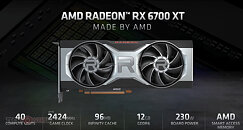
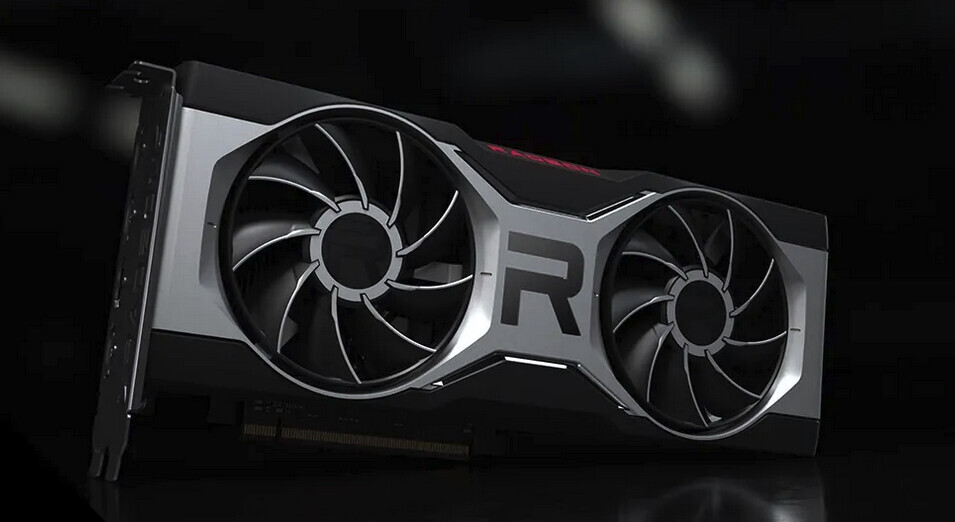
AMD today announced the Radeon RX 6700 XT, its fourth RX 6000 series graphics card based on the RDNA2 graphics architecture. The card debuts the new 7 nm "Navi 22" silicon, which is physically smaller than the "Navi 21" powering the RX 6800/RX 6900 series. The RX 6700 XT maxes out "Navi 22," featuring 40 RDNA2 compute units, amounting to 2,560 stream processors. These are run at a maximum Game Clock frequency of 2424 MHz, a significant clock speed uplift over the previous-gen. The card comes with 12 GB of GDDR6 memory across a 192-bit wide memory interface. The card uses 16 Gbps GDDR6 memory chips, so the memory bandwidth works out to 384 GB/s. The chip packs 96 MB of Infinity Cache on-die memory, which works to accelerate the memory sub-system. AMD is targeting a typical board power metric of 230 W. The power input configuration for the reference-design RX 6700 XT board is 8-pin + 6-pin.
AMD is marketing the RX 6700 XT as a predominantly 1440p gaming card, positioned a notch below the RX 6800. The company makes some staggering performance claims. Compared to the previous-generation the RX 6700 XT is shown beating the GeForce RTX 2080 Super. NVIDIA marketed the current-gen RTX 3060 Ti as having the same performance outlook. Things get interesting, where AMD shows that in select games, the RX 6700 XT can even beat the RTX 3070, a card NVIDIA marketed as matching its previous-gen flagship, the RTX 2080 Ti. AMD is pricing the Radeon RX 6700 XT at USD $479 (MSRP), which is very likely to be bovine defecation, given the prevailing market situation. The company announced a simultaneous launch of its reference-design and AIB custom-design boards, starting March 18, 2021.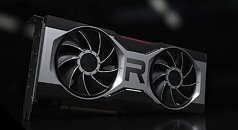
 AMD's performance claims follow.
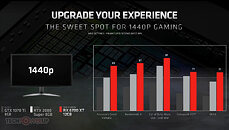
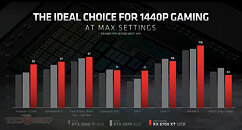
AMD is marketing the RX 6700 XT as a predominantly 1440p gaming card, positioned a notch below the RX 6800. The company makes some staggering performance claims. Compared to the previous-generation the RX 6700 XT is shown beating the GeForce RTX 2080 Super. NVIDIA marketed the current-gen RTX 3060 Ti as having the same performance outlook. Things get interesting, where AMD shows that in select games, the RX 6700 XT can even beat the RTX 3070, a card NVIDIA marketed as matching its previous-gen flagship, the RTX 2080 Ti. AMD is pricing the Radeon RX 6700 XT at USD $479 (MSRP), which is very likely to be bovine defecation, given the prevailing market situation. The company announced a simultaneous launch of its reference-design and AIB custom-design boards, starting March 18, 2021.



104 Comments on AMD Radeon RX 6700 XT: All You Need to Know
In the reality this is what we all have to know: Miners will buy ALL the cards!!!
So, go to hell miners aaaaaand
The days of yearly die shrinks on similarly priced fabrication processes are over. $/transistor is going up with each node, that is just a reality brought on by physics. Could AMD sell a bit cheaper? Sure, and it wouldn't make a lick of difference to the prices we pay. The only thing that will drive prices down is competition and supply commensurate with demand. We finally have competition, we just need supply from TSMC/Samsung to increase which can take years unfortunately.
This is a card that, if it is faster then a 3070, will be twice the speed of a vega 64 with more VRAM for $479. Vega was $650 in 2016, as was the 1080. Doubling performance three tiers down from the high end in two generations is pretty good considering how much trouble AMD has had lately with GPUs, and it is a surprising jump over the 5700xt, which has the same core count.
I bought my 5700 for $299 in December 2019 myself. *If* the performance of the 6700XT was on par or greater with my 5700, I'd sell it, make twice the profit and get a 6700 XT if they don't sell out in first few seconds lol. I don't see that happening though XD
Don't forget, there's a bunch of additional cache that the 5700XT never had, and there's also all of the hardware raytracing units.
Polaris was only 232mm^2 and on top of that GloFo 14nm was an unpopular node at a time when wafer supply was good and GloFo had no other major committments to other customers; AMD managed to get chips out of GloFo at a good price. TMSC's 7FF is a constrained, sought-after, premium node with a lot of bidders pushing the price up and TSMC basically getting whatever they ask for it.
Polaris:
Small die,
cheap node with no competition,
plenty of supply,
cheap PCB with simple VRMs
cheap alu extrusion cooler for 150-180W cards.
Navi 22:
44% larger die, despite a higher density node
the most expensive node currently available,
bidding against many competitors with much deeper pockets than AMD
supply constraints everywhere pushing up prices,
manufacturing difficulties due to COVID and water shortages
higher-end PCB with more layers and more complex power delivery
more expensive vapor-chamber and multi-heatpipe soldered coolers for 230-350W cards.
This is a much closer comparison in terms of transistor count, die area, and board/cooler design to the $699 RadeonVII (7nm Vega64). If you want to make a Polaris comparison, wait for Navi23 which should be much closer to the die size and transistor count of Polaris, TPU seems to have some leaked/rumoured specs here:
www.techpowerup.com/gpu-specs/radeon-rx-6600-xt.c3774
So you get 35% more performance, but it costs 20% more. Real world price will likely be closer to 40-50% mroe then a 5700xt. so IRL pricing this will likely end up another turing level generation where price/perf barely moves.
I'm far away from being Ngreedia's fanboy (I bought 2900 GT, 4870, 6870, R290, RX480 in the past), but I have to say it: $479 MSRP is a joke. No DLSS, worse RT, worse encoder, no supported Adobe Premiere/After effects GPU acceleration... The only plus over 3060TI I can see is +4 gigs of VRAM. This GPU should be priced at $349-379 imho.
AMD drivers suckx: All You Need to Know
The bigger issue IMO is that the card is 10w more than 3070 without quite matching its performance, likely pointing to these cards being pretty heavily clocked. I need a card for the HTPC so I might grab one before the prices skyrocket like every other card launch, but I have serious questions about how good this card actually is.
You don't need to see who's right - I wasn't guessing the die size, Navy flounder (codename for Navi22) was confirmed a 335mm die when information intended for regulators was leaked last year. Since then we've had additional confirmation from manufacturing leaks and photos. Sapphire, who make the 6700XT reference cards, have had these things out in the wild for over a month already. For it to be available to buy in the US in three weeks time, the finished product had to leave the factory a month ago ;)
I wouldn't get too worried about die size comparisons that aren't on the same process. Transistor count is a more accurate gauge of how "high-end" any given product is, though you do have to account for major shifts in architecture, such as Pascal vs Turing that added an enormous amount of extra transistors for RT cores and Tensor cores.
happy I went with the Powercolor 6800 Fighter (non xt), with some undervolting I'm running stock <200W total on my HTPC (great card btw, awesome value in AU/NZ).
I like my PCs to be small and inaudible, so low power consumption is a pretty high priority for me.
I have plenty of super hot and noisy boxes at work with threadrippers or multiple 2080Ti cards in them but I game and watch movies with speakers, not headphones. I like maximum dynamic range and to hear all of the subtlest, quietest details over the sound of fans whirring.
I believe what AMD is doing (and don't really blame them I guess) is they know AIBs will sell this card for ~$600 no matter what they set the MSRP at. The market right now means no matter what the price is they will sell out instantly, so why bother pricing these cards really low?
If AMD set the MSRP at $349 to be ultra competitive then AIBs would just make loads of money as the street price would still be ~$600, if AMD prices them at $479 then AMD & AIBs make loads of money. And you just have to hope some of that money goes into RDNA 3, 4 and 5 development.
Manufacturers don't set the price of products, buyers set the price! There isn't a single card on the market right now that I would buy, so my money is staying in my pocket. Once the mining bubble bursts or production catches up to demand then I will look at cards and prices again. What everyone else is up to them.
And who knows, maybe Intel will be the saviour of the PC gaming market!!!