Thursday, July 15th 2021

Valve Announces the Steam Deck Game Console
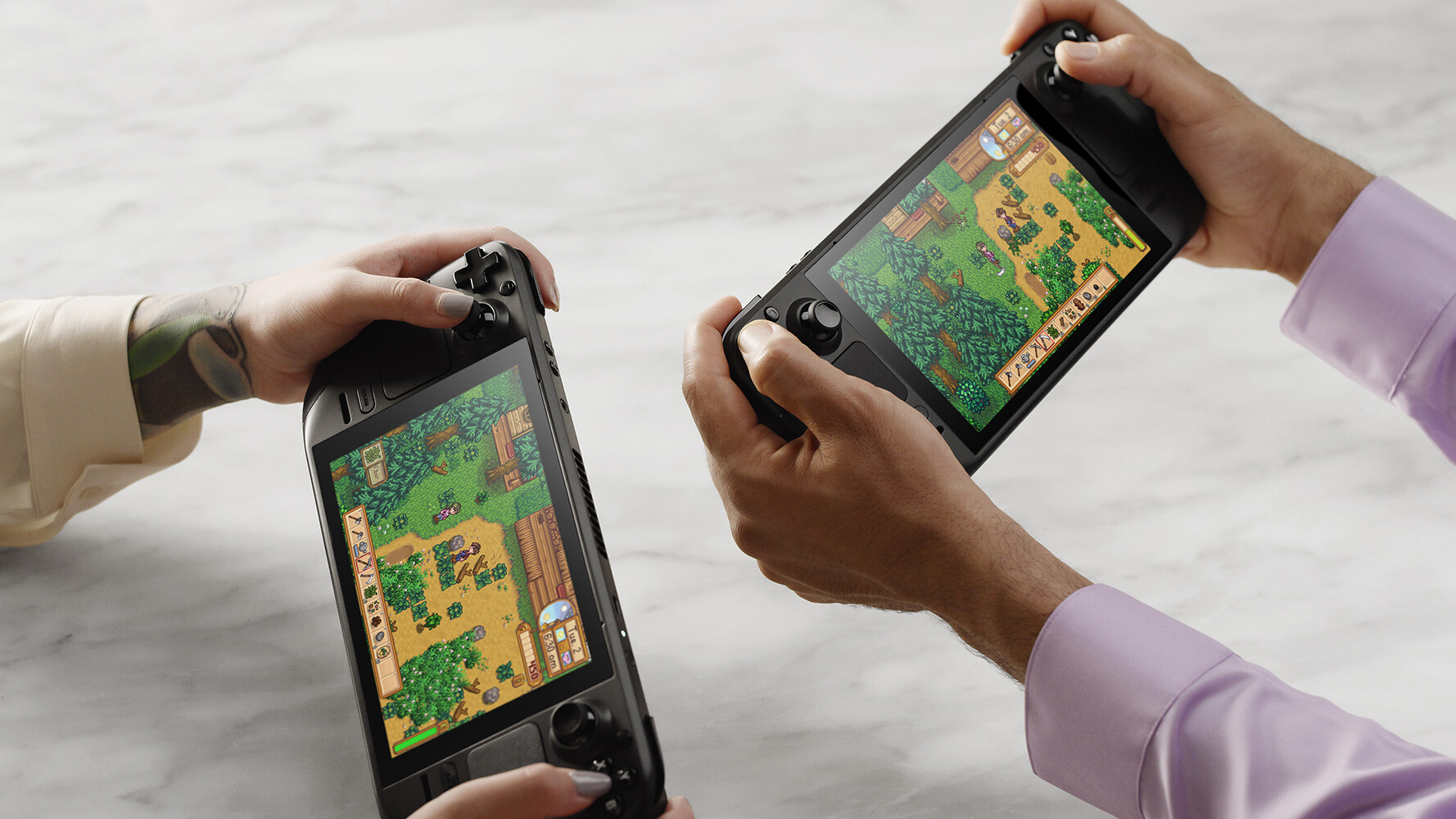
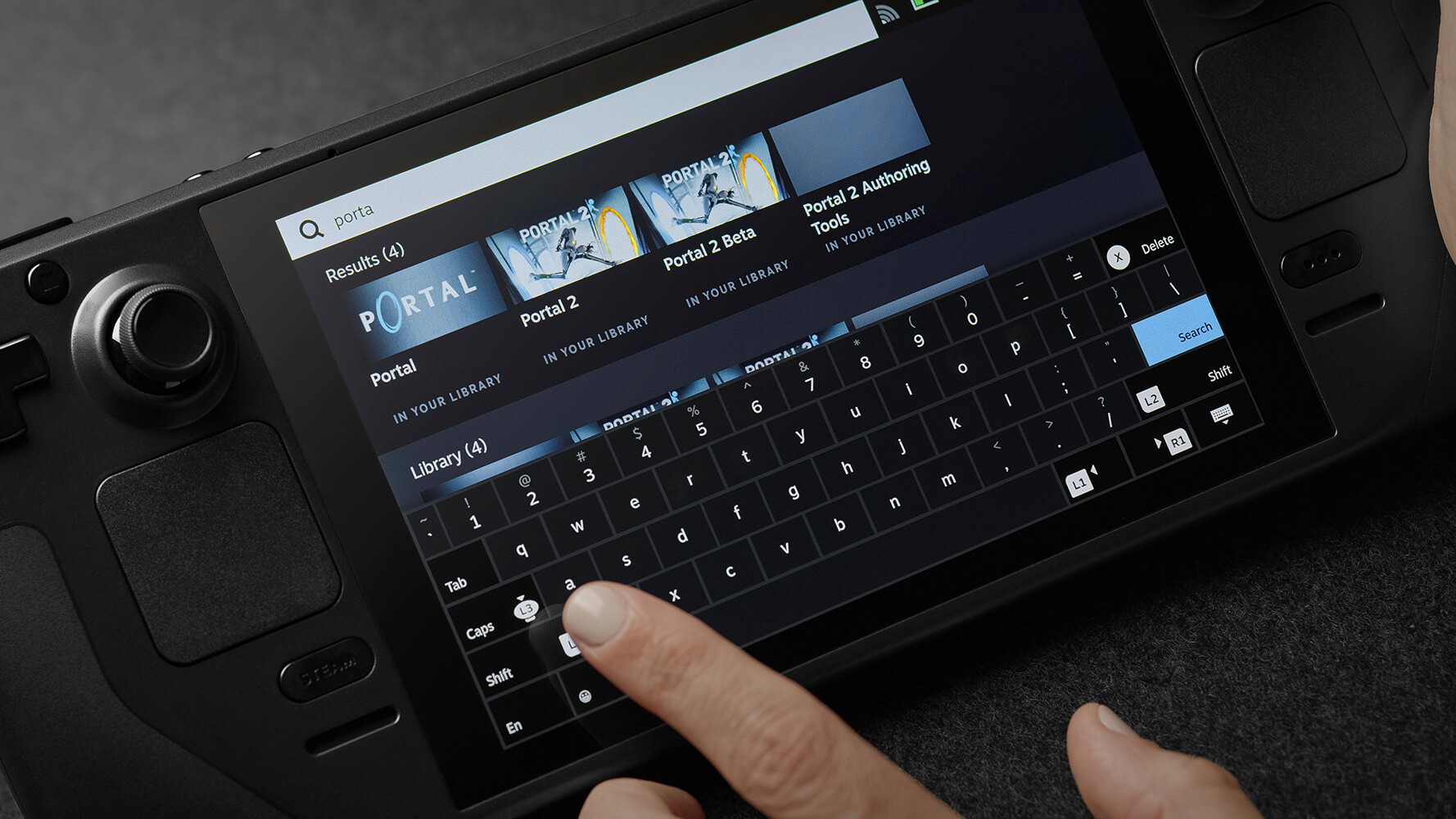
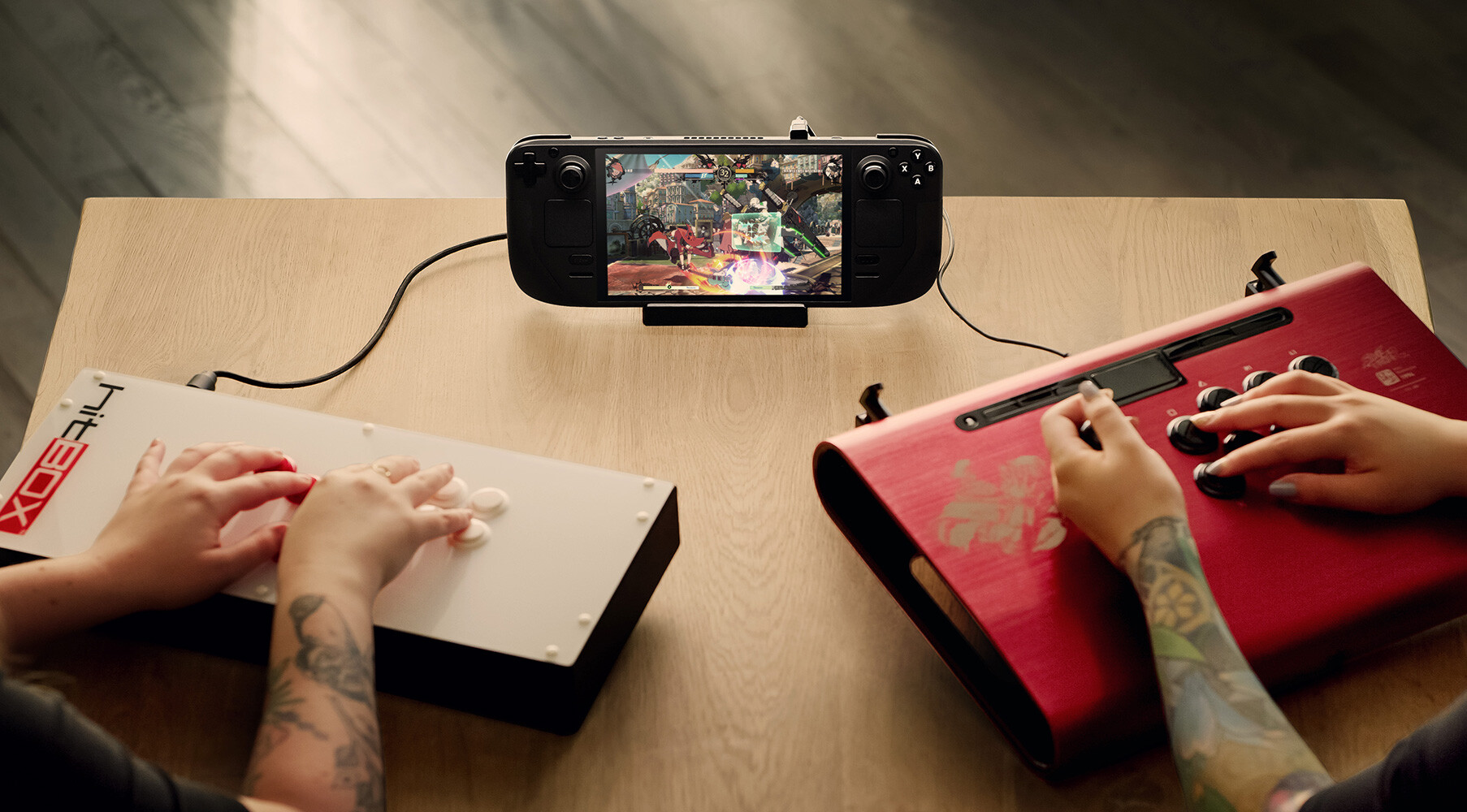
Valve announces Steam Deck, the first in a new category of handheld PC gaming devices starting at $399. Steam Deck is a powerful all-in-one portable PC. With a custom processor developed in cooperation with AMD, Steam Deck is comparable to a gaming laptop with the ability to run the latest AAA games. Your Steam library will be on Deck to play games wherever and whenever you want. Steam Deck is also an open PC, adding the ability to install any software or connect with any hardware.
"We think Steam Deck gives people another way to play the games they love on a high-performance device at a great price," says Valve founder Gabe Newell. "As a gamer, this is a product I've always wanted. And as a game developer, it's the mobile device I've always wanted for our partners." Steam Deck starts at $399, with increased storage options available for $529 and $649. Reservations open July 16th at 10 AM PDT; shipping is slated to start in December 2021.


 Steam Deck details:
"We think Steam Deck gives people another way to play the games they love on a high-performance device at a great price," says Valve founder Gabe Newell. "As a gamer, this is a product I've always wanted. And as a game developer, it's the mobile device I've always wanted for our partners." Steam Deck starts at $399, with increased storage options available for $529 and $649. Reservations open July 16th at 10 AM PDT; shipping is slated to start in December 2021.
- Powerful, custom APU developed with AMD
- Optimized for hand-held gaming
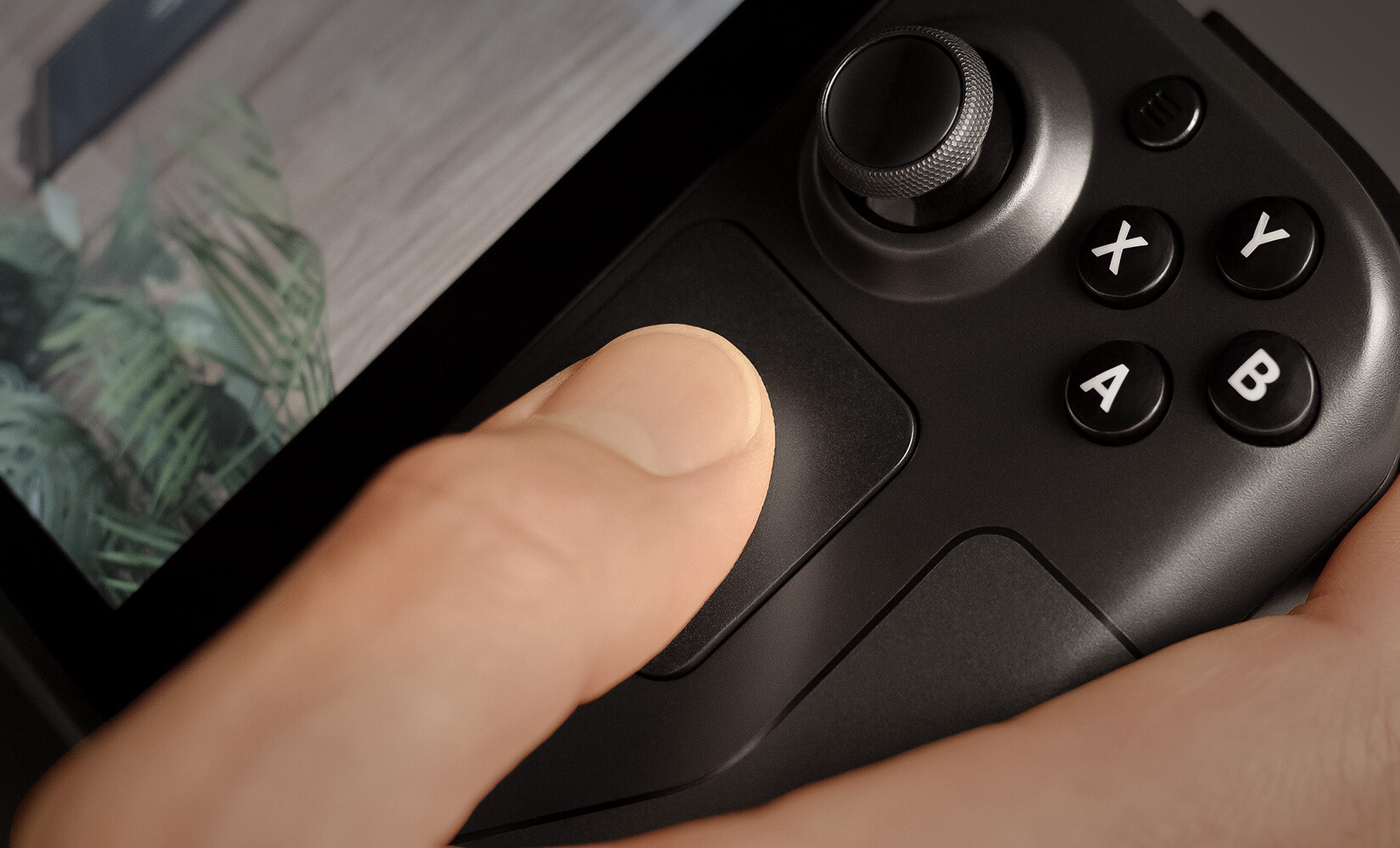
- Full-sized controls
- 7" touchscreen
- WiFi and Bluetooth ready
- USB-C port for accessories
- microSD slot for storage expansion
- 3 different storage options available
188 Comments on Valve Announces the Steam Deck Game Console
So in three years nowt will play on it and indie games won't fit on it, gtfo.
I have many games that would work on it as long as I own it.
You have no clue how I or others would use this so stop spouting balls, Presumptuously.
No one said it's the next f£#@&£ epoch of gaming, however it'll do me.
Not once have you replied to any of my actual well reasoned reply's( on point) so I'm done with this stop replying to me ,we disagree.
I repeat.
"The HW is to weak". PORTABILITY is the game here, not power. If you want to run your games on ultra settings, 4k, 144hz... get a laptop. This form factor can not support that kind of power yet, simple as that. And you are greatly underestimating the RDNA 2 cores and LPDDR5. Games will run much better than 30 fps. Seems like your penalizing the Deck for something its not being made for, and panning it's performance when you have no idea how well it will perform. If you don't value portability, that's fine, but ALOT of people do.
Putting more cores in? You do realize the RDNA 2 cores have like 2x ipc than vega cores? So in reality, you're getting ~14 vega cores. Anyways, the biggest issue with performance on APUs is memory bandwidth. What's the point of putting more cores in than the memory bandwidth can support? I'll take 16gb of LPDDR5 over 4 more cu.
I get that you wish it was a more powerful device, but what you are getting is the most powerful device of its kind in its price range.
edit:
It can't support it because its already almost 1kg. Switch is like 455g in comparison. You want to add more mass/weight, or a fan that could fail?
Why would performance not be adequate? You are missing the point that you can adjust settings to make performance adequate.
Honestly, you want a device that's more like 1000, not 400.
Anyways I think at this point its clear you want something more premium than the Deck is being positioned as. And thats fine.
Its kind of silly to trash the performance though lets just wait and see about that. Maybe it will be trash? But compare it to mobile devices in the same price range.
Being able to hit that 399 price point was clearly one of Valves main objectives. Compromises have to be made. We will see I guess if they made the right ones but it seems to be generating alot of hype despite your low opinion.
720p is totally fine for a 7 inch screen. The ppi is really high even for being 12 inches from your face.
But yes they could have added more cores, given faster ram, stacked ram/cache... its designed to just be enough and not the most powerful. But for most, even some enthusiasts, it will be more than enough. I still have high confidence that most AAA games released over the past few years will run at way over 30fps with a mix of high to med settings, and with freesync that will still feel smooth. Most PS4/Xbox One multiplats will be ~60hz and run/look better than either system.
In addition, from the rumours, Van Gogh wasn't supposed to be for this but for Microsoft tablets, Valve just kinda of used it after MS gave up on products with it.
Valve could have probably used Rembrandt and that would have more CUs, but it might then be impossible to get it to the price they wanted, or likely even announce it now(depending on how AMD feels like it since they will probably announce and release Rembrandt at CES next year).
Let's take a closer look at some demanding titles, average fps and settings:
Apex, 1080p medium (high textures), avg 50 fps
Warzone, 1080p lowest, avg 53 fps
Control, 1080p lowest, avg 44 fps
RDR 2, 1080p lowest, avg 37 fps
Horizon Zero Dawn, 1080p lowest, avg 36 fps
AC Valhalla, 720p lowest, avg 58 fps
Cyberpunk, 720p low, avg 44 fps
So depending on game your experience can be okay, but on most demanding titles, RX 560 really struggles or doesn't struggle, but makes everything looks like potato. And supposedly RX 560 is 80% faster than Deck's RDNA APU (I doubt that it can sustain maximum boost with that reported very generous boost range). So if we do math, we can get how well Deck will perform in same titles, at same settings, assuming no VRAM limitations and no CPU bottleneck, which isn't very realistic, but here's the list:
Apex, 1080p medium, avg 28 fps
Warzone, 1080p lowest, avg 29 fps
Control, 1080p lowest, avg 24 fps
RDR 2, 1080p lowest, avg 21 fps
Horizon Zero Dawn, 1080 lowest, avg 20 fps
AC Valhalla, 720p lowest, avg 32 fps
Cyberpunk, 720p low, avg 24 fps
If we agree that lowest acceptable performance is average 30 fps (it will dip below that) and lowest good performance is 40 fps, then only AC Valhalla runs adequately well at 720p lowest at 32 fps. Obviously, there's not much point (super sampling is always cool, but it's very taxing on any hardware) in running games at 1080p on Deck, so we can calculate performance at 720p, which is basically 2x of 1080p in theory, then our game list looks like this:
Apex, 720p medium, avg 56 fps
Warzone, 720p lowest, avg 58 fps
Control, 720p lowest, avg 48 fps
RDR 2, 720p lowest, avg 42 fps
Horizon Zero Dawn, 720p lowest, avg 40 fps
AC Valhalla, 720p lowest, avg 32 fps
Cyberpunk, 720p low, avg 24 fps
Some games are now running really smooth, but others are just okay and Cyberpunk is still in sub 30 fps zone. If we want to hit 40 fps average, we can calculate performance per pixel and arrive at resolution at which in theory titles should run at 40 fps on Deck. So we are left with AC Valhalla and Cyberpunk, both at low-lowest settings, so there's nothing you can change in visual settings anymore and you only can search for low spec mods or reduce resolution. Reducing resolution is easier solution.
AC Valhalla. 720p is 1280x720, meaning 921600 pixels. We get 32 fps with that. We want 40 fps. So we calculate:
32/40*100 = 80%
We need 20% less pixels, so:
0,8*921600 = 737280
And then according Wikipedia's resolution list (en.wikipedia.org/wiki/List_of_common_resolutions) we get that closest resolution to 737280 pixels is 960x720 (691200 pixels, so we get some performance boost and it's 4:3 aspect ratio, so it might end up being stretched to fit 16:10 screen, if Deck doesn't have good scaler).
Cyberpunk. 720p is 1280x720, meaning 921600 pixels. We get 24 fps with that. We want 40 fps. So we calculate:
24/40*100 = 60%
We need 40% less pixels, so
0,6*921600 = 552960
And using same resolution list, we get that closest resolution is 960x540, which is 518400 pixels, so a bit of fps boost from 40 fps and it's 16:9 aspect ratio resolution, so there might be less stretching or less black bars. And it pretty much ends up being a bit more than half of native resolution of Deck itself.
Is this a good experience on brand new device? For me it's not and over time you will need to go lower and lower just to hit 40 fps or 30 fps average. Also my calculations are only meaningful if performance scales linearly. If there's VRAM limitation or CPU limitation, fps will be lower and there may be some nasty stuttering. If we trust calculations, then we end up at more realistic list, where we try to balance visuals with fps (we want 40 fps average) and we end up with:
Apex, 720p medium-high
Warzone, 720p medium-high
Control, 720p low-medium
RDR 2, 720p lowest
Horizon Zero Dawn, 720 lowest
AC Valhalla, 960x720 lowest
Cyberpunk, 960x540 lowest
If you want to play games on the list, Deck isn't really going to be a nice experience, but I picked some heavier games. Most games are easier to run and should run at higher fps and visual details, but I wanted to see how in theory Deck should perform at its worst. Those are results today and Deck is only running games at 720p (not 1280x800 native) and gets 40 fps. In some cases more, but sometimes a lot less. After a year or two there will be even more demanding games and since we already have to scale down resolution a lot and Deck itself doesn't have very high resolution, let's just say that AAA gaming on Deck will mean Vaseline resolution or just not running them. And that's optimistic. I haven't mentioned that proton has some overhead and that some DRMs are heavy on CPU, so my calculated performance results are really optimistic and it's unknown at what actual clock speed GPU will usually run, I picked 1,5GHz-1,6GHz range, but it's within spec for it to run even at 1GHz. At that point performance won't be nearly close to what I calculated, it will be a lot lower. And for all these reasons, I think that Deck isn't really going to cut it for gaming, but if you are informed customer, well aware of Deck's capabilities and watch benchmark videos, you may be able to play some latest AAA games respectfully well or you should be able to run somewhat older AAA games.
Emulation is mostly decided by CPU single threaded performance. And you need 2 times faster than FX 6300 core, cores ton run some PS2 games emulated. Zen+ had nearly 2 times IPC of FX 6300, but we have Zen 2 cores here. And unfortunately lower clock speed range. It's not going to run all PS2 games well, but with frame skipping some could run. PS3 emulation is not doable at all. So you are left with trouble free emulation of PS1, Dreamcast, PSP, Wii, NDS, GameCube. By trouble free emulation, I meant in performance only, I can't imagine how you could map Nunchuck to Deck's gamepad or emulate dual screens of NDS. So Deck will realistically be good for PS1, PSP, Dreamcast and maybe GameCube. Obviously, all lower end consoles shouldn't be problematic to emulate, but odd controller layouts will not be doable on Deck, those are N64, Sega Master System (Genesis), Sega Saturn, Atari Jaguar and some others. Is this good? It might be good in terms of raw number of titles, but I'm pretty sure that Deck buyer would really want PS2 emulation and it's somewhat painful not to have it run well. Overall, it's fine for emulation, only with minimal limitations.
Is device capable? It's is capable, but nowadays many devices do more and at similar price point. And if you don't pick 64GB model (which should be avoided), it ends up being even more expensive and then competition is even fiercer. At that point it's possible to buy a laptop, which can run PS2 emulation well and get a gamepad for that, Despite all hype, Proton today is still not great. You still lose a lot of your game library. If you ditch Steam OS, you may be able to use Windows, but Valve didn't promise any Windows drivers and Windows will have it's own quite big overhead, higher storage requirements and some actual maintenance requirement and no console UI. Making it less than ideal solution, if not outright broken solution (custom hardware is cool, until you need drivers).
If emulation is ignored, then it would seem almost reasonable to drop display resolution to native 1280x720 or even lower 960x540, to have more performance and better visual quality in games and sometimes to preserve some battery life. Otherwise, Deck will age like milk.They didn't promise Freesync and I provided my performance analysis of what you could optimistically expect out of Deck. I really don't think that your expectations are realistic for Deck yet, you seem to be overestimating it and expect it to be a lot better than it will actually be. I hope that my preliminary performance analysis will be insightful for you.I'm sorry, but actual numbers would be nice and from what we know yet, Deck seemingly won't be fast enough to not disappoint hyped up fanbase. Anyway, if I remember correctly Intel released Broadwell with EDRAM. It didn't increase the cost of CPU, but it made like 20% performance difference. I think that it would have been smart of Valve to include something like that.
It's from "Ryzen: Strictly Technical" thread from Anandtech:
forums.anandtech.com/threads/ryzen-strictly-technical.2500572/
Performance per watt greatly increases, if clock speeds are kept at high power efficiency point. More slower cores are more power efficient, than less cores with higher clock speed. Same performance, but different power consumption. This is how much points per watt Stilt got:
25W - 24 pt/W
30W - 29 pt/W
35W - 29 pt/W
40W - 27 pt/W
45W - 26 pt/W
50W - 24 pt/W
55W - 23 pt/W
60W - 22 pt/W
And so on. It's why Xeons are lower clocked with lots of cores and that's why laptop chips are so power efficient. Basically, there's the optimal frequency point at which you don't need to increase voltage much for lots of clock speed gains and then at some point, you start to need a lot more voltage for same frequency gains. Last frequency steps can be very inefficient and just a tiny frequency reduction, can lead to massive power savings. It's mostly related to simple formula Power consumption = Frequency * Voltage squared. Obviously, you have things like threshold voltage, minimum voltage required for transistor operation, regardless of frequency, as well as other issues at the other end (voltages leaks, changing impedance, heat changing impedance and lots more). Some of those factors depend on architecture, but generally, for each frequency increase, you need one voltage step squared. At first, it barely does anything, but last steps require exponentially more voltage. So my uneducated idea (maybe it's already in very optimal range, who knows?) is to increase CU count, but run each CU at lower clock speed with hopes of increasing performance, without ruining power efficiency and at somewhat higher manufacturing cost (probably not much, dies like that are already small and cost increase may not be linear). I'm not an engineer, but basically all consumer products prefer more clock speed, rather than more, but slower cores. Especially in CPU space, but that's mostly due to poor performance scaling with more cores.
I personally tweaked my RX 580 vBIOS and had stock power limits set to 147 watts, reduction to 92 watts, led to decrease of clock speed by 50-150 MHz in games, meanwhile reducing real wattage of card by ~40 watts. Stock speed on my RX 580 was 1350MHz. I lost no more than 10% of performance, meanwhile I reduced power usage from system total of 220-230 watts to 180-190 watts. Meaning about 40 watt reduction from graphics card alone, which equals to around 35% reduction in graphics card power consumption. That's accounting even for lower VRM efficiency (graphics card's), which is due to them now forced to work at their lower efficiency point. I have seen the same with i5 10400f, but I don't mess with it.No, I rechecked what I said and Deck specs, there's no mistake. Perhaps I wasn't clear that I wasn't talking about Deck, when I mentioned Zen 2, instead of Zen 2 in general. Deck only boosts until 3.5GHz, probably on single core and in non sustainable way.PS2 emulation is still quite difficult. Hardware requirements depend on game and some games are easy to run, meanwhile others aren't. I had no luck trying to run Juiced on FX 6300 or some Shutokou Battle Game. It was really so bad, that FX wasn't even reaching 30 fps. And PS2 instead of running choppy, it makes whole game run in slow motion, due to games made to base their timing on PS2 CPU speed. Perhaps frame skipping can make it choppy again, but FX was so far gone, that I didn't even check that. If you want, you can check out best PS2 emulators, I always use this site:
emulation.gametechwiki.com/index.php/Main_Page
To determine the quality of emulation of each of them. For PS2, it recommends PCSX2:
emulation.gametechwiki.com/index.php/PlayStation_2_emulators
And then you should always look for emulator compatibly list, they often have all known problems collected and documented. In this case, you would need to download, PCSX2, configure it for highest accuracy (often information is required from multiple sources, but sometimes there are good guides on net), get BIOS if needed and get Juiced ISO. I wonder if your 3800X will be able to run it. I'm just curious if Ryzen is enough for it. Anyway, real benchmarks are other titles:
emulation/comments/4thnv6
I wouldn't be surprised if Ryzen fails to run some games, emulation can be extremely hardware intensive. The more accurate it is, the more intensive on hardware it will be. SNES needs 3GHz Core 2 Duo to be emulated really well:
arstechnica.com/gaming/2011/08/accuracy-takes-power-one-mans-3ghz-quest-to-build-a-perfect-snes-emulator/2/
PS2 is many times more powerful. I wouldn't be surprised if it required 50 GHz Skylake cores to run at proper framerate and yet with some hacking it can run mostly reasonably well on 4Ghz Skylake cores. I remember, that some settings of PS1 emulators can make AMD FX cores cry. It's a miracle that PS3 is already being emulated. Ironic, considering how some people believed it to be still one of the fastest machines around.
You can watch this video about emulation madness and what it takes to make them easy to run on less powerful hardware:
- Amnesia: The Dark Descent
- Deus Ex
- Jotun
- Human: Fall Flat
- Little Nightmares
- Superflight
- RimWorld
- Ori and the Blind Forest
- Dead by Daylight
- Besiege
- Motosis
- Risk of Rain 2
- City Skylines
- FTL: Faster Than Light
- Among Us
- Battleblock Theater
- Castle Crashers
- Darkest Dungeon
- Gang Beasts
- Pit People
- Pummel Party
There are some older FPS games like Far Cry 2 I might want to play, but it depends on how well I enjoy shooters without a keyboard and mouse.Which of these games do you think would struggle on the Steam Deck @The red spirit ? Like I have been saying, if you have reasonable expectations of performance there are thousands of games that would perform fine on the Steam Deck. It is unreasonable to expect good performance in games like Apex, Warzone, Control, RDR2, Horizon Zero Darn, and AC Valhalla without heavy graphic setting tweaks.
Edit: I probably could fit every game I listed except dead by daylight on the 64gb version. I reserved the 512gb version because I will be able to afford it, but it is nice to know that I could have done just fine with the 64gb version.
On emulation: I used to emulate games on my 2014 android phone. I had dozens of roms downloaded. I stopped using my phone for emulation because I really didn't like touch screen controls. I think the steam deck will have at least a little bit more performance than my old Droid mini.
Anyways all your points maybe true at this time. But since Deck is an open platform and will be a hit in the emulation community (yes 64gb + sd card + you can modify to install m2, will be enough for that crowd) and you can expect a lot of development for it and things will improve as more RDNA2 architecture stuff is utilized.
Anyway I will list everything about how they run, I will use Steam and Proton's compatibility list, but I won't touch Wine:
Amnesia: The Dark Descent - linux native, supports gamepad, low system requirements.
[*]Deus Ex - very old game, not on Steam, but Proton seems to deal well with it, might have some minor compatibility issues, might not properly support modern gamepads.
[*]Jotun - linux native, supports gamepad, low system requirements.
[*]Human: Fall Flat - not linux native, but proton seems to make it run well, not exactly low spec friendly game, but should be okay on Deck, supports gamepad.
[*]Little Nightmares - lot linux native, not low spec friendly, proton supports it.
[*]Superflight - not linux native, only has partial gamepad support, not particularly low spec friendly, well supported in proton.
[*]RimWorld - low spec friendly, no official gamepad support, linux native.
[*]Ori and the Blind Forest - not exactly low spec friendly, supports gamepad, works well with proton.
[*]Dead by Daylight - Windows only, doesn't run well with proton, supports gamepads, high system requirements.
[*]Besiege - linux native, no gamepad support, low spec friendly.
[*]Motosis - not on steam, not on proton compatibility list, don't expect it to work.
[*]Risk of Rain 2 - not linux native, very low spec unfriendly, supports gamepad, works well with proton.
[*]City Skylines - partial gamepad support, very low spec unfriendly (hard on CPU), linux native.
[*]FTL: Faster Than Light - no gamepad support, low spec friendly, linux native.
[*]Among Us - not linux native, no gamepad support, low spec friend, 80% chance that it will work with proton.
[*]Battleblock Theater - linux native, low spec friendly, supports gamepad.
[*]Castle Crashers - low spec friendly, supports gamepad, not linux native, works well with proton.
[*]Darkest Dungeon - low spec friendly, partial gamepad support, linux native.
[*]Gang Beasts - supports gamepad, low spec friendly, linux native.
[*]Pit People - not linux native, low spec friendly, supports gamepad, works well with proton.
[*]Pummel Party - supports gamepad, barely low spec friendly, not linux native, 80% chance of working with proton.
Overall, if you want a great experience on Deck, you will likely have to forget quite a bit of titles, but majority should work well. 70% of time, you will have a good experience, granted that you like those games.I wouldn't even attempt. Not linux native, 70% chance of working well with proton, no listed gamepad support, low spec friendly.Quite a bit of them, but not for performance reasons alone.Why? LowSpecGamer usually makes titles playable on Athlon 200GE, but Steam has enough influence to actually make some optimizations that aren't as hacky. At least they could let devs optimize those games themselves. Unfortunately, it seems that they don't care. If puny Vega 3 can do it (with big sacrifices), just imagine where RDNA2 8 would be. You are underestimating it and excusing devs for laziness too much.You certainly can have performance problems in more demanding emulated titles:
forums.pcsx2.net/Thread-LIST-The-Most-CPU-Intensive-Games
Shadow of Colossus struggled to run at 60 fps or more with overclocked 4790K. Should run on Ryzen, but just saying that PS2 emulation is still very resource intensive.iGPU doesn't matter. You should run emulated games in software mode, if you want the most accurate emulation with less bugs and glitches. Emulators are notoriously easy on GPU and they are very demanding on a single thread (except for multicore consoles, then you need lots of fast threads).I'm skeptical.
This is why Valve hasn't bothered making games-Valve rakes in an estimated $6 billion in annual revenue from Steam commissions alone-They don't need to. Bet Gabe is fatter now, must eat a shit ton of doughnuts
You said some of those games are not on steam by the way. That is incorrect. Each of those is on steam. They are all in my steam library and I have played many of them before.