Wednesday, February 26th 2025

Complete Specifications of AMD Radeon RX 9070 and RX 9070 XT Leaked
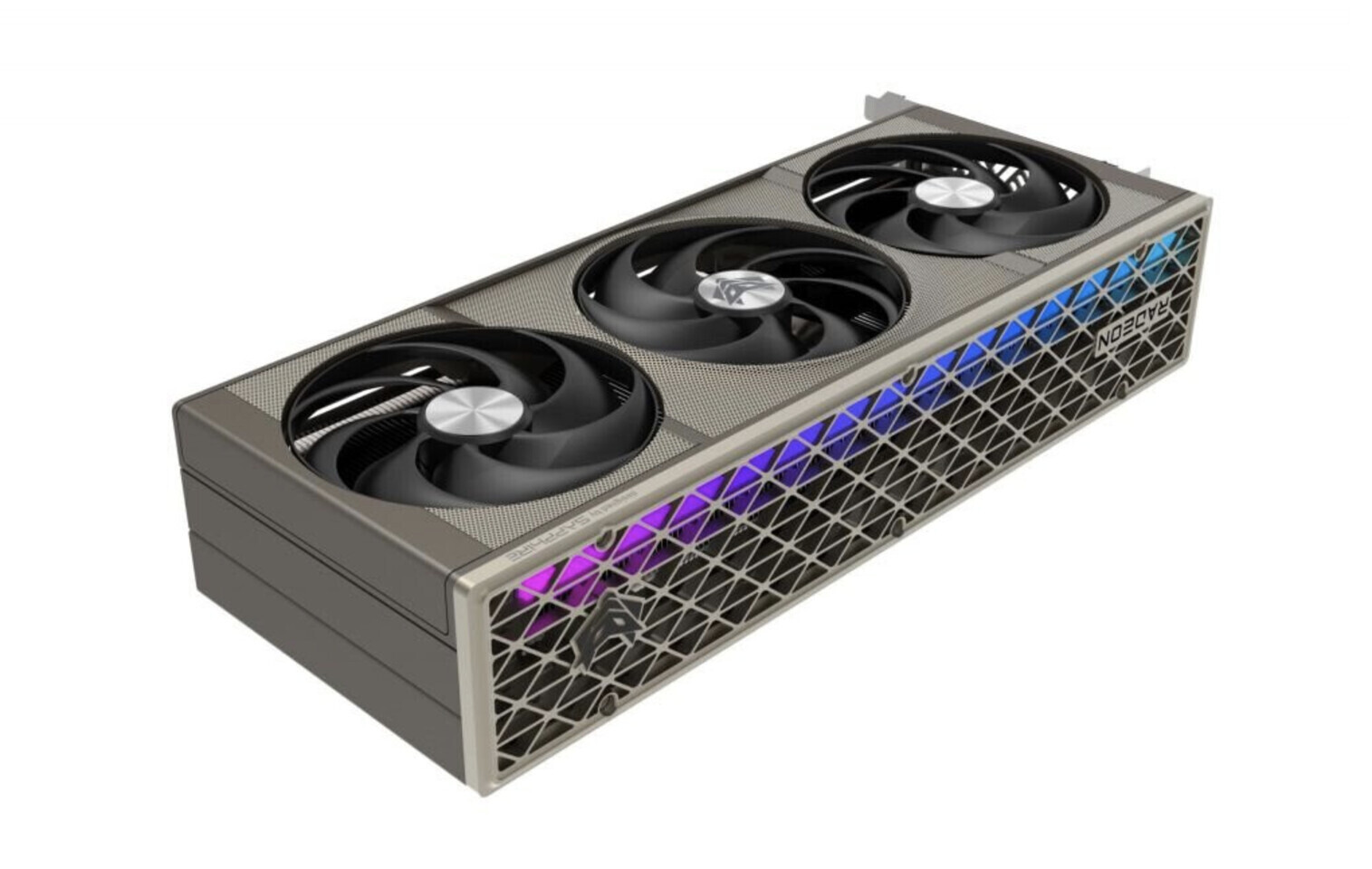
VideoCardz obtained AMD Radeon RX 9070 series specifications, which appear to be the official final configurations of the upcoming RDNA 4 GPUs. As we previously expected, the lineup consists of two models based on the Navi 48 GPU, which integrates 53.9 billion transistors on a 357 mm² die using a 4 nm (N5) process from TSMC. Both the RX 9070 XT and RX 9070 utilize identical memory configurations: 16 GB of GDDR6 memory running at 20 Gbps across a 256-bit bus, delivering 640 GB/s bandwidth. Each card implements 64 MB of 3rd Generation Infinity Cache and supports PCIe 5.0 x16 interface standards. The RX 9070 XT features 64 RDNA 4 Compute Units, equating to 4096 Stream Processors, 64 Ray Accelerators, and 128 AI Accelerators. It operates at a 2400 MHz game clock and 2970 MHz boost clock, providing 48.7 TFLOPS of single-precision FP32 compute performance.
Power requirements include a 304 W TBP and a recommended 750 W power supply. The standard RX 9070 reduces specifications to 56 Compute Units (3584 Stream Processors), 56 Ray Accelerators, and 112 AI Accelerators. Clock speeds decrease to 2070 MHz game clock and 2540 MHz boost clock, with correspondingly lower power requirements of 220 W TBP and a recommended 650 W power supply. Since both SKUs use the same Navi 48 die, the separation between them is likely better binning for the XT version, and lower bins end up for the non-XT version. Both models support HDMI 2.1b and DisplayPort 2.1a UHBR13.5 outputs. AMD has confirmed the cards will launch exclusively through board partners with no reference designs planned and that the official unveiling will be in March. Earlier rumors have suggested a $699 price tag for the Radeon RX 9070 XT SKU, putting its expected price/performance near NVIDIA's GeForce RTX 5070 Ti. AMD notes that 85% of gamers buy cards below $700, which the RDNA 4 series will focus on.
Source:
VideoCardz
Power requirements include a 304 W TBP and a recommended 750 W power supply. The standard RX 9070 reduces specifications to 56 Compute Units (3584 Stream Processors), 56 Ray Accelerators, and 112 AI Accelerators. Clock speeds decrease to 2070 MHz game clock and 2540 MHz boost clock, with correspondingly lower power requirements of 220 W TBP and a recommended 650 W power supply. Since both SKUs use the same Navi 48 die, the separation between them is likely better binning for the XT version, and lower bins end up for the non-XT version. Both models support HDMI 2.1b and DisplayPort 2.1a UHBR13.5 outputs. AMD has confirmed the cards will launch exclusively through board partners with no reference designs planned and that the official unveiling will be in March. Earlier rumors have suggested a $699 price tag for the Radeon RX 9070 XT SKU, putting its expected price/performance near NVIDIA's GeForce RTX 5070 Ti. AMD notes that 85% of gamers buy cards below $700, which the RDNA 4 series will focus on.
66 Comments on Complete Specifications of AMD Radeon RX 9070 and RX 9070 XT Leaked
The 9070xt has a roughly 30% higher clock speed and 25% fewer cores then a 7900xt. So short of ground shattering IPC improvements, you're not catching a 7900xtx.
Something else not considered: rDNA4 is a denser design. Denser designs tend to run hotter. That clock speed gulf has no guarantee of staying then under intense 3d workloads, or with RT.
It's highly unlikely a design with 96 ROPs is going to consistently beat a design with 192 ROPs, especially at higher resolution.
Its pretty evident AMD learned nothing from the RX 7000 series launch & reception from the general public.. or lack there of, for the latter one.
AMD needs marketshare in dGPU's, not another lack luster launch that only tech enthusiasts will actually care about. Sure, I'm not mad that they're pricing it at $699 or $649 (seen both numbers thrown around), but it doesnt mean its a good thing. AMD can clearly cut the prices more too, if the prices of RX 7000 cards dropping drastically after launch says anything, they just choose not too. I get that they dont have as good of margins as NVIDIA, but come on. If you can't price it well have other reasons people wanna buy it.
I know I said I'd reserve my opinion until AMD actually showcased the cards & had numbers with them but its just like; holy shit, everyone called it. Again. ffs..
HOPING To be proven wrong but also not gonna sit here and cheerleader them when I know they're gonna probably just going to further mirror that one famous quote about "insanity is doing hte same thing over and over again expecting something to change."
No dual fan model since AMD cancelled their reference (and idk if that was even dual slot)
www.techpowerup.com/forums/threads/when-itx-gpu.317508/
Completely off topic, your username reminded me of these
lithub.com/judith-butler-to-imagine-a-world-after-this-democracy-needs-the-humanities/
cac.org/daily-meditations/mechthild-of-magdeburg-gods-power-is-love/
Yet they add useless PCIe 5.0. Im guessing to cut the bus on some models to x8 or even x4 link speeds to save literal pennies.
From AMD home page: AMD RDNA™ 3 delivers over 2X more AI performance than AMD RDNA™ 2 architecture. Featuring 2 AI Accelerators per compute unit – Radeon RX 7000 Series Graphics cards deliver up to 123 TFLOPs of FP16 performance
1. These cards will most likely cost more than 700. Cost of UHBR20 implementation is not an issue.
2. Feature parity. Competitor has UHBR20 support. They strive for feature parity in everything else. In the past they were actually in the lead as 40 series did not support any 2.1 speed at all.
3. RDNA3. Pro cards in that series had full UHBR20 support two years ago. It was reasonable to expect AMD to move from UHBR13.5 on RDNA3 consumer and UHBR20 on RDNA3 prosumer cards to unified UHBR20 this time, considering that RDNA3 was two years ago.
4. Monitors. More and more monitors are being released with UHBR20 support and the cable length issue has been resolved. UHBR20 is no longer some niche feature a few professionals use.