Tuesday, July 15th 2025

NVIDIA's N1x CPU Hits New Roadblock: Launch Pushed to Late 2026
NVIDIA's long-awaited entry into Arm-based laptop CPUs has hit yet another obstacle, according to insiders close to SemiAccurate. Despite publicly declaring the N1 and its sibling N1x is in full production, the company now faces fresh engineering challenges that threaten to push shipping dates as far back as late 2026. Sources speaking to SemiAccurate describe that the newest issue may require a modification to the actual silicon. This setback follows an earlier hiccup, reported in early 2025, when some subtle flaws emerged during initial validation. NVIDIA engineers managed to correct those without a respin, restoring confidence and nudging the timetable back to early next year.
Performance teasers we spotted a month ago showed a prototype "NVIDIA N1x" scoring 3,096 in single-thread and 18,837 in multi-thread tests on Geekbench 6.2.2. The sample chip, believed to power an HP "8EA3" development notebook with 20 logical cores clocked at 2.81 GHz and backed by 128 GB of RAM running Ubuntu 24.04.1 LTS, suggested a significant performance in big.LITTLE arrangement built from standard 10 Cortex-X925 performance cores and 10 Cortex-A725 efficiency cores. The N1x's integrated graphics and neural-processing unit would close the gap with Qualcomm's Snapdragon Elite series and even Apple's M3-class silicon. Now, with the latest issues looming, OEM partners may have to recalibrate their Windows laptop plans. NVIDIA will need to balance the risk of further delays against the need to demonstrate a polished, reliable experience before its CPU ambitions can truly challenge established players in the laptop arena. Late 2026 now appears set to become the new milestone for when the first N1-powered notebooks might finally reach store shelves.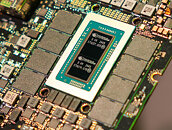
Source:
SemiAccurate
Performance teasers we spotted a month ago showed a prototype "NVIDIA N1x" scoring 3,096 in single-thread and 18,837 in multi-thread tests on Geekbench 6.2.2. The sample chip, believed to power an HP "8EA3" development notebook with 20 logical cores clocked at 2.81 GHz and backed by 128 GB of RAM running Ubuntu 24.04.1 LTS, suggested a significant performance in big.LITTLE arrangement built from standard 10 Cortex-X925 performance cores and 10 Cortex-A725 efficiency cores. The N1x's integrated graphics and neural-processing unit would close the gap with Qualcomm's Snapdragon Elite series and even Apple's M3-class silicon. Now, with the latest issues looming, OEM partners may have to recalibrate their Windows laptop plans. NVIDIA will need to balance the risk of further delays against the need to demonstrate a polished, reliable experience before its CPU ambitions can truly challenge established players in the laptop arena. Late 2026 now appears set to become the new milestone for when the first N1-powered notebooks might finally reach store shelves.

70 Comments on NVIDIA's N1x CPU Hits New Roadblock: Launch Pushed to Late 2026
/s
IMHO, ARM is good for gadgets, handhelds, smartphones, tablets and other battery-dependent stuff.
Those scenarios when you don't require real performance but efficiency for mails, internet, porn and shit.
I wouldn't put much faith in Intel's "going forward" either. AVX10 was supposed to not support 512-bit vectors on E-cores, but suddenly in the latest revision of the specs it was made mandatory. That means future E-cores are going to be as capable as P-cores in that regard, including running existing AVX-512 software (since AVX10/512 is backwards compatible).
So while HT was removed for now it doesn't mean they won't go back to it in the future.
SMT (which HT is a marketing name for) isn't useless, Phoronix benchmarked the "small" server CPUs from both Intel and AMD:The same story for "big" EPYC:Some benchmarks scale to over 50% as well.
I can't find the source, so take it with a grain of salt, but I remember reading AMD stating that including SMT is a relatively small area size increase for a tangible benefit. What is more, Zen 5 was designed with dual 4-way decoders - one for each thread.
petapixel.com/2024/11/07/apple-macbook-pro-with-m4-max-review-another-performance-leap/
www.datacenters.com/news/why-the-world-s-largest-arm-supercomputer-astra-will-be-air-cooled-andthe-goals-
I am thinking that Risc-V will need something similar to see adoption, but I don't see it happening the next 10-20 years. In the next years we will be seeing Risc-V CPUs becoming faster, better more capable, but I doubt the architecture will get 1% of the market, because those CPUs will be coming from small design teams. That will partially change if one of the 4 biggest players, Intel, AMD, Nvidia or Qualcomm starts designing and releasing Risc-V CPUs, with strong support behind the architecture. Also Microsoft or Google will need to offer a complete and stable OS running on those CPUs.
Now, from those 4, AMD while having the size, can't promote anything. I mean they are incapable of promoting anything. They just can't. Qualcomm will probably not show strong interest, because it is the top company in the ARM market, so why abandon a leading position in an already established market? Their win against ARM in their last legal dispute doesn't give them a reason to start thinking Risc-V as their near future primary architecture. Intel also would want to stick with X86. I mean based on the new CEO's own words recently, they are not even in the 10 top design teams. But they are still second in X86 and they make billions from that architecture. If they where going Risc-V they would beome irrelevant in chip design and they would end up just begging others to make their Risc-V CPUs in their fabs. So, who remains? Nvidia. The problem with Nvidia is that it loves control. That's why they tried to buyout ARM, before strongly pushing ARM designs. With Risc-V they will have zero control over the architecture and the competition. So, probably even Nvidia wouldn't want to push Risc-V out there any time soon. Google and Microsoft creating versions of their OS to run on Risc-V? Well, probably. Assigning huge teams and resourses behind those builds? Probably not.
So, what I see is that Risc-V will have some success in the market, as the next big thing waiting to happen, but corporations like AMD, Intel, Qualcomm, Nvidia, Microsoft and Google will probably work on Risc-V as much as needed to have something partially ready in case Risc-V see skyrocketing success and adoption for whatever reason. I don't see them taking the next step and heavily promoting the architecture. Maybe if Apple desides to make another transition from ARM to Risc-V, maybe then the architecture could become relevant. Or maybe if China decides to push Risc-V as the main architecture used in the country, maybe they could throw enough billions behind the architecture and a couple of official distros to promote it. Until something like this happens, Risc-V will be out there with 99.9% of consumers ignoring it's existense.
But I could be wrong. It wouldn't be the first time I would be wrong, not even the 100th time.....
We got 2 cpus running at 2Ghz of frequency;
1 is ARM and the other one is x86_64;
to make 1+1=2 at base frequency of 2Ghz on x86_64 we need 15 instructions!
to make 1+1=2 at base frequency of 2Ghz on ARM we need 5 instructions!
At this point!!!
because the base frequency is always the same on both - then what do you think?
- Which CPU will finish this operation for first?
P.S: If you understood the answer to this question, then you can already understand the reasoning for which x86_64 must completely disappear from the face of the earth.
Ever since Apple showed ARM could do high performance for work laptops the race has been on. Before Apple went to ARM their laptops had 2-6 hours of battery life, since going to ARM it is 12-20 hours.
Being able to work an entire work day and not having to worry about a charge is a big deal.
Cloud platform providers like Amazon, Google, and Microsoft are also looking to bring down their electrical and cooling costs for their Data Centers. ARM CPUs consume significantly less electricity under load and thus produce significantly less waste heat.
Windows ARM is a joke because Microsoft didn't take it seriously the way Apple did. Now Microsoft is increasingly starting to take Windows ARM seriously.
- Control both their software and hardware layers
- Make enough money to fund big design changes in both those layers
- Target multiple markets with the same resources, benefitting one side of their business more than another, making the relatively small potatoes side (Mac and Gaming GPUs) benefit from the improvements in the big bucks side (iPhone and Professional GPUs)
If MicroIntelDevices were one focused company then maybe they could so the same: port Windows natively over to ARM for laptop efficiencies and maybe even desktop/gaming if ARM proves flexible enough in the long term. It'd likely need both a Rosetta-type translation layer for lighter office work apps as well as Universal Binaries so calculation-heavy apps like scientific and games run well. But of course it can be done.
Hell, Apple's done it 4 freakin' times now (68xx - PPC - OSX - Intel - ARM/M#), contract Apple to do it!
As to your argument, 1+1=2 in x86 assembly is 3 instructions:The same number of instructions in ARM assembly:If you want to make a point at least select an example that makes sense ;)
As for the irrelevancy of ISA wars. AMD Zen's chief architect stated in an Anandtech interview that ISA is not the critical part, but the internal microarchitecture:So there was an ARM project at AMD co-developed with Zen, but wasn't commerciallized.
There's a good article on Chips and Cheese about this issue as well.
Why they are picking Cortex-X925 instead of X1 or at least X4 which is the latest & greatest?
If you wish to cannibalize Intel, then pick the best - Right?
Yes... now I see.
We already have ARM laptops that cost many times more than an x86_64 based laptop. The masses rejected it and laughed at it because it was expensive, slow, buggy and non compatible. But it had amazing battery life - at the time!
AMD could easily launch a range of efficient and performant laptop chips consisting of only Zen 5c cores and LPDDR5 memory. Zen 6c looks to offer at least another 25% more performance through IPC and frequency gains and another similar jump in power savings. People have to realise that Windows is the biggest issue with x86 performance and battery life. Windows is awfully designed and coded. Linux offers higher efficiency but is not compatible, nor is it easy to use, but that situation is starting to improve through Valve's efforts. Maybe Linux will finally be a thing in 2026/7 thanks to the work AMD and Valve is doing.
People using Apple chips as an example are crazy. If those chips were privately sold to 3rd parties, an M4 Pro/Max chip (comparable to high end x86) would cost $800 for the chip alone and still offer crap GPU performance, which cannot be upgraded.
Cherry picking Apple's move from ancient, god-awful Intel chips to Apples own CPU, optimized for their software is absolutely disingenuous and is not the state of play in 2025 at all! You can buy an x86 laptop right now that offers 20+ hours of battery life even with god-awful Windows and it's unoptimized bloat! (Lenovo ThinkPad X9 15 Aura Edition - Intel Luna Lake CPU)
I think there is plenty of life left in the performance x86 arena.
And as always the supreme leader is Apple silicon.