Tuesday, July 15th 2025

NVIDIA's N1x CPU Hits New Roadblock: Launch Pushed to Late 2026

NVIDIA's long-awaited entry into Arm-based laptop CPUs has hit yet another obstacle, according to insiders close to SemiAccurate. Despite publicly declaring the N1 and its sibling N1x is in full production, the company now faces fresh engineering challenges that threaten to push shipping dates as far back as late 2026. Sources speaking to SemiAccurate describe that the newest issue may require a modification to the actual silicon. This setback follows an earlier hiccup, reported in early 2025, when some subtle flaws emerged during initial validation. NVIDIA engineers managed to correct those without a respin, restoring confidence and nudging the timetable back to early next year.

Performance teasers we spotted a month ago showed a prototype "NVIDIA N1x" scoring 3,096 in single-thread and 18,837 in multi-thread tests on Geekbench 6.2.2. The sample chip, believed to power an HP "8EA3" development notebook with 20 logical cores clocked at 2.81 GHz and backed by 128 GB of RAM running Ubuntu 24.04.1 LTS, suggested a significant performance in big.LITTLE arrangement built from standard 10 Cortex-X925 performance cores and 10 Cortex-A725 efficiency cores. The N1x's integrated graphics and neural-processing unit would close the gap with Qualcomm's Snapdragon Elite series and even Apple's M3-class silicon. Now, with the latest issues looming, OEM partners may have to recalibrate their Windows laptop plans. NVIDIA will need to balance the risk of further delays against the need to demonstrate a polished, reliable experience before its CPU ambitions can truly challenge established players in the laptop arena. Late 2026 now appears set to become the new milestone for when the first N1-powered notebooks might finally reach store shelves.
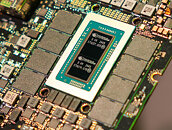
Source: SemiAccurate
Add your own comment

70 Comments on NVIDIA's N1x CPU Hits New Roadblock: Launch Pushed to Late 2026

#51
Doctor Who
Nvidia is moving with ARM because that is all they have to go with to enter the CPU space. They have a battle up ahead because AMD isn't going to sit idle nor will ARM defeat anything but itself.
Posted on Reply
#52
Rightness_1
Super XPNvidia is moving with ARM because that is all they have to go with to enter the CPU space. They have a battle up ahead because AMD isn't going to sit idle nor will ARM defeat anything but itself.
Exactly, some people were fooled by Intel only being able to achieve 1-2% IPC improvements in their CPU's for 10+ years. Many Intel shills made excuses, mostly claiming that x86 was at it's end and could not be pushed any further.

AMD finally has proven that to be a complete lie. x86 IPC has more than doubled since those days, and are showing no sign of stopping, even Intel suddenly remembered how to design a CPU again.

Again, the biggest problems with x86 are Windows, and badly made software (Adobe especially) that has become reliant on brute force to get it's work done. This is why I simply do not understand the Apple performance brainwashing that goes on in places like this. People post benchmarks from software that has been highly optimised and takes advantage of the hardware on offer to it and use the results to say x86 is dead, it can't ever work like this, ARM is God etc etc. Most x86 software for Windows barely knows what time it is, let alone what hardware is available to it and to actually take advantage of it, making comparison between the platforms meaningless - it's not the hardware's fault.

I do not want to take anything away from Apple, they make easily the best SOC in the world, (and the worst GPU BTW) and the upcoming M5 series is going to be amazing and far more cutting edge than Zen 6 etc, but these Apple SOCs cost a fortune to make, and are far more complex than any x86 CPU, but it is only available on Apple platforms, and only with macOS. That alone kills the available market to purchase it, and makes it completely irrelevant for 90% of the market.

But saying all this, I will also say that AMD have gotten lazy again. Yes they push the IPC by 10% or so each two years, they also push clockspeeds too, but they add nothing to the CPU's underlying features. Why no standardised NPU on the Ryzen desktop range? Why no dedicated video hardware compression/decompression...? AMD needs to add features to their CPU's to make them more Apple SOC like. If they standardised more hardware acceleration of common tasks into their CPU's, then Microsoft could build on that and make it work in Windows, but AMD is too lazy to push the platform to where it needs to be. I hope it won't be too late by the time they realise this.

EDIT: I just came accross this announcement from CDProject Red...

Cyberpunk 2077 can achieve 60FPS at 1440p native resolution without RT on an Apple M4 Max with 36 GB of memory. That's simply awful.
Posted on Reply
#53
ThomasK
renz496Nvidia become 4 trillion company because they being smart on which market they seriously want to go after rather than just blindly throwing billions on it hoping it will shift to their way. It is the mistake intel did a decade ago that ruined intel.
Very smart of Nvidia trying to join the ARM laptop market, it's in such high demand, right? /s

Qualcomm should know, it is selling like hotcakes.
renz496It is the mistake intel did a decade ago that ruined intel.
Intel's biggest mistake was not adopting D-EUV tools early on. Now it can't catch up to TSMC anymore.
Posted on Reply
#54
ncrs
Rightness_1But saying all this, I will also say that AMD have gotten lazy again. Yes they push the IPC by 10% or so each two years, they also push clockspeeds too, but they add nothing to the CPU's underlying features.
They added AVX-512 in Zen 4, improved it to full 512-bit in Zen 5 desktop/server variants. The extension is supported on every Ryzen from laptop to server. At the same time Intel removed it (for now - until AVX10).
Rightness_1Why no standardised NPU on the Ryzen desktop range?
Probably because the Zen 5 IO die was reused from Zen 4, and was itself designed years before its release in 2022? I expect Zen 6 will introduce a NPU to the IO die, especially since it's rumored to be on a smaller process.
Rightness_1Why no dedicated video hardware compression/decompression...?
That is present since Zen 4 introduced the iGPU to the desktop IO die, and was always present in laptop versions. Server IO die doesn't have it.
Rightness_1AMD needs to add features to their CPU's to make them more Apple SOC like. If they standardised more hardware acceleration of common tasks into their CPU's, then Microsoft could build on that and make it work in Windows, but AMD is too lazy to push the platform to where it needs to be. I hope it won't be too late by the time they realise this.
Apple controls the hardware completely and are totally vertically integrated with their software stack. That is very hard to achieve in the PC space, and I'm not even convinced Microsoft could be trusted with that. Even if AMD itself designed a new improved platform with all bells and whistles they would have to convince Microsoft to support it, and historically MS wouldn't want to be in this position. They want to dictate, not follow ;)
Posted on Reply
#55
dyonoctis
Rightness_1Exactly, some people were fooled by Intel only being able to achieve 1-2% IPC improvements in their CPU's for 10+ years. Many Intel shills made excuses, mostly claiming that x86 was at it's end and could not be pushed any further.

AMD finally has proven that to be a complete lie. x86 IPC has more than doubled since those days, and are showing no sign of stopping, even Intel suddenly remembered how to design a CPU again.

Again, the biggest problems with x86 are Windows, and badly made software (Adobe especially) that has become reliant on brute force to get it's work done. This is why I simply do not understand the Apple performance brainwashing that goes on in places like this. People post benchmarks from software that has been highly optimised and takes advantage of the hardware on offer to it and use the results to say x86 is dead, it can't ever work like this, ARM is God etc etc. Most x86 software for Windows barely knows what time it is, let alone what hardware is available to it and to actually take advantage of it, making comparison between the platforms meaningless - it's not the hardware's fault.

I do not want to take anything away from Apple, they make easily the best SOC in the world, (and the worst GPU BTW) and the upcoming M5 series is going to be amazing and far more cutting edge than Zen 6 etc, but these Apple SOCs cost a fortune to make, and are far more complex than any x86 CPU, but it is only available on Apple platforms, and only with macOS. That alone kills the available market to purchase it, and makes it completely irrelevant for 90% of the market.

But saying all this, I will also say that AMD have gotten lazy again. Yes they push the IPC by 10% or so each two years, they also push clockspeeds too, but they add nothing to the CPU's underlying features. Why no standardised NPU on the Ryzen desktop range? Why no dedicated video hardware compression/decompression...? AMD needs to add features to their CPU's to make them more Apple SOC like. If they standardised more hardware acceleration of common tasks into their CPU's, then Microsoft could build on that and make it work in Windows, but AMD is too lazy to push the platform to where it needs to be. I hope it won't be too late by the time they realise this.
Everyone but Apple and ARM is proceeding like this : "we must make hardware that's very good in the datacenter. Once that's done we will try to retrofit that hardware for laptops". Apple knows that many of their customers are video editors, so stuff like prores hardware acceleration is something that they can afford to do not only because they have bigger margins, but they also know that this feature will be appreciated. For AMD that would be too niche, and not guaranteed to be profitable(and people are already unsure about the NPU.) Most of the features that AMD is adding either triclkes down from the datacenter (X3D) or can be sold to gamers.

Btw, apple computers never offered the best GPU for the price, even when they still used Nvidia/AMD. Their laptops never used anything better than a x60 for a very high cost. On the iMac, at best, you got mid-range gaming PC performance for a very high price. The absolute peak performance for the $ might be low, but the efficiency is crazy. Theit GPUs aren't bad, they just don't chase peak performance at all cost.

And they probably have little incentive to do so: the only customers on the Apple side that would care about very high GPU perf, already migrated en masse to the PC once Apple decided to ban nvidia from their computers: 3D artists. and those guys are big workstation users, which is something that Apple is slowly leaving behind (The Mac pro is still using the M2 ultra wich make it slower than the mac studio).

Small quiet devices is what they want to do, a big +300watts workhorse GPU isn't on the table.
Posted on Reply
#56
john_
PizderkoWe got 2 cpus running at 2Ghz of frequency;
1 is ARM and the other one is x86_64;
to make 1+1=2 at base frequency of 2Ghz on x86_64 we need 15 instructions!
to make 1+1=2 at base frequency of 2Ghz on ARM we need 5 instructions!
My apologies for using AI.
how many instructions an arm cpu must do to calculate 2+2?

Answer
An ARM CPU would need at least three instructions to calculate 2 + 2. One instruction to load the value 2, another to add the value 2, and a third to store the result.
how many instructions an x86-64 cpu must do to calculate 2+2?

Answer
An x86-64 CPU would typically require a minimum of two instructions to calculate 2 + 2: one to load the immediate value 2 into a register, and another to add 2 to that register
Posted on Reply
#57
Lew Zealand
Rightness_1EDIT: I just came accross this announcement from CDProject Red...

Cyberpunk 2077 can achieve 60FPS at 1440p native resolution without RT on an Apple M4 Max with 36 GB of memory. That's simply awful.
What is your point? That Apple has the fastest iGPU on the planet? The Radeon 8060s only gets 48fps at 1440p in CP2077:

Are you implying that a laptop not intended for gaming that gets a brand new gaming port doesn't have the performance of a 4090? Are you implying that if Windows switched to ARM that adding in a PCIe interface for dGPUs is impossible? This already exists.

Windows could easily run as well on ARM or better than x86 if the resources are put in to designing a good CPU like the Apple M# and Windows is ported to native ARM. Circling the wagons around x86 doesn't matter. I have an AMD R7 7840HS Mini PC and it's efficiency is fantastic and I wish more laptops and desktops could be built from this design, and future designs with some performance (cache) improvements will be great but you know what? I also want to know if an ARM design could be even better. Not some half-assed crap design but something with the effort Apple put into the M# CPUs. Windows deserves that option.
Posted on Reply
#58
TheinsanegamerN
Lew ZealandWhat is your point? That Apple has the fastest iGPU on the planet? The Radeon 8060s only gets 48fps at 1440p in CP2077:
The 8060s is also weaker than the M4 max iGPU.
Lew ZealandAre you implying that a laptop not intended for gaming that gets a brand new gaming port doesn't have the performance of a 4090?
He never said this
Lew ZealandAre you implying that if Windows switched to ARM that adding in a PCIe interface for dGPUs is impossible? This already exists.
He never said this either.
Lew ZealandWindows could easily run as well on ARM or better than x86 if the resources are put in to designing a good CPU like the Apple M# and Windows is ported to native ARM. Circling the wagons around x86 doesn't matter. I have an AMD R7 7840HS Mini PC and it's efficiency is fantastic and I wish more laptops and desktops could be built from this design, and future designs with some performance (cache) improvements will be great but you know what? I also want to know if an ARM design could be even better. Not some half-assed crap design but something with the effort Apple put into the M# CPUs. Windows deserves that option.
We've seen native ARM windows before. It didnt go well. Everything else here is pure conjecture.
Posted on Reply
#60
Lew Zealand
What's the point of posting screencaps of random fanboy tweets where the guy can't even add 2 easy numbers together?
More than Apple and Amazon together.
I'll make it easy: $3T + $2T = $5T. Not $4T. I'm sure the rest of the cheerleading is equally useful.
Posted on Reply
#61
lexluthermiester
OnasiYeah, no. Not in our lifetime. x86 is not going anywhere, neither is ARM.
This. Both are are to stay. That's just the real world.
Posted on Reply
#62
Shrek
Rightness_1I see no reason why ARM should be in high-end consumer PC's and laptops.
I thought ARM was more energy efficient.
Posted on Reply
#63
chrcoluk
Software is king, if it cant run x86 software performantly, it will fail on desktop.
Posted on Reply
#64
Simon.J
ncrsAPX is not a revolution, nor is it making x86 RISC-like. It's doubling the number of general purpose registers, modifying the instruction encodings, allows for three-operand instructions, adds new branch and memory operation instructions. If anything it's making x86 even more complex.
There are clear benefits to APX, but it requires compiler modifications and recompilation of software to benefit from it.
Internally modern x86 cores are RISC-like anyway, so the whole RISC vs. CISC debate has long been obsolete due to that, and traditionally RISC architectures like ARM adding CISC-like features to their design.
Then what stops Intel/AMD to emulate legacy ISA within new APX/AVX10.2 ISA, cause anyway you have to recompile binaries?
Posted on Reply
#65
ncrs
Simon.JThen what stops Intel/AMD to emulate legacy ISA within new APX/AVX10.2 ISA, cause anyway you have to recompile binaries?
I'm not sure I understand your question.
An APX CPU will be able to run "legacy" x86 and amd64/x86-64 code natively without any changes to binaries. It will be fully backward compatible.
However if software wants to use the new features of APX it will have to be recompiled, which will break binary compatibility with older x86/amd64/x86-64.
Posted on Reply
#66
Simon.J
ncrsI'm not sure I understand your question.
An APX CPU will be able to run "legacy" x86 and amd64/x86-64 code natively without any changes to binaries. It will be fully backward compatible.
However if software wants to use the new features of APX it will have to be recompiled, which will break binary compatibility with older x86/amd64/x86-64.
I meant at hardware level, if you remember x86S supposed to get rid of some legacy stuff and now with next evolution of x86 ISA they (fake duopoly) can run by moving legacy to software emulation.
Posted on Reply
#67
ncrs
Simon.JI meant at hardware level, if you remember x86S supposed to get rid of some legacy stuff and now with next evolution of x86 ISA they (fake duopoly) can run by moving legacy to software emulation.
x86S isn't happening - the industry rejected it and Intel terminated the project. And even if it did happen the parts that were going to be removed don't matter to normal users. Ancient 16-bit applications can't run, but they already can't under 64-bit Windows. 32-bit applications can run under 64-bit OS just like they can run now. 32-bit OS can't be booted, but Windows 11 doesn't even have a 32-bit version.

Even without x86S Intel made CSM (the BIOS compatibility layer that allowed you to, for example boot MS-DOS) not mandatory in 2020, and some motherboard vendors don't even ship it in new products. So you can argue that legacy cruft was already removed to some extent from modern x86.
Posted on Reply
#68
randomdude9182
Deleted member 250678To the people saying that x86_64 vs ARM ISA argument was always obsolete, I need to ask you this particular thing.

We got 2 cpus running at 2Ghz of frequency;
1 is ARM and the other one is x86_64;
to make 1+1=2 at base frequency of 2Ghz on x86_64 we need 15 instructions!
to make 1+1=2 at base frequency of 2Ghz on ARM we need 5 instructions!

At this point!!!
because the base frequency is always the same on both - then what do you think?
- Which CPU will finish this operation for first?

P.S: If you understood the answer to this question, then you can already understand the reasoning for which x86_64 must completely disappear from the face of the earth.
last time I checked, any cpu UARCH takes 1-2 instructions to add. Source for the 5-15 number?
Oh and try doing anything that isnt basic addition, youll quickly find that X86 can do much more complex things per cycle. There is much more nuance than just "blah blah blah Arm better faster haha". As an example, CISC Cpus for decades break down CISC --> RISC seince the pentium pro (1995). The only true metric is benchmarks, they are really are your only bet for real world, ACTUAL performance metrics..

And the performance of the M series in terms of battery efficiency also kind of falls apart when you realize TSMC and Apple have... well they kinda have a huge deal beacuse Apple always makes customers pay upfront for insane prices (seriously, 1599$ for entry level laptop with multithread equivlent of a zen4 refresh between 8840HS - 8845HS laptops which have a simmilar tdp (those chips being on 4nm whilst Apples on a "2.4" nm equivlent node, and laptops with those chips being 500-600 dollars cheaper) , and 16gb of ram is bad even with the huge ram price disperity is WILD) so TSMC gets better proffit margins, and has for a long time favored letting Apple use the bleeding edge nodes they make for whatever.
This huge node difference is what makes Apple's architecture more efficient. However, if we fairly compare node-node and remove that node advantage, Apple's advantage dissapears and really starts to make Apple look like the laughing stock. Comparing 5nm "Zen4" (non refresh, which was produced on 4nm) with 5nm "M2" series chips, on the highest tier chips, the performance difference on Apple's 24 core (yes, 24 cores, 16 P and 8 E cores) 150W- on average under max super stress cpu load is barley faster in single thread (~4%) and LOOSES 12% in multithread to the 75w (which can spike to 150 watts, but isnt constantly drawing 150 watts under a heavy load like the m2 ultra) 7945hx3d 16 core cpu.
Sources (will provide more):
www.cpubenchmark.net/compare/5533vs5799/Apple-M2-Ultra-24-Core-vs-AMD-Ryzen-9-7945HX3D


As mentioned on another comment, geekbench is kind of an outlier. I have personally seen this result too, its kind of odd. I did some digging on the head of geekbench, John Poole, who is a very, very biased person and a huge apple fan. I personally belive that he has done software trickery to make the Macs look way better than they a ctually are.
dyonoctisValue-oriented hardcore gamers are certainly not the target atm. And certainly not the desktop. Battery life is only one part of the equation; performance on battery matters as well, and for some reason, X86 is really bad at that. AMD and Nvidia are trying to make their GPUs work for portable devices, but they really weren't designed for that. So yhea, X86+dGPU stands at the pinnacle of performance, but once you unplug the laptop, it's mediocre. Sometimes, only getting a third of the performance offered by a Macbook. I remember seeing graphs showing that Lunar lake was a bit better, but I can't seem to find that review
X86 powered on battery is a software, not a hardwere issue, lol. Windows loves to use as little power AS possible, and will really hamper the cpu in order to stop it performing. On linux, this shouldnt happen. PS: Windows is extremly inneficent and using linux can improve CPU performance by crazy amounts, Im talking 40% in some cases (Bazzite) beacuse the windows squeduler is a POS. Linux just seems to use the CPU a hell of a lot better. Even the power draw can go up by a few watts beacuse the cpu is better used compared to windows.
Posted on Reply
#69
randomdude9182
Rightness_1Exactly, some people were fooled by Intel only being able to achieve 1-2% IPC improvements in their CPU's for 10+ years. Many Intel shills made excuses, mostly claiming that x86 was at it's end and could not be pushed any further.

AMD finally has proven that to be a complete lie. x86 IPC has more than doubled since those days, and are showing no sign of stopping, even Intel suddenly remembered how to design a CPU again.

Again, the biggest problems with x86 are Windows, and badly made software (Adobe especially) that has become reliant on brute force to get it's work done. This is why I simply do not understand the Apple performance brainwashing that goes on in places like this. People post benchmarks from software that has been highly optimised and takes advantage of the hardware on offer to it and use the results to say x86 is dead, it can't ever work like this, ARM is God etc etc. Most x86 software for Windows barely knows what time it is, let alone what hardware is available to it and to actually take advantage of it, making comparison between the platforms meaningless - it's not the hardware's fault.

I do not want to take anything away from Apple, they make easily the best SOC in the world, (and the worst GPU BTW) and the upcoming M5 series is going to be amazing and far more cutting edge than Zen 6 etc, but these Apple SOCs cost a fortune to make, and are far more complex than any x86 CPU, but it is only available on Apple platforms, and only with macOS. That alone kills the available market to purchase it, and makes it completely irrelevant for 90% of the market.

But saying all this, I will also say that AMD have gotten lazy again. Yes they push the IPC by 10% or so each two years, they also push clockspeeds too, but they add nothing to the CPU's underlying features. Why no standardised NPU on the Ryzen desktop range? Why no dedicated video hardware compression/decompression...? AMD needs to add features to their CPU's to make them more Apple SOC like. If they standardised more hardware acceleration of common tasks into their CPU's, then Microsoft could build on that and make it work in Windows, but AMD is too lazy to push the platform to where it needs to be. I hope it won't be too late by the time they realise this.

EDIT: I just came accross this announcement from CDProject Red...

Cyberpunk 2077 can achieve 60FPS at 1440p native resolution without RT on an Apple M4 Max with 36 GB of memory. That's simply awful.
Zen6 is meant to be a huge improvment, 10% ipc, 30% clockspeed increase, huge node jump, better die interconnect, 50% higher core counts (beacuse of 12c chiplets) meaning it could have 45% better single thread and id say 60-70% more multithread. The interconnect will also increase efficiency by quite a bit. Even zen6c is targeting 4.5ghz with higher ipc than zen5, and zen6c cores might be as fast as 5ghz zen5 core. Also there is a rumor about stacked l2 cashe but idk about that one. This will put zen6 13% ahead of the m5's current offerings (compared passmark with the 9955hx vs the m5 10 core). As mentioned before, the m5 10 core is basically on a 2.4 nm node, I dont think the m6 series will pull >13% in single thread, so zen6 might actuall beat apple's next chip in single and multithread, and with the new interconnect, it could do it at lower power draw. And zen7 will have another 8 cores added for 32 cores and 64 threads. And that is expected to be on tsmc's 1.4nm node with a 25% ipc increase.
Posted on Reply
#70
Simon.J
randomdude9182Zen6 is meant to be a huge improvment, 10% ipc, 30% clockspeed increase, huge node jump, better die interconnect, 50% higher core counts (beacuse of 12c chiplets) meaning it could have 45% better single thread and id say 60-70% more multithread. The interconnect will also increase efficiency by quite a bit. Even zen6c is targeting 4.5ghz with higher ipc than zen5, and zen6c cores might be as fast as 5ghz zen5 core. Also there is a rumor about stacked l2 cashe but idk about that one. This will put zen6 13% ahead of the m5's current offerings (compared passmark with the 9955hx vs the m5 10 core). As mentioned before, the m5 10 core is basically on a 2.4 nm node, I dont think the m6 series will pull >13% in single thread, so zen6 might actuall beat apple's next chip in single and multithread, and with the new interconnect, it could do it at lower power draw. And zen7 will have another 8 cores added for 32 cores and 64 threads. And that is expected to be on tsmc's 1.4nm node with a 25% ipc increase.
Well, I really hope for AMD to implement APX ISA extension which in away it’s an evolution on its own for x86 ISA.
Posted on Reply
Add your own comment
Nov 14th, 2026 19:15 CST change timezone

New Forum Posts

Popular Reviews

TPU on YouTube

Controversial News Posts