Tuesday, August 5th 2025

AMD's Next-Gen AM6 Socket Expected to Boost Pin Count to 2100 While Matching AM5 Size
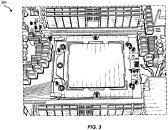
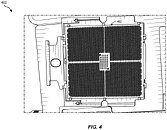
AMD's next AM6 socket will have a much higher pin count while still working with current cooling systems. New patents filed by AMD (US 20250149248) and reports from Bits&Chips cited by Wccftech show that the socket will have 2100 pins up from AM5's 1718 pins. This 22% jump in pins could lead to better performance. More pins might allow for power delivery above 200 watts beating AM5's 170-watt limit. Extra pins could also mean more data lanes and faster input/output supporting PCIe 6.0 in the future. However, we might not see widespread use of PCIe 6.0 until about 2030. Keep in mind that while patent diagrams suggest increased pin density, some details remain speculative since certain illustrations may reference server-grade SP5 sockets rather than mainstream consumer platforms. The actual implementation may differ from current projections, particularly regarding memory channel configurations.
AMD seems to keep AM6 the same size as AM5, so it will work with existing AM5 and AM4 coolers. Still, third-party companies might develop new cooler versions that work best with Zen 7 chip layouts and heat needs. The switch to the new socket will take time since AM5 will still support the upcoming Zen 6 chips giving the platform about three more years of life. We expect to see AM6 launch with the Zen 7 design marking AMD's next big socket change.
Sources:
Wccftech, Bits&Chips
AMD seems to keep AM6 the same size as AM5, so it will work with existing AM5 and AM4 coolers. Still, third-party companies might develop new cooler versions that work best with Zen 7 chip layouts and heat needs. The switch to the new socket will take time since AM5 will still support the upcoming Zen 6 chips giving the platform about three more years of life. We expect to see AM6 launch with the Zen 7 design marking AMD's next big socket change.


49 Comments on AMD's Next-Gen AM6 Socket Expected to Boost Pin Count to 2100 While Matching AM5 Size
I built this system last winter, she hasn't had an easy life..
You want it cheaper? Sure. Ask Intel to be competitive and release new Xeons. You want it even more cheap? Absolutely. Ask Nvidia, Qualcomm and Apple to make their first ever DIY products with four channels.
There are good reasons why even some of the richest companies dare not venture into DIY desktop space in the first place, let alone offer diverse CPUs with varied memory channels. Think about it.You can use eGPU enclosure if you need more.
Enjoy crippled eGPU and 3x prices, we are here thanks to you
If you want lower prices, competitors need to be ready to invest into developing and offering equivalent DIY platforms to what AMD offers. You know this basic market rule, so don't pretend. And spare me from personal comments. Reported to mods.
To the rest of you, please carry on in a constructive fashion. Thanks! :toast:
resources.altium.com/p/ddr5-vs-ddr6-heres-what-expect-ram-modules
LPDDR6 is indeed a 24b channel composed of 2 12b subchannels (though no ECC at all), so there is a rather thigher-than-normal chance that we would be seeing 24b data subchannels on DDR6 proper. Still, I'm not getting my hopes up. Much prefer getting my hopes up for CXL suportcoming to the consumer socket and dropping an fat 5.0×8 (or ideally 6.0×8) memory expansion card in there.Sounds to me like said redditors did not install updated firmware, because ASRock has already publicly admitted fault (they shipped too high voltages) and have already released fixed firmware.
Personally I've got a 9800X3D on an Asus X670E board and aside from being a bit temperamental with memory training (despite the super-basic JEDEC 5600 setup with ECC enabled.. or ECC is the part causing the temperamentalness? 🤔). That said, every firmware update incrementally made it batter, to the point that these days it's pretty dang reliable, though I will say that there is still room for improvement compared to how utterly bulletproof my X99, X79 and Z77 systems were with similarly lax memory setups (minus the suicidal Asus X99, ofc).Dang, you beat me to it 🤣
Since you are running ECC, maybe you should look into logging ECC corrections and errors if you can figure out how to do that. I am wondering if the ECC correction and error rates could be a possible early warning indicators.
I personally hope ECC will become standard on desktops, or at least more adoption that the current measly situation. With more higher clocked kits for desktop platforms (Registered, Unbuffered), I don't mean very high clocks, but something good above the JEDEC standard.
ECC definitely has no bearing on the failures, I just added it for context on what my history with UEFI updates has been with my board - namely that things got incrementally better with each update.It's specifically during POST/pre-POST memory link training, so well before ECC functionality would be a factor. What might be a factor is that EC4 ECC UDIMMs are using 36-bit wide subchannels rather than the usual 32-bit wide subchannels of non-ECC memory, so it would be a bit tougher to train, hence my speculation.
In case you missed this part:I have 2 AM4 systems running right now, and a third in boxes.
HUB has tested CPU bottleneck and only with 4090-5090 do you start to get to the point when AM4 based X3D is holding back the GPU.
If you're using 5070 Ti/9070 XT or slower then AM4 with Zen 3 is still viable.
As 5800X3D owner i dont think even 9800X3D is fast enough to justify an upgrade. Im waiting for Zen 6 X3D on AM5. Likely 2027. Hopefully DDR5 prices have fallen back to some normalcy by then. Right now is a bad time to upgrade to anything unless you literally have no working PC.
Lets look at your 5900X for instance. Chances are, you are not running it like how I was. 260/180/240 +200 -25AC. At full multicore PBO load, 5900X can do 4500MHz with Linpack. 9900X at 310/210/240 can do the same work at 5400MHz. The shear clock speed bump, then IPC is what helps make AM5 so fast. I do not hate AM4, it had a good run, heck I spent a lot of money on AM4. But.. AM5 is faster. Only 3-4 cores on my 5900X can do 5150, and max average effective clock is usually around 4600-4700MHz. My 9900X is 1GHz faster, for sure. And instead of only a few cores being able to hit top speed, almost the entire CCD0 hits 5850, and average effective is 5650.
when you argue with a 12 or 16 cor eryzen 5000 series cpu, you are a multi core user.
Gentoo toolchian wise my previous ryzen 5800x, a 8 core processor is nearly identical, but a bit slower as my ryzen 7600x, a 6 core without DRAM tuning. I did compare in the past a heavily tuned 5800x vs a out of the box experience Ryzen 7600x with a very bad motherboard choice.
Ryzen 5000 is not bad when you have a high core count, 12 or 16 core processor and you are using multi core software. Single Core Wise you may loose without checking 5800X3d vs 7600x.
I bought the cheapest only offer in may 2023, a ryzen 7600x. That placeholder cpu does a very good job.