Tuesday, August 5th 2025

AMD's Next-Gen AM6 Socket Expected to Boost Pin Count to 2100 While Matching AM5 Size
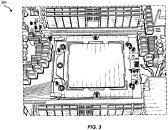
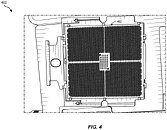
AMD's next AM6 socket will have a much higher pin count while still working with current cooling systems. New patents filed by AMD (US 20250149248) and reports from Bits&Chips cited by Wccftech show that the socket will have 2100 pins up from AM5's 1718 pins. This 22% jump in pins could lead to better performance. More pins might allow for power delivery above 200 watts beating AM5's 170-watt limit. Extra pins could also mean more data lanes and faster input/output supporting PCIe 6.0 in the future. However, we might not see widespread use of PCIe 6.0 until about 2030. Keep in mind that while patent diagrams suggest increased pin density, some details remain speculative since certain illustrations may reference server-grade SP5 sockets rather than mainstream consumer platforms. The actual implementation may differ from current projections, particularly regarding memory channel configurations.
AMD seems to keep AM6 the same size as AM5, so it will work with existing AM5 and AM4 coolers. Still, third-party companies might develop new cooler versions that work best with Zen 7 chip layouts and heat needs. The switch to the new socket will take time since AM5 will still support the upcoming Zen 6 chips giving the platform about three more years of life. We expect to see AM6 launch with the Zen 7 design marking AMD's next big socket change.
Sources:
Wccftech, Bits&Chips
AMD seems to keep AM6 the same size as AM5, so it will work with existing AM5 and AM4 coolers. Still, third-party companies might develop new cooler versions that work best with Zen 7 chip layouts and heat needs. The switch to the new socket will take time since AM5 will still support the upcoming Zen 6 chips giving the platform about three more years of life. We expect to see AM6 launch with the Zen 7 design marking AMD's next big socket change.


49 Comments on AMD's Next-Gen AM6 Socket Expected to Boost Pin Count to 2100 While Matching AM5 Size
Please AMD PLEASE don’t fall into this same trap with AM6. You’re literally the premium CPU platform now. A premium platform which deserves the best cooling performance. This sort of regression doesn’t make any sense!
The quadra-sected pin arrangement, Strix Point's 256-bit memory bus, and the rumor that the next IOD has dual memory controllers...
has me very hopeful for 'quad-channel' RAM on non-HEDT desktops.
For that reason alone, I think the potential is precisely 0.
If AM6 follows AM5 then it will support at least three generations of CPU's (AM4 supported four) spanning at least 6 years.
Up until nearly the 2040's.
Yes PCIe 6.0 will likely appear on AM6 at some point, but im not sure it will be at launch.
3rd memory channel is never going to happen and yes two channels will be enough to feed 24c/48t CPU's.
Nevertheless, most cpu cooler vendors will release an upgrade kit and likely for free. Or you could put some plastic washers and call it a day.
The thermal paste marking of the ryzen 7600x revealed a lot of space left on the Be quiet dark rock pro 5. cooler bottom plate.
the am5 cooler are much bigger as the ryzen 7600x..
I read it as they want to reuse existing am4 = am5 coolers.
I think it was the same with the noctua nh-d15. The offset mounting bracket which i use show in both positions too much unused cooler space.
With am4 ryzen 5800x (several), 3700x, ryzen 3 3100 i also saw a lot of unused cooler bottom plate space.
--
AM6 is cheap consumer platform. I would not expect a third memory channel. There have to be a difference to the better threadripper and milan processors. You may replace cheap with consumer or entry level
We've been at the point of marginal gains for coolers for the past ~10 years or so in terms of 'technology' for cooling. As seen by the original Noctua D15 still being near the top of the charts for air coolers 11 years after release.
What they needed to do (they won't because of lack of expertise and too much stupidity / unnecessary conservatism) was to redesign the CPU with its IHS to be as thin as possible, and work with the coolers' manufacturers in order to introduce vapour chambers and AirJet technology, especially when they plan to get higher performance by simply lifting the TDP of the processors.
And I can look at your own reviews, and prove that what I wrote is the best and true.
The difference between a very expensive liquid cooler and a high-end heat pipes cooler, both on AM5:
Maximum heat capacity (heat load to avoid thermal throttling 95°C):
www.techpowerup.com/review/be-quiet-pure-rock-pro-3-black-dual-tower-cpu-air-cooler/7.html
Basically bringing in a something similar to the old Intel X58 chipset that had 3 memory channels and enough lanes to support Quad SLI/X-Fire if one wanted, but in a modern form. I loved the massive amount of I/O possible with my old X58A-UD9 Gigabyte board, which can only be replicated in modern times via a TR/EPYC build.
I can pick the 5900X/XT for 2-3x performance and the 5700X3D introduces X3D tech that competes with AM5 offerings.
AM5 still has enough weird things going on that I will never be romanced into adopting it even if the market crashes.
AM3+ is still fast enough that I often consider swapping out my Ryzen for the FX-8370 to do VR recording/streaming.
AM3 has completely fallen behind with its common quad core habitat and ultra rare 6 core variants.
AM2 can still compete in the retro gaming sphere but competes best in the alternative NAS market.
Everything else has completely fallen off. Bad scraps from boomers that can barely use the Internet.
Even as an overclocker my compass tends to spin but stops often enough that I will go for "stability."
CPU burnup, ultra high memory price, board partners roaching out, AM5 just doesn't look that great.
This mean that "some" AM5 coolers might not be compatible with AM6, not because of the surface design, but because of the mounting mechanism. They could just have an AM6 specific mount and get with it, but the larger surface of AM6 will probably means a new cooler design.
Edit: The FIG3 pictures clearly shows more than 2 DIMM channels, this socket could be SP6's successor.Yes and no.
DDR5 now has a 2x32bit bus per DIMM, so it's technically a 2x DIMM setup like most of us know as Dual Channel is actually a Quad Channel, though the technical term I prefer is each DIMM have 2 sub channels, a 2x DIMM (dual channel) system have a total of 4x subchannels.
DDR6 is rumoured to have a 4x 24bit per DIMM, so If I understood the rumours correctly (which I might not), a single DIMM will have a quad channel, a dual DIMM will be Octal Channel. The CPUs will have 2x IMCs, each IMC will handle a single DIMM (4x 24bit).
You might have noticed that 2x 32bit in DDR5 is 64bits per DIMM, just like how DDR4 and lower was. But DDR6 having 4x 24bits means a total of 96bit per DIMM, which is an increase in bus width as well.
Separating the bus into sub channels reduces the challenges with wider bus in higher frequencies. In DDR6, they reducing the subchannels from 32bit to 24bits, and increased the number of subchannels to 4. This allows them to further increase the speed more. No wonder DDR6 requires a new slot design, it's not just the T topology of current DIMM slots limiting the frequency, but the increased bus width requires more contacts too, so they're considering CAMM2 sockets.
The two main concerns I have regarding CAMM2 sockets are:
1. Desktop platform will probably have a single CAMM2 socket as it can replace 2x DIMMs (Natively Dual Channels). Upgrading RAM will mean replacing the old module with a new one, unlike now where you can add extra DIMMs for more capacity (assuming the guy doesn't care about RAM speed).
2. The perpendicular design of the CAMM2 module means larger area on the motherboard, which will be more challenging with SFFs, especially the mini ITX designs, some might opt for backside replacement, but not all cases will support this, and heat management might be an issue.