Wednesday, August 20th 2025

Upcoming Valve Fremont Console Surfaces on Geekbench with 6-Core AMD Zen 4 Processor
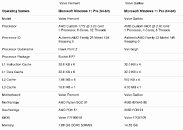
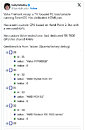
Valve might be gearing up for its next big piece of gaming hardware, codenamed Fremont, and early benchmark leaks give us a first detailed picture of what's inside. The system showed up on Geekbench with a custom AMD chip (Hawk Point 2 family), built on the Zen 4 architecture and produced on a 4 nm process. It looks to feature 6 cores and 12 threads running at 3.2 GHz base clock with boost frequency up to 4.8 GHz. On the memory side, the chip carries 16 MB of L3 cache and 6 MB of L2 cache. Graphics power comes from a Radeon RX 7000-series GPU (RDNA 3), likely offering a big step up from the Steam Deck's older RDNA 2 setup.
In Geekbench 6, Fremont scored 2412 points in single-core and 7451 points in multicore. Interestingly, the tested unit only had 8 GB RAM (DDR5-5600), less than the Steam Deck's 16 GB LPDDR5, yet still nearly doubled performance thanks to the newer architecture. For context, the Steam Deck and Steam Deck OLED use a Zen 2-based chip with 4 cores, 8 threads, base 2.8 GHz, boost 3.5 GHz, plus just 4 MB L3 and 2 MB L2 cache. Comparing the two, Fremont's CPU alone looks like a massive leap forward. The GPU bump from 8 compute units of RDNA 2 to an RX 7600-level RDNA 3 design is also significant.


 While some rumors suggested Valve might refresh its handheld with an "Aerith Plus" chip, the evidence points elsewhere. Fremont seems designed more like a console than a handheld, possibly tied to a new wave of SteamOS-based living room devices.
If these specs hold, Valve's Fremont could deliver a console-class experience with far stronger CPU and GPU performance than the Steam Deck. All eyes are now on Valve for an official reveal.
Sources:
club386, via reddit, @SadlyItsBradley on X
In Geekbench 6, Fremont scored 2412 points in single-core and 7451 points in multicore. Interestingly, the tested unit only had 8 GB RAM (DDR5-5600), less than the Steam Deck's 16 GB LPDDR5, yet still nearly doubled performance thanks to the newer architecture. For context, the Steam Deck and Steam Deck OLED use a Zen 2-based chip with 4 cores, 8 threads, base 2.8 GHz, boost 3.5 GHz, plus just 4 MB L3 and 2 MB L2 cache. Comparing the two, Fremont's CPU alone looks like a massive leap forward. The GPU bump from 8 compute units of RDNA 2 to an RX 7600-level RDNA 3 design is also significant.


If these specs hold, Valve's Fremont could deliver a console-class experience with far stronger CPU and GPU performance than the Steam Deck. All eyes are now on Valve for an official reveal.
37 Comments on Upcoming Valve Fremont Console Surfaces on Geekbench with 6-Core AMD Zen 4 Processor
Are they trying to do consoles or is another way to try bring steamos to masses? I assume SteamOS is still mostly amd gpu support and not nvidia
Jokes aside, this sounds great, and will all come down to pricing. Currently I game in the living room on our htpc, but if I could replace that with a mini steam thing, that'd be great.
As far as their aim, it's impossible to say at this point. Maybe it's a console alternative, the hardware is roughly the level of a PS5 or Xbox Series X. Maybe it's just a test piece to refine SteamOS on a more typical PC hardware configuration, and an actual Valvebox will come out in a year or two with newer hardware, who knows.I mean, it's still newer and about as good as what's in the Xbox Series X and base PS5. RDNA 4 silicon might make it too expensive for what Valve wants, I imagine TSMC 6nm is pretty cheap by now. And the Steam Deck shows that things like software support are much more important to success than the power of the chip. There's a plethora of handhelds now, but Windows 11 is so messy and cumbersome to use that the Steam Deck is still the best-selling one. And of course, this could just be an engineering sample. Maybe they just want to get practice optimizing SteamOS for a system with a discrete CPU and GPU, and the actual Valve Box will come in a year or two with newer hardware.This is probably exactly it. AMD's looking for any customers for their older silicon. No surprise Valve (and probably lots of other companies) are taking engineering samples and messing around with them. I don't think this is necessarily indicative of an immanent release. Maybe something will come of this, maybe not.
It's gotta be half that.
Windows 7's Home Premium edition had a memory limit of just 16 GB, so at least the new limit in place since Windows 8 is more accommodating of modern hardware.
This is a home console being sold to consumers. Windows 11 home edition supports 128 GB. This machine doesn't even come close to hitting 128 GB. Why would a home console need group policy editor?
2026 console hardware needs to upscale to 4k efficiently though which means FSR4. RX 9060 GPU, or Krackan R5 or Gorgon R5 CPU. Otherwise there's a big market for SoC upgrade kits.
There are many games that use 8 cores already, hyperthreading is not good on a fully occupied core - AND the OS and Display driver will eat a whole core or two. This should have been released 3 or 4 years ago it's so dated a low spec! This on a 4K TV screen... Good luck with that.
Nvidia on the other hand works most of the time.
Until it doesn’t, or the driver version you have has issues with proton.
I guess most people who would buy this are not psychopaths and don't want to waste hours installing NVidia drivers to get things working.
And the GPU, woof. an 8GB 7600 in 2025 is certainly a choice. It's going to immediately relegate this box to playing social games at 1080p. If it's upgradeable this box may still have value, if not it'll have a worse lifespan then the Alienware Alpha, (RIP, gone too soon).
And PS5 just got a price increase, not like they’ve been worth buying to begin with…I’m sure they’d love to use RDNA4. Problem is, there aren’t any mobile RDNA4 offerings available nor are any rumored. They’re SOL. Also, this seems to be more of a casual device. If you really wanted performance, you could just stream your main rig to your TV.
Existing Strix Point & Strix Halo mobile APUs are RDNA 3.5.
This is the minimum spec for a future-proofed new console