Wednesday, August 20th 2025

Upcoming Valve Fremont Console Surfaces on Geekbench with 6-Core AMD Zen 4 Processor
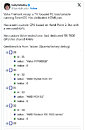
Valve might be gearing up for its next big piece of gaming hardware, codenamed Fremont, and early benchmark leaks give us a first detailed picture of what's inside. The system showed up on Geekbench with a custom AMD chip (Hawk Point 2 family), built on the Zen 4 architecture and produced on a 4 nm process. It looks to feature 6 cores and 12 threads running at 3.2 GHz base clock with boost frequency up to 4.8 GHz. On the memory side, the chip carries 16 MB of L3 cache and 6 MB of L2 cache. Graphics power comes from a Radeon RX 7000-series GPU (RDNA 3), likely offering a big step up from the Steam Deck's older RDNA 2 setup.
In Geekbench 6, Fremont scored 2412 points in single-core and 7451 points in multicore. Interestingly, the tested unit only had 8 GB RAM (DDR5-5600), less than the Steam Deck's 16 GB LPDDR5, yet still nearly doubled performance thanks to the newer architecture. For context, the Steam Deck and Steam Deck OLED use a Zen 2-based chip with 4 cores, 8 threads, base 2.8 GHz, boost 3.5 GHz, plus just 4 MB L3 and 2 MB L2 cache. Comparing the two, Fremont's CPU alone looks like a massive leap forward. The GPU bump from 8 compute units of RDNA 2 to an RX 7600-level RDNA 3 design is also significant.



 While some rumors suggested Valve might refresh its handheld with an "Aerith Plus" chip, the evidence points elsewhere. Fremont seems designed more like a console than a handheld, possibly tied to a new wave of SteamOS-based living room devices.
If these specs hold, Valve's Fremont could deliver a console-class experience with far stronger CPU and GPU performance than the Steam Deck. All eyes are now on Valve for an official reveal.
Sources:
club386, via reddit, @SadlyItsBradley on X
In Geekbench 6, Fremont scored 2412 points in single-core and 7451 points in multicore. Interestingly, the tested unit only had 8 GB RAM (DDR5-5600), less than the Steam Deck's 16 GB LPDDR5, yet still nearly doubled performance thanks to the newer architecture. For context, the Steam Deck and Steam Deck OLED use a Zen 2-based chip with 4 cores, 8 threads, base 2.8 GHz, boost 3.5 GHz, plus just 4 MB L3 and 2 MB L2 cache. Comparing the two, Fremont's CPU alone looks like a massive leap forward. The GPU bump from 8 compute units of RDNA 2 to an RX 7600-level RDNA 3 design is also significant.


If these specs hold, Valve's Fremont could deliver a console-class experience with far stronger CPU and GPU performance than the Steam Deck. All eyes are now on Valve for an official reveal.
37 Comments on Upcoming Valve Fremont Console Surfaces on Geekbench with 6-Core AMD Zen 4 Processor
According to this selling less than previous gen.
www.eurogamer.net/ps5-pro-sales-fall-behind-ps4-pros-pace-in-the-us
2026 APUs have the same RDNA 3.5.
Probably no RDNA 4 mobile discrete GPUs exist because of Halo, and it being a better choice.
I'd rather have 8 Zen 3 cores for the 8 threads a modern game asks for rather than 6 slightly faster cores that the game is now sharing resources with the OS and GFX driver, causing stuttering and uneven frame rates.
And RDNA3 is awful, in any variant. It didn't make Radeon a joke and take away most of their remaining market share for no reason! RDNA4 at least offers FSR4 and some modern low-end A.I. and RT capabilities.
This console is fine for retro gaming, but not much else. I think most people would rather pay $100 more for an 8 core CPU and a low end RDNA4 GFX chip, that is capable of playing more than just Half-life 2 and CS:go.