Thursday, August 21st 2025

Melting 12VHPWR Connector Claims its First AMD RX 9070 XT Victim
It appears as though AMD has also fallen prey to the melting 12VHPWR connector issues that plagued the NVIDIA RTX 4000 and 5000-series cards. Although very few AMD graphics card makers used the 12VHPWR connector for the Radeon RX 7000 series, adoption rates for the new connection standard increased with the release of the RX 9070 and 9070 XT. What appears to be first recorded instance of a melted 12VHPWR connector on an AMD Radeon RX 9070 XT has been posted to the r/Radeon subreddit by a user who goes by u/Savings_Opportunity3.
The issue only seems to have affected the cable on the GPU side, and the GPU seems to have survived for now, although the user remarks that one pin on the GPU power connector is darker than the rest, suggesting it has suffered spotty contact and increased heat. The GPU is an AsRock Taichi OC AMD Radeon RX 9070 XT, although many of the commenters suggest the PSU being used in the system was to blame for the melting connector. The GPU was also connected via a 3×8-pin adaptor, not straight to an ATX 3.1 PSU, and these sorts of adaptors have also been known to result in melted connectors. There have been no widespread issues with AMD GPUs and melting connectors, seemingly due to the lower power draw, but it clearly anything is possible, depending on the circumstances.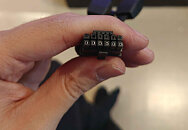
Source:
u/Savings_Opportunity3 on Reddit
The issue only seems to have affected the cable on the GPU side, and the GPU seems to have survived for now, although the user remarks that one pin on the GPU power connector is darker than the rest, suggesting it has suffered spotty contact and increased heat. The GPU is an AsRock Taichi OC AMD Radeon RX 9070 XT, although many of the commenters suggest the PSU being used in the system was to blame for the melting connector. The GPU was also connected via a 3×8-pin adaptor, not straight to an ATX 3.1 PSU, and these sorts of adaptors have also been known to result in melted connectors. There have been no widespread issues with AMD GPUs and melting connectors, seemingly due to the lower power draw, but it clearly anything is possible, depending on the circumstances.

109 Comments on Melting 12VHPWR Connector Claims its First AMD RX 9070 XT Victim
Pushing anything more than 400W though it? Not idealThat's not evidence and flawed anyway. 8 pin connectors have been around forever, so those "hits" would take into account 8 pin connectors from decades ago as well.
The 8 pin connectors basically have way too much margin of safety. No i'm not talking about the fact that it can handle 300W but spec limits it to 150W, but since it's limited to 150W the cards need 2 or 3 of them. So It's load balancing across 2 or 3 connectors by default. But the 12VHPWR spec doesn't require any load balancing and is hence nonexistent, and you're pulling 450 to 600 watts from a theoretical maximum of 660W. It's easy to see why there are way, way more reported cases of, say, 4090's melting vs 7900XTX cards, or any other recent card using multiple 8 pins.
The connector itself isn't great either with a terrible latching mechanism and feel while the sense pins are a waste of space but let's excuse all that. What's not excusable is what the connector is officially rated at. 300 or even 350 watts would've been fine and kept it in line with 8 pin's margin of safety. 600W is a joke.
3090's didn't have an issue for a reason. It pulled 350W to 400W while load balancing across 3 points and mine runs 24/7 for a few years now with zero issues. I wouldn't have the same confidence with any 12VHPWR connector that pulls anything more than 300W.
8 pin connectors fail less than 12VHPWR connectors because it's theoretically safer. The opposite happening is defying physics
12VHPWR is on it's third revision, and still has problems with melting. Once you start to label things as "hate" it's really clear you're just being defensive and don't care what the facts are.
AMD approved the connector for a 360W GPU, though it's the Taichi version, so it isn't clear if the card was OC'ed past 400W. I wouldn't trust the connector at any more than 300W unless it had per pin amperage detection.
RX 9070 XT Taichi is well made card. I was about to buy this card, but the connector killed the choice for me. Btw, Taichi can go past 400W (not talking about spikes).
It's not about there's so far only one RX 9070 XT with melted shitty connector reported ...
There are multiple reports from Nvidia cards owners that reported partially melted connector.
pcmasterrace/comments/1hatdj3/well_it_happened_to_me_4090_connector_meltingpcmasterrace/comments/1iydwsw/4090_connector_start_melting_after_2_years_and_4For anyone who would argue that those were 3rd party connectors and original one (and that's the bloody reason it melted):
www.tomshardware.com/pc-components/gpus/official-rtx-4090-power-cable-found-melted-by-reviewer-2-years-later-card-functioned-fine-despite-hidden-melted-connector
Original Nvidia connector melted after long time of usage. Slightly more current per wire than max. allowed (like 10.5A) is enough to ucase this sort of melting over longer period of time.
Now image how many partially melted connectors are out there in users' rigs and they don't know about it since melting has not caused any failures yes.
That does not mean that the connector will not melt eventually (but slowly). Even partially melted connector is damaged connector and any damaged equipment, cables (incl. connectors) must not be used.
This connector is PoS, does not matter whether it is on Nvidia card or on the one from AMD.
No, you're not safe if you card pulls less than 400W. No, you're not safe even if your card pulls just 300W.
One should understand that total power draw (sum of voltage x current on all 6 wires) does not guarantee that 9.33A limit per one wire will not be surpassed.
Without further IC to control per wire current distribution, you may as well get 12 amps, 14 amps, or even more per one wire.
Yes, chances that your connector melts are lower when you use it with a card with lower power draw. Chance is lower but not eliminated.
So this "standard" is just a step in the "planned obsolescence" of products that the big corporations are very adept at developing these days.
Ok bud
We need someone with some decent electronic testing equipment to sacrifice some psu's and a video card!!
Greetings to the aquarists
Fred.
Hell, I had a 6600 GT AGP (~50W card) killed almost 20 years ago by a shitty PSU.
You're grasping at straws here to make an argument despite the fact even companies have, left and right, made changes to this connector or their related products. They don't do this if the product is fine. Similarly, its fact the new standard is rated for more power over less raw material/lower AWG wire. Its part of the reason it was designed: cost reduction.
We are not seeing said changes on the 8 pin connector.
We can go over this for days, but the gap in specs between these connector types is just simple fact, as is the immense gap in safety tolerances. Everything else is really just mulling over details that don't matter. The margins are tighter, and as a result, you're seeing more failures in less time on this relatively new connector. The absolute amount of failures will still be higher on 8 pins, sure! But how long, and how many of those are out in the wild? I don't think we need to open research on that to determine there are many orders of magnitude more 8 pins doing their job today than there are 12 pins.
TL DR the argument you are trying to make here, is baseless. There is no shitstorm surrounding 8 pin and there never has been one even remotely like what we're seeing on 12 pins today.
for the record, I don't blame Nvidia for anything here, the whole industry needs a reality check
For those technical specifications are up to ASUS quality standardsNowhere it states the 800 Watt Hoax:
rog.asus.com/graphics-cards/graphics-cards/rog-matrix/rog-matrix-rtx5090-p32g-30th/spec/
So who is wrong? the product page?
rog.asus.com/graphics-cards/graphics-cards/rog-matrix/rog-matrix-rtx5090-p32g-30th/spec/
Feel free to share a screenshot with DATE and with clear visible product link
rog.asus.com/graphics-cards/graphics-cards/rog-matrix/rog-matrix-rtx5090-p32g-30th/spec/
where it states 800 Watts.It is known a lot of intel processors and mainbards already need more than 450 Watts. I wonder how a 600 Watts GPU connector, storage, case fans, RGB lights fit the 1000 WATT power supply recommendation by ASUS? (no i will not post that. I read it quite often 450 Watts or 420 Watts or more than 400 Watts for a intel cpu with mainboard. Not sure if the DRAM was included for those claims)
--
www.techpowerup.com/340079/asus-unveils-quad-fan-geforce-rtx-5090-rog-matrix-gpu800 W of power.
The board has three 8-pin connectors and each 8-pin connector has three pairs of current-carrying wire at 12V. The safety margin on an 8-pin connector is huge, even if there's a malfunction somewhere and the cable is using the lowest-specified AWG14 wire, that's still 15A per wire. Let's assume a worst-case scenario and all but one of the wire pairs failed and a single pair was asked to carry the current of the three pairs - that's supposed to be no more than 150W and the 12V*15A is 180W through a single pair before it even exceeds the wire gauge spec, or the MiniFit Jr spec - both specs that themselves have a built-in safety margin.
Something happened here, either the board is violating the spec and being extremely cheap by merging all 8-pin connectors together into a common rail so that they can save $0.08 on having to use a current sensor per connector, or there was some kind of manufacturing defect/component failure that shorted the current sensing.
My money is on the first option. Manufacturers will always take profit over safety margin. That card was blindly pulling 363W from three connectors and treating them as one. All it would take for this design to cause a problem is a damaged cable with a poorly-crimped connector that gets hot, increasing the resistance, thus increasing the temperature in the same vicious feedback loop that's burnt all the 3090, 4090, and 5090 connectors.
If it was an older PSU with no more than two 8-pins per connector on the PSU side, that would also likely have saved this from happening. Putting too much current through a common UNMONITORED rail is the reason we are seeing connectors burn.
Edit - nevermind, I thought the Taichi was using 12V6X2 on the PSU side to 3x8-pins based on the images on page 1 but that was an unrelated 3080 with 8-pins that melted. This is just a classic case of the dumb connector having a power rating far in excess of its own safety margin. Wire pairs need to be monitored if you're going to arrange them in a connector that's expected to pull (in this case) more than double what the AWG14 wires are rated for.
We don't have proper statistics, and most of the highest end cards with 350W or over have used the 16-pin connector (AMD was selling way fewer of them than NVIDIA), so it's more likely to happen to the 16-pin connector than to the 8-pin.
What I've seen with Corsair recently is a 12V6X2 on the PSU side to two 8-pins connectors as an optional cable to make use of the 12V6X2 connector on the PSU's modular backplane. All of the RMe and RMX models I've seen with these cables have already had support for four 8-pin native cables with at least 3 EPS/6+2 modular 8-pin headers on the PSU end, so this cable is optional to tidy up cable spaghetti if your PSU is on full display, or in the rare instance where you need more 8-pins for some reason.
There's just no need for adapters because 12V6X2-only PSUs don't exist (yet).
So guy most likely used the bundled 12VHPWR to 3x8-Pin cable based on the photos:
With a "Bronze 700W Modular Kolink" PSU. Whatever the f... that is...
Photos I found:
How the hell did they manage to plug a 3x8-pin to one of these is beyond me.
Reddit OP mentions having trigger OCP while playing BF6 open beta. Koolink models I found have only 1 PCI-E connector on the PSU side. Reddit OP didn't post a photo of the PSU or the 8-pin cables connected to the adapter. We only see the adapter. They didn't even post a link to the PSU model, only brief mention in one of the replies.
My bullshit detector is tingling.
In any multi-wire connector there's always a potential failure mode where a single pair is pulling all the current. In the case of this 9070XT Taichi, it uses 364W when gaming as per W1zzard's review, but it has a higher 404W power limit. Even at 363W, that's 30A down a wire that's only rated to 15A if it's AWG14 and 20A if it's AWG12.
When using multiple connectors, it's the board designer's responsibility to ensure that no more than 150W are pulled by a single connector. fuses or monitoring circuits are mandatory per connector to meet the PCI-SIG spec, and I don't think that's happened on this card, because there's no way 150W (12.5A) caused a 15A or 20A wire to get melty hot. Someone like Buildzoid or Der8auer would need to examine the board layout and tell us whether Asrock are violating the spec here or not.
There's limited info about this stuff and it's about as low-quality as you can get without being an actual scam, with parts and specs changing based on availability or whatever becomes the new cheapest way to do something. The modular Kolink PSU in question may well have had enough ports on it to correctly power the 3x8-pin adapter - even if you had the exact model number of the PSU it likely wouldn't help you much since Kolink only list a single PSU series on their website and you can image-search Kolink PSU to see their brand on a massive range of extremely cheap and basic-looking PSUs that aren't the one range Kolink claim as their own.
All of these cards with melted connectors use a lot of power, and clearly a single pin/wire gets hot enough to imblance the whole connector and command all of the current. Since most of these 12VHPWR/12V6X2 cables are running AWG16 then it's rated to 114W and I don't know what the official safety margin is but it's not hard to find youtube videos testing wire amperate to destruction and AWG16 melts its insulation at between 17-25A depending on which video you watch - presumably it's down to variations in melting point for different insulation plastics.
That 17-25A range that I've personally seen from YT videos gives us a limit (with zero safety margin) of 204W-300W before things start burning. If GPU manufacturers want to avoid this they need to put monitoring per-pin (in the case of 12V6X2) and per connector (in the case of 8-pin).
There is no question whatsoever this is more durable and has higher tolerance. The amount of live wires is higher and the wires are thicker. Its as simple as that.