Thursday, August 21st 2025

Melting 12VHPWR Connector Claims its First AMD RX 9070 XT Victim

It appears as though AMD has also fallen prey to the melting 12VHPWR connector issues that plagued the NVIDIA RTX 4000 and 5000-series cards. Although very few AMD graphics card makers used the 12VHPWR connector for the Radeon RX 7000 series, adoption rates for the new connection standard increased with the release of the RX 9070 and 9070 XT. What appears to be first recorded instance of a melted 12VHPWR connector on an AMD Radeon RX 9070 XT has been posted to the r/Radeon subreddit by a user who goes by u/Savings_Opportunity3.

The issue only seems to have affected the cable on the GPU side, and the GPU seems to have survived for now, although the user remarks that one pin on the GPU power connector is darker than the rest, suggesting it has suffered spotty contact and increased heat. The GPU is an AsRock Taichi OC AMD Radeon RX 9070 XT, although many of the commenters suggest the PSU being used in the system was to blame for the melting connector. The GPU was also connected via a 3×8-pin adaptor, not straight to an ATX 3.1 PSU, and these sorts of adaptors have also been known to result in melted connectors. There have been no widespread issues with AMD GPUs and melting connectors, seemingly due to the lower power draw, but it clearly anything is possible, depending on the circumstances.
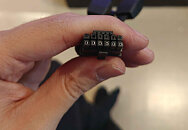
Source: u/Savings_Opportunity3 on Reddit
Add your own comment

109 Comments on Melting 12VHPWR Connector Claims its First AMD RX 9070 XT Victim

#101
jonnyGURU
Chrispy_I'd love to get the exact model of the Kolink PSU, just to see if I can find any more info on it.

The 12V6V2 connector melted because the six wire pairs were unmonitored, so one of them grossly exceeded the expected 9.5A it was rated for. This is Asrock's fault.

The cause of the current imbalance is likely cable quality - all it takes is for one of the wires from the PSU to the adapter to be too thin, get hot, and as a result have its resistance increase enough to cause a positive feedback loop of higher resistance > more current > current makes it hotter > heat increases the wire resistance. That particular wire pair from the PSU cable would then be carrying far more load that all the other (unbalanced) wire pairs, and the weakest link is the part with the smallest cross-sectional area, likely the miniscule little pins in the 12V6X2 end of the adapter.

Unless some adapters are better than the ones I've seen, another issue with 12VHPWR to triple 8-pin adapters is that they increase the current draw from PSU cables by 50% by only using two of the three available 12V wire pairs available. All of the triple adapters I've seen mate the 9 available pairs of PCIe 12V with the 6 pairs of 12VHPWR by simply omitting one of the wire pairs from each 8-pin connector. That means only two wire pairs to handle the current that is designed to be spread over three pairs. If a GPU is actually pulling all 450W from the 3x 8-pin adapter, it's taking 150W from each 8-pin connector, but only two of the three wire pairs are being used, so rather than being 4.2A per wire, it's 6.3A per wire, which is obviously 2.1A more than the specification - a specification that any cost-cutting PSU manufacturer would build down to. Why use more expensive wire rated to 6.3A when cheaper wire that handles the 4.2A of the specification saves them money?

Adapters are bad - Even if you ignore the fact that connections are typically the weakest link in a circuit and using adapters just adds 24 more of these weakest links to the whole system - the problem is that I've yet to see an adapter that merges three wire pairs from the 8-pin into two wire pairs of the 12VHPWR. That would be necessary to avoid violating spec, unless the load (GPU) in question draws no more than 300W, thus keeping the current draw over the 6 used wire-pairs from the 8-pins within the 4.2A spec they're rated for.
The only GPU that does current monitoring is the Asus 50 series cards. OP insisted that the 12V-2x6 was fully seated... in the GPU. But since it's an adapter, it probably wasn't fully seated where the 8-pins meet the adapter.

Also, I think the user was using extensions in addition to using the adapter. Why?

They said they had a Kolink 700W. There's only one. Core RGB. A VERY cheap fixed cable PSU. The cables in his photo are white. Obviously, fixed cables can't be replaced, so the OP apparently used extensions AND an adapter.

This was a recipe for disaster with or without 12V-2x6.
Posted on Reply
#102
Fluffmeister
I have the "other" RX 9070 XT card using 12VHPWR the Sapphire Nitro+ and it's all good, but then I'm using a Seasonic Focus GX-850W. It's not the latest spec PSU so it still seems silly to be running three seperate PCI-E cables to an adaptor to a single connector on the back of the card!
Posted on Reply
#103
Chrispy_
jonnyGURUThere's only one. Core RGB. A VERY cheap fixed cable PSU. The cables in his photo are white. Obviously, fixed cables can't be replaced, so the OP apparently used extensions AND an adapter.


I guess some blame should go on the manufacturers for creating an industry that heavily promotes form-over-function: RGBLED, colour-matched components, and hidden cables are more important these days than actual performance.

Form and function aren't mutually exclusive but I so often see potato bling where the money should have gone on a higher quality part rather than stupid decorative 'features'.
Posted on Reply
#104
Fluffmeister
The age old battle... my graphics card has a pretty logo on the side, shame it also has hideous borg cables coming out of it too.
Posted on Reply
#105
EsaT
TheinsanegamerNNo, the conclusion is indeed quite different. A larger connector with thicker wires only fixes an issue of resistance in the wire. Requiring load balancing on the card does not require a spec change, as load balancing is not part of the cable (and was common place before the Red Lung).

One conclusion is the spec is bad, the other is that card manufacturers cheaped out and we are paying the price.
Even if load balancing is there, this abomination of connector doesn't have proper safety margins.

In proper engineering you never want to use anything close to its theoretical maximum, because you can't guarantee those perfect conditions of theoretical world.
In real world there's lots of variables which can degrade connection:
Slight flaw in manufacturing, wear from use, not full insertion from either user not pushing connector in 100% fully or cable tugging it etc.
All of those can cause worser connection and increase in resistance meaning even more heating of connector than normally.

And that increase in temperature starts actually increasing resistance of materials worsening the situation.
All the while pins in this connector with their tight spacing are also less capable of getting rid of heat.


Older 8 pin connector and cable is far more tolerant to these real world variables and more things have to go wrong/more badly to risk melting of connector.
Posted on Reply
#106
Crackong
Since there is just one huge +ve plane and one -ve plane.
The next generation GPUs should use this simple solution

Posted on Reply
#107
pavle
Not all that strange really, even at > 300W and < 350W as RX 9070 XT runs at the connector is operating over its real capability which is 300W (if that with those flimsy little thin metal parts).
Posted on Reply
#108
johnjoeshmo
Bruh I've had no issues with my 5090 12vhpwr connector that came with my PSU. I've played in 4k for like 10 hrs on end but I've also undervolted the card and I never let it go above 450 watts.
Posted on Reply
#109
R-T-B
Space Lynxone is enough, because 0 modern ones have that use the regular connector, dumb as hell
There is a picture of a melted 8-pin right above you.
Hecate91How many 12vhpwr connectors have melted vs. 8 pin molex?
That's the right question but given the stupid mob uproar I fear we will never know the true answer.
Posted on Reply
Add your own comment
Nov 28th, 2026 06:49 CST change timezone

New Forum Posts

Popular Reviews

TPU on YouTube

Controversial News Posts