Thursday, August 21st 2025

Melting 12VHPWR Connector Claims its First AMD RX 9070 XT Victim
It appears as though AMD has also fallen prey to the melting 12VHPWR connector issues that plagued the NVIDIA RTX 4000 and 5000-series cards. Although very few AMD graphics card makers used the 12VHPWR connector for the Radeon RX 7000 series, adoption rates for the new connection standard increased with the release of the RX 9070 and 9070 XT. What appears to be first recorded instance of a melted 12VHPWR connector on an AMD Radeon RX 9070 XT has been posted to the r/Radeon subreddit by a user who goes by u/Savings_Opportunity3.
The issue only seems to have affected the cable on the GPU side, and the GPU seems to have survived for now, although the user remarks that one pin on the GPU power connector is darker than the rest, suggesting it has suffered spotty contact and increased heat. The GPU is an AsRock Taichi OC AMD Radeon RX 9070 XT, although many of the commenters suggest the PSU being used in the system was to blame for the melting connector. The GPU was also connected via a 3×8-pin adaptor, not straight to an ATX 3.1 PSU, and these sorts of adaptors have also been known to result in melted connectors. There have been no widespread issues with AMD GPUs and melting connectors, seemingly due to the lower power draw, but it clearly anything is possible, depending on the circumstances.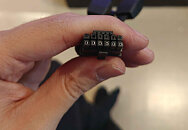
Source:
u/Savings_Opportunity3 on Reddit
The issue only seems to have affected the cable on the GPU side, and the GPU seems to have survived for now, although the user remarks that one pin on the GPU power connector is darker than the rest, suggesting it has suffered spotty contact and increased heat. The GPU is an AsRock Taichi OC AMD Radeon RX 9070 XT, although many of the commenters suggest the PSU being used in the system was to blame for the melting connector. The GPU was also connected via a 3×8-pin adaptor, not straight to an ATX 3.1 PSU, and these sorts of adaptors have also been known to result in melted connectors. There have been no widespread issues with AMD GPUs and melting connectors, seemingly due to the lower power draw, but it clearly anything is possible, depending on the circumstances.

109 Comments on Melting 12VHPWR Connector Claims its First AMD RX 9070 XT Victim
Just a bad connector full stop.
That's why there haven't been any melted connectors on RTX4070's.
How many connectors have melted? So far a SINGLE AMD card has failed.
In his first message, the four sensor pins only have one pin thats 450. Strange.
watercooling/comments/15pfhgc/3080_8_pin_pci_cable_seems_to_have_melted_in_the
What was that? Zero modern ones? Guess the 8 pin connector was dangerous and faulty!See above, the old ones DID fail. They were not immune to melting or incorrect installation or incorrect loading. I've yet to see any concrete numbers showing the 16 pin is any worse.
As for "why fix", the 8 pin officially was only rated at 150 watt, and 3 connectors was already very ornery to deal with. The 4090/3090/3090ti/5090 would require 4 of the things, and on the small PCB nvidia is using that just isnt possible.
Yeah I'm sure you can keep finding results on reddit, but 8 pin molex can handle more than 150W per connector, and personally I'd rather deal with 3 or 4 8 pins than risk a card and PSU being ruined from a melting prone plug.
The 12 pin connector is simply garbage, if the entire industry weren't being influenced by a single company with 90% marketshare, the connector wouldn't have passed testing.
I thought it was Nvidia that submitted the prototype 12pin connector (used in 3000 series) to PCI-SIG then developed into the 12VHPWR
No, its more a PCI-SIG thing.Correction, it was NVIDIA who proposed it. The 12-pin connector actually worked properly though. It's this 12VHPWR revision that made it worse. 12V-2x6 tried to make it better, but it only changed how the sense pins are socketed.The 12-pin connector on the RTX 3000 series had better
properload balancing with 3 balancing resistors. So this would be 6 powered wires. If you cut up to three of them (one from each pair), the card would still run despite the powered wires now handling double the load. However if any of those pairs were completely cut the card would simply not boot up.With 12VHPWR/12V-2x6, the balancing is more out of whack where even if you cut 5 of the powered wires, it apparently will try to push all that power through the last wire. No clue why PCI-SIG decided this was a good change.
From Buildzoid's video.
Either there is flawed cable plugs being made ... or the GPUs are drawing more than rated - which is entirely possible.
And yeah lots of things can go wrong. We deal with enormous amounts of current in PCs since we're still stuck with this antiquated 12V power supply design and it's very difficult to provide that much current safely. There can be cable manufacturing defects, the cable can be tensioned towards the clip, potentially loosening the other side (which is what I generally suspect when there's fairly even damage across the connector) or the connector just may not be seated properly. There is also evidence suggesting that running large amounts of power over these cables can cause damage over time, but so far I've only seen that with the old 12VHPWR sockets and this latest generation of cards hasn't been available nearly long enough for that to be the case.
The overwhelming majority of nvidia GPUs are not melting. The overwhelming majority of AMD 9000 series are not melting. This is the FIRST 9000 series to fail. Statistically, this is a rounding error.The real issue isnt the connector itself, rather it is the lack of load balancing done between the PSU and GPU. In other applications with limited overhead, like USB type C, there is a continuous handshake between the power supply and device that negotiates allowable voltage and amperage limits, along with temperature.
The 12vhpwr was modified to the 12vpwr v2 with 4 sensing pins, but it doesnt appear these GPUs have any sort of ability to negotiate power. If they did this wouldnt be occurring.Is this the fault of 12v 2x6 though? I thought it was nVidia cheapening out on the card design that resulted int he load resistors being removed.
User first claims they had "slight discoloration" on the 12VHPWR side, then later show the slightly melted cable. I wouldn't call the GPU a "victim" of the cable type. More likely the victim of their Kolink PSU. User admits their PSU is "cheap and under the recommendation". These cards don't draw anywhere near the power needed to overload a defect free, properly connected cable.
If ASRock (and Sapphire) did the same thing as the RTX 4090/5090s now, then it could be PCI-SIG's fault because that means they're just OEMs following the design. However, PCI-SIG did say that it's up to the device manufacturers to make sure their products are QA'd properly.
Then you have enthusiasts pushing over 600W, flashing higher power bios...you'd figure THEY must be having the connectors burn left and right.....but they don't.
Not saying all users are at fault, but I'm willing to bet that for quite a few of these instances, there were some user choices made that led to their eventual outcome. Not All, but I'm willing bet there' s a bit. Though, very hard for people to be open and forthcoming on what their setup is/was and what they were doing with it.
I remember an instance I saw of the burnt 5090 connector, it was of card that was literally shoved in SFF case where it had no business being in... side panels used to basically hold and the wires all in and cranking out benchmarks/stress tests at full power...... I mean what exactly was the expectation here?
In-fact if you go look at Reddit... majority of the burnt 5090 connectors were from use in compact cases.I'm sorry a what PSU?
I guess we can just chalk another one up to what I said above.
The resistors on the card exist because PC PSUs are dumb supplies. They provide voltage and up to a certain amperage, but there's no thought behind it. They will keep shoving amperage on a 12 volt rail if there is demand, with only dead shorts triggering protection. So on the 12v connector, the PSU pushes amperage on all 6 connectors, but since they are all on the same rail, power will take the path of least resistance. The resistors on the card provide increasing ohms if draw on a line gets too high, wherein the flow of power will shift to the underutilized lines.
I could see this being PCI SIGs fault for not requiring proper load balancing on the host end. There really needs to be an enforced balancing method, whether it be resistors one very line or an actual communication ala USB C. Ostensibly this is what the sensing pins are supposed to be for.... On the other hand, this same issue could affect 8 pin cards too, it was just common sense to use resistors to ensure no pin got overloaded. So is it really the SIGs fault or is it card makers getting cheap AF post covid deciding to roll the dice on these GPUs by skipping $0.20 on resistors?Card manufacturers need to do a better job of placing the connector. nVidia mounts theres at an angle and it helps prevent the issue of excess pressure on the connector itself. I remember EVGA had an addon for their cards to re route the PCIe connectors to the back of the card.You could, but once you get to 3-4 8 pin connectors it becomes annoying. The 8 pin just doesnt have the capacity for modern high end cards. My 6800xt has 3 8 pin connectors and getting those wires to fit, even in my girthy Cooler Master 932 with the side panel installed is a royal pain.
Now it would be kinda neat if we had a card where the pin connectors were all loose, like the multi 8 pin to 12v connector, with stress relief rings built into the card.
The 12 pin connector has theoretical maximum of 684W and used up to ... 600W or more
Its obvious why the 12 pin is burning like Christmas tree