Wednesday, August 27th 2025

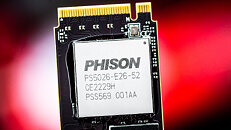
Phison Posts Latest Update on SSD Controller Stability

As stated on August 18, Phison was made aware of the KB5063878 and KB5062660 updates on Windows 11 that potentially impacted several storage devices, including some supported by Phison. In response, Phison dedicated over 4,500 cumulative testing hours to the drives reported as potentially impacted and conducted more than 2,200 test cycles. We were unable to reproduce the reported issue, and no partners or customers have reported that the issue affected their drives at this time.

Phison remains committed to the highest standards of reliability and continues to closely monitor the situation in collaboration with our industry partners.
Best Practices for End Users
While our validation testing has not identified any concerns related to these Windows 11 updates, we have shared industry best practices to support high-performance storage devices. We continue to advise users that for extended workloads, such as transferring large files or decompressing large archives, make sure a proper heatsink or thermal pad is used with the storage device. This helps maintain optimal operating temperatures, reduces the likelihood of thermal throttling, and ensures sustained performance.

For users with questions or potential troubleshooting needs, please contact support@phison.com.
Add your own comment

50 Comments on Phison Posts Latest Update on SSD Controller Stability

#1
bobsled
Did anything happen, to any vendor drives? Or was it all hogwash?
Posted on Reply
#2
Fluffmeister
Yeah something stinks, some people claim it's all drives, some say it's just Phison... Phison say we can't reproduce the issue.
Posted on Reply
#3
rusTORK
Use decent thermal pads for controller, NAND chips, DRAM chips and PMIC;
Use decent heatsink to transfer heat;
Check SSD voltage (3.3V line)!
Posted on Reply
#5
maxli86
As if heatsink/thermal pad will help which is a joke.
If the controller has issues even with a heatsink it will fail/die.
Posted on Reply
#6
Chane
I have a couple Phison controller drives and they have been fine, no issues with these Windows updates for me. I do have another drive with a Sandisk controller, and that one definitely flips out if it hits thermal limit for an extended period, it'll just enter a limp mode until it is completely power flushed. It doesn't matter if the temperature returns down to 40c, it has to be power cycled to get it out of limp mode.
Posted on Reply
#7
_roman_
I do not understand what passive cooling has to do with the issue at hand.
Best Practices for End Users
While our validation testing has not identified any concerns related to these Windows 11 updates, we have shared industry best practices to support high-performance storage devices. We continue to advise users that for extended workloads, such as transferring large files or decompressing large archives, make sure a proper heatsink or thermal pad is used with the storage device. This helps maintain optimal operating temperatures, reduces the likelihood of thermal throttling, and ensures sustained performance.
I should look up properly the original bug or issue from Microsoft.

The other two sentences are just a filler sentences which are absolutely unnecessary. Having proper passive cooling usually maintains optimal operating temperatures with the usual room temperature of 20°C and also usually reduces the likelihood of thermal throttling. Of course less thermal throttling ensures sustained performance.

No word is said about bad computer cases with in case temperatures of 50°C. A passive cooler will not be as effective in such scenarios.

--

Without defining how these 2200 test cycles were made the statement is rather without any value.
2200 test cycles of every possible controller? which firmware? which models ? ...

I highly doubt the issue at hand was thermal throttling caused by bad active cooling or bad passive cooling of the storage device in question.

--

edit 2:

Search KB -> here: Yields: www.techpowerup.com/340032/microsoft-windows-11-24h2-update-may-cause-ssd-failures
Community testing has since identified a reproducible pattern in which certain SSDs, when running sustained sequential writes of approximately 50 GB, become inaccessible and display unreadable SMART telemetry.
I am allergic to the phrase file corruption.
Symptoms reportedly recur after a reboot, which often restores visibility temporarily but does not eliminate the underlying fault, creating a risk of file corruption if the same workload is repeated.
edit: 3

it's hard to find facts

www.computerbase.de/news/storage/windows-11-update-kb5063878-soll-ssd-und-hdds-lahmlegen-koennen.93914/

my words, loosely based on that link

When the drive vanish from the operating system data corruption has occured or may occur because the drive is not accessible anymore.

German quoted text from CB. If you like to use any translation service yourself.
Das Laufwerk ist allerdings nicht beschädigt, ein Neustart bringt es zurück. Die zuvor geschriebenen Daten können durch den abrupten Ausfall aber korrumpiert sein. Weitere Schreibvorgänge führen zum erneuten Ausfall.
Who knows if some articles or search results form the popular search engines were removed in the mean time? Hard to provide facts or proof for that.
Posted on Reply
#8
Kwadratowicz
Trrrryt
In first article the TPU is citing "A Japanese tester NichePCGamer published a 21-drive matrix"
On his site there is more info, and update about it. I thought that it was windows fault, but You should read it and have own point of view with it.
Japanese link
www.nichepcgamer.com/archives/windows11-24h2-issue-with-writing-to-the-ssd-is-this-caused-by-kb5063878-kb5062660.html
Google translated Japanese link.
www-nichepcgamer-com.translate.goog/archives/windows11-24h2-issue-with-writing-to-the-ssd-is-this-caused-by-kb5063878-kb5062660.html?_x_tr_sl=auto&_x_tr_tl=pl&_x_tr_hl=en
Posted on Reply
#9
Chris_Ramseyer
Phison Rep
maxli86As if heatsink/thermal pad will help which is a joke.
If the controller has issues even with a heatsink it will fail/die.
The heatsink portion of the statement just covers everyone. Phison ran every drive listed in the initial report on X in the exact same workload and cadence. This goes all the way down to the Japanese version of the game! We were unable to reproduce the issue, and to date, we are not aware of a professional test lab that has been able to do so (several partners and other companies have investigated this claim).

Back to the heatsink statement. When brainstorming potential causes, we thought it would be a good idea to remind everyone that high-performance SSDs require a heatsink when running extended workloads. Remember, even an extremely low-power SSDs can thermal-throttle under extended workloads. This isn't new, it was even an issue with SATA drives. That is why those early SATA SSDs had machined cases, and the drives were like a quarter pound.
Posted on Reply
#10
Visible Noise
So, another out of control internet rumor that turned out to be nothing.

Imagine that!
Posted on Reply
#11
remixedcat
Chris_RamseyerThe heatsink portion of the statement just covers everyone. Phison ran every drive listed in the initial report on X in the exact same workload and cadence. This goes all the way down to the Japanese version of the game! We were unable to reproduce the issue, and to date, we are not aware of a professional test lab that has been able to do so (several partners and other companies have investigated this claim).

Back to the heatsink statement. When brainstorming potential causes, we thought it would be a good idea to remind everyone that high-performance SSDs require a heatsink when running extended workloads. Remember, even an extremely low-power SSDs can thermal-throttle under extended workloads. This isn't new, it was even an issue with SATA drives. That is why those early SATA SSDs had machined cases, and the drives were like a quarter pound.
Pre and post update?
Chris_RamseyerThe heatsink portion of the statement just covers everyone. Phison ran every drive listed in the initial report on X in the exact same workload and cadence. This goes all the way down to the Japanese version of the game! We were unable to reproduce the issue, and to date, we are not aware of a professional test lab that has been able to do so (several partners and other companies have investigated this claim).

Back to the heatsink statement. When brainstorming potential causes, we thought it would be a good idea to remind everyone that high-performance SSDs require a heatsink when running extended workloads. Remember, even an extremely low-power SSDs can thermal-throttle under extended workloads. This isn't new, it was even an issue with SATA drives. That is why those early SATA SSDs had machined cases, and the drives were like a quarter pound.
Also I've heard the LEAST amount of issues from phison based SSDs lately which is good and reassuring of my upcoming 2 SSD selections
Posted on Reply
#12
yfn_ratchet
I wonder if the reports that came in were problematic drives that were seemingly operating 'normally' before the update, and the update merely exposed them. It's a crackpot theory, but it's happened at more macro scales before. A lot of organizations that shirk disaster recovery drills tend to not realize how many problems have been silently roiling underneath their feet until the data's gone for real...
Posted on Reply
#13
ben07
I was in the process of building a home file server (win11). The installation occupied less than 45Gb of the drive, (installed on an inexpensive P300 128Gb which had a phison E13T controller. The system was idle for the entire time (was still waiting for the hdd to arrive) so it was just windows, stripped down of telemetry and non-needed services. At 51-54 POH, crystaldisk reported 93% health. The computer was in operation for about 4 days (on and off), hence the low POH. However, total drive writes was 6772+Gb. I replaced the drive with what I had on-hand,a 512Gb Teamgroup Mp33 (SM controller), without modifying or changing anything (cloned the os from the orig P300), and with this new Mp33 drive at 68 POH (already exceeding the old drive), health remains at 100%. I have since transferred the P300 to a laptop and added another 77 POH, and registered another 146GB THW and 130Gb THW. Health dropped another 1%. I have 9 other computers (all with the "offending" KB updates, none of the other ssd are affected. I understand that 128gb will have a lower endurance and the additional effect of WAF (write amplification), but 6700+ is just excessively alarming.
Posted on Reply
#14
TechTronic9000
Right after the update, my Windows started to do random BSOD / Kernel panic. drive is a Samsung 980 PRO Gen.4 1TB, it got corrupted and even Samsung Magician would not be able to perform a SMART test. Then I have tried to make a bootable USB Windows recovery drive and for a "strange reason" i tryed to do it for 4-5 times and process was failing or the drive disappearing / crashing. The USB drive is a SanDisk Ultra Fit 64 GB, USB 3.1. So made the drive on another PC that didn't have the update, went with recovery, managed to uninstall the blasted KB5063878 and also managed to run chkdsk / sfc and dism which all found corrupted stuff. Other "funny" things were that the dive was also marked dirty so each windows start / restart was done with chkdsk, which didn't didn't find anything. Yet run from windows (read only) would always find more corruption. The only fix was update uninstall and repair with the USB drive.
Posted on Reply
#15
efikkan
Visible NoiseSo, another out of control internet rumor that turned out to be nothing.
Imagine that!
Well a good handful of SSDs are dead, so that part is at the very least true, which should in turn be RMAed so it can be investigated by the appropriate vendors.
It's the reasoning behind it which seems flaky at best, either because of all the noise data, or the underlying assumption of the cause which may be wrong.

One thing is for sure, if there is something in this (or a similar) update which triggers an underlying bug in SSDs, then we should see a steady stream of new cases until it's stopped. If on the other hand it's just a peak of failed SSDs right at a update and then it returns to normal failure rates, then the cause may simply be that these SSDs were on the brink of failure and a major load was all it took.

I want to stress that issues with SSDs are incredibly common, which makes it much harder to determine if there is an issue. It's so common that I usually have 1-2 spares on hand.
TechTronic9000Right after the update, my Windows started to do random BSOD / Kernel panic. drive is a Samsung 980 PRO Gen.4 1TB, it got corrupted and even Samsung Magician would not be able to perform a SMART test. Then I have tried to make a bootable USB Windows recovery drive and for a "strange reason" i tryed to do it for 4-5 times and process was failing or the drive disappearing / crashing. The USB drive is a SanDisk Ultra Fit 64 GB, USB 3.1. So made the drive on another PC that didn't have the update, went with recovery, managed to uninstall the blasted KB5063878 and also managed to run chkdsk / sfc and dism which all found corrupted stuff. Other "funny" things were that the dive was also marked dirty so each windows start / restart was done with chkdsk, which didn't didn't find anything. Yet run from windows (read only) would always find more corruption. The only fix was update uninstall and repair with the USB drive.
But does the drive still fail the SMART test after your recovery?
Because everything else explained can be just a corrupted file system and a bad USB drive.
Posted on Reply
#16
TechTronic9000
efikkanBut does the drive still fail the SMART test after your recovery?
Because everything else explained can be just a corrupted file system and a bad USB drive.
Now it's passing the SMART test, without any warnings. What I have noticed is the increased number of unsafe shutdowns, but those are easy to explain as my PC was boot looping between blue and black screens. Now I no longer have any issue, Windows is stable, updates pause and missing the KB5063878
Posted on Reply
#17
Aarlog
I'd just like to mention that I experienced issues firsthand with this update as soon as I rebooted. Before KB5063878 installed my SP A55 2TB (with a Phison PS3111-S11-13 controller) was detected and working just fine, after rebooting and letting the update finish installing the drive no longer appeared in file explorer and any desktop shortcuts to programs on the drive showed a blank icon. The drive showed up in disk manager but acted like it was uninitialized. Rebooting again didn't fix the issue.

It took shutting down, physically unhooking the SATA plug from the drive, booting into W11, uninstalling the update, shutting down, plugging the SATA cable back in, and booting again to get it to show up as normal. The only other drive in the system is a WD_Black SN850X 4TB boot drive with WD's in-house controller, and it had no issues. As far as I can see I managed to come out of it with no noticeable damage to the drive or data loss.

I've since paused updates for a few weeks (it immediately tried to reinstall itself) to give my system some time for MS to patch this issue, other than that I'm not sure what else I can do at this stage.
Posted on Reply
#18
Jtuck9
TechTronic9000Now it's passing the SMART test, without any warnings. What I have noticed is the increased number of unsafe shutdowns, but those are easy to explain as my PC was boot looping between blue and black screens. Now I no longer have any issue, Windows is stable, updates pause and missing the KB5063878
Do you have "fast startup" enabled?

I'd be curious to see the integrity of hibernation files, etc, on affected machines.
Posted on Reply
#19
remixedcat
We really need other controller mfrs to do this same test
Posted on Reply
#20
TechTronic9000
Jtuck9Do you have "fast startup" enabled?

I'd be curious to see the integrity of hibernation files, etc, on affected machines.
I don't use fast startup, I've disabled it long time ago.
Posted on Reply
#21
pidrox
at work as of today we have 15 clients that had clean copies of 24H2 installed with latest updates, with SSD's that became bricked shortly thereafter, not even showing up in bios
drives are mostly patriot burst, netac sa500 and hiksemi wave (all dram-less)
i know these drives arent the most reliable but this failure rate is insane and something like this never happened before
Posted on Reply
#22
_roman_
efikkanI want to stress that issues with SSDs are incredibly common, which makes it much harder to determine if there is an issue.
NO.

Bad performance of WD, SANDDISK and ADATA SSds are quite common. Slow response times and poor read and write performance. Drive is not as advertised. These windows update topic problems are not that common in the past ~8 years. (I had 6 different SATA 2.5" SSDs from different vendors in use over each year. 120 or 128GB in size each. Past years i bought a few m2 nvme)
efikkanOne thing is for sure, if there is something in this (or a similar) update which triggers an underlying bug in SSDs, then we should see a steady stream of new cases until it's stopped. If on the other hand it's just a peak of failed SSDs right at a update and then it returns to normal failure rates, then the cause may simply be that these SSDs were on the brink of failure and a major load was all it took.
Not everyone uses Micrsoft Windows as their core operating system in the past years.

We speculate about a hardware defect or a hardware flaw of HARDWARE. If there are issues with SSDs we should have seen those in other use cases also. The fact is, we talk about Microsoft Windows. The fact is, we talk about some KB numbers, which seems to be update numbers, which seems to date to a certain update period.

Are there any influence factors which were not there in the past?
M2 related?
m2 nvme related?
M2 DRAM related?
M2 no DRAM related?
M2 Controller related?
M2 PCIE 5.0 related?
M2 PCIE 4 or PCIE 3 drive in a PCIE 5.0 socket related?

I do not know how long DRAM less drives are on the market. SATA SSDs are very long on the market. M2 with DRAM are very long on the market.
TechTronic9000Other "funny" things were that the dive was also marked dirty so each windows start / restart was done with chkdsk
I run quite often ntfsfix for windows 11 pro. Any interrupted bootup marks C: as dirty.
Posted on Reply
#23
R-T-B
bobsledDid anything happen, to any vendor drives? Or was it all hogwash?
I don't know. Only thing I can say at this time is it would help a metric butt-ton to have an actual reproducible test, not that joke of a twitter post.

This whole thing was a case of bad science clowns running the show and thus no real data was gathered.
Chris_Ramseyerin the initial report on X in the exact same workload and cadence.
Oh? How exactly were the "150 video files of approximately 150MB each, 7zipped" sections replicated? Cause that could really be anything on earth and we should be sharing data.

Also include 7zip compression settings you used too. That tweet was lacking a ton of important technical details for a scientific test.
Posted on Reply
#24
efikkan
_roman_NO.
Bad performance of WD, SANDDISK and ADATA SSds are quite common. Slow response times and poor read and write performance. Drive is not as advertised.
Depends on what you mean by bad performance. To my knowledge, all current consumer SSDs have a behavior where performance slows down as you fill them up, and can only support short burts of "good" speed. Do you mean bad performance beyond that which deviates from quality reviews?

One of the reasons why Samsung 970 Pro is regarded as the last "good" consumer SSD is the consistency and reliablity of the MLC flash. And it still matches up to the "top class" PCIe 4 SSDs in most benchmarks that matter, if only I could get some in 4TB sizes, then it would last me for a while longer for "scratch space".

What I was referring to as SSD issues is the fact that consumer SSDs have a very high rate of integrety issues, or even randomly dying before three years of use. You can have hardware issues long before the SSD completely dies or your OS tells you your drive is bad. I regard a drive as faulty at the first sign of SMART errors, as that means it has already lost data and the flash is going bad. I'm pretty sure if you took ~100 random forum users' PCs and did a proper SMART test, you'll likely find several such cases. And that's why if people go look for issues, you'll find a lot, so the baseline of issues is very high, making it harder to distinguish a specific new problem from the rest.
_roman_Not everyone uses Micrsoft Windows as their core operating system in the past years.

We speculate about a hardware defect or a hardware flaw of HARDWARE. If there are issues with SSDs we should have seen those in other use cases also.
You don't tell? I've been running Linux primarily since 2007. ;)

But there is an undeniable fact, if a drive dies/malfunctions prematurely, then there is a "hardware" issue with that drive. Even if it just happens in a specific OS or under very specific applications, it's still 100% the drive's fault for not behaving according to spec. We've had several such cases in Linux too, and over a decade back many SSDs were known for "misbehaving" on Linux.

And my point remains, if there is a problem in a Windows update triggering hardware issues, then we should see a steady stream of new cases until the update is rolled back or "fixed".
If on the other hand we just see a spike of reports, then it may be completely unrelated hardware issues, just blown out of proportions thanks to misinformation.
_roman_I do not know how long DRAM less drives are on the market. SATA SSDs are very long on the market. M2 with DRAM are very long on the market.
There are many theories floating around about problems caused by lack of DRAM cache, but if anything this cache poses a potential risk for data loss, if you don't have power loss protection. Lack of DRAM cache shouldn't make firmware controllers go bad.
R-T-BI don't know. Only thing I can say at this time is it would help a metric butt-ton to have an actual reproducible test, not that joke of a twitter post.

This whole thing was a case of bad science clowns running the show and thus no real data was gathered.
I agree.
Those wanting to reproduce it could use publicly available data, like Linux ISOs, in order to make it reproducible for everyone. And more importantly, the drives should be returned to the manufacturer for investigation.

Bud judging by the difference in reports, we are probably looking at a bunch of different cases, some may be unrelated to this update;
- Drives which died immediately after the update. (likely related)
- Drives which slowed down immediately after the update. (likely related)
- Drives which died shortly after the update, after a large load. (may be unrelated)
- File systems which got corrupted, but no issues remain after reformat or repair.

The last one isn't a hardware issue at all, like seen in post #17, if there has been ever served a single sector with errors, the error count in the SMART data will remain. So in such cases, the file system was corrupted from the outside, whether that's a software bug, system crash or a hardware issue outside the SSD.

And I want to remind everyone, the chances for any error to occur, like system stability(especially Windows), driver issues and even some hardware issues, are for most users more likely to happen during a major update. That sort of stuff can even happen on Linux, in fact, most Linux issues that I've ever seen has been caused during a update.
Posted on Reply
#25
remixedcat
Phison could have been lucky and not ran into the issue like some ppl will go to the beach and swim in the ocean and never get eaten by sharks. That doesn't deny that sharks have never attacked anyone ever and anyone that's been bitten isn't suddenly imagining it or making things up. That does happen.
Posted on Reply
Add your own comment
Nov 25th, 2026 16:28 CST change timezone

New Forum Posts

Popular Reviews

TPU on YouTube

Controversial News Posts