Wednesday, August 27th 2025

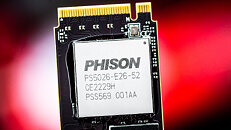
Phison Posts Latest Update on SSD Controller Stability

As stated on August 18, Phison was made aware of the KB5063878 and KB5062660 updates on Windows 11 that potentially impacted several storage devices, including some supported by Phison. In response, Phison dedicated over 4,500 cumulative testing hours to the drives reported as potentially impacted and conducted more than 2,200 test cycles. We were unable to reproduce the reported issue, and no partners or customers have reported that the issue affected their drives at this time.

Phison remains committed to the highest standards of reliability and continues to closely monitor the situation in collaboration with our industry partners.
Best Practices for End Users
While our validation testing has not identified any concerns related to these Windows 11 updates, we have shared industry best practices to support high-performance storage devices. We continue to advise users that for extended workloads, such as transferring large files or decompressing large archives, make sure a proper heatsink or thermal pad is used with the storage device. This helps maintain optimal operating temperatures, reduces the likelihood of thermal throttling, and ensures sustained performance.

For users with questions or potential troubleshooting needs, please contact support@phison.com.
Add your own comment

50 Comments on Phison Posts Latest Update on SSD Controller Stability

#26
mb194dc
Probably other factors, hardware or software involved in the bug. Need the rig from original reporter or others with the issue to confirm what.
Posted on Reply
#27
Knight47
I got told that I don't need heatsink or pads for the m.2 drives, I can run it bare since even Gen4 drives dont produce much heat. Now I do need one?
Posted on Reply
#28
Jtuck9

BEWARE! Windows Update and SSD Problem is WAY worse than we thought! Full Demonstration

Posted on Reply
#29
R-T-B
Jtuck9

BEWARE! Windows Update and SSD Problem is WAY worse than we thought! Full Demonstration

I'm videophobic and also at work. Can someone provide a text summary?
Posted on Reply
#30
Chrispy_
This is starting to smell like the Nvidia 12VHPWR connector.

Nvidia - There is no problem with the connector, it's user error
Phison - There is no problem with our SSDs, it's user error.

At the moment it's too early to say for sure if it's really a major problem or just a tiny minority making a lot of noise and people with unrelated issues all blaming these patches for unrelated SSD issues. However, the number of people saying their drives stopped working after KB5063878 and KB5062660 is non-trivial, and Jayz2c's video is proof that at least for him, it isn't user-error.

Jay was copying games to the drive as part of his routine benchmark setup for his reviews. He's done that hundreds of times, presumably without fault prior to KB5063878 and KB5062660.
R-T-BI'm videophobic and also at work. Can someone provide a text summary?
Text summary:

Jay finds his test rig suffers the issue after copying hundreds of GB of games to it.
He wonders if it's the Windows update SSD issue, then confirms it - Phison-based SSD is unrecognised even in BIOS after a crash until a power cycle.
The problematic patches are installed and he's unable to roll back KB5063878 because it's a feature update.
With no way back, he clones the Phison-based T500 to an SSD supposedly unaffected by the patch (P5 Plus) and it's fine.

Microsoft's silence is still the elephant in the room. Controller manufacturers are looking for and assessing the symptoms but the cause was Microsoft's patch.
Posted on Reply
#31
R-T-B
Chrispy_P5 Plus
That's pretty much the only drive I'd say is pretty verifiably immune at this point. Everything else is a statistically crapshoot but that one uses a inhouse Micron controller, has a dram cache, and like, zero reports of update issues (there's one but it's pretty clearly just a drive failing and unrelated to the update). I myself have 6 of them deployed with the update working hard right now. OT but great drives reliability wise (raw performance is a bit mixed but hey, we aren't reviewing here).

I wish I could say more than "we really don't know what's going on, but P5 plus is fine, as well as probably some others and most likely Optane?" but that's where I'm at right now.
Posted on Reply
#32
remixedcat
R-T-BThat's pretty much the only drive I'd say is pretty verifiably immune at this point. Everything else is a statistically crapshoot but that one uses a inhouse Micron controller, has a dram cache, and like, zero reports of update issues (there's one but it's pretty clearly just a drive failing and unrelated to the update). I myself have 6 of them deployed with the update working hard right now. OT but great drives reliability wise (raw performance is a bit mixed but hey, we aren't reviewing here).

I wish I could say more than "we really don't know what's going on, but P5 plus is fine, as well as probably some others and most likely Optane?" but that's where I'm at right now.
I did see some Intel 670 and 660p reports but those aren't optane. That's the closest.
Posted on Reply
#33
Jtuck9
R-T-BThat's pretty much the only drive I'd say is pretty verifiably immune at this point. Everything else is a statistically crapshoot but that one uses a inhouse Micron controller, has a dram cache, and like, zero reports of update issues (there's one but it's pretty clearly just a drive failing and unrelated to the update). I myself have 6 of them deployed with the update working hard right now. OT but great drives reliability wise (raw performance is a bit mixed but hey, we aren't reviewing here).

I wish I could say more than "we really don't know what's going on, but P5 plus is fine, as well as probably some others and most likely Optane?" but that's where I'm at right now.
In his case the trigger was running a benchmark for an F1 game, which looked like it stuttered its way to a blue screen rather than immediately crashing. I believe the implication was there could be a variety of triggers. I still think the underlying cause is something along the lines of the supposed 25h2 refinement groundwork being laid:
  • Enhanced Power Management: Revised scheduler heuristics and updated chipset drivers enable more efficient use of multi‑core processors under mixed-load scenarios. On laptops, this translates to modest battery life improvements—on the order of 5% under balanced usage profiles.
www.techpowerup.com/340505/windows-11-25h2-preview-arrives-as-lightweight-enablement-package

I'm not sure if new chipset drivers will coincide with the release of 25h2 but certain boards over on Gigabyte and Asrock support pages have recently released drivers listed (7.06.24.2226), so perhaps installing those and running this 25h2 release preview would be an interesting test bench?!
Posted on Reply
#34
remixedcat
Jtuck9In his case the trigger was running a benchmark for an F1 game, which looked like it stuttered its way to a blue screen rather than immediately crashing. I believe the implication was there could be a variety of triggers. I still think the underlying cause is something along the lines of the supposed 25h2 refinement groundwork being laid:
  • Enhanced Power Management: Revised scheduler heuristics and updated chipset drivers enable more efficient use of multi‑core processors under mixed-load scenarios. On laptops, this translates to modest battery life improvements—on the order of 5% under balanced usage profiles.
www.techpowerup.com/340505/windows-11-25h2-preview-arrives-as-lightweight-enablement-package

I'm not sure if new chipset drivers will coincide with the release of 25h2 but certain boards over on Gigabyte and Asrock support pages have recently released drivers listed (7.06.24.2226), so perhaps installing those and running this 25h2 release preview would be an interesting test bench?!
Could the scheduler be putting drives in a weird state they can't cope with and they freak out??
Posted on Reply
#35
Jtuck9
remixedcatCould the scheduler be putting drives in a weird state they can't cope with and they freak out??
Yea, something along those lines, or faffing around with power draws, hence a benchmark causing issues.
Jtuck9I'm not sure if new chipset drivers will coincide with the release of 25h2 but certain boards over on Gigabyte and Asrock support pages have recently released drivers listed (7.06.24.2226), so perhaps installing those and running this 25h2 release preview would be an interesting test bench?!
ASUS also have the new chipset drivers listed
Posted on Reply
#37
Chrispy_
N3utroWindows11/comments/1n94ttu/a_taiwanese_hardware_review_site_pcdiy_claimed
Apparently the issue was only on pre production firmwares
What about all the non-Phison drives failing then?

WD SATA drives use Marvell controllers
WD NVMe drives use in-house Sandisk controllers
SK Hynix use in-house LAMD controllers
HP and the Hanye HE70 use MaxioTech controllers
Adata (XPG) use Silicon Motion controllers

Posted on Reply
#38
remixedcat
And not everyone is going to be running beta firmware. And I don't think WD or Samsung are gonna ship drives w engineering or alpha firmware
Posted on Reply
#39
R-T-B
Chrispy_What about all the non-Phison drives failing then?

WD SATA drives use Marvell controllers
WD NVMe drives use in-house Sandisk controllers
SK Hynix use in-house LAMD controllers
HP and the Hanye HE70 use MaxioTech controllers
Adata (XPG) use Silicon Motion controllers

My issue is that tests results are not reproducible so no one can verify the findings.
Posted on Reply
#40
Jtuck9
Specifics would be nice (i.e. what was it about that particular update that caused the drives to fail, what was it about that particular firmware that caused the drives to fail) Hopefully this has gone up the chain and to other manufacturers to see if it can be replicated.

I'm not sure how much difference a lack of a world model makes to automated code generation but this old article sprang to mind regarding made up circuit components ( more recently ingredients)

Is Artificial Intelligence Permanently Inscrutable?

nautil.us/is-artificial-intelligence-permanently-inscrutable-236088/

The fact that it was a chilly -273 Celsius last night according to the weather widget might have had something to do with it.
Posted on Reply
#41
Chrispy_
R-T-BMy issue is that tests results are not reproducible so no one can verify the findings.
www.techpowerup.com/340032/microsoft-windows-11-24h2-update-may-cause-ssd-failures

That matrix was repeatable though. The Japanese tested who posted that also provided their hardware config, system drive (990 Pro) and verified the issue with three runs per drive. If the SSD manufacturers have used that exact config and failed to reproduce the issue it's yet more evidence that Microsoft have really really broken something vendor-agnostic under the hood of these W11 patches.
Posted on Reply
#42
remixedcat
I think everyone that is blaming people for running ENGINEERING FIRMWARE on their NVME drives is idiots. Most people aren't gonna be running it and I've personally confirmed w some of the victims that they were running STOCK STABLE FIRMWARE! They didn't even know you can obtain engineering firmware for samsung or western digital or seagate drives. Seagate literally makes you have to enter a valid serial number to even download firmware and they make it tough to make sure people don't run the wrong firmware on thier drives!
Posted on Reply
#44
_roman_
According to this the fault is Phison Firmware

source: www.pcgameshardware.de/Windows-Software-277633/News/Win11-Probleme-mit-SSDs-haben-einen-Schuldigen-1481929/

I do not care that Phison shipped faulty alpha firmware to manufacturers and did not properly code the firmware. Fact is, the issue is, according to the german text, bad firmware. They label it nicely with Prerelease Firmware.

Phison has to ensure via contracts that not bad firmware is in the wild. Or they can make a generic update tool for any of their controllers for any given scenario to update the firmware. Not only for windows 11 pro.

I just waited for the next topic.
Die SSD-Ausfälle nach aktuellen Windows-11-Sicherheitspatches konnten teilweise aufgeklärt werden. Phison nennt Vorabversionen von SSD-Firmware als Ursache - doch auch Microsoft behebt einen Fehler mittels Patch.
ssd issues after a windows 11 security patch are partly resolved. Phison blames pre release ssd firmware as a root cause - but microsoft also fixes that issue with a patch. (in my words!)

-- I did not found the techpowerup article where phision claimed it was not their fault. I wanted to post in that article forum discussion in the first place.
Posted on Reply
#45
remixedcat
_roman_According to this the fault is Phison Firmware

source: www.pcgameshardware.de/Windows-Software-277633/News/Win11-Probleme-mit-SSDs-haben-einen-Schuldigen-1481929/

I do not care that Phison shipped faulty alpha firmware to manufacturers and did not properly code the firmware. Fact is, the issue is, according to the german text, bad firmware. They label it nicely with Prerelease Firmware.

Phison has to ensure via contracts that not bad firmware is in the wild. Or they can make a generic update tool for any of their controllers for any given scenario to update the firmware. Not only for windows 11 pro.

I just waited for the next topic.


ssd issues after a windows 11 security patch are partly resolved. Phison blames pre release ssd firmware as a root cause - but microsoft also fixes that issue with a patch. (in my words!)

-- I did not found the techpowerup article where phision claimed it was not their fault. I wanted to post in that article forum discussion in the first place.
That doesn't explain the failures of other controller based drives and wd and ss own in-house controllers.

I think Phison is being held hostage by Microsoft

They are acting weird about this
Posted on Reply
#46
efikkan
Jay's videos are interesting in the sense that in his test case was reproducible (on his system) and the drive just shuts off and remain unresponsive until full power cycle, then works as before after that. This is very different from all the early cases which reported either completely dead drives or "permanent" slow drives. In his latest video he seemingly resolved it by updating BIOS/firmware. It is worth noting that his failures were happening more and more frequently up until that point. I wish he had gotten hold of several more identical drives to reproduce it, and tested with Windows installs both with and without the infamous updates. His problem may not even be a drive issue at all, so reproducing this with a separate (good) OS drive would be interesting to see if the system crashes or if just the drive stops responding. His system was also overclocked.

When the reported symptoms are very different, we have to assume the reported issues are different problems until we can prove otherwise. I still believe there are several unrelated issues here, some of which may be triggered by these updates. If we are to get any useful conclusion from this, confirmed cases needs to be categorized to see which factors are common, e.g. controllers. There are most certainly a lot of "noise data" here, as SSD issues are very common.
Posted on Reply
#47
Sora
remixedcatThat doesn't explain the failures of other controller based drives and wd and ss own in-house controllers.
There are no other failures caused by the windows update, congratulations, you are a victim and conspirator of mass hysteria founded on a few posts with questionably configured pc's that may themselves be on known problematic Firmware, and conflating an issue with statistical defect.
efikkanI wish he had gotten hold of several more identical drives to reproduce it, and tested with Windows installs both with and without the infamous updates. His problem may not even be a drive issue at all, so reproducing this with a separate (good) OS drive would be interesting to see if the system crashes or if just the drive stops responding. His system was also overclocked.
You can crash problematic controllers with excessive correctable errors rates,
Keep in mind, NVMe's have already been known to just drop of the buss on Gen 4+ interfaces through bad ASPM defaults combined with controller bugs.

forum.level1techs.com/t/asus-flashstor-12-wd-red-4tb-sn700-nvme-drives-going-offline/218736
gigabyte/comments/m3z89u/2nd_nvme_random_desconection_crashes_pc_thiszfs/comments/11yc4qx/problem_with_a_nvme_device_it_drops_off_the_buswww.dell.com/support/kbdoc/en-us/000228837/when-the-ps1010-ps1030-nvme-ssd-is-installed-psod-may-occur-when-collecting-os-logs-with-tsr-or-vmsupport
Posted on Reply
#48
Th3pwn3r
I started having problems with my drive when this was becoming news. Coincidence? I think not, first my Dota2 files became corrupted. Then random crashes and BSOD. Yesterday my Internet wouldn't work. What's weird and reinstalling drivers wouldn't work either, nor would wifi. I could see everything as connected to my network. Then I booted from another drive/windows and my Internet worked again. I'm guessing my main m.2 drive is cooked.
Posted on Reply
#49
remixedcat
Th3pwn3rI started having problems with my drive when this was becoming news. Coincidence? I think not, first my Dota2 files became corrupted. Then random crashes and BSOD. Yesterday my Internet wouldn't work. What's weird and reinstalling drivers wouldn't work either, nor would wifi. I could see everything as connected to my network. Then I booted from another drive/windows and my Internet worked again. I'm guessing my main m.2 drive is cooked.
What drive??
Posted on Reply
#50
Sora
Yeah, no, you don't have a windows issue, you have a general hardware instability.

start a thread.
Posted on Reply
Add your own comment
Nov 25th, 2026 16:18 CST change timezone

New Forum Posts

Popular Reviews

TPU on YouTube

Controversial News Posts