Friday, September 5th 2025

ASUS 800-Series Motherboards Unlock DDR5-7200 Speeds with Intel Core Ultra 200S
ASUS has officially validated DDR5-7200 JEDEC memory support across its Intel 800-series motherboard lineup when paired with Core Ultra 200S processors, raising the guaranteed baseline specification beyond Intel's standard DDR5-6400 configuration. The validation covers the complete range including Z890, B860, and H810 chipsets. Intel's Arrow Lake-S CPUs ship with JEDEC DDR5-6400 support out of the box. ASUS says it has extended this through enhanced PCB routing, signal integrity optimization, and improved power delivery design. Crucially, this higher speed operates at JEDEC standard specifications without requiring XMP or EXPO profile activation, ensuring official warranty coverage and stock-level stability.
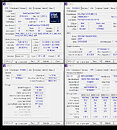
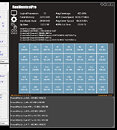
ASUS demonstrated the capability using a Core Ultra 7 265K paired with the mainstream/entry-level PRIME Z890-P motherboard from the Z890 lineup and a Kingston 32 GB (2×16 GB) DDR5-7200 kit. The configuration was running at 1.10 V with CL58-58-58-115 timings using a 1:2 memory controller ratio. Despite the relatively loose latencies, the setup maintained full stability under RunMemtestPro stress testing. The performance jump from DDR5-6400 to DDR5-7200 delivers approximately 800 MT/s additional bandwidth and while not revolutionary for all workloads, memory-sensitive applications should see improvements.
Sources:
Videocardz, via ASUS @X
ASUS demonstrated the capability using a Core Ultra 7 265K paired with the mainstream/entry-level PRIME Z890-P motherboard from the Z890 lineup and a Kingston 32 GB (2×16 GB) DDR5-7200 kit. The configuration was running at 1.10 V with CL58-58-58-115 timings using a 1:2 memory controller ratio. Despite the relatively loose latencies, the setup maintained full stability under RunMemtestPro stress testing. The performance jump from DDR5-6400 to DDR5-7200 delivers approximately 800 MT/s additional bandwidth and while not revolutionary for all workloads, memory-sensitive applications should see improvements.


15 Comments on ASUS 800-Series Motherboards Unlock DDR5-7200 Speeds with Intel Core Ultra 200S
From TPU other post which is in "news" -> ASUS is also expanding its high-end Z890 motherboard lineup
If we put 2 ventilators on rx 9070 xt or rtx 5090 instead of three. Then by this logic, 2 ventilators is bottom tier while with three is top tier :D. Even though, under the hood is the same capable chip.
Another example. Not that long ago noctua/asus released their rtx 5800. So it is top-end enthusiast and other AIBs with custom coolers are entry level?
What a time to be alive, hehe.
:toast:
Dram have the unit GiB. Most gnu userspace software adapted the right units already.
I remember some of the first Z690 apex failing to POST as early as 6400. In part the memory controllers were to blame, and also the RAM chips itself. But what I want to say is that this is a big jump on then “non-overclocked-officially-supported” frequency.
Also, on non-overclock oriented boards as low as 7000 can be challenging, as you can see here: www.igorslab.de/en/r-batches-13900kss-and-imc-regressions-intel-core-14th-gen-binning-results-from-almost-600-cpus/7/
So, for me, it is a good result. For some use cases I would happily sacrifice timmings for lower power consumption, and JEDEC standarization is always a (small) step forward.
Voltages on most “tuned” DDR5 sticks are close to DDR3 standard voltage (1.5V) on XMP/EXPO. There is no point in making the voltage for a newer standard lower and lower if no manufacturer is following it.
Also, as previous post stated, there are some systems were the user can barely configure anything memory-related.
And JEDEC is also good for scenarios like the one you described, since most current modules can run at 6000MT/s on the first POST, albeit with looser latencies, that is far better than 4800MT/s.