Thursday, September 11th 2025

Intel Fine-Tunes "Panther Lake" Gaming Performance, Up to 18% Boost Before Launch
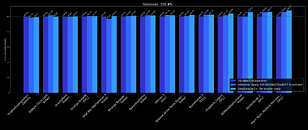
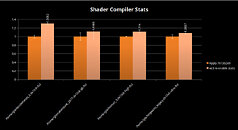
Intel engineers today merged 14 compiler patches into the Mesa 3D graphics stack to fix performance regressions that threatened Xe3 iGPUs in upcoming Core Ultra Series 3 "Panther Lake" mobile chips. The patches focus on compiler scheduling and thread-level parallelism, reintroducing conservative static-analysis heuristics tuned to Xe3 behavior. In Intel lab testing, the changes produced measurable gains: peak gaming runs rose by up to 18%, while many gaming runs climbed in the mid-to-high single digits. Those runtime improvements come with a cost: shader pre-compilation workloads in shader-db benchmarks grew by about 25%. It is a compile-time penalty Intel accepted because it yielded the largest real-world frame-time benefits. The updates are already in Mesa 25.3 and maintainers plan backports to the stable 25.2 branch so Linux users can avoid regressions as Panther Lake hardware approaches market arrival.
However, field-testing also revealed stability issues that remain under investigation. During capture runs, a handful of titles produced periodic GPU hangs, and one demanding game was omitted from some test sequences after it repeatedly triggered a hardware hang, prompting further debugging by Intel and contributors. Because Windows GPU drivers are proprietary, comparable public results for Panther Lake on that platform are not available, making cross-platform comparisons incomplete. For Linux users planning to purchase Panther Lake laptops, staying on a recent Mesa build will likely be necessary to see the improvements and sidestep regressions. Distributions and users should expect updated packages or backports in the weeks following the launch. The patch series is Intel's active ongoing effort to tune the software ahead of launch. Buyers should keep drivers current to get the best experience when the new PTL-H and PTL-U SKUs arrive later this year. Below, the blue graph shows performance uplift, while the orange graph shows shader increase with these new patches applied.
Sources:
Intel for Mesa 3D, via Phoronix, HardwareLuxx
However, field-testing also revealed stability issues that remain under investigation. During capture runs, a handful of titles produced periodic GPU hangs, and one demanding game was omitted from some test sequences after it repeatedly triggered a hardware hang, prompting further debugging by Intel and contributors. Because Windows GPU drivers are proprietary, comparable public results for Panther Lake on that platform are not available, making cross-platform comparisons incomplete. For Linux users planning to purchase Panther Lake laptops, staying on a recent Mesa build will likely be necessary to see the improvements and sidestep regressions. Distributions and users should expect updated packages or backports in the weeks following the launch. The patch series is Intel's active ongoing effort to tune the software ahead of launch. Buyers should keep drivers current to get the best experience when the new PTL-H and PTL-U SKUs arrive later this year. Below, the blue graph shows performance uplift, while the orange graph shows shader increase with these new patches applied.


19 Comments on Intel Fine-Tunes "Panther Lake" Gaming Performance, Up to 18% Boost Before Launch
Easily bad enough for me to warn anyone off buying anything with Intel graphics for the forseeable.
But the nuance is still important: Intel’s own headline still says “up to 18% boost,” which is technically correct (NBA 2K23 sees that much vs. the broken baseline) but reads like a marketing slide out of context.
Looking at the data, most titles only gain 1–5%, some regress slightly, and geomean uplift is about +2.4%. It’s good work, just not a magic 18% across the board.
Spending a few dollars here or there will not bring me a decent amd64 processor and storage and network chips. It will bring low quality parts and software.
Make processors without graphics. Companies should solder on dedicated graphic cards with dedicated dram on motherboards or just use proper nvidia plug in cards.I bought more than 4 refurbished lenovo laptops with official microsoft refurbisher windows license. all the intel ones had problems. The amd ones work better out of the box with w11 pro. I could install gnu linux. I keep on purpose w11 pro on the device to see how broken windows is out of the box with a microsoft refurbisher license. Very interesting how a microsoft refurbisher license w11 pro has lots of problems on amd stock lenovo laptop which is just out of the 4 years warranty window.
Nova lake should follow arrow lake for the desktop and the normal laptop
www.phoronix.com/news/Intel-Fixes-Xe3-Perf-ProblemsHe didn't talked with Jerez, he just reported on the data that Jerez published.
Intel also started to show their CPU losing to the competion in their marketing slides. I'm not defending a bilion dollar company, but I'm bothered by critiscism that don't apply to the context.
It's just a bunch of Intel engineer sharing their work with the open source community, and journalists stumbled upon it and reported on it. The data that I showed was literally shared by an Intel employee for the world to see.
Just say that you don't like the quality of TPU reporting, rather than diving into conspiracy stuff (below is club 386 reporting on the matter). And as I said before, it's up to 18% faster than something that was broken to begin with. It's obvious that the disdain that you have for that brand prevented you from reading the source,( or even the article) wich is transparent about what's going on, the drawbacks, or even the games are that still bugged.
Fine marketing dishonesty to say that the GPU will hang in some games, or that performace is still weird in other games. Also TPU is a corrupted media receveing money from Intel to mask PR as reporting.
That's why I'm calling BS on the marketing theory, because that's a shyte marketing strategy. Launch reviews are going to be the real deal, once Panther Lake launches in a few months, nobody will care about that linux bug-fixing story, and they will look at how it performs vs Lunar Lake on windows.
And oh yhea, Intel iGPU having performance issues on linux isn't a new thing, that was already the case with Lunar lake:
www.phoronix.com/review/lunar-lake-xe2
So, once gain, that news is about Intel trying to unbreak something that's been broken for a while. Up 18% faster than something broke, just shows that progress is made anyone technologically literate understands what that news is about. But for all we know that might still be pretty bad compared to performance on Windows.
I don't have blinders; I'm just less cynical and studied marketing. But hey, I remembered that Intel fired their marketing dept, and use AI now, so maybe you're right, it is marketing, but it's bad because it's managed by an AI.