Monday, October 13th 2025

Intel Phases Out "Ponte Vecchio" and "Arctic Sound" Data Center GPUs
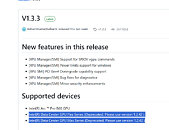
Intel has apparently started a slow deprecation phase of its "Ponte Vecchio" Data Center GPU Max and "Arctic Sound" Data Center GPU Flex series. According to the changelog in the Intel XPU Manager—a free and open-source tool for monitoring and managing Intel data center GPUs—version 1.3.3 deprecates Data Center GPU Flex Series and Data Center GPU Max Series. Owners of these GPUs are now advised to stick with the older version 1.2.42 for maximum feature support, and not update to the latest release. There are several reasons why this is happening, and a part of the suspicion is that Intel is preparing for "Jaguar Shores" AI accelerator transition, even as its has been only two years since its Data Center GPU Flex/Max series have launched.
Built on the Xe-HPC microarchitecture using Intel's 10 process, Ponte Vecchio is a massive chip, measuring about 1,280 mm² and containing roughly 100 billion transistors. It features 16,384 shading units, 1,024 tensor cores, and has a peak TDP of up to 600 W per card. The Max 1100, 1350, and 1550 SKUs, which offer 48 to 128 GB of memory, once made the design appealing for specialized HPC and AI applications. However, its large scale results in high costs, significant power consumption, and integration challenges. Intel's "Arctic Sound," also based on the Generation 12.5 GPU microarchitecture and manufactured on the Intel 10 node, is a much smaller chip, measuring around 190 mm² with about 8 billion transistors, 8,192 shading units, and 128 ROPs, and has a TDP close to 500 W. The Arctic Sound 1T, 2T, and M SKUs are compact 16 GB designs aimed at midrange data center tasks, with the GPU first appearing in 2021.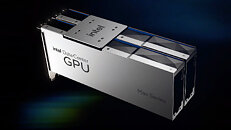
 These designs never captured significant market share and saw only limited use in enterprise settings for a few clear reasons. Ponte Vecchio and Arctic Sound entered a market already dominated by established accelerators and mature software stacks. For most buyers, factors like driver stability, tooling, and a robust ecosystem are as important as raw silicon. Intel had to develop both hardware and software ecosystems simultaneously, which created additional challenges for integrators and cloud providers considering migration and support costs. However, Intel successfully integrated these GPUs into the Aurora supercomputer, marking a significant engineering achievement. This deployment demonstrated that the chips could operate at the highest scale and meet the demands of a challenging customer. Despite this, Intel's frequent shifts in accelerator strategy discouraged vendors from committing to an Intel-exclusive approach. Future designs, such as the upcoming Jaguar Shores rack-scale platform, will feature more advanced silicon, HBM4, and a now mature OneAPI software stack.
Sources:
Intel on GitHub, via VideoCardz, Phoronix
Built on the Xe-HPC microarchitecture using Intel's 10 process, Ponte Vecchio is a massive chip, measuring about 1,280 mm² and containing roughly 100 billion transistors. It features 16,384 shading units, 1,024 tensor cores, and has a peak TDP of up to 600 W per card. The Max 1100, 1350, and 1550 SKUs, which offer 48 to 128 GB of memory, once made the design appealing for specialized HPC and AI applications. However, its large scale results in high costs, significant power consumption, and integration challenges. Intel's "Arctic Sound," also based on the Generation 12.5 GPU microarchitecture and manufactured on the Intel 10 node, is a much smaller chip, measuring around 190 mm² with about 8 billion transistors, 8,192 shading units, and 128 ROPs, and has a TDP close to 500 W. The Arctic Sound 1T, 2T, and M SKUs are compact 16 GB designs aimed at midrange data center tasks, with the GPU first appearing in 2021.


4 Comments on Intel Phases Out "Ponte Vecchio" and "Arctic Sound" Data Center GPUs
After canceling Falcon Shores I'll believe Intel when silicon is benchmarked by independent parties. The PR spin for investors is not really working anymore.
Hoping we're too dumb to notice or remember.