Friday, October 31st 2025

Thermal Grizzly WireView Pro II Now Available for Pre-Order

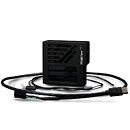
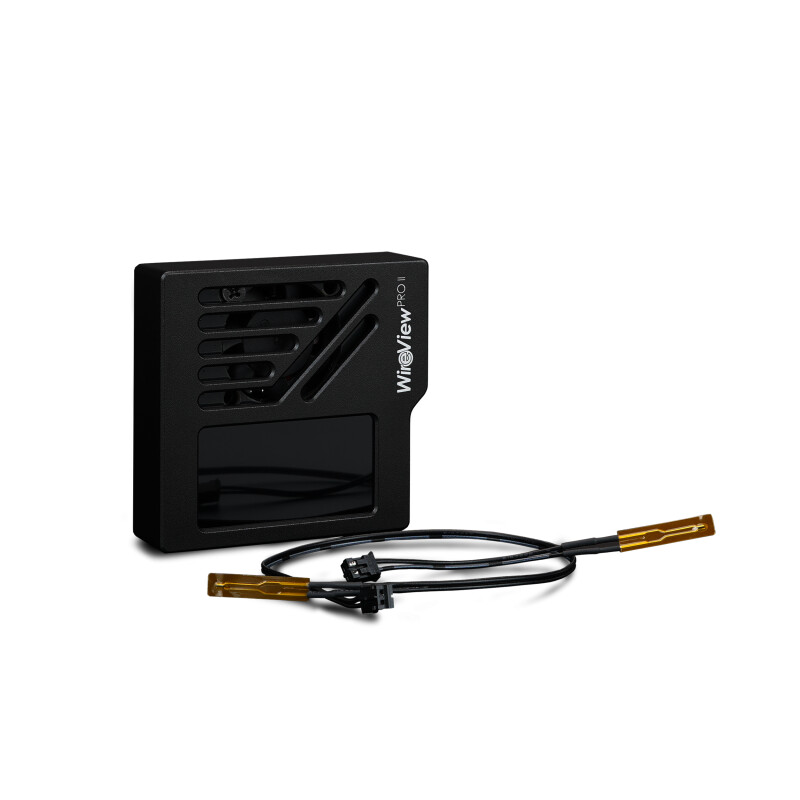
The WireView Pro II, which was already presented at Computex 2025, is now available for pre-order exclusively in the Thermal Grizzly shop and offers new features for monitoring and data logging as well as new protection functions for graphics cards with a 12VHPWR power connector. The WireView Pro II is a device for measuring the power consumption of graphics cards and introduces precise per-pin monitoring of the 12V-2x6 connector for the first time, providing valuable insights into load distribution on modern high-end graphics cards along with advanced safety features.

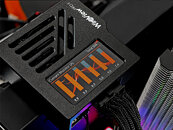
A CNC-machined aluminium housing with semi-passive cooling and a high-contrast TFT-IPS display ensures reliable visualization of all critical measurements. Automatic data logging and an extended 2-year warranty for the GPU connector and graphics card provide additional peace of mind in demanding setups.
The WireView Pro II has been specifically developed for the demanding use of modern high-end graphics cards with the 12V-2x6 connector and represents the most advanced iteration of the WireView Pro. Current is not only measured as a total value, but also per each individual pin and wire of the 12V-2x6 connector. This enables immediate identification of potential contact issues between the cable and graphics card. The WireView Pro II has been purpose-built to enable precise monitoring of the 12V-2x6 connector, allowing early detection of load distribution problems and helping to prevent possible damage to the graphics card and the 12V-2x6 connector.

The WireView Pro II is available for EUR 119.90 incl. VAT or USD 119.90 excl. VAT and is expected to be available from mid December, 2025.

WireView Pro II features overview:
  • Enhanced version of the WireView Pro with additional functionality
  • Per-pin current monitoring for highest precision
  • Extended warranty covering the GPU connector for 2 years
  • Automatic data logging for failure case analysis
  • Custom-designed 12V-2x6 connector for optimal compatibility
  • Normal or reversed plug orientation options
  • Plug-and-play usability without the need for custom configuration
  • 90-degree cable routing for optimized cable management
  • CNC-machined aluminium housing with active cooling functionality
  • Semi-passive 30-mm fan controlled by temperature and power load
  • Temperature monitoring at the input and output of the 12V-2x6 connector
  • Two external 10k NTC temperature sensors included
  • USB-C for user-performed firmware updates
  • USB-C to USB-2.0 adapter cable for internal PC integration
  • 320x170-pixel TFT-IPS color display
  • Main View: per-pin monitoring, power consumption, connector detection, fan %, output temperature
  • Simple View: total power, highest-current pin, voltage, hottest sensor
  • Current Monitor: per-pin current in amps with visual limit display
  • Voltage Monitor: per-pin voltage and average value
  • Power Monitor: per-pin and total power
  • Temperature Monitor: display of all 4 temperature sensors
  • Audible and visual warnings if limits are exceeded
  • Extensive configuration options for the display
  • Global settings for alarms, cycle mode, design, and fan control
Availability and Pricing
Thermal Grizzly WireView Pro II GPU monitoring tool is now available for pre-order exclusively from the Thermal Grizzly Online Shop. In the table below, you can see the manufacturer's suggested retail prices (MSRP) including VAT.

The WireView Pro IIis available with the 12VHPWR 16-pin power connector (4x sensor + 12x power/ground) in "Normal" (N) and "Reverse" (R) versions:
  • If the graphics card has power connectors where the four sensor pins are located between the PCB and the 12 power pins, the "N" version is required (PCB - 4x sensor pin - 12x power pins).
  • If the graphics card has power connectors where the 12 power pins are located between the PCB and the four sensor pins, the "R" version is required (PCB - 12x power pins - 4x sensor pin).
  • TG-WV-P2-H19N WireView Pro II GPU 12V-2x6 Normal €119,90
  • TG-WV-P2-H19R WireView Pro II GPU 12V-2x6 Reversed €119,90

Source: Thermal Grizzly
Add your own comment

17 Comments on Thermal Grizzly WireView Pro II Now Available for Pre-Order

#1
Chaitanya
Cottage industry is thriving thanks to the fire hazard.
Posted on Reply
#3
b1k3rdude
I have a certain amount of respect for TG/Der8aur, and I appreciate a product like this. If I 'ever' upgrade to a 4090 I will defiantly be getting this. I currently own an updated version (thank you to Florian@ThermalGrizzly) of the original W/v (8pin x3 to 12v x1 - it provide a 90 degree adapter and to use my old PSU)

But I am concerned about the warranty policy, I get replacing the WV2pro if it experiences an overload event, I even get offering to replace the 12v connector, but replacing the whole video card..? How can they afford this..
Posted on Reply
#4
lepudruk
With Aqua Computer AMPINEL coming soon at 80 euro per piece, I don't think Der8auer's new toy would sell well..
This new WireView offers only monitoring while AMPINEL will have active current balancing which is far superior.
Posted on Reply
#5
yzonker
lepudrukWith Aqua Computer AMPINEL coming soon at 80 euro per piece, I don't think Der8auer's new toy would sell well..
This new WireView offers only monitoring while AMPINEL will have active current balancing which is far superior.
Yes and no. The problem with the AMPINEL is that in order to actually load balance, it needs to increase resistance on the pins that are drawing too much current which adds more heat and voltage drop. The better solution is to recognize the cable/connector has a load balance issue and replace it. A good cable/connector will be fairly well balanced and not need intervention from another device.

Both devices can of course serve this purpose, but the built in balancing is more of a patch to an underlying problem than being a far superior solution. The best solution is to have a good balanced cable in the first place.
Posted on Reply
#6
RejZoR
lepudrukWith Aqua Computer AMPINEL coming soon at 80 euro per piece, I don't think Der8auer's new toy would sell well..
This new WireView offers only monitoring while AMPINEL will have active current balancing which is far superior.
Der8auers frankly looks better. Also he stated that price increase (from around 90€ to around 119€) is for the better warranty that will also include graphic card which is not even their responsibility.
Posted on Reply
#7
CornyOC
lepudrukWith Aqua Computer AMPINEL coming soon at 80 euro per piece, I don't think Der8auer's new toy would sell well..
This new WireView offers only monitoring while AMPINEL will have active current balancing which is far superior.
Der8auer has already explained in the video that in order to load balance with such device they would have to counter balance resistance with MOSFETs and that would sort of work against an ideal solution. That is because wires with worse conductivity/contact would be loaded more amps, whilst better wires with better contact would be choked. This is NOT how you want to load balance. Remember, depending on how bad the contact is and/or how bad the individual wire's conductivity is, at lower amps components can still cause overheat. Der8auer didn't disclose this as a literal reference, but it gives us a hint that Aquacomputer's AMPINEL will potentially use that method to load balance. I am only speculating, let's see what the product is like when it gets released and what Aquacomputer is willing to disclose to public, if they never mention anything about the load balancing method, then it will be a straight up red flag.

I do not know yet what AQ's AMPINEL will do to load balance, but if it will be what has been described by Der8auer, then it is a better option to have a monitoring device that will alert/shut down and then investigate what component(s) cause imblanced amp load per wire, and just replace the faulty/defective component (or send out GPU for repair if it's that). For example, if your 12V-2x6 cable is not properly inserted or has a bad contact in one 12v pin, then load balancing would probably just make it worse as more amps would be fed through it, whilst reducing amps through the better contacts. So a solution is a new cable, not load balancing.

Personally, I suspect that any load balancing method that comes from a little adapter device like these, would be a bad band aid that doesn't solve the issue but rather bypass and cause the next components in line to suck it up. The solution needs to come from the PSU, it has to monitor power draw of GPU then load balance per wire accordingly. So in my opinion, the solution to this is, either PSU tech needs to evolve or more robust cables and sockets need to be developed to ensure that they can take imbalanced amperage better (so thicker wires and pins, with much higher FOS). Probably both should happen, this form factor is simply not sufficient for the amount of power draw and the failures occur more often the higher the power draw. It needs to be redesigned to ensure there are no bad contacts. Besides that, the whole PC hardware industry should switch to 24V power rails, 12V was okay decades ago, but not so much now. Sub 1V supply for most electronic components, but over 50A @ 12V supply for those small chips? Maybe even consider 48V tbh.

Besides TG's device looks higher quality product with better display. So that alone would involve some premium pricing.
Posted on Reply
#8
Chomiq
Der8auer absolutely hates this connector but he can't stop himself from making money out of it.
Posted on Reply
#9
HBSound
yzonkerYes and no. The problem with the AMPINEL is that in order to actually load balance, it needs to increase resistance on the pins that are drawing too much current which adds more heat and voltage drop. The better solution is to recognize the cable/connector has a load balance issue and replace it. A good cable/connector will be fairly well balanced and not need intervention from another device.

Both devices can of course serve this purpose, but the built in balancing is more of a patch to an underlying problem than being a far superior solution. The best solution is to have a good balanced cable in the first place.
How can you know you have a good, balanced cable?
Posted on Reply
#10
lepudruk
yzonkerBoth devices can of course serve this purpose, but the built in balancing is more of a patch to an underlying problem than being a far superior solution. The best solution is to have a good balanced cable in the first place.
I called it "superior" in terms of number of options and price. It seems likely that the average user will choose something that offers more for less.

As you've noticed, there are no details to talk about how does it handle with the problem. I guess we have to wait for more data (or reviews).

BTW It's ironic that such "workaround" is needed in a first place - the problem lies elsewhere but nobody at the source doesn't seem to care..
Posted on Reply
#11
TheinsanegamerN
yzonkerYes and no. The problem with the AMPINEL is that in order to actually load balance, it needs to increase resistance on the pins that are drawing too much current which adds more heat and voltage drop. The better solution is to recognize the cable/connector has a load balance issue and replace it. A good cable/connector will be fairly well balanced and not need intervention from another device.
There's no difference in the load balancing of the 12 pin or the old 8 pin connectors. Both are dumb cables. They are physically incapable of self balancing. Balancing is the job of the consuming device.
yzonkerBoth devices can of course serve this purpose, but the built in balancing is more of a patch to an underlying problem than being a far superior solution. The best solution is to have a good balanced cable in the first place.
Cables do not balance. Devices balance.
Posted on Reply
#12
EsaT
yzonkerYes and no. The problem with the AMPINEL is that in order to actually load balance, it needs to increase resistance on the pins that are drawing too much current which adds more heat and voltage drop. The better solution is to recognize the cable/connector has a load balance issue and replace it. A good cable/connector will be fairly well balanced and not need intervention from another device.

Both devices can of course serve this purpose, but the built in balancing is more of a patch to an underlying problem than being a far superior solution. The best solution is to have a good balanced cable in the first place.
Only way cable could ever balance load is by adding resistance to wires whose load tries to draw too much current.
Onus for this mess is 110% on Greedia and their POS engineering:
  • First overspeccing connector over its real capabilities leading to having no real safety margins.
  • And then not mandating load balancing (/current limit) per pin/wire.
Posted on Reply
#13
TheDeeGee
NVIDIA saves maybe $5 per board to make it unsafe, and this will make TG $120.
Posted on Reply
#14
TheinsanegamerN
EsaTOnly way cable could ever balance load is by adding resistance to wires whose load tries to draw too much current.
Onus for this mess is 110% on Greedia and their POS engineering:
  • First overspeccing connector over its real capabilities leading to having no real safety margins.
the connector is not under specced. It's not over specced either, the 8 pin was over specced. The specs of t 12v6 are fine, as long as the load is balanced.

Der8aur has demonstrated that the cause of melting is these pins draining 21+ amps because there is no load balancing. That is over 3x the safe limit. Any connector is going to melt under such conditions, unless youa re going heavy industrial type stuff.
EsaT
  • And then not mandating load balancing (/current limit) per pin/wire.
This is where nVidia truly screwed up. Load balancing was mandatory on any card with more then 1 6/8 pin connector, for obvious reasons.

Despite all this, we have no hard data on the rate of card failures. 8 pins melted too, it just wasnt newsworthy. nVidia sells millions of cards per year, if this connector really was faulty, we'd have seen sufficient numbers to demand a recall by now.
CornyOCDer8auer has already explained in the video that in order to load balance with such device they would have to counter balance resistance with MOSFETs and that would sort of work against an ideal solution. That is because wires with worse conductivity/contact would be loaded more amps, whilst better wires with better contact would be choked. This is NOT how you want to load balance. Remember, depending on how bad the contact is and/or how bad the individual wire's conductivity is, at lower amps components can still cause overheat. Der8auer didn't disclose this as a literal reference, but it gives us a hint that Aquacomputer's AMPINEL will potentially use that method to load balance. I am only speculating, let's see what the product is like when it gets released and what Aquacomputer is willing to disclose to public, if they never mention anything about the load balancing method, then it will be a straight up red flag.

I do not know yet what AQ's AMPINEL will do to load balance, but if it will be what has been described by Der8auer, then it is a better option to have a monitoring device that will alert/shut down and then investigate what component(s) cause imblanced amp load per wire, and just replace the faulty/defective component (or send out GPU for repair if it's that). For example, if your 12V-2x6 cable is not properly inserted or has a bad contact in one 12v pin, then load balancing would probably just make it worse as more amps would be fed through it, whilst reducing amps through the better contacts. So a solution is a new cable, not load balancing.

Personally, I suspect that any load balancing method that comes from a little adapter device like these, would be a bad band aid that doesn't solve the issue but rather bypass and cause the next components in line to suck it up. The solution needs to come from the PSU, it has to monitor power draw of GPU then load balance per wire accordingly. So in my opinion, the solution to this is, either PSU tech needs to evolve or more robust cables and sockets need to be developed to ensure that they can take imbalanced amperage better (so thicker wires and pins, with much higher FOS). Probably both should happen, this form factor is simply not sufficient for the amount of power draw and the failures occur more often the higher the power draw. It needs to be redesigned to ensure there are no bad contacts. Besides that, the whole PC hardware industry should switch to 24V power rails, 12V was okay decades ago, but not so much now. Sub 1V supply for most electronic components, but over 50A @ 12V supply for those small chips? Maybe even consider 48V tbh.

Besides TG's device looks higher quality product with better display. So that alone would involve some premium pricing.
A) this would break all backwards compatibility with other hardware. PCIe cards like GPUs, remember, get 12V power. So you'd have 0 backwards compatibility.
B) such components are also more expensive. People already complain about the price of things. Plus since the whole industry is built around 12v, it would take years of effort to transition, with the loss of scalability along the way.

Better idea: force card makers via PCI SIG to include load balancing, which they should be doing anyway.
Posted on Reply
#15
CornyOC
TheinsanegamerNthe connector is not under specced. It's not over specced either, the 8 pin was over specced. The specs of t 12v6 are fine, as long as the load is balanced.

Der8aur has demonstrated that the cause of melting is these pins draining 21+ amps because there is no load balancing. That is over 3x the safe limit. Any connector is going to melt under such conditions, unless youa re going heavy industrial type stuff.

This is where nVidia truly screwed up. Load balancing was mandatory on any card with more then 1 6/8 pin connector, for obvious reasons.

Despite all this, we have no hard data on the rate of card failures. 8 pins melted too, it just wasnt newsworthy. nVidia sells millions of cards per year, if this connector really was faulty, we'd have seen sufficient numbers to demand a recall by now.


A) this would break all backwards compatibility with other hardware. PCIe cards like GPUs, remember, get 12V power. So you'd have 0 backwards compatibility.
B) such components are also more expensive. People already complain about the price of things. Plus since the whole industry is built around 12v, it would take years of effort to transition, with the loss of scalability along the way.

Better idea: force card makers via PCI SIG to include load balancing, which they should be doing anyway.
The previous 8 pin PCIe connectors were rated 150W per cable/connector and since they are far more robust design with thicker pins and socket they had a higher FOS. There was a a number of failures due to bad contacts or manufacturing defects, but due to much higher FOS (due to more robust components) and lower power delivery rating, it was less likely to occur. We are talking about 4x 12V wires @150W max VS 6x 12V wires @600W max, not only that but the pins and sockets are not even half the size! So a lot more amps through a lot smaller contact surface and thinner wires, FOS goes rock bottom, like ~1.1 if I remember correctly. Much more prone to failure when anything, just a little bit is not prefect. Be it a cable just slightly not inserted fully, the sockets inside the connector not sitting completely flush and leveled, a bit of weaker solder inside the cable or GPU PCB.

The designers (sorry forgot the electrical origination's name) and Nvidia knew exactly what to expect, and they will get away with it as they are worth a country by revenue at this point. They chose the low FOS design choice for the sake of favorable form factor.

As for the source of the issue, it has been there all this time pretty much, but pre-2020s the power draw wasn't that high to be an issue with 2-3 PCIe 6/8 pin connectors (unless bad contact, not fully inserted, defective parts, etc.), so the problem could not manifest under normal circumstances. Now with the new form factor12V-2x6 connectors and 450W+ power draw, it does happen. So the imbalanced amps per wire issue was there the whole time, but it is much more likely to manifest with smaller form factor + lower FOS and higher power draw. The solution really needs to come from PSU side though, Nvidia rolled this out incorrectly as they should've looked into load balancing issue and made requests for new PCIe industrial standards for PSU sector. PSU should monitor and supply balanced amps per wire.
Posted on Reply
#16
TheinsanegamerN
CornyOCThe previous 8 pin PCIe connectors were rated 150W per cable/connector and since they are far more robust design with thicker pins and socket they had a higher FOS. There was a a number of failures due to bad contacts or manufacturing defects, but due to much higher FOS (due to more robust components) and lower power delivery rating, it was less likely to occur. We are talking about 4x 12V wires @150W max VS 6x 12V wires @600W max, not only that but the pins and sockets are not even half the size! So a lot more amps through a lot smaller contact surface and thinner wires, FOS goes rock bottom, like ~1.1 if I remember correctly. Much more prone to failure when anything, just a little bit is not prefect. Be it a cable just slightly not inserted fully, the sockets inside the connector not sitting completely flush and leveled, a bit of weaker solder inside the cable or GPU PCB.
Do you have any source with actual numbers to indicate that the failure rate of the 8 pin was statistically lower? Is there any hard evidence the 12 pin is more prone to failure?

So far all anyone has offered is Reddit posts.
CornyOCThe designers (sorry forgot the electrical origination's name) and Nvidia knew exactly what to expect, and they will get away with it as they are worth a country by revenue at this point. They chose the low FOS design choice for the sake of favorable form factor.
So we're now claiming nVidia knew these connectors would fail? We're at tin foil hat conspiracy territory....
CornyOCAs for the source of the issue, it has been there all this time pretty much, but pre-2020s the power draw wasn't that high to be an issue with 2-3 PCIe 6/8 pin connectors (unless bad contact, not fully inserted, defective parts, etc.), so the problem could not manifest under normal circumstances.
This is demonstrably untrue. One can easily find the same type of anecdotes over melted 8 pins dating far pre 2020, on GPUs that were pulling under 300 watts.

NiceHash/comments/85b0c8/melted_power_cable
There are 0 hard numbers for "8 pins only failed if they were not fully inserted or defective".
CornyOCNow with the new form factor12V-2x6 connectors and 450W+ power draw, it does happen. So the imbalanced amps per wire issue was there the whole time, but it is much more likely to manifest with smaller form factor + lower FOS and higher power draw. The solution really needs to come from PSU side though, Nvidia rolled this out incorrectly as they should've looked into load balancing issue and made requests for new PCIe industrial standards for PSU sector. PSU should monitor and supply balanced amps per wire.
Monitoring power draw has always been on the device PULLING THE POWER. The PSU has no idea what you are plugging into it. It is not the industry standard anywhere for a PSU to determine what appropriate draw for a device is.

The solution is the device needs to have load balancing on board, same as it has always been. I'm still waiting for someone to provide actual evidence the 12v is failing any more often then 8 pin cards did, as opposed to being a media frenzy everyone is jumping onto.
Posted on Reply
#17
CornyOC
TheinsanegamerNDo you have any source with actual numbers to indicate that the failure rate of the 8 pin was statistically lower? Is there any hard evidence the 12 pin is more prone to failure?

So far all anyone has offered is Reddit posts.

So we're now claiming nVidia knew these connectors would fail? We're at tin foil hat conspiracy territory....

This is demonstrably untrue. One can easily find the same type of anecdotes over melted 8 pins dating far pre 2020, on GPUs that were pulling under 300 watts.

NiceHash/comments/85b0c8/melted_power_cable
There are 0 hard numbers for "8 pins only failed if they were not fully inserted or defective".

Monitoring power draw has always been on the device PULLING THE POWER. The PSU has no idea what you are plugging into it. It is not the industry standard anywhere for a PSU to determine what appropriate draw for a device is.

The solution is the device needs to have load balancing on board, same as it has always been. I'm still waiting for someone to provide actual evidence the 12v is failing any more often then 8 pin cards did, as opposed to being a media frenzy everyone is jumping onto.
Frankly speaking, Reddit, Youtube, social media sites are full of reports. People like Der8auer himself, literally demonstrated how bad 1.1 FOS is, when one wire was pulling over 20A during a 5090 stress test. Besides that, I don't really care what you believe or not. I have done homework for people over the internet in the past, and even then they rejected it, so I stopped doing that. Do your own research.
Posted on Reply
Add your own comment
Nov 13th, 2026 22:44 CST change timezone

New Forum Posts

Popular Reviews

TPU on YouTube

Controversial News Posts