Thursday, November 13th 2025

NVIDIA Moves to In-House Server Production, Leaving OEMs with a Secondary Role

NVIDIA plans to reshape the industry's approach to building high-performance AI servers with its "Vera Rubin" product stack, which will enter volume production as the VR200 line in late 2026. Rather than supplying CPUs and GPUs to OEMs, NVIDIA plans to ship fully finished L10 compute trays that come pre-populated with "Vera" CPUs, "Rubin" accelerators, memory, 800G NICs, 110kW power delivery, and liquid-cooling infrastructure, all of which are validated before they leave the factory. This, however, will leave many system vendors and OEMs shifting away from designing core server electronics and toward tasks such as rack-level assembly, power configuration, installation of rack cooling sidecars, and final certification.

Rubin silicon is rumored to have a TDP of up to 2.3 kW for highest-end models, leading to rack-level power consumption exceeding 250 kW and making custom cooling designs economically unviable. NVIDIA's strategy reportedly involves standardizing cooling and power across two performance tiers while increasing network I/O density. These choices decrease the feasibility and cost-effectiveness of third-party replication. By centralizing production with select partners, development cycles can be shortened and manufacturing yields improved. However, this approach also limits the options OEMs and hyperscalers have traditionally used to differentiate their hardware.
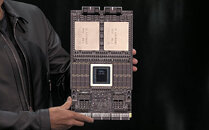

The entire supply chain value of the lucrative AI server market will be different, as value and margins are likely to migrate toward certified component makers and high-volume integrators, leaving branded OEMs with narrower opportunities for hardware differentiation and tighter margins. Cooling and power subsystem vendors that secure qualification are set to benefit, while smaller suppliers may find it harder to compete.
Source: @Jukanlosreve on X
Add your own comment

30 Comments on NVIDIA Moves to In-House Server Production, Leaving OEMs with a Secondary Role

#2
windwhirl
Nvidia really trying to emulate Apple here, going as far in vertical integration as they can.
Posted on Reply
#3
dgianstefani
TPU Proofreader
windwhirlNvidia really trying to emulate Apple here, going as far in vertical integration as they can.
It equals cost efficiency if business is good, which it is.
Posted on Reply
#4
LastDudeALive
dgianstefaniIt equals cost efficiency if business is good, which it is.
And more importantly, it emphasizes that Nvidia is the most valuable part of the supply chain. If the value of your product depends on third-parties (software, additional hardware, system building, etc), your valuation as a company is dependent on those companies. A bad quarter from a partner means your stock price takes a hit as well.

At this point, Nvidia has everything except the chip manufacturing in-house, while AMD can't decide which parts of the product stack they want to have in-house vs outsource to streamline.
Posted on Reply
#5
kondamin
Oh make this the same blunder 3dfx made
Posted on Reply
#6
Hecate91
kondaminOh make this the same blunder 3dfx made
Nvidia is too large of a company to fail at this point, especially if they can keep the AI bubble going.

AMD selling off their server production business isn't the same as this news, what Nvidia is doing is vertical monopoly tactics, not good for anyone but their own profits.
Posted on Reply
#7
kondamin
Hecate91Nvidia is too large of a company to fail at this point, especially if they can keep the AI bubble going.

AMD selling off their server production business isn't the same as this news, what Nvidia is doing is vertical monopoly tactics, not good for anyone but their own profits.
At this point in time, yes I do not know where they will stand in 2028 never mind where they will be in 2030
Posted on Reply
#8
john_
Typical of Nvidia, trying to get all the money. But who can blame them? They know that their partners will keep making money, just much less, thanks to the quantities they sell.
LastDudeALiveMeanwhile, AMD sold off their in-house server production team.

www.techpowerup.com/342291/amd-sells-zt-systems-data-center-manufacturing-to-sanmina
AMD was always in disadvantage, so they can't be seen as competitors to manufacturers. They kept the personnel needed to design racks, they sold the manufacturing part of ZT Systems to not be seen as competitors to companies making racks for Instinct cards.
Hecate91Nvidia is too large of a company to fail at this point, especially if they can keep the AI bubble going.
Even if AI bursts in the most amazing way tomorrow morning, Nvidia wouldn't really suffer. Their income will, their valuation will, but they have a very strong position and thanks to AI a very strong pocket to keep going. They will just try to find other markets to become a monopoly, like for example laptops and desktops where they could channel all those ARM based chips they are building and while having a monopoly in GPUs, offer to their PC platforms an advantage over connecting their gaming GPUs with an X86 CPU. For example, the next RTX 7090 for example could be using 8 lanes of PCIe 5.0 when used in an X86 system with AMD or Intel CPUs, but use a different RTXLink (or something) interconnect when used in an Nvidia platform, with much higher bandwidth and lower latency, offering significant advantage in 1% low FPS. Just an example. People will just start moving from X86 systems to Nvidia based systems giving Nvidia the opportunity to make money from the whole system, not just the GPU.
Posted on Reply
#9
mb194dc
Hecate91Nvidia is too large of a company to fail at this point, especially if they can keep the AI bubble going.

AMD selling off their server production business isn't the same as this news, what Nvidia is doing is vertical monopoly tactics, not good for anyone but their own profits.
If their cost base is adjusted to bubble level revenue and that revenue falls. Say 99%, or close to it.

They've already sold all the ML hardware needed for the next 10 or 20 years.

Then they could really struggle over the next decade.
Posted on Reply
#10
Darmok N Jalad
LastDudeALiveAt this point, Nvidia has everything except the chip manufacturing in-house, while AMD can't decide which parts of the product stack they want to have in-house vs outsource to streamline.
I didn’t think AMD made anything in house? I have my doubts that nvidia will own any manufacturing equipment. I’d bet they will still sub all production to contracted factories. There just won’t be middle-men anymore. Even an FE graphics card is ultimately manufactured by a combo of TSMC and a packaging and assembler like Foxconn.
Posted on Reply
#11
Bwaze
It's only natural, look at the size differences of Nvidia and partners.

It's like tiger outsourcing his work to his fleas.
Posted on Reply
#12
Hyderz
Hecate91Nvidia is too large of a company to fail at this point, especially if they can keep the AI bubble going.
Famous last words... we all thought intel couldnt fail, but i agree nvidia is no intel
Posted on Reply
#13
_JP_
Biggest difference between nVidia and Intel before getting outrun, is that nVidia isn't sitting on their butts just waiting for the cash to roll in, and this news piece is an example of it. Intel wasn't making management, structure or supply-chain moves for some 5 years until it got shook. Just kept on stubbornly trying to compete on nodes.
Posted on Reply
#14
Unregistered
Reminds me of how the fall of 3DFX began.

They wanted to be greedy and wanted to be the only ones selling their GPUs.

the difference is, 3DFX didnt had an inflated 4.5 trillion capitalization.

Which helps a lot with their bribed influencers that make sure to keep the hype going.
#15
evernessince
dgianstefaniIt equals cost efficiency if business is good, which it is.
If this were a smaller company that didn't have a monopoly over the market, sure.

In this case though, Nvidia's "cost efficiency" goal is in the same way standard oil vertically integrating offered cost efficiency, by increasing control over a market it has a monopoly over and decreasing competition.

Rest assured, this will not bode well for Nvidia's customers, be they business or individuals.
Posted on Reply
#16
Onasi
Neo_Morpheusthe difference is, 3DFX didnt had an inflated 4.5 trillion capitalization.

Which helps a lot with their bribed influencers that make sure to keep the hype going.
*sigh*
Again, market cap has no relevance and is NOT in any way connected to companies free cash flow or reserves. In the words you can understand - it doesn’t mean that NV suddenly has more money to “bribe influencers”. This is not how it works. I agree that they are overvalued, but this is just how the stock market works - it’s pure speculation all the way down. Let’s say that tomorrow, for whatever reason, NV stock drops 10%. This absolutely does not mean that they are suddenly 450 million poorer.
Posted on Reply
#17
LastDudeALive
evernessinceRest assured, this will not bode well for Nvidia's customers, be they business or individuals.
The customers will love this, actually. If you've built a GW scale datacenter and it suddenly goes down in the middle of the night, you absolutely DO NOT want to have to wrangle representatives from multiple companies onto a conference call to figure out what's wrong. Nvidia is successful preciously because they provide everything. Whether the problem is CUDA, networking, the GPUs, the CPUs, or now the servers themselves, you just call 1 person (your Nvidia rep) to figure it out. This is exactly what companies need.
Posted on Reply
#18
evernessince
LastDudeALiveThe customers will love this, actually. If you've built a GW scale datacenter and it suddenly goes down in the middle of the night, you absolutely DO NOT want to have to wrangle representatives from multiple companies onto a conference call to figure out what's wrong. Nvidia is successful preciously because they provide everything. Whether the problem is CUDA, networking, the GPUs, the CPUs, or now the servers themselves, you just call 1 person (your Nvidia rep) to figure it out. This is exactly what companies need.
Nvidia is successful because of CUDA and their hardware. Saying they are successful because of their vertical integration is backwards, the former two enabled the later. Not the other way around. With that established, this isn't about building on what took them to where they are today, it's about increasing control.

The more a company tries to do, the less focus it has on it's core products. I don't think it's a good move to take over the building part, because companies like Dell only have an 18% margin and they have decades of experience in that market. It's really not worth it from a resource perspective, it reminds me of Intel when it had it's monopoly over the CPU market. The only angle it makes sense from is Nvidia wanting to exert more control. They clearly aren't doing it to help it's partners or for the no so fat margins.
Posted on Reply
#19
LastDudeALive
evernessinceNvidia is successful because of CUDA and their hardware. Saying they are successful because of their vertical integration is backwards, the former two enabled the later.
Do you not understand what vertical integration is? CUDA is vertical integration. Nvidia owning their own networking standard is vertical integration. Nvidia developing their own datacenter CPU is vertical integration. All of these have directly contributed to their success, because this vertical integration allowed Nvidia to become the one-stop-shop for making an AI datacenter.
evernessinceThe more a company tries to do, the less focus it has on it's core products. I don't think it's a good move to take over the building part, because companies like Dell only have an 18% margin and they have decades of experience in that market. It's really not worth it from a resource perspective, it reminds me of Intel when it had it's monopoly over the CPU market.
It's not about the margin, the margin is irrelevant for Nvidia when they're a $4 trillion company with $50 billion cash on hand. They're not doing this to squeeze out an extra 1% margin. It's about making the experience for the end user more simple. Now, if there's a problem with your servers, you don't have to call the third-party OEM, you just call Nvidia. And anyone who's worked in the enterprise IT market will tell you that is invaluable, companies will pay more to only have a single point of contact instead of dealing with multiple vendors.
Posted on Reply
#20
evernessince
LastDudeALiveDo you not understand what vertical integration is? CUDA is vertical integration. Nvidia owning their own networking standard is vertical integration. Nvidia developing their own datacenter CPU is vertical integration. All of these have directly contributed to their success, because this vertical integration allowed Nvidia to become the one-stop-shop for making an AI datacenter.
I repeat, saying they are successful because of their vertical integration is backwards. The networking and datacenter CPUs wouldn't have added squat if the hardware wasn't good enough in the first place. Further integration certainly helped but that's because they had a good hardware base. The one begets the other.
LastDudeALiveIt's not about the margin, the margin is irrelevant for Nvidia when they're a $4 trillion company with $50 billion cash on hand. They're not doing this to squeeze out an extra 1% margin. It's about making the experience for the end user more simple. Now, if there's a problem with your servers, you don't have to call the third-party OEM, you just call Nvidia. And anyone who's worked in the enterprise IT market will tell you that is invaluable, companies will pay more to only have a single point of contact instead of dealing with multiple vendors.
We all know Nvidia is an altruistic company doing something to help their partners. FYI that's sarcasm.

It's foolish to bet against a company doing something for profit because that's the reason for the existence. Even more so when you are talking about Nvidia, a company that has publically been called out by it's partners multiple times and has even driven some of them out of business. You could not pick a worse company to imply their goal it to help partners. Helping partners would be the implied benefit but it is 1000% not Nvidia's goal. You'd have to be born yesterday to think Nvidia's of all companies is aiming for that.
Posted on Reply
#21
LastDudeALive
evernessinceThe networking and datacenter CPUs wouldn't have added squat if the hardware wasn't good enough in the first place. Further integration certainly helped but that's because they had a good hardware base. The one begets the other.
No, you don't know about this industry. Nvidia's datacenter hardware isn't technically superior to AMD's Instinct GPUs, and the Grace CPUs are technically inferior to EPYCs.

Nvidia's strength is offering everything through one vendor, which again, if you know anything about this industry, is an incredible advantage. Instead of writing your own code for your GPUs, you can just use CUDA. Instead of wrangling with Intel or Mediatek networking, you use Nvidia. Instead of dealing with a seperate CPU vendor, you just use Nvidia. And now, instead of having to reach out to an OEM for help with your server, you just ask your Nvidia rep.
evernessinceIt's foolish to bet against a company doing something for profit because that's the reason for the existence. Even more so when you are talking about Nvidia, a company that has publically been called out by it's partners multiple times and has even driven some of them out of business. You could not pick a worse company to imply their goal it to help partners. Helping partners would be the implied benefit but it is 1000% not Nvidia's goal. You'd have to be born yesterday to think Nvidia's of all companies is aiming for that.
You don't understand basic economics? If something is better for Nvidia's customers, Nvidia makes more money. That's how a free market works. Exchanging money for goods and services means both parties end up better off.
Posted on Reply
#22
john_
LastDudeALiveThe customers will love this, actually. If you've built a GW scale datacenter and it suddenly goes down in the middle of the night, you absolutely DO NOT want to have to wrangle representatives from multiple companies onto a conference call to figure out what's wrong. Nvidia is successful preciously because they provide everything. Whether the problem is CUDA, networking, the GPUs, the CPUs, or now the servers themselves, you just call 1 person (your Nvidia rep) to figure it out. This is exactly what companies need.
While you do have a point here, Nvidia's business model was always that of a walled garden that was limiting the option of (also) using hardware from competitors. Nvidia tried to manipulate users with PhysX and CUDA getting disabled when AMD GPU was primary, then AIBs with the Partner program, then there where rumors of companies seeing delays in receiving AI hardware when considering to try competing hardware also. Nvidia's way of doing business is known. With competing options from other companies emerging, not just from AMD, but also Broadcomm, Qualcomm, or even companies like Google, Amazon or Microsoft that try to create their own silicon, Nvidia is trying to make it sure that using anything else than Nvidia hardware will be a challenge. Grabbing the last $ is just a bonus. Offering what you call "one phone call support" is fine and many companies will appreciate it, but in the end they could end up limited to just that one specific phone number. If they try to call another number, they might find it somewhat difficult. They better also see the stick, not just the carrot.
Posted on Reply
#23
evernessince
LastDudeALiveYou don't understand basic economics? If something is better for Nvidia's customers, Nvidia makes more money. That's how a free market works. Exchanging money for goods and services means both parties end up better off.
Implying others don't know basic economics while unironically thinking that what we have is a free market is certainly funny.

We don't have a free market, we and most other countries have a mixed market. There's a reason for that, pure free markets don't work. You cannot create a system where supply and demand are the sole determiners of prices with no undue influence (as anyone who's lived in the last 60 years of capitalism would know). That kind of market is equivalent to anarchy, wherein the most powerful players will always gain and control the most influence due to the complete lack of any moderating forces. Government influence is prohibited in a pure free market.

Mind you, it's extra funny that you would imply that Nvidia of all companies is trying to encourage a free and fair market, particularly with this move that furthers their grip over the market. There are dozens of papers written on the impact of vertical integration with America being the top case study of the negative effects hitting every part of the economy: rooseveltinstitute.org/wp-content/uploads/2020/07/RI-Vertical-Integration-and-Market-Power-Crisis-Issue-brief-201904.pdf#:~:text=While the increase in horizontal concentration across,effects. If anything, the reverse is true.

You certainly are trying your best to side-step the fact that Nvidia, like all publically traded companies, exists to make money, they have a long history of being anti-competitive, and they are in a more dominant position than most past monopolies at their height. They also happen to be in an extremely lax regulatory environment that's taken basically no meaningful action in the last several decades to stop mass mergers, acquisitions, and vertical integration that have fixed power in an increasingly smaller amount of hands. No amount of insults will change those facts.
LastDudeALiveNo, you don't know about this industry. Nvidia's datacenter hardware isn't technically superior to AMD's Instinct GPUs, and the Grace CPUs are technically inferior to EPYCs.

Nvidia's strength is offering everything through one vendor, which again, if you know anything about this industry, is an incredible advantage. Instead of writing your own code for your GPUs, you can just use CUDA. Instead of wrangling with Intel or Mediatek networking, you use Nvidia. Instead of dealing with a seperate CPU vendor, you just use Nvidia. And now, instead of having to reach out to an OEM for help with your server, you just ask your Nvidia rep.
Again, I'm not talking about the industry now, but how it got here. None of that vertical integration is relevant if it wasn't for the GPU hardware they built the company on. You are putting the cart before the horse and saying the cart is what got us here when that's not how it works.

There's a reason you see companies increasingly vertically integrate as they have grown. Walmart, Amazon, Google, Meta. They've all done it. It's not something a company does until it has a successful business, usually. It very frequently doesn't work in the customer's favor either.
Posted on Reply
#24
Vayra86
HyderzFamous last words... we all thought intel couldnt fail, but i agree nvidia is no intel
Its exactly the same thing, frankly. Its a company and its building history.

Things can turn around just like that.
evernessinceAgain, I'm not talking about the industry now, but how it got here. None of that vertical integration is relevant if it wasn't for the GPU hardware they built the company on. You are putting the cart before the horse and saying the cart is what got us here when that's not how it works.

There's a reason you see companies increasingly vertically integrate as they have grown. Walmart, Amazon, Google, Meta. They've all done it. It's not something a company does until it has a successful business, usually. It very frequently doesn't work in the customer's favor either.
I disagree. Verticals have been a thing in corporate businesses for a while now and what I see is that companies are in fact created to dominate an entire value chain. Screw the monopoly, you can escape that reality by just getting the entire chain in such a tight control that you offer the best product, in ways no competitor can offer it.

And if you look at Nvidia as a company doing their Geforce line up, the same thing has occurred. Their FE is the result of that same line of thought, the exit of EVGA is another. Everyone else still selling these products are just shoving boxes for a minor margin. It has nothing to do with their 'current success'. Its a defined business approach that has gained popularity.
Posted on Reply
#25
evernessince
Vayra86I disagree. Verticals have been a thing in corporate businesses for a while now and what I see is that companies are in fact created to dominate an entire value chain. Screw the monopoly, you can escape that reality by just getting the entire chain in such a tight control that you offer the best product, in ways no competitor can offer it.

And if you look at Nvidia as a company doing their Geforce line up, the same thing has occurred. Their FE is the result of that same line of thought, the exit of EVGA is another. Everyone else still selling these products are just shoving boxes for a minor margin. It has nothing to do with their 'current success'. Its a defined business approach that has gained popularity.
We are all aware that vertical monopolies are not new, my point was that Nvidia didn't form it's success through verticality. That came later. Your assertion isn't mutually exclusive from that, so saying "you disagree" implies to me some misunderstanding on your part. If all companies are "in fact created to dominate an entire value chain" in your own words, then logically any individual company's success lies elsewhere intrinsically. You wouldn't say company Y is successful for doing something you believe everyone is doing.

Mind you, the idea that it's every company's prerogative to dominate their value chain would be an effect of every company's goal to make as much money as possible, which I what I posited earlier. You are in essence agreeing with me here but stating the symptom and not the root cause for that desire. The root of which is much more important, as it's not in every company's best interest to dominate the value chain. It depends on the industry but more important than all, it requires a massive amount of capital. It's a warped modern perception to think every company MUST dominate their value chain, only in a world full of mega-corps does such a perception make sense. For small to medium companies it almost never makes sense. Even for large companies, they should be weighing the pros and cons. Most of all, the negative effects of mass vertical integration across the broader markets are well noted in the paper I linked earlier in addition to several other's readily available on the internet. One need merely look at the US economy and loss of competition across the board to see the impacts. Customer choice is robbed, competition stifled, and innovation greatly hampered among other negative effects.
Posted on Reply
Add your own comment
Nov 21st, 2026 13:36 PST change timezone

New Forum Posts

Popular Reviews

TPU on YouTube

Controversial News Posts