Thursday, November 13th 2025

NVIDIA Moves to In-House Server Production, Leaving OEMs with a Secondary Role
NVIDIA plans to reshape the industry's approach to building high-performance AI servers with its "Vera Rubin" product stack, which will enter volume production as the VR200 line in late 2026. Rather than supplying CPUs and GPUs to OEMs, NVIDIA plans to ship fully finished L10 compute trays that come pre-populated with "Vera" CPUs, "Rubin" accelerators, memory, 800G NICs, 110kW power delivery, and liquid-cooling infrastructure, all of which are validated before they leave the factory. This, however, will leave many system vendors and OEMs shifting away from designing core server electronics and toward tasks such as rack-level assembly, power configuration, installation of rack cooling sidecars, and final certification.
Rubin silicon is rumored to have a TDP of up to 2.3 kW for highest-end models, leading to rack-level power consumption exceeding 250 kW and making custom cooling designs economically unviable. NVIDIA's strategy reportedly involves standardizing cooling and power across two performance tiers while increasing network I/O density. These choices decrease the feasibility and cost-effectiveness of third-party replication. By centralizing production with select partners, development cycles can be shortened and manufacturing yields improved. However, this approach also limits the options OEMs and hyperscalers have traditionally used to differentiate their hardware.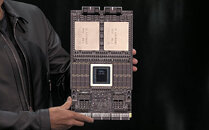
 The entire supply chain value of the lucrative AI server market will be different, as value and margins are likely to migrate toward certified component makers and high-volume integrators, leaving branded OEMs with narrower opportunities for hardware differentiation and tighter margins. Cooling and power subsystem vendors that secure qualification are set to benefit, while smaller suppliers may find it harder to compete.
Source:
@Jukanlosreve on X
Rubin silicon is rumored to have a TDP of up to 2.3 kW for highest-end models, leading to rack-level power consumption exceeding 250 kW and making custom cooling designs economically unviable. NVIDIA's strategy reportedly involves standardizing cooling and power across two performance tiers while increasing network I/O density. These choices decrease the feasibility and cost-effectiveness of third-party replication. By centralizing production with select partners, development cycles can be shortened and manufacturing yields improved. However, this approach also limits the options OEMs and hyperscalers have traditionally used to differentiate their hardware.


30 Comments on NVIDIA Moves to In-House Server Production, Leaving OEMs with a Secondary Role
Even during the Geforce days... the entire idea of GameWorks... the many many engineers Nvidia sent to studios over the years... lots of collaboration that one could easily define as verticality. Nvidia has from the beginning tried to sell more than just their GPU hardware. CUDA was mentioned, it is another example. Their software stack is verticality. Gsync is a vertical. Buying PhysX much the same.
AMD similarly survives because it has verticality. Their APU custom business is an example.
Intel similarly became the giant it still is because it similarly offered a shitload of services around their products and suppliers, integration in enterprise is also a vertical.
Vertical monopolies... thats not really a thing. The entire definition of a vertical is that you offer a service or product or combination tailored to a niche, in a way nobody else does. It is automagically a monopoly if you're the first to do so. But it doesn't mean a competitor can't offer something similar, or better, at all. As soon as there is a competitor offering a competitive solution... there is no monopoly. AMD is now exercising that exact thing with Zen, slowly fighting back Intel 'contracts' in enterprises as they run out.
As for 'must' ... that's hypercapitalism at work, where the bottom line is money and nothing else. I think its slowly dawning on everyone that this is not the way. Only from the perspective of the corporation itself is this a vision they think they need to chase, because 'someone else might do it too'. And it needs restraint - I do believe there is a natural restraint in the population because it all depends on our acceptance of it. Its not unlike states and their urge to go to war or annex territory. We keep developing checks and balances to prevent that - with varying success.