Tuesday, December 16th 2025
DRAM Price Hikes Have Minimal Impact on PC OEMs, Notes Report
The global DRAM shortage has driven up the prices of individual RAM kits, but PC OEMs have largely remained unaffected. Acer and ASUS indicated this week that rising memory costs are starting to influence notebook pricing, though retail price changes are still limited for now. Some brands, such as Dell, may begin raising prices on select high-end and business models, but neither Acer nor ASUS has officially changed their MSRPs in any way. Company executives warned that as new orders enter the market in the coming quarters, memory inflation will increasingly be reflected in end-product pricing. However, pricing remains stable for the time being, and there are no price changes.
Much of the near-term price stability comes from long-term supply agreements that protect OEMs and ODMs from paying spot market rates. Acer's CEO noted that memory historically accounted for about 8% to 10% of a PC's bill of materials, and that a 30% to 50% rise in memory costs so far has resulted in only an approximate 2% to 3% impact on the total BOM cost. Since many manufacturers secure memory through contracts that renew on quarterly or multi-year cycles, wider price fluctuations effects are likely to appear gradually, with more noticeable changes expected from the second quarter and into the third quarter of 2026 as contracts reset.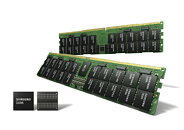 Manufacturers are responding with a mix of specification adjustments and selective price moves rather than a single industry-wide increase. Entry-level notebooks are expected to retain base configurations such as 8 GB of RAM and a 256 GB SSD, which will compress vendor margins, while mid-tier products may see reduced memory or storage and higher fees for upgrades. High-end systems remain the most likely candidates for direct price increases. Visibility is low because companies are pre-stocking for upcoming quarters, which complicates demand forecasting, and any meaningful relief will depend on expanded production capacity from memory suppliers, especially in mainland China, with cost pressures likely to persist into the first half of next year.
Source:
Commercial Times
Much of the near-term price stability comes from long-term supply agreements that protect OEMs and ODMs from paying spot market rates. Acer's CEO noted that memory historically accounted for about 8% to 10% of a PC's bill of materials, and that a 30% to 50% rise in memory costs so far has resulted in only an approximate 2% to 3% impact on the total BOM cost. Since many manufacturers secure memory through contracts that renew on quarterly or multi-year cycles, wider price fluctuations effects are likely to appear gradually, with more noticeable changes expected from the second quarter and into the third quarter of 2026 as contracts reset.

8 Comments on DRAM Price Hikes Have Minimal Impact on PC OEMs, Notes Report
But 8gb of RAM and a 256gb SSD has to be rough to deal with how much bloatware and junk comes pre installed on W11 OEM PC's.
DELL and Lenovo's major market are companies, that buy their hardware in the thousands. Those costs are negotiated and are not what you think, i.e., shelf cost minus tax.
Also, most companies are agreeing on production numbers so manufacturers are doing almost JIT for orders. Outside of this, like distributors and low-volume on-request small companies, they can charge as they please, hence this communication.
Also, don't forget that these companies output to side-channels (resellers, not retail) any excess stock of parts, and you can get those too. But this time around, for a couple of years, that might not happen.
Acer and ASUS still have the consumer market which works very differently and quite certainly, they have stocks of parts enough for production and support channels.
wccftech.com/after-dell-acer-asus-have-surrendered-to-memory-shortages/
"30% to 50% rise in memory costs so far has resulted in only an approximate 2% to 3% impact on the total BOM cost"
Samsung hikes DDR5 memory prices over 100%, tightening pressure on consumer tech
And it's just the beginning.