Friday, January 16th 2026
HDD Prices Increase by an Average of 46% Over the Past Four Months
Hard Disk Drives are now in great demand, which has pushed their price premiums up by an average of 46% since mid-September. According to the ComputerBase tracker, HDDs have increased their prices over the past four months by anywhere from 23% to 66%, depending on the model. Standing at the lowest 23% increase is the Seagate IronWolf Pro NAS HDD + Rescue 16 TB HDD, while the highest price increase was observed in the Toshiba Cloud Scale Capacity MG10F AFA 22 TB model. The price tracker followed fluctuations of the 12 most popular HDD models based on their EUR listings and found that HDDs rose by an average of 46% across the four-month period, resulting in spinning rust being almost 50% more expensive, without any substantial supply chain shortage.
A month ago in December, DigiTimes reported that fourth-quarter 2025 contract negotiations concluded with traditional HDD prices rising about 4% quarter-over-quarter, the largest increase in the past eight quarters. This contributed to the overall 46% price increase observed today, as these single-digit contract changes accumulate and multiply by the time they reach consumers. Interestingly, HDDs contain almost no silicon for storage purposes, making their significant price increases a supply chain issue unrelated to the semiconductor industry. Apart from the controllers that use silicon, HDD platters are made from materials that are not currently in short supply. However, high demand is what keeps their prices elevated.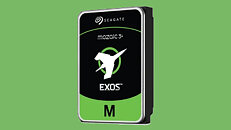
 The surge in demand is driven by heavy procurement of high-capacity units by major U.S. cloud service providers and hyperscalers. Concerns about SSD data retention have also led some customers and policymakers to prefer HDDs for certain workloads. Large cloud operators are expanding their exabyte-class storage for AI, analytics, and archival needs. Manufacturers report near-full utilization rates as demand extends beyond traditional surveillance and backup applications. In particular, AI infrastructure requires massive data storage for model training, prompting AI labs to incorporate some HDD-based storage where speed is not a priority.
Source:
ComputerBase
A month ago in December, DigiTimes reported that fourth-quarter 2025 contract negotiations concluded with traditional HDD prices rising about 4% quarter-over-quarter, the largest increase in the past eight quarters. This contributed to the overall 46% price increase observed today, as these single-digit contract changes accumulate and multiply by the time they reach consumers. Interestingly, HDDs contain almost no silicon for storage purposes, making their significant price increases a supply chain issue unrelated to the semiconductor industry. Apart from the controllers that use silicon, HDD platters are made from materials that are not currently in short supply. However, high demand is what keeps their prices elevated.


34 Comments on HDD Prices Increase by an Average of 46% Over the Past Four Months
It's actually cheaper to buy the 2 TB SKU now. :confused:
Remember Jensen Huang says so! Don't be so negative about AI you are hurting society...
Of course every such thread has bunch of comments in vein of "I have bought such and such stock of items that are now basically unavailable, so it doesn't affect me - I even welcome this, since it makes me special!"
Scalers and centres are popping up and expanding to chase the mirage that is AI.
We've had AWSes, Azures, and GClouds for decades now, but I can't think of any instance in which they had a first-order effect on consumer market prices before this mess (well, not unless you include mining farms in the definition)...
Next target is those stupid led strips that go into every PC component that will see 1500% $up as those, too, are essential to the AI supremacy race. Else, what will give light to those uber mega AI server factories..
20TB of storage across the only two sata ports available to the board. The rare situation where I finally need more?
Giganto 20-30TB HDDs in every (non-swap) drive cage in the rack. Imagine 2010 era computers with ~180TB of HDD.
That's basically what happens on the consumer end. Enterprise has the strat of reliable storage with these spinning rusts.
Ever notice how data on mission critical SSDs have a high likelihood of going poof the moment the drive controller pukes?
There are reasons to have HDDs just as there are reasons to have SSDs. When I need long term storage anywhere it's on HDD.
When access time and I/O speeds matter way more than anything, yeah SSD is gonna pull through. Nobody is browbeating this.
Does AI benefit from new giganto HDD products? Maybe. They're definitely a lot faster today than the ones I remember ages ago.
Is it likely that every AI company will start hoarding new HDDs? Not really. It's a good place for usable data but not for live production.
The price of those always goes up and down and are ALWAYS cheaper than buying a regular hard drive. They just perform ever so slightly slower when not attached to the USB/SATA interface card inside. Supposedly the board also does some fancy caching but that wont matter too much if youre running it in RAID or want a general purpose scratch disk to dump stuff on.
On the consumer side, sure. Business... hmmmm
Coding is one example. AI writes code, dev removes the issues, end result is the same but in half the time.
Similarly, in my closer proximity at work I see the use of AI Agents to, for example, assist in insurance claim handling, finding relevant documents and clauses for a claim, and serving them to the claim handler. Its quickly shaping up to be a useful tool, but only if used in a very controlled environment.
<click> Remove from cart.
Taste the profits/bonus from all those suckas errr AI investors dollars.
Keep rising the prices guys we need to milk those suckas ….. AI investors dry……errr I mean the AI demand is causing such shortages it’s just supply and demand…..ya that’s it. Hey what if we constrain supply even more?? Muwahahaha