Monday, December 15th 2025
HDD Prices Soar, Sparking Fears of Incoming Shortage
The good-old "spinning rust"—commonly referred to as Hard Disk Drives (HDDs)—may be another leg in the depleted computing infrastructure caused by the AI boom. According to DigiTimes, contract negotiations for the fourth quarter of 2025 concluded with traditional HDD prices settling about 4% higher quarter-over-quarter, marking the largest rise in the past eight quarters. That is over the largest increase in recent years, indicating that the demand is again outpacing supply even in the slower storage segments like HDD. The massive demand reportedly comes from particularly strong uptake for desktop 3.5-inch drives in China and continued heavy procurement of high-capacity units by major U.S. cloud service providers and hyperscalers.
In China, there is a preference for domestically produced CPUs and operating systems, combined with an increase in local PC assembly, which has brought HDDs back into first-class role in certain PC configurations after years of being replaced by SSDs. Additionally, concerns about SSD data retention have led some customers and policymakers to favor HDDs for specific workloads. Large cloud operators are also expanding their exabyte-class storage for AI, analytics, and archival needs. Manufacturers report that utilization rates are at or near full capacity as demand extends beyond traditional surveillance and backup applications. Especially with AI infrastructure, storing massive data for model training has prompted AI labs to use some HDD-based storage infrastructure where speed isn't needed.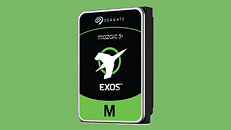 On the pricing front, typical retail indicators confirm this trend. A 3.5-inch, 1 TB desktop and surveillance HDDs are trading up about 4% QoQ to roughly US$53, and 2.5-inch, 1 TB notebook drives are up about 3% to near US$50 per unit. These product classes have seen price increases for three straight quarters, with the most recent quarter the steepest since Q4 2023. Some analysts expect HDD shortages to become more apparent by 2026, and suppliers may prioritize larger, higher-margin data-center customers, which could extend further price pressure into the consumer area. After NAND flash shortage powering SSDs, HDDs are now in high demand and may remain like that for more quarter to come. Companies like Seagate are already investing a ton of resources into HAMR HDDs with the capacity of roughly 55 TB for enterprise.
Source:
DigiTimes
In China, there is a preference for domestically produced CPUs and operating systems, combined with an increase in local PC assembly, which has brought HDDs back into first-class role in certain PC configurations after years of being replaced by SSDs. Additionally, concerns about SSD data retention have led some customers and policymakers to favor HDDs for specific workloads. Large cloud operators are also expanding their exabyte-class storage for AI, analytics, and archival needs. Manufacturers report that utilization rates are at or near full capacity as demand extends beyond traditional surveillance and backup applications. Especially with AI infrastructure, storing massive data for model training has prompted AI labs to use some HDD-based storage infrastructure where speed isn't needed.

34 Comments on HDD Prices Soar, Sparking Fears of Incoming Shortage
As always, us little people get da shaft, and the big corps don't give a sh*t either...
I am anxiously awaiting the inevitable Corp/AI "bubble pop", and NO, I won't shed any tears about it either :D
The two 20 TB Toshiba MG10 drives I got in August are now up by almost US$65/€55 each.
It sort of smells like price fixing. If the demand were indeed so high (and we know it is) for RAM than why not build more FABs. These things take time so they are already behind. The only reason not to build out is if the companies in question simply don't believe the current demand is sustainable. So do nothing rather then shift focus to more corporation demand without increasing supply / fabrication is simply risk averse.
For HDD I usually buy either as needed or when there are sales. So Black Friday I'll usually buy a drive if nothing else. Las year I bought a WD EasyStore 20TB drive for ~$239.99 USD (September). This year (September)I bought another WD EasyStore 20TB for ~$269 so the prices were already higher even during the time of year when the prices are historically low.
why can't these stupid ai companies learn to optimize like us normal ppl have to... and I think the govt shouldn't be funding them at all, they need to lose and they need to crumble hard.
You play your video games on an old PC.
Making money from nothin'... Get bitcoin for free...
I want my.... I want my... I want my SSD...
That anit working...
We are rolling the weekly price-fixing dice now!
openAI lost almost $12 billion (US), yet Amazon, broadcom, nvidia, oracle and microsoft have invested $1.4 TRILLION (US), which is pretty crazy
this bubble is HUGE, when it pops (and it will), it's going to cause massive panic and some companies won't survive unless they have a SOLID plan in place. This includes all the memory makers