Friday, January 16th 2026
HDD Prices Increase by an Average of 46% Over the Past Four Months
Hard Disk Drives are now in great demand, which has pushed their price premiums up by an average of 46% since mid-September. According to the ComputerBase tracker, HDDs have increased their prices over the past four months by anywhere from 23% to 66%, depending on the model. Standing at the lowest 23% increase is the Seagate IronWolf Pro NAS HDD + Rescue 16 TB HDD, while the highest price increase was observed in the Toshiba Cloud Scale Capacity MG10F AFA 22 TB model. The price tracker followed fluctuations of the 12 most popular HDD models based on their EUR listings and found that HDDs rose by an average of 46% across the four-month period, resulting in spinning rust being almost 50% more expensive, without any substantial supply chain shortage.
A month ago in December, DigiTimes reported that fourth-quarter 2025 contract negotiations concluded with traditional HDD prices rising about 4% quarter-over-quarter, the largest increase in the past eight quarters. This contributed to the overall 46% price increase observed today, as these single-digit contract changes accumulate and multiply by the time they reach consumers. Interestingly, HDDs contain almost no silicon for storage purposes, making their significant price increases a supply chain issue unrelated to the semiconductor industry. Apart from the controllers that use silicon, HDD platters are made from materials that are not currently in short supply. However, high demand is what keeps their prices elevated.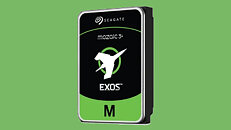
 The surge in demand is driven by heavy procurement of high-capacity units by major U.S. cloud service providers and hyperscalers. Concerns about SSD data retention have also led some customers and policymakers to prefer HDDs for certain workloads. Large cloud operators are expanding their exabyte-class storage for AI, analytics, and archival needs. Manufacturers report near-full utilization rates as demand extends beyond traditional surveillance and backup applications. In particular, AI infrastructure requires massive data storage for model training, prompting AI labs to incorporate some HDD-based storage where speed is not a priority.
Source:
ComputerBase
A month ago in December, DigiTimes reported that fourth-quarter 2025 contract negotiations concluded with traditional HDD prices rising about 4% quarter-over-quarter, the largest increase in the past eight quarters. This contributed to the overall 46% price increase observed today, as these single-digit contract changes accumulate and multiply by the time they reach consumers. Interestingly, HDDs contain almost no silicon for storage purposes, making their significant price increases a supply chain issue unrelated to the semiconductor industry. Apart from the controllers that use silicon, HDD platters are made from materials that are not currently in short supply. However, high demand is what keeps their prices elevated.


34 Comments on HDD Prices Increase by an Average of 46% Over the Past Four Months
Perhaps the effect is not a first-order one as far as HDDs go, but an externality is still an effect.
It’s like every company/sector is jumping on the ‘gangbang the $$$ from PC parts’ wagon, no rules applied except for it to go up up up.
The party is on, and even if it’s a short one the price will never return to what it was.
2026 has just started and it’s gona be a fun fun ride to watch o_O
Keep in mind that consumers are really quite small customers for the hard drive and memory makers, regardless if that's DRAM or NAND we're talking about.
At some point, the bubble will burst again and then these companies are going to have to try to find their way back to the consumer market.
It's not going to be this year though, that's for sure.
160GB HDD
240GB HDD
300GB HDD
500GB HDD
1TB HDD
1TB HDD
2TB HDD....
They all have MAD hours on them and/or bad sectors.
Moving all that junk to single 4TB, 8TB, 16TB disks is a good way to obsolete all of it.
Some of us are willing to take it further: 20TB, 22TB, 24TB, 30TB...It fetches good price and performance.
It's also way easier on electric and basic hardware management too. It's good to toss the cable cobweb.
My 4.9TB Whitelabel drive was a fair enough $120 back in 2017:
The 16TB Toshiba MG08 stuff was kind of high price in 2021 but managed to hold it over a few years. That's insane.
Also not for nothin but if I were dealing with this sort of thing in Big 2026, I would definitely be looking into 24/30TB drives. Seagate is MONEY.
Beyond a certain point refurb doesn't matter, all storage has a lifespan and nothing is here forever. Make the best of it.
Hopefully the spinning rust ecosystem doesn't stay slammed as hard as ram/sdd prices for as long as it's potentially less useful to the trillion dollar ai brigade.
Also I am not sure what are they doing with those AI datacenters, since so far, worst than those ubberly crappy smartphone's voice assistants is the Amazon's Alexa, probably the Worst of The worst in the market. I still have no idea how a trillion dolar corporation can have such as useless and shitty AI, even after billions on investments.
It go far and beyond any product this or software that service. No consideration, a this point, for financial cost.
What we small consumers experience is the very end of those mega-wave side effect.
It is a global geo-political issue, that will determine who will be the next top super power country: USA vs China mainly. At lest that`s how they talk and behave, see Trump ambition to take over Greenland (and Iceland next..)