Friday, January 23rd 2026

Intel Reallocates PC Production Capacity to Server CPUs Amid Tight Wafer Supply

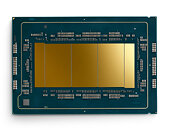
Yesterday, after the equity market closed, Intel announced its Q4 and full-year 2025 earnings, along with weaker-than-expected guidance for Q1 2026. As a result, Intel's stock is anticipated to open 11% lower today. During the Q4 earnings call, Intel's CFO, David Zinsner, explained the reasons behind the reduced outlook, despite the increasing demand for Intel products. The situation arose due to hyperscalers demanding more units. Intel's discussions with these customers indicated a preference for high core count solutions rather than increased unit shipments. Consequently, Intel adjusted its inventory and internal wafer supply to maintain reasonable stock levels while consistently shipping new units. However, hyperscalers have since been ordering larger quantities, leading to a temporary shortage of Xeon processors for the Data Center and AI (DCAI) group. To address this, Intel plans to redirect some resources from the Client Computing Group (CCG) to support Xeon CPU production.
Intel CFO David ZinsnerBoth (DCAI and CCG) will be down as a function of supply. Obviously, we're shifting as much as we can over to data center to meet the high demand, but we can't completely vacate the client market. So we're trying to support both as best we can and obviously work our way out of this supply issue. I do believe that the first quarter is the trough. We will improve supply in the second quarter. Part of the challenge is that in the third and fourth quarter of 2025, we lived off of supply, but we also had a reasonable chunk of finished goods inventory to also work through. Unfortunately, that is now down to kind of 40% of what it was at peak levels.
Intel manufactures its latest Xeon 6 "Granite Rapids" and "Sierra Forest" processors at its Intel Foundry sites, using Intel 7 and Intel 3 nodes. Production on these nodes is now being redirected to the DCAI group, away from the CCG. Interestingly, CCG's newest "Panther Lake" CPU is made on the 18A node, so these supply redirects won't affect the latest product lineup. However, for other lineups, we might see lower availability as inventory decreases. Some client CPUs like "Arrow Lake" are manufactured externally at TSMC's fabs, so they won't be affected by these changes.
Source: Intel Q4 Earnings Call Transcript
Add your own comment

21 Comments on Intel Reallocates PC Production Capacity to Server CPUs Amid Tight Wafer Supply

#1
faquino
More nails in the coffin of the personal computing era
Posted on Reply
#2
ncrs
Intel manufactures its latest Xeon 6 "Granite Rapids" and "Sierra Forest" processors at its Intel Foundry sites, using Intel 7 and Intel 3 nodes. Production on these nodes is now being redirected to the DCAI group, away from the CCG. Interestingly, CCG's newest "Panther Lake" CPU is made on the 18A node, so these supply redirects won't affect the latest product lineup.
Panther Lake is using Intel 3 for its basic iGPU tile with the more advanced iGPU tile being made by TSMC, so it will be affected.
Posted on Reply
#3
kondamin
faquinoMore nails in the coffin of the personal computing era
There is more computing power in my phone than there has been in my main computers for most of my life for my seniors this is even more true.
Posted on Reply
#4
Bwaze
"We can't completely vacate the client market"

- Proceeds to vacate client market...

We're heading in a very interesting future for personal computers.
Posted on Reply
#5
Hecate91
"we're shifting as much as we can over to data center to meet the high demand, but we can't completely vacate the client market."

So they've decided to vacate away from the client market, despite $8.9 billion in taxpayer funding and promising to deliver on consumer products.
It seems like corporations don't wants the average person to own their PC, several tech CEO's have admitted they want people to move to cloud computing.
Posted on Reply
#6
Shihab
Going to be fun seeing ARM vendors filling the void, then proceeding to use the gained knowledge, experience, and collective investment in related software and tooling to encroach (even further) on the HPC/datacenter market.
Posted on Reply
#7
Bwaze
There have now been enough public statements from high ranking "powers that be" that the era of Personal Computer is ending, there is no doubt these shortages aren't just result of supply and demand, but intentional policy.

How else can we explain stagnating or even shrinking capacities (NAND for instance) during all the demand from AI servers? I know some tried to explain it by manufacturers being cautious and not overcommiting due to fear of AI bubble burst - but there is absolutely no explanation to shrink the supply during record demand!
Posted on Reply
#8
AleksandarK
News Editor
ncrsPanther Lake is using Intel 3 for its basic iGPU tile with the more advanced iGPU tile being made by TSMC, so it will be affected.
It is a priority product, so I don't think it will have an effect. It is more likely that other older products get cut.
Posted on Reply
#9
vbq7qK68eyYAH4iR
Mere Mortal
ncrsPanther Lake is using Intel 3 for its basic iGPU tile with the more advanced iGPU tile being made by TSMC, so it will be affected.
Luckilly (?), it's the smaller 4xe package, and not the larger 12xe package. This means that if there is an issue with supply, it'll be with basic desktop solutions, not the ones that might interest enthusiasts.
Posted on Reply
#10
TechBuyingHavoc
BwazeThere have now been enough public statements from high ranking "powers that be" that the era of Personal Computer is ending, there is no doubt these shortages aren't just result of supply and demand, but intentional policy.

How else can we explain stagnating or even shrinking capacities (NAND for instance) during all the demand from AI servers? I know some tried to explain it by manufacturers being cautious and not overcommiting due to fear of AI bubble burst - but there is absolutely no explanation to shrink the supply during record demand!
While I am sympathetic to your first sentence, there absolutely is a reason why supply would shrink for a less profitable market if that supply could be diverted to a more profitable market.

Car production for civilians during WWII became nonexistent because the same factories could be used to make tanks instead. As long as the AI bubble continues, all sorts of PC hardware can and will be sucked up to serve the much richer corporate customers. You won't see PC hardware availability improve until total supply exceeds corporate demand.

We have always been the last priority for the manufacturers. It is just that supply has always balanced itself against demand historically until the AI bubble started. If there were no AI demand at all but a war between China and the US instead, you should expect to see the same supply crunch and prioritization of hardware for corporate customers.
Posted on Reply
#12
zenlessyank
PC users are now a threat to the MEGAGOVCORP and need to be weened off their potential threatmaker.

We are now the enemy because we demand the goods they need. Now it is all shifting to them and we are left out in the cold who provided them the income to be able to do this. Nvidia has especially fit this profile more than anyone else. Intel has always had cashflow from server cpu's but still took our money too. Did Intel or Nvidia give us a nice little AI app like AMD did? No, yet they are the main dogs in the hunt to create the software to control the world.

You ain't seen nothin' yet folks.
Posted on Reply
#13
Bwaze
We might even be looking at the whole thing "upside down". There is no "AI bubble" - all those capacities that are being built right now can also be used (more or less) for cloud computing - which was foretold as inevitable evolution, sudden AI hype just accelerated this move, and the excuse that there are no capacities for both home PC and AI server making will push the market, software developers, everything quickly to the planned destination.
Posted on Reply
#14
pavle
Core Ultra 4xx is coming at the end of 2026, prior chips are not competitive anyway (cache throughput choke-point).
Posted on Reply
#15
TechBuyingHavoc
BwazeSSD prices may follow RAM pricing after Samsung and SK Hynix reportedly cut NAND production

It makes very little sense, especially as the NAND storage is becoming more important in servers - but apparently they're cutting production to give more way for DRAM, and to maximize revenue by rising prices.
I am starting to think you don't understand how markets work on a fundamental level. Revenue maximization is the point, it always has been the point. NAND production would be expected to drop if it means more DRAM production and thus more revenue.
Posted on Reply
#16
Dirt Chip
Yep, the CPU side of the AI race is still untouched, lot's of potential here to make extra $$ on us peasants consumers.

Somehow they will find a way to repousse cpu wafers to ram and nand or whatever. There is so much profit in it this will quickly happen..
Posted on Reply
#17
Bwaze
TechBuyingHavocI am starting to think you don't understand how markets work on a fundamental level. Revenue maximization is the point, it always has been the point. NAND production would be expected to drop if it means more DRAM production and thus more revenue.
I was merely trying to understand it on light of recent articles that pointed out how all the planned new AI hardware heavily utilizes NAND storage as a temporary buffer, how just Nvidia's Rubin will require more than 10% of all produced NAND - and that it will inevitably become scarce, shoot up in price, even without production cuts.
Posted on Reply
#18
TechBuyingHavoc
BwazeI was merely trying to understand it on light of recent articles that pointed out how all the planned new AI hardware heavily utilizes NAND storage as a temporary buffer, how just Nvidia's Rubin will require more than 10% of all produced NAND - and that it will inevitably become scarce, shoot up in price, even without production cuts.
As always, high prices are the solution to high prices. Eventually, supply will catch up because there is too much money to let that demand just sit there unfulfilled. The real danger is not the supply crunch but what happens if the demand disappears. I think a lot of companies are worried about that scenario, which is why supply has been so slow in its rate of increase. The longer the bubble continues, the less fear people have that the bubble will disappear (which is a key requirement to making the bubble disappear, the irony of human psychology).

You can see in the last few weeks, all the RAM companies have slowly (but increasingly fast) moving up their planned production increases as their margins increase.
Posted on Reply
#19
evernessince
Intel's fab not executing continues to royally bite it in the rear. If they can't do well during a huge chip shortage, they are in big trouble.
Posted on Reply
#20
kondamin
BwazeWe might even be looking at the whole thing "upside down". There is no "AI bubble" - all those capacities that are being built right now can also be used (more or less) for cloud computing - which was foretold as inevitable evolution, sudden AI hype just accelerated this move, and the excuse that there are no capacities for both home PC and AI server making will push the market, software developers, everything quickly to the planned destination.
No, everything going into inferencing today is a total write off and e waste in a couple of years.
no one will be running windows 365 clients or keeping their icloud on old blackwell AI boxes
All the HBM going in to AI servers now isn't going to magically be moved to systems that do other cloud workloads

I really enjoy having access to gemini and screwing around on nightcaffe
look i made a beautiful business gorgon lady with a halo


But the hardware needs to be at least 10x more powerful and energy efficient to become somewhat of a viable business model.
In a couple of years it will be very obvious that keeping the old junk they paid hundreds of billions for running is economic suicide, they will be shut down and no one will want those servers.
Posted on Reply
#21
Dirt Chip
kondaminBut the hardware needs to be at least 10x more and energy efficient to become somewhat of a viable business model.
In a couple of years it will be very obvious that keeping the old junk they paid hundreds of billions for running is economic suicide, they will be shut down and no one will want those servers.
Like with old trucks, ships and weapons systems those soon to be old ai junk will probably be sold in small quantities to 2nd and then 3rd world countries and other less critical demand users.
If not, Mother Earth will not forgive us
Posted on Reply
Add your own comment
Nov 13th, 2026 23:30 CST change timezone

New Forum Posts

Popular Reviews

TPU on YouTube

Controversial News Posts