Monday, February 2nd 2026

Intel Mandates 7,467 MT/s+ Memory for "Panther Lake" Arc B390/B370 Integrated Graphics
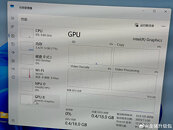
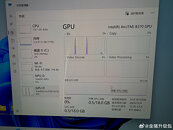
Intel is reportedly mandating OEM integrators of the latest "Panther Lake" SoCs to use LPDDR5X memory starting at 7,467 MT/s and beyond, with an interesting software differentiator between adequate speeds or those below. According to Golden Pig Upgrade, LDDR5X memory running below the 7,467 MT/s threshold will force the software to display a generic mark of "Intel (R) Graphics," while configurations with that exact memory speed or higher will display the full name of "Intel (R) Arc (TM) Graphics B390" or "Intel (R) Arc (TM) Graphics B370" marking in Windows 11 Task Manager. Reportedly, Intel is doing this to stop OEMs from cutting corners with their "Panther Lake" laptop configurations, where they could bundle a lower-speed LDDR5X memory out of the Intel specification.
Without the required memory, Intel's Arc B390/B370 iGPUs would likely be left starving for bandwidth, as the whole SoC is being powered by that memory. At higher speeds, memory can do the data transfer faster, resulting in a boost of the overall system performance, and most importantly, the frame rate that these chips can push out. Especially for single-package systems like "Panther Lake" is, faster memory is a great way to get extra performance boost. Intel's flagship SKUs are advertised as capable of running with LPDDR5X memory at speeds up to 9,600 MT/s, which is just below the point where LPDDR5X technology tops out at 10,700 MT/s. Interestingly, there are lots of options from Intel's OEM partners that integrate top-end memory, which is a positive sign for the ecosystem.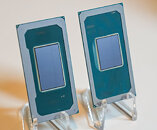

 Additionally, Intel is developing a separate "Panther Lake" SoC focused on handheld devices, likely featuring a new Arc B SKU rumored to be named Arc B380. This version is expected to be more power-efficient, possibly through selective die binning, maintaining the full 12 Xe cores configuration at slightly reduced clock speeds to deliver similar performance with a lower TDP. With a minimum memory speed requirement, these SoCs are expected to perform well, and OEMs might even use the fastest LPDDR5X running at 9,600 MT/s to achieve optimal handheld performance.
Sources:
Golden Pig Upgrade, via VideoCardz
Without the required memory, Intel's Arc B390/B370 iGPUs would likely be left starving for bandwidth, as the whole SoC is being powered by that memory. At higher speeds, memory can do the data transfer faster, resulting in a boost of the overall system performance, and most importantly, the frame rate that these chips can push out. Especially for single-package systems like "Panther Lake" is, faster memory is a great way to get extra performance boost. Intel's flagship SKUs are advertised as capable of running with LPDDR5X memory at speeds up to 9,600 MT/s, which is just below the point where LPDDR5X technology tops out at 10,700 MT/s. Interestingly, there are lots of options from Intel's OEM partners that integrate top-end memory, which is a positive sign for the ecosystem.


23 Comments on Intel Mandates 7,467 MT/s+ Memory for "Panther Lake" Arc B390/B370 Integrated Graphics
Back to topic. Performance from what i have seen - decent for iGPU. Only question, how much does the cpu cost... mini pc with this would be great.
Off Topic. I was watching The Phawx's review of the Intel X9 388H Pantherlake and in it he mentioned that it includes a memory compression feature, that seems to make its limited memory bus far less of an issue. This might be a good area for TPU to do an article on, exploring what this compression is exactly, as I hadn't heard of it in previous Panther Lake content, what work loads will benefit from it and a prediction/napkin math on how it helps Panther Lake compete with Strix Point and Strix Halo. Maybe an interview with Tom Peterson but it and how Intel came up with it, how they selected the specific compression algorithm and why, do they see it playing a part in their desktop environment, like AMD tried to with SAM and Zen 3.
Of course, even if it is allowed, no OEMs are going to use it...
semiconductor.samsung.com/dram/module/lpcamm2/
assets.micron.com/adobe/assets/urn:aaid:aem:4e076108-df95-4c2d-8785-06c30049afb5/original/as/lpddr5x-camm2-technical-brief.pdf
Hmmmmmm........One of the biggest factors in LPDDR5x managing significantly higher speeds is the proximity of the memory to the memory controller on the CPU. So theoretically on package DDR would be able to maintain faster speeds then LPDDR5x could manage.We heard the same promises with CAMM and to my knowledge we have yet to see these speeds demonstrated in a retail product.
very expensive.
www.technalysisresearch.com/downloads/TECHnalysis%20Research%20White%20Paper%20for%20Rambus.pdf
Shorter trace lengths allow greater signal integrity, which allows higher memory speeds. Long trace length leading to poor memory speed is why the industry has been looking into replacements for SODIMMs, its why CUDIMMS can clock higher (the clock generator is on the memory stick instead of the CPU) and it was the biggest curdle for CAMM2 memory speeds. Panther lake supporting LPDDR5x 9600 does not disprove the idea that getting the memory even closer could allow higher speeds. Pro overclocking boards come with only 2 DIMM slots to reduce the number and length of traces to improve overclocking results. I could go on.
You know how VRAM on GPUs has gotten progressively closer to the GPU itself as speeds increase? Do you think they did this for funsies? No, it was critical in maintaining the higher speeds these chips run at. Its also made cooling them and building the PCB a PITA, so if they could maintain those speeds with GDDR5 or GDDR4 spacing they would absolutely do so.You know whats fun? Evidence.
Dell offers the pro plus lineup with both intel lunar lake CPUs and AMD Hx series CPUs. Lunar lake has that super expensive on package memory. Guess what? With the same screen, memory, battery, ece, the only difference being the CPU, the highest end lunar lake chip, the Ultra 7 268V is $100 CHEAPER then the HX 370 system it competes with.
That being said, that Dell is overpriced for what its offering. For a 16" laptop it should at least be able to handle 55W+ TDP and have two USB4 ports that are separately routed (e.g. both ports have their own dedicated PCI-E lanes for tunneling).
AMD kills the it at 35W, for very low watts Apple simply slaughters them both at 6W for a comparable score in single threaded cinebench.
Intel has made a small stride, mostly due to back side power delivery making their nodes more efficient at low power.
Also, the 4 Xe core version is competitive with 8 Xe core version in Lunarlake.