Thursday, March 19th 2026

Apple Delivers More Timely Security Updates for iOS, iPadOS, and macOS
Apple has designed a new framework to keep its operating systems secure and up to date with modern protection technology without relying on major OS updates for essential security improvements. Called Background Security Improvements, this framework spans all of the company's operating systems that power iPhones, iPads, and Mac computers, used by hundreds of millions of users globally. For example, whenever a security issue arises in the Safari browser, WebKit framework, or any other software with an internet-first connection, security becomes the top priority. Instead of waiting to bundle these security updates with a new version of an operating system, Apple provides ongoing patches between major updates to address any security issues.
The company is gradually enhancing the quality of life on its platforms, and this is another significant step forward. Background Security Improvements begin with iOS 26.1, iPadOS 26.1, and macOS 26.1, and will continue with future versions of these operating systems across supported devices. Interestingly, Apple also publishes Background Security Improvements by date, component patched, and CVE number, so you can understand what the update addresses, why it was necessary, and have peace of mind that your OS remains safe from the growing number of online exploits targeting unpatched systems.
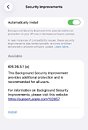 Apple lists the following ways to access Background Security Improvements settings, which includes the following scenarios:
Source:
Apple
The company is gradually enhancing the quality of life on its platforms, and this is another significant step forward. Background Security Improvements begin with iOS 26.1, iPadOS 26.1, and macOS 26.1, and will continue with future versions of these operating systems across supported devices. Interestingly, Apple also publishes Background Security Improvements by date, component patched, and CVE number, so you can understand what the update addresses, why it was necessary, and have peace of mind that your OS remains safe from the growing number of online exploits targeting unpatched systems.


- On iPhone and iPad: Go to Settings, then tap Privacy & Security.
- On Mac: From Apple menu, choose System Settings. Then click Privacy & Security.
3 Comments on Apple Delivers More Timely Security Updates for iOS, iPadOS, and macOS
There are a few other points that you seem to have missed.
The introduction of the Background Service Improvements isn't a flood of "constant" updates. Unlike Microsoft, Apple has no scheduled monthly update like Patch Tuesday. What is being offered in these Background Service Improvements are basically some important security patches that would be included in the next point update anyhow, similar to out-of-band updates that Microsoft offers up for Windows. I think Microsoft pushed out two in the past week for enterprise users and one for consumer Windows users (KB5085516 is the one I'm thinking about).
Apple pushed out a BSI update today to Macs running macOS 26 Tahoe. Not everyone installs the latest update right away so even if macOS 26.4 is expected within a week, this is a way to offer important security updates with minimal disruption.
Moreover Background Service Improvements can be toggled OFF per the screenshot above.
Also Apple actually had an existing framework to allow for special software. I have "Security Responses & System Files" toggled ON to automatically install on my iPhone running older iOS 18, and iPad running iPadOS 18, and another Mac running macOS 18 Sequoia. This has been around for several generations of Apple operating systems. The Background Service Improvements is a more formalized enhancement to the existing framework, it's not really earth shattering.
Altogether, this is a positive step for Apple and their operating system software and no one (with a clue) is really complaining. And no, they did not go fifteen years without this sort of framework only to cave in now. Anyone who thinks that isn't informed about how much Apple's system software has evolved over the years.
But, the only time i got an infection on a usb stick (video/images) was an apple on display, while not a single pc (+20, laptops/desktops) gave me one.
I still see too customers/users with the believe they dont get any kind of malware on apple, because its not Win (OS).