Tuesday, March 31st 2026
AMD Quietly Renames Anti-Lag 2 to "FSR Latency Reduction 2.0"
AMD has quietly renamed its Anti-Lag 2 technology as part of the FSR package, now calling it "FSR Latency Reduction 2.0." This move aligns with AMD's recent trend of rebranding FSR-related technologies. The AMD Radeon marketing team has successfully unified FidelityFX Super Resolution under the FSR branding, although Anti-Lag 2 was previously an exception, bundled with other AMD technologies. The advanced graphics technology, once known as FidelityFX Super Resolution, is now simply called "FSR." This change is reflected on AMD's official product page, which notes that FSR stands for "formerly AMD FidelityFX Super Resolution." However, AMD has not formally announced this rebranding. These changes occurred before the official launch of the FSR "Redstone" product in late December last year. Now, every new announcement features the standard FSR language, suggesting that this renaming might be part of a broader update to Anti-Lag 2.
Since FSR is aimed at gamers, it is now included in the FSR package as "FSR Latency Reduction 2.0." With FSR Redstone, AMD has already grouped four technologies under the FSR "Redstone" name: FSR Upscaling, FSR Frame Generation, FSR Ray Regeneration, and FSR Radiance Caching. If the renaming becomes more than just a label update, FSR Latency Reduction 2.0 could become the fifth component of the FSR "Redstone" suite. Technologies like AMD Anti-Lag 2 are specifically designed to reduce latency by improving CPU and GPU coordination. Even without frame generation, it can lower latency in a game, but it may be especially useful when synthetic frames are involved, helping to keep latency at a level where any added delay is far less noticeable.
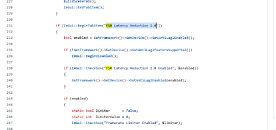
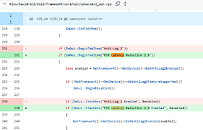 VideoCardz originally discovered that Anti-Lag 2 has been renamed in the source code of AMD FSR SDK 2.2. This version includes FSR 4.1 upscaling technology, Ray Regeneration 1.1, the older AMD FSR Frame Generation 4.0.0 in its standard version, as well as AMD FSR Radiance Caching 0.9.0, which is now in technical preview. Perhaps this leak is just a step before the official announcement, or AMD will maintain the quiet rebranding approach it has used since the FSR rebrand.
Source:
VideoCardz
Since FSR is aimed at gamers, it is now included in the FSR package as "FSR Latency Reduction 2.0." With FSR Redstone, AMD has already grouped four technologies under the FSR "Redstone" name: FSR Upscaling, FSR Frame Generation, FSR Ray Regeneration, and FSR Radiance Caching. If the renaming becomes more than just a label update, FSR Latency Reduction 2.0 could become the fifth component of the FSR "Redstone" suite. Technologies like AMD Anti-Lag 2 are specifically designed to reduce latency by improving CPU and GPU coordination. Even without frame generation, it can lower latency in a game, but it may be especially useful when synthetic frames are involved, helping to keep latency at a level where any added delay is far less noticeable.


13 Comments on AMD Quietly Renames Anti-Lag 2 to "FSR Latency Reduction 2.0"
but the other names are bad
fsr what fsr?
latency is a well defined terminology. anti lag means what? antimattter ...
-- amd should focus on software quality and not on nice paint on a pile of shit. the software quality is bad. really bad.
Copying another company isn't going to impart their success. Understanding what makes them successful will. Nvidia's confusing nomenclature isn't what makes them successful, although it does earn them money in the mobile segment by tricking customers (of course both AMD and Intel already do this).
Copying everything without a thought is in fact brainless, it shows a company lacking critical thinking skills where it can't even make basic executive decisions without looking at the competition. You don't lead the market when all you can do is copy and you rob your own company of growing critical thinking skills.
Can it run Crisis?
... with lower latency?
Nah, while AMD can be absolutely retarded as a company many times, they still release good hardware for gamers playing actual games for a good price. Plus without them for competition a 5070 would cost $2K. Like them or not they keep prices for mainstream hardware "affordable".
34% growth and 50% profit and half of that is CPUs and gaming hardware.
Their stupidness about card control isn’t new, it’s just getting worse. You can believe all the Nvidia only hype but they are making a lot of chips to be, reports if reliable show that Nvidia is TSMCs largest customer, twice the sales of AMD. Almost 60% of those chips at a higher price due to size are AI hardware.
To break it down
Nvidia spends 33 Billion at TSMC, 60% of the hardware is AI that costs “more”‘per unit than GPU dies.
AMD spends 10 Billion and only 25% are AI.
My guess is they are probably producing close to the same number of consumer GPU dies. Nvidia hardware just costs more, they are also harder to buy. If I were interested in spending 1K on the most performance per dollar I would still buy AMD, if I didn’t have kids, a huge house, family etc… I would spend the 5K for a few more FPS
AMD wants to do business with reliable enterprise partners, not fickle consumers.