Thursday, April 9th 2026

ASUS Introduces ROG Equalizer 12V-2x6 Cable for GPU Power Stability

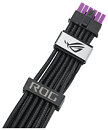
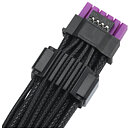
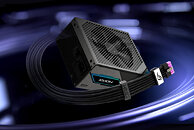
ASUS has introduced the ROG Equalizer, a new 12V-2×6 PCIe power cable designed to improve power delivery stability for modern GPUs. The cable is compliant with ATX 3.1 and PCIe 5.1 standards and will be bundled with the company's upcoming ROG Thor III and ROG Strix Platinum power supplies. The ROG Equalizer targets ongoing reliability issues around 16-pin GPU power connectors by focusing on load balancing across all pins. According to ASUS, the cable is designed to distribute power more evenly across all the wires, this reducing the risk of hotspots caused by uneven load. The cable supports up to 17 A per wire, compared to standard 12V-2x6 cables, which are rated at 9.2 A per wire (per pin).

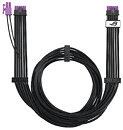
ASUS also claims the design keeps operating temperatures around 73°C even when some wires aren't under full load, a situation where standard cables can run noticeably hotter due to uneven current distribution across the conductors. The exact internal engineering hasn't been provided by ASUS, but the likely approach is equalizing the impedance across all conductors (wires) to spread the load more evenly. The cable itself is 750 mm long, braided in a dual-tone finish, and ships with cable combs for tidier routing. It follows a GPU-first wiring layout and is built with high-power delivery in mind. No information regarding pricing yet.
Source: ASUS
Add your own comment

84 Comments on ASUS Introduces ROG Equalizer 12V-2x6 Cable for GPU Power Stability

#1
_roman_
very nice

problem solved
The cable supports up to 17 A per wire, compared to standard 12V-2x6 cables, which are rated at 9.2 A per wire (per pin).
Who wants to test it and find the first issue?
Posted on Reply
#2
Guwapo77
Is this only compatible with Asus PSUs tho?
Posted on Reply
#3
Nomad76
News Editor
Guwapo77Is this only compatible with Asus PSUs tho?
Nope, it's compatible with PSUs from most major manufacturers/brands. Just that for the start it will only be bundled with some ASUS PSUs.
Posted on Reply
#4
lambda
Is the per pin loading balancing performed on the PSU side?
Posted on Reply
#5
Bobaganoosh
Guwapo77Is this only compatible with Asus PSUs tho?
I would bet it works with others, minus the voltage sense lines it looks like they added (which they had on their previous cables too).
Posted on Reply
#6
agmarley
I wonder when this miracle cable will make it into the packaging of the PSU's? Will they have a super special sticker to designate the new cable is included? Kind of like the cereal box toys from the 1980's in the US? Maybe we could get a Captain Crunch themed it's inside campaign!
Posted on Reply
#7
Nomad76
News Editor
lambdaIs the per pin loading balancing performed on the PSU side?
Don't think so in this case, as the cable is compatible (and should perform similarly) with non-ASUS PSUs.
@agmarley

I wonder when this miracle cable will make it into the packaging of the PSU's? Will they have a super special sticker to designate the new cable is included? Kind of like the cereal box toys from the 1980's in the US? Maybe we could get a Captain Crunch themed it's inside campaign!
There's a dedicated package/box just for "the equalizer" :)
Posted on Reply
#8
Jism
thanks to nvidia a serious sidemarket has arised with the use of 3rd party cables that are supposed to prevent systems from burning up. What a way.
Posted on Reply
#9
lepudruk
I don’t fully understand how this is supposed to work... From what I see, it’s just a cable with increased resistance that can withstand higher loads and temperatures. There are no electronic circuits like those in TG Wireview II PRO or AC Ampinel. So what is supposed to balance the current on the individual pins?
Posted on Reply
#10
DeltaHawk001
So what I'm hearing is
"Nvidia is incompetent at making 12vhp cables work, so we will"

Without blowing up your 5080 of course

Probably
Posted on Reply
#11
Noci
lepudrukI don’t fully understand how this is supposed to work... From what I see, it’s just a cable with increased resistance that can withstand higher loads and temperatures. There are no electronic circuits like those in TG Wireview II PRO or AC Ampinel. So what is supposed to balance the current on the individual pins?
Exactly, besides a fancy cable comb and obviously high quality looking cables/connector I don't see how load balancing would be realised :confused:.

But let's await until this gets a thorough review. Maybe there are some hidden features for now.
Posted on Reply
#14
Wirko
lepudrukSo what is supposed to balance the current on the individual pins?
Well, the increased resistance! You can do that to some extent, perhaps raise the resistance to 50 milliohms or so (that would be the +12V wire plus ground wire resistance). But then voltage and power losses become excessive and the wires you need are thin and delicate 20 AWG (0.5 mm²). And the equalisation is very probably still insufficient if there's a bad case of oxidation (etc.) on the pins.
Posted on Reply
#15
evernessince
_roman_very nice

problem solved


Who wants to test it and find the first issue?
Depends how they "solved" the issue. If pin spread is still an issue, you will still get runaway thermal scenarios. The cable would only hide the issue.
Posted on Reply
#16
mouacyk
12V-2x6 plays fornite -- NVidia: "ship it!"
Consumer proceeds to run furmark...
Posted on Reply
#17
Visible Noise
Same snake oil as expensive audio cables.

There’s a sucker born every second.
Posted on Reply
#18
Chaitanya
Visible NoiseSame snake oil as expensive audio cables.

There’s a sucker born every second.
There are a lot of suckers oops fanboys of Shitsus who will buy this expensive cable thinking it will magically load balance and monitor the load. Apart from using thicker gauge copper dont see any mention of monitoring(thermal and electrical) in the cable rather its limited to handful of future PSUs which will come with load balancing.
Posted on Reply
#19
Kwadratowicz
Trrrryt
Maybe finally the connector on GPU side will melt IF it has higher melting point than GPU side connector. But if it is compatible with all psu, so psu side can melt too.
Posted on Reply
#20
N/A
How are you going to explain this then?
*Testing method: This extreme test removes the four middle wires of the +12V 16‑pin PCIe power cable to evaluate cable temperature performance under maximum current load.

Test conditions: 25°C 25A+0+0+0+0+25A (Total power: 600W)
With ROG Equalizer Without ROG Equalizer
Pin Current per pin: PSU to ROG Equalizer Current per pin: PSU to connector
1 8.31 25.00
2 8.30 0.00
3 8.33 0.00
4 8.37 0.00
5 8.36 0.00
6 8.33 25.00
Posted on Reply
#21
azrael
Nomad76Don't think so in this case, as the cable is compatible (and should perform similarly) with non-ASUS PSUs.


There's a dedicated package/box just for "the equalizer" :)
Original or reboot or reboot reboot?
Posted on Reply
#22
coolkwc
lepudrukI don’t fully understand how this is supposed to work... From what I see, it’s just a cable with increased resistance that can withstand higher loads and temperatures. There are no electronic circuits like those in TG Wireview II PRO or AC Ampinel. So what is supposed to balance the current on the individual pins?
From what i understand from Asus website, this is not a active balancer like AC Ampinel. It didn't have electronics on the cable, it just a pure cable with upgraded pin and wire in terms of current carrying capacity. In case the imbalance did happen with the ROG cable, even with only remaining 2 wires carrying the total 600W load (25A per cable), it still within the cable safe temperature limit, this is tested by Asus themself by comparing normal 12V-2x6 vs ROG cable by removing 4 out of 6 12V rail in the cable.
Posted on Reply
#23
Ihnako
Besides a dedicated connector (for some "premium" ASUS PSUs), I don't see what's so special about this cable?
So your cable won't melt because they teste it and it's only heating up to 73°C, while your connector melts cause some pins deliver higher than rated currents.
Posted on Reply
#24
Aleksandar_038
Well, if idea of using 600W graphic card in desktop PC is not stupid enough...
Posted on Reply
#25
londiste
WirkoWell, the increased resistance! You can do that to some extent, perhaps raise the resistance to 50 milliohms or so (that would be the +12V wire plus ground wire resistance). But then voltage and power losses become excessive and the wires you need are thin and delicate 20 AWG (0.5 mm²). And the equalisation is very probably still insufficient if there's a bad case of oxidation (etc.) on the pins.
Looking at the lack of anything active on the cable something like that would be my guess as well. Because the runaway problem is unbalanced power on different wires due to resistance differences, they add some resistance by default so any added resistance would have a smaller effect? I would not be surprised if something like that helps with mild cases but not the ones that burn and melt.
Posted on Reply
Add your own comment
Nov 25th, 2026 17:18 CST change timezone

New Forum Posts

Popular Reviews

TPU on YouTube

Controversial News Posts