Thursday, April 16th 2026

Steam's Proton Gets Wine 11 Gaming Performance Improvements, Valve Launches Arm64 Compatibility Layer
It seems as though Valve's Proton 11 is rolling out in a new Beta update, and along with it, all of the improvements that come from the recent updates introduced in Wine 11, as pointed out by Brad Lynch on X. The changelog for Proton shows the inclusion of Proton 11 Beta, which would be based on Wine 11. Wine 11 made waves in mid-March when it launched, specifically because it added NTSync kernel driver support to the translation layer, introducing theoretical massive performance improvements to Linux games.
NTSync theoretically reduces the overhead when running Windows games via Proton by moving Windows NT library emulation into a kernel driver. While it isn't going to improve frame rates across the board, it has been reported to improve compatibility where esync and fsync were lacking, and it may reduce CPU overhead. This has the end result of making some games feel smoother, thanks to improving frame rate consistency and increasing 1% and 0.1% low frame rates.
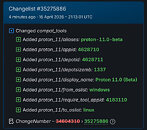
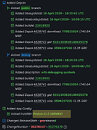 Valve has also added a configuration called Proton 11.0 (ARM64), which should be the release version for Proton destined to run the Steam Frame standalone VR headset. This Proton version would allow the Steam Frame to run games designed for x86 on Arm hardware, and, while it may be designed for the Steam Frame, it should also enable compatibility with other Arm devices like powerful Android gaming handhelds and similar, although the Frame itself runs a modified version of the Linux-based SteamOS. Valve previously detailed the requirements and compatibility systems that it would be using for the Steam Frame, which are slightly more complicated than the current Steam Deck Verified program.
Source:
SadlyItsBradley on X
NTSync theoretically reduces the overhead when running Windows games via Proton by moving Windows NT library emulation into a kernel driver. While it isn't going to improve frame rates across the board, it has been reported to improve compatibility where esync and fsync were lacking, and it may reduce CPU overhead. This has the end result of making some games feel smoother, thanks to improving frame rate consistency and increasing 1% and 0.1% low frame rates.


7 Comments on Steam's Proton Gets Wine 11 Gaming Performance Improvements, Valve Launches Arm64 Compatibility Layer
for further information you may read and the link i provided there: www.techpowerup.com/forums/threads/talk-linux-kernel-7-0-0-was-released.348293/#post-5709104
I do not agree wiht this statement, therefore i pointed to the other sources. the topic i wrote yesterday or the information i was reading yesterday were claiming performance uplifts over 20% for games in whatever test case they used.
it was also well known that nvidia or the kernel or the kenrel module did not use that ntsync feature which exists since kernel 6.14 up to recently..the work wiht rust and the new nvidia gpu driver which went into the linux kernel needs also be considered. / evaluated by those who owns such hardware.
-- in short kernel 7.0.0 + right configuration should give performance.
gentoo is still stuck on a very old wine-proton version.
url says 11 beta is available for wine-proton: github.com/ValveSoftware/wine/tags
It is really close that I can do everything what I want on Linux!
CPU part may work better with Linux than Windows on ARM. Linux has a longer history of multiple architectures.
GPU part heavily depends on what will nVidia deliver.
At the end of the day:
A.I. and some other productivity will work.
For gaming just buy x86 and windows.