Thursday, April 23rd 2026

Intel Posts Strong Q1 2026 Results, Lands Tesla as First 14A Node Major Customer

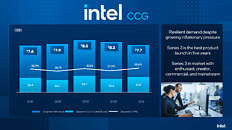
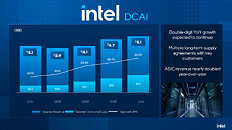
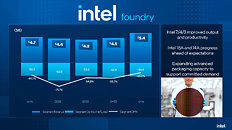
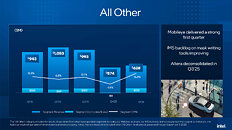
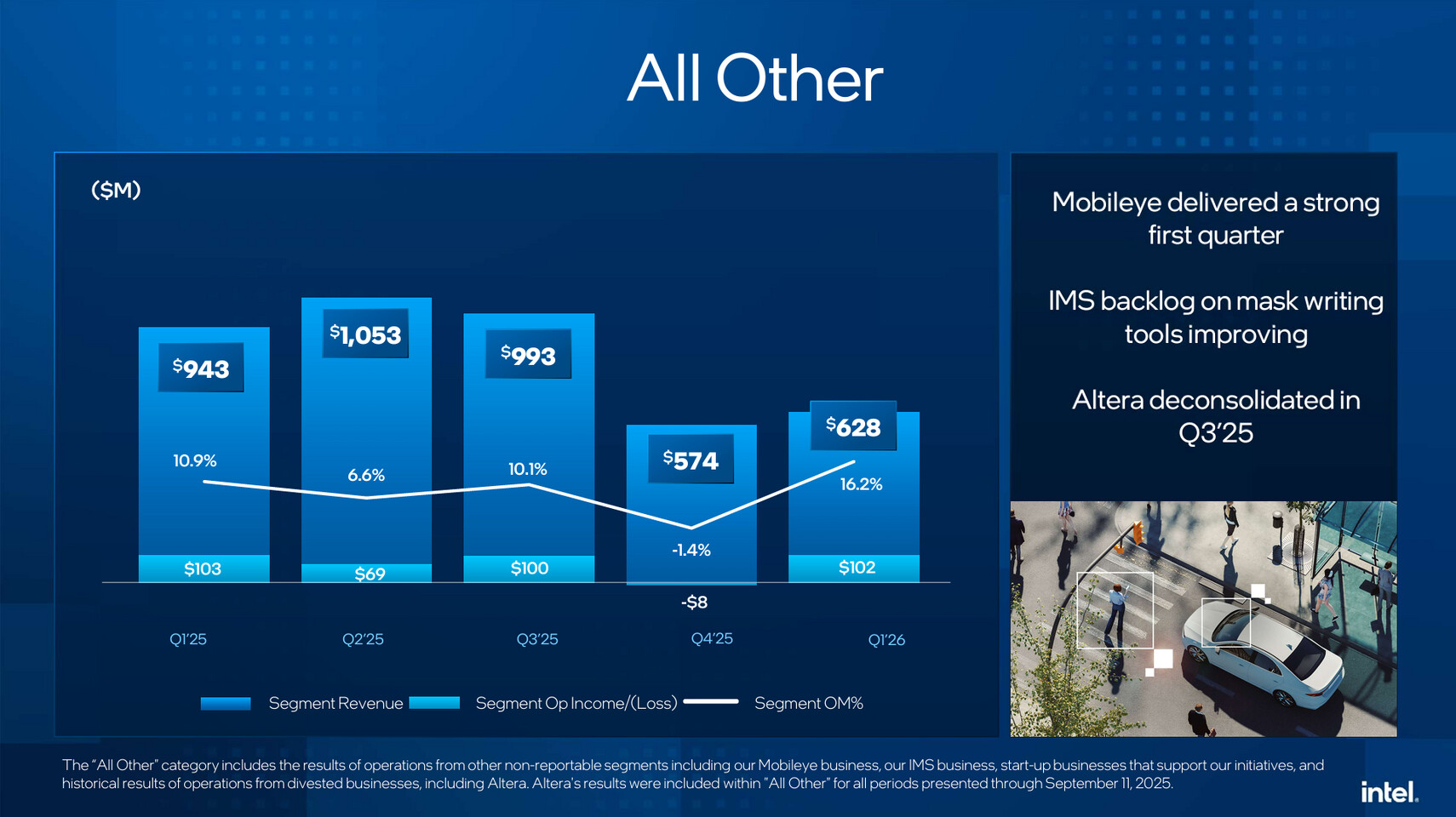
Intel has posted better-than-expected Q1 2026 results, with $13.58 billion in revenue, up 7.2% year over year and well ahead of the $12.42 billion analysts had forecast. Adjusted earnings per share hit 29 cents against an expectation of just one cent, sending the stock up more than 15% in after-hours trading. Data center and AI were strong performers, bringing in $5.1 billion against estimates of $4.41 billion. The foundry division revenue generated $5.4 billion, though the vast majority of that was Intel's own internal business. External customer revenue was less than $200 million, mostly legacy wafer work. Also, Intel ASIC business is on track for more than $1 billion in revenue this year. Part of the Q1 surprising results came from Intel clearing out finished goods inventory it hadn't expected to move, according to CFO David Zinsner. The company is also raising chip prices to offset rising production costs, which is reflected in its Q2 guidance of $13.8 to $14.8 billion, a bit more than the $13 billion Wall Street had estimated.

Going back to the foundry side, Intel scored two notable wins on this front. Tesla signed on as Intel's first major 14A customer for Elon Musk's Terafab AI chip complex in Austin, however, the details of this deal are still unknown. The most logical scenario is that Terafab will license the Intel 14A process, but neither side has confirmed it. The second win came earlier this month when Intel expanded its AI CPU deal with Google, the two companies extending their co-development of custom ASIC-based IPUs.

In this first quarter, Intel launched several new processor families, including Xeon 600 for workstations, Core Ultra 200S Plus and 200HX Plus for desktop and mobile, Core Ultra Series 3 with vPro, Core Series 2 for edge devices, and Core Series 3, the first mainstream chips built on Intel 18A. Worth mentioning that Intel repurchased the 49% equity interest of its Fab 34 in Ireland and expanded assembly and test capacity in Penang, Malaysia.
Source: Intel
Add your own comment

14 Comments on Intel Posts Strong Q1 2026 Results, Lands Tesla as First 14A Node Major Customer

#1
AntiX3DGlazer
To everyone who bought Intel shares at $18


damn that's some good ROI.
Posted on Reply
#2
kondamin
AntiX3DGlazerTo everyone who bought Intel shares at $18


damn that's some good ROI.
It was obvious intel was going to stick around when they got a government participation.
That they would make a turn around in less than a year wasn’t expected.
Posted on Reply
#3
Bwaze
It would be hilarious if after all the "wins" Intel just admitted later that 14A is in fact not progressing as promised and will be delayed until further notice...

I mean, we're now hearing for months now about how great the node that will start to be utilised only in 2027 is. Anyone remembers their first 10 nm CPU - Core i3-8121U "Cannon Lake", quietly launched in May 2018 in a limited-release Lenovo IdeaPad 330 laptop so they could claim they have a working 10 nm node, although it didn't work for more than a year after that...
Posted on Reply
#4
john_
BwazeIt would be hilarious if after all the "wins" Intel just admitted later that 14A is in fact not progressing as promised and will be delayed until further notice...

I mean, we're now hearing for months now about how great the node that will start to be utilised only in 2027 is. Anyone remembers their first 10 nm CPU - Core i3-8121U "Cannon Lake", quietly launched in May 2018 in a limited-release Lenovo IdeaPad 330 laptop so they could claim they have a working 10 nm node, although it didn't work for more than a year after that...
The share price will lose 20% overnight. But Intel's 18A is working, I mean Panther Lake is selling, so someone can only expect their 14A to reach maturity much faster than what it took 18A.
Posted on Reply
#5
mb194dc
Foundry only lost 2.4 billion this quarter and the non cooked books gaap loss was 3.7bn...
Posted on Reply
#6
Nhonho
It's useless for Intel to have a super-advanced 1.4nm process if it continues to manufacture its CPU components in tiles, an approach that greatly increases latencies and decreases overall CPU performance. The fastest parts (x86 cores, iGPU, PCIe and RAM controllers) MUST be on the same die in order to get the lowest possible communication latencies between them.
mb194dcFoundry only lost 2.4 billion this quarter and the non cooked books gaap loss was 3.7bn...
Uncle Trump is going to use taxpayer money to pay for the blunders and high salaries of Intel's executives this year, again...
Posted on Reply
#7
mb194dc
NhonhoIt's useless for Intel to have a super-advanced 1.4nm process if it continues to manufacture its CPU components in tiles, an approach that greatly increases latencies and decreases overall CPU performance. The fastest parts (x86 cores, iGPU, PCIe and RAM controllers) MUST be on the same die in order to get the lowest possible communication latencies between them.


Uncle Trump is going to use taxpayer money to pay for the blunders and high salaries of Intel's executives this year, again...
The stock can be worth anything in these crazy markets and there's obviously a propaganda campaign going on to boost INTC specifically. I don't think their underlying business has actually changed, the foundry is still struggling, their CPU are not the top anymore. GPU / Arc is doing nothing. Only Musk has signed up to anything with the foundry and we know he is in with the administration.
Posted on Reply
#8
Vayra86
mb194dcThe stock can be worth anything in these crazy markets and there's obviously a propaganda campaign going on to boost INTC specifically. I don't think their underlying business has actually changed, the foundry is still struggling, their CPU are not the top anymore. GPU / Arc is doing nothing. Only Musk has signed up to anything with the foundry and we know he is in with the administration.
This is really just lots of disgusting hands feeding the others.

It won't last unless Intel is actually going to deliver value again. Not in some random niche, but enterprise wide.
Posted on Reply
#9
kondamin
NhonhoIt's useless for Intel to have a super-advanced 1.4nm process if it continues to manufacture its CPU components in tiles, an approach that greatly increases latencies and decreases overall CPU performance. The fastest parts (x86 cores, iGPU, PCIe and RAM controllers) MUST be on the same die in order to get the lowest possible communication latencies between them.
Nah even amd's bridge model is fine for cpu's, Emib and foveros are faster and with the return of the memory controller on the compute tiles most issues have been solved
As is visible with panther lake.

that microscopic jump on to an other tile isn't going to change anything about the inches data needs to moves over PCI-e
Posted on Reply
#10
Visible Noise
john_The share price will lose 20% overnight. But Intel's 18A is working, I mean Panther Lake is selling, so someone can only expect their 14A to reach maturity much faster than what it took 18A.
This aged well.

Posted on Reply
#11
Nhonho
Visible NoiseThis aged well.

People who buy Intel stock these days either have a magic crystal ball that tells them the future value of the stock, or they're fearless enough to watch the value of Intel stock plummet the next day.
Posted on Reply
#12
john_
NhonhoPeople who buy Intel stock these days either have a magic crystal ball that tells them the future value of the stock, or they're fearless enough to watch the value of Intel stock plummet the next day.
For decades, technology has been becoming an increasingly dominant part of our society. Children under the age of 10 have grown up with a smartphone in their hands since they were two. Those who are currently two years old will have 'friends' AI systems by the time they reach 8-10. Companies are looking for ways to replace employees and how to produce work faster and better. Many professionals are already using AI to improve their results or simplify their tasks. Later on, we will start talking about robot assistants in companies and eventually in our homes.
Ignoring the negative consequences of AI on society, the point is that the average person's needs for technological equipment at home or at work are constantly increasing. Regarding hardware, companies like Nvidia, AMD, Intel, TSMC, Broadcom, and others will only see their market caps trend upwards in the coming years. Unless something truly dramatic happens—a planetary disaster, war, or a global uprising because of unemployment—I personally believe that AMD’s market capitalization will double and Intel’s will triple.
As for Nvidia, I'm not sure. Where Nvidia stands now, it seems to have hit a ceiling. But people have been saying that about Nvidia's market cap since it was at around 200 billion—and now it's at 5 trillion company. Some argue it will reach 20 trillion in the next 10 years. I would say it might move between 8 and 10 trillion. But then again, my crystal ball might be cloudy, and I might not be seeing clearly what it's showing.
Posted on Reply
#13
Nhonho
john_Where Nvidia stands now, it seems to have hit a ceiling. But people have been saying that about Nvidia's market cap since it was at around 200 billion—and now it's at 5 trillion company. Some argue it will reach 20 trillion in the next 10 years. I would say it might move between 8 and 10 trillion. But then again, my crystal ball might be cloudy, and I might not be seeing clearly what it's showing.
For Nvidia to continue growing, I only see one solution: it should buy MediaTek. This way, it would acquire all of MediaTek's ARM CPU technology, engineers, and all of MediaTek's current customers (home and corporate consumers). For those who don't know, MediaTek's top-of-the-line ARM CPUs have performance as high as or better than Qualcomm's.

If Nvidia buys MediaTek, I know it would have to renegotiate licensing agreements with ARM to produce and sell CPUs, APUs, and SoCs, but this would be NO problem, as ARM would love to license its IP to a huge client like Nvidia. This licensing agreement would be very beneficial for both companies (Nvidia and ARM). The more ARM CPUs are sold, the more ARM will diminish x86 dominance and prevent RISC-V processors from gaining market share from ARM.

Thus, Nvidia would become the largest supplier of ARM CPUs, APUs, and SoCs on the planet for Smart TVs, smartphones, tablets, SoCs for cars, consoles, home PCs (laptops and desktop PCs), etc. Even Microsoft and Sony would start buying ARM SoCs from Nvidia to equip their future consoles. Furthermore, MediaTek is one of the largest suppliers of chips used in routers, modems, HDDs, SSDs, and various other types of devices.
Posted on Reply
#14
john_
NhonhoFor Nvidia to continue growing, I only see one solution: it should buy MediaTek. This way, it would acquire all of MediaTek's ARM CPU technology, engineers, and all of MediaTek's current customers (home and corporate consumers). For those who don't know, MediaTek's top-of-the-line ARM CPUs have performance as high as or better than Qualcomm's.

If Nvidia buys MediaTek, I know it would have to renegotiate licensing agreements with ARM to produce and sell CPUs, APUs, and SoCs, but this would be NO problem, as ARM would love to license its IP to a huge client like Nvidia. This licensing agreement would be very beneficial for both companies (Nvidia and ARM). The more ARM CPUs are sold, the more ARM will diminish x86 dominance and prevent RISC-V processors from gaining market share from ARM.

Thus, Nvidia would become the largest supplier of ARM CPUs, APUs, and SoCs on the planet for Smart TVs, smartphones, tablets, SoCs for cars, consoles, home PCs (laptops and desktop PCs), etc. Even Microsoft and Sony would start buying ARM SoCs from Nvidia to equip their future consoles. Furthermore, MediaTek is one of the largest suppliers of chips used in routers, modems, HDDs, SSDs, and various other types of devices.
Nvidia already holds an ARM core license. They’ve had it from the start and continue to maintain it. Their Grace AI processors are ARM-based, and Nintendo’s Switch consoles use ARM SoCs. Even after all these years, Nvidia is still selling the Nvidia Shield. They tried to acquire ARM because, as a company, they are used to crushing the competition. They wanted ARM to exert absolute control over the technology and gradually make companies like Qualcomm uncompetitive—essentially doing what they are already doing in the gaming GPU market. But it didn't go their way.
The N1 processor is designed in collaboration with MediaTek. Nvidia doesn't need to acquire MediaTek; they have the GPU expertise, while MediaTek specializes in mobile SoCs. Nvidia has close ties with OEMs due to their GPUs, while MediaTek has its own established clientele. Nvidia is exploiting these advantages. In five to ten years, I expect them to start making laptop and desktop SoCs exclusively on their own. At that point, MediaTek will realize why companies like Apple vowed never to collaborate with Nvidia again.
Posted on Reply
Add your own comment
Nov 12th, 2026 04:42 CST change timezone

New Forum Posts

Popular Reviews

TPU on YouTube

Controversial News Posts