Friday, May 22nd 2026
AMD Updates "Polaris" and "Vega" GPU Drivers With Adrenalin Edition 26.5.2 Version
AMD has released a new GPU driver update for its older "Polaris" and "Vega" GPU architectures, which are now almost a decade old. The latest Adrenalin Edition 26.5.2 drivers, released a few days ago, are specifically designed for these two architectures, which were AMD's popular gaming GPUs before the RDNA 1.0 generation. Interestingly, the Adrenalin Edition 26.5.2 driver update for "Polaris" and "Vega" GPU architectures includes only a single fix: resolving an application crash issue in Apex Legends on Radeon RX 400/500 series graphics cards. No other changes have been made, aside from updating this driver version from the August 2025 release of Adrenalin Edition 25.8.1 for these two GPU architectures.
Officially, the driver supports Radeon RX 400, Radeon RX 500, Radeon 500X, Radeon RX Vega, Radeon VII, Radeon Pro Duo, and Radeon 600 Mobile GPUs, which encompass all the series AMD released based on these GPU architectures. As some may recall, AMD's "Polaris" debuted in 2016 for OEM systems and appeared in 2017 for gaming GPUs, while the "Vega" GPU generation lasted until 2019, with the Radeon VII being AMD's last release. Although these GPU architectures have been replaced by RDNA, they have lost some relevance, but there are still millions of these GPUs in use worldwide, prompting AMD to issue a few final fixes like the one we see today.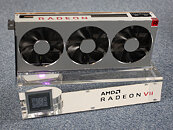
Sources:
AMD, via VideoCardz
Officially, the driver supports Radeon RX 400, Radeon RX 500, Radeon 500X, Radeon RX Vega, Radeon VII, Radeon Pro Duo, and Radeon 600 Mobile GPUs, which encompass all the series AMD released based on these GPU architectures. As some may recall, AMD's "Polaris" debuted in 2016 for OEM systems and appeared in 2017 for gaming GPUs, while the "Vega" GPU generation lasted until 2019, with the Radeon VII being AMD's last release. Although these GPU architectures have been replaced by RDNA, they have lost some relevance, but there are still millions of these GPUs in use worldwide, prompting AMD to issue a few final fixes like the one we see today.

35 Comments on AMD Updates "Polaris" and "Vega" GPU Drivers With Adrenalin Edition 26.5.2 Version
i think the nvidia 900 generation argument is most likely gone. the cards can not be used for anything useful anymore in 2023. I doubt it has changed as of now.
-- when we talk about mesa, vulkan, i would consider anything which is older as 3 months obsolete. all those libraries work together in some ways and older usually means worse. it is not libreoffice which i had to ditch recently as the source code version was from 12/2025 and the binary version was released a few days ago. for libreoffice or similar stuff older does not really matter much.
I would not stay on the side of old software except retro games and retro computing. 3 years ago does not classify for that label.
VRAM? I've got 24 GB on this thing. It's still wooden. This stint with this GPU here made me actually resent anyone still glorifying the GTX 1080 Ti. It's not that it's bad, especially for a GPU that's a decade old, I think GP102 puts quite a fight. But if anyone thinks they're not getting anything of substance by upgrading by now, I wish I was as much of a fool as they are.
You're on Linux, so at least you get excellent support for all of these cards nonetheless. AMD, Nvidia, it doesn't matter. We on Windows aren't so lucky.
Let's be clear, I'm not saying that more update drivers are not good, just saying that drivers that are only a couple years old are not a bad thing, not by far. 5 and 6 years old, ok yeah that's a bit out there.
One major reason for me to ditch most considerations of RX 9070 XT (among others) when changing my main system GPU/s, for $100 less than a RTX 5070 Ti I was not going through all the nonsense of AMD lack of "long" term support (in my opinion even not that reasonable when you can't even reach full 5 years of main support) to Radeon products when I do need not so outdated APIs for my main system use cases and tests, and I require both Linux and Windows in my case, not just one if them.
Really for someone actively still using GCN 3-5 GPUs for modern software outside basic uses it may just be better to migrate to Linux, RADV still gets updated here and GCN 3-5 has Vulkan 1.4 support with RADV. Even AMDGPU may get the occasional even if rare update for these graphic families.Try installing the extracted drivers manually through Device Manager and see if it works, but it may or may not work, and Adrenalin can often complain about driver version if too mismatched or certain flags not met. For the RDNA 2 integrated graphics systems, AMD combined "-c" package should work but it often causes problems, so unless you are actually using the integrated graphics you are better off by disabling them now.Yes, for Polaris and Vega it is a 3 years old stack and codebase only iterated to apply minor bug fixes and security patches. No kernel, API, features or major compatibility changes. RDNA 1 and RDNA 2 are freezed at 25.10 which is around October 2025, no updates to Vulkan API since then for the 25.10 driver branch despite the current one for RDNA 3 and 4 receiving Vulkan API and extensions updates since then, only thing that differs from Vega and Polaris is that AMD is just providing generic game profiles and Vega and Polaris style updates (minor bugfixes and security patched) may be monthly for now until "market needs" as deemed by AMD don't require that anymore.Should allow for encoding advantages in theory, but never tried that and I doubt it'll work well with the splitted drivers well now. Also a general advantagr of any integrated graphics in theory is extra outputs if really needed. Power saving should be if configuring like a laptop to go through the integrated graphics, but use dGPU for demanding tasks, but I'm actually not sure if power savings would be really that significant in current desktop chiplet AMD CPUs because of the I/O die power consumption, if such power savings are really needed then it may work better with the monolithic APUs and Intel iGPUs.
So this release is just made as a marketing stunt to mock nvda so that they can claim supporting the 580 longer than nvda did with the 1080? wth
They only have that fix to release at the time (whether that's because there's nothing else to fix without exceeding whatever boundary they set for themselves or because the other fixes aren't ready yet is unknown) so that's what we have out here.
Also, while it may not have received the most features throughout its lifecycle, the longest supported architecture is GCN 1, not Maxwell. It was supported from 2011 through 2022. Just thought I'd throw that fact out there.