Friday, June 12th 2026

Steam Survey: Increased Windows 11 Adoption, AMD GPU Detection Fix Live
Despite having launched in 2021, adoption of Windows 11 has been somewhat slow-going, with Microsoft's latest desktop OS only overtaking Windows 10 nearly four years after launch and only reaching 1 billion users in 2026. If Valve's Steam Hardware and Software survey is anything to go by, it looks as though Windows 11 adoption has continued to grow in recent months. The survey results for May 2026 point to a 2.02% increase in the number of PC gamers on Windows 11, with Windows 10 losing 1.64% and Linux losing 0.53%, despite Valve's ongoing work on SteamOS and the never-ending proclamations of "the year of the Linux desktop."
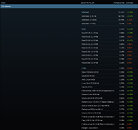
Overall, however, these changes have barely moved the needle, with Windows gaining 0.38% of Steam's user share, and macOS gaining 0.15%. It's worth noting that English-language users are somewhat overrepresented in this particular Steam Survey, with 2.71% more English users than in the previous survey. These sorts of biases have previously skewed results, as certain groups may have status quo biases that play into their choice of operating system and hardware. The rest of the Steam Hardware and Software Survey results are more or less business as usual, with 16 GB of RAM and 1080p monitor resolution continuing to be the standard, although the latter has lost a negligible amount of market share. The same is true for GPUs, where the NVIDIA GeForce RTX 3060 continues to be the most popular GPU on Steam. It appears as though the fix for Steam's recent faulty detection of Radeon GPUs has been released out of beta, though, as the survey reports that the AMD Radeon RX 9070 XT has gained 1.24%.
Source:
Steam Hardware and Software Survey
Overall, however, these changes have barely moved the needle, with Windows gaining 0.38% of Steam's user share, and macOS gaining 0.15%. It's worth noting that English-language users are somewhat overrepresented in this particular Steam Survey, with 2.71% more English users than in the previous survey. These sorts of biases have previously skewed results, as certain groups may have status quo biases that play into their choice of operating system and hardware. The rest of the Steam Hardware and Software Survey results are more or less business as usual, with 16 GB of RAM and 1080p monitor resolution continuing to be the standard, although the latter has lost a negligible amount of market share. The same is true for GPUs, where the NVIDIA GeForce RTX 3060 continues to be the most popular GPU on Steam. It appears as though the fix for Steam's recent faulty detection of Radeon GPUs has been released out of beta, though, as the survey reports that the AMD Radeon RX 9070 XT has gained 1.24%.


75 Comments on Steam Survey: Increased Windows 11 Adoption, AMD GPU Detection Fix Live
EG1. Test it in a CPU heavy game where GPU isn't the bottleneck. Usually that's where it works best at providing the lowest amount of latency. When your GPU is already maxed out latency is horrible - since FG lowers your framerate even more
1. Not that good anyway. Never use it.
2. Only works in some cases. Needs a complicated whitelist system.
3. Impossible to be used because the older hardware is not capable of running it.
4. Nvidia is the good guy from stopping me from using this meaningless feature that i have to explicitly enable myself.
I'm unlucky and can clearly see the artifacts even at 100fps base framerate that's also why I don't personally like using it.
The steam survey is just a rough guide people take it way too seriously.
We know most people buy Geforce, check
We know some people buy Radeon, check
we know most people run windows, check
We know most people game on a potato, check
it's not super complicated.I literally picked up a 5080 just to test it because it was the most similar card performance wise to my primary PC to see if I liked to game on it vs the 4090. The answer in general is it doesn't matter both cards are good enough, the second answer is other that 2x frame gen which is barely tolerable to me framegen sucks outside of some very specific use cases, I still like it from about 10 feet away on a 65-75 inch oled with a controller but those TVs only go up to 144hz meaning 3x-4x is still useless unless the base framerate is less than 50 but then it's still ass due to latency even on a controller.
Maybe I should have tried it with an old ass CPU might pair it with my 5800X and see if I like it better lol.
There is no corporation that is the good guy and in 2026 both seem to be doing the bare minimum to get the gamers $$$.
It's just a convenient excuse for some people (im not saying you specifically) to handwave away all criticism of Nvidia. But if AMD does the same then the very same people are red (pun intended) with rage how AMD is screwing over their buyers. Despite the fact that back when those cards launched there was no FSR to speak of and those cards were not sold with a promise of RT, AI or anything like that. Those were sold with a promise of strong raster and big VRAM.
Now some people retroactively complain that AMD is screwing them over.
The situation with Nvidia is different because Nvidia and it's supporters constantly tout how RTX was such a forward looking architecture and that 20 series can run DLSS 4.5. Them neglecting other features the older RTX cards lack doesn't exactly jive with the whole futureproof argument.
I experienced this myself as a 20 series owner for 4 years (and 10 series owner 5 years prior to that). Nvidia will screw over their buying customers just as well as any other company. So because they gave 20 series DLSS 4.5 they're the good guys suddenly and all is forgiven? Oh please...
If they can do something they should though, how much bad press did AMD need to announce FSR4 for RDNA3/2 when they are clearly far behind Nvidia in marketshare it made zero sense especially because we have known it works via int8 for a long time due to them accidentally leaking it.
Glad to see the 9070XT doing well I noticed it doing better on Amazon/newegg lately but when the competitor cut most the supply of it's competiting card it shouldn't be a huge surprise. My last customer build used one, not because that is what they wanted, but because that is what they could afford and dropping down to the 12GB 5070 wasn't appealing to them.
We are effectively 3rd glass citizens in their eyes now. They will throw us a bone and give us a decent DLSS update every 2-3 years though.
AMD fans should just feel lucky their architecture isn't as desirable for AI, yet....
Interesting that the arguably worst value Blackwell GPU (5080) goes toe to toe with the 9070XT too, but there have been large spans of time across multiple markets, including currently even, where Blackwell offerings sell at or verifiably below MSRP, making RDNA4 offerings a much tougher sell relatively speaking, especially with all the negative press over the FSR4 fiasco.
I'm already glad Win 11 is stable and doesn't crash on me, but good lord it had many quirks i had to google to fix/change.
Still its good to see the 9070 XT doing well, its a solid card and is most likely what I would also have if I wasn't too used to Nvidia's feature set especially DLSS/DLAA which is enabled in all of my modern games by default.
FG is game dependant but even with my 5000 serie GPU I'm still only using x2 FG in certain games where its fine/has a decent implementation.
I did 6 builds with them during that time, I told people I knew wanted to update their system do it now or you'll be spending 30-40% more soon. I actually think it's even worse than that overall right now.
This actually isn't too terrible, but the Nvidia gpu's are stupidly priced right now besides the gimped vram models. PC gods must have been looking out for me I live a few hours away from 2 microcenters.
www.microcenter.com/product/5007329/amd-ryzen-7-9850x3d,-msi-x870e-p-pro-wifi-am5,-corsair-vengeance-rgb-32gb-ddr5-6000-kit,-computer-
I did finally get some hands on with a 9070XT recently and honestly it was super solid in a lot of games jumping to the 5080 wasn't that different at 1440p like going from 70ish fps to 80ish fps. Some 5080s are good overclockers though so you can add 10-12% then it becomes more noticeable but 1 sample for me only gained about 5% so still a lottery. The only 9070XT (Reaper model) didn't overclock well for me.
Pathtracing is honestly it's only real weak point and a lot of gamers probably still dont care becuase of how heavy that is even on the flagships. Not to mention there are only a few AAA games where it's even impressive enough to turn on.
It's still currently the only 600+ usd gpu I'd recommend becuase spending 500+ on 12GB cards is against my religion in 2026 lol.
You have shown the light. Now pave the way and sign me up!
I don't care who throws shade at who, they're all multi billion dollar corpo's at the end of the day and deserve a critical eye at all times, and I ain't no shareholder/employee. What gets me is bad arguments made earnestly, (like whataboutism/tu quoque/bulverism/relative privation) that also don't account for the differences and nuances of the situation(s). If your argument is sound, the motivation is effectively irrelevant.
ie, Nvidia didn't backport FG/MFG to Ada/Ampere/Turing, and AMD didn't give FSR4 to RDNA2-3.5, those things are argued to be the same and that the first excuses the second - only they're not the same, and it doesn't. There are similarities, crossovers even, but the devil is in the details and one doesn't excuse the other , never did, but especially when the totality of the situation is accounted for.That wouldn't seem to be the case with RDNA3 though. They launched alongside/just after Nvidia's 3rd generation RTX cards, well into the age of RT and ML upscaling with these (below) marketing slides among others.
RT and AI accelerators are lines on their spec sheet too;
Ray Accelerators 96
AI Accelerators 192
But the single biggest factor on the entire situation IMO is that their own FSR4 code leaked showing it worked and worked well, that's something that never happened with FG/MFG so we don't actually know if it (specifically) works, and at what performance or quality level. Note that I am not saying Nvidia can't be criticised for it, knock yourselves out (and MANY did/do), just that it's different. Different feature, circumstances, facts etc, and that it doesn't somehow excuse AMD.
In any event I am happy to see the detection sorted, it's now much more clear which individual SKU's are popular or not.
Last time was 1-2 weeks ago. I guess I'm a chosen one.
As I explained in the post#35, the statistical error is not trivial at all, despite looking small on the face value. Another example. Jon Peddie asks $3,000 for their quarterly report, and yet they make egregious mistakes from quarter to quarter. AMD discrete GPUs were labelled at 5% in Q4 2025 report from March. Now, it's 'suddenly' 8% for the same period in the latest Q1 2026 report. 3% correction looks small on the face value, but it means missing ~350,000-400,000 cards in their spreadsheet.
In Q4 2025 report, Jon Peddie said AIBs shipped 11.4 millions GPUs in that quarter
www.tomshardware.com/pc-components/gpus/nvidia-dominates-discrete-gpu-market-as-sales-of-amd-radeon-graphics-cards-hit-historical-low
In Q1 2026 report, Jon Peddie said AIBs shipped 11.8 millions of GPUs, stating that it was "0.6% decrease from the previous quarter". Really?
www.tweaktown.com/news/112161/desktop-gpu-shipments-hold-steady-in-q1-2026-with-nvidia-maintaining-90-percent-market-share/index.html
5% from 11.4 million is roughly 570,000 cards. 8% from the same number is roughly 910,000 cards. The correction means that they lost hundreds of thousands of cards in their numbers. While I do acknowledge that global sampling and count can be challenging, it is also true what @Fouquin said about doing good statistics. Folks from Steam Survey and Jon Peddie will need to invest significantly more effort to calculate stuff properly, especially when one of them wants a lot of money for their reports.
If it's been this way for so long, this means AMD didn't get represented in the actual share of the market. If they had been represented from their launch or some short time after, this could of contributed in a small way for sales. Instead they've just been viewed as selling so poor that they don't even show up on the list.
While us tech enthusiasts or tech news readers may know better, more avg PC gamers viewed AMD doing poorly with Readon 9000 Series and didn't buy potentially.
Seems reasonable, it'll be interesting to see how the trend works over 6 months or so as any individual month can be pretty skewed. At least this month we don't have 1/3 the world's population switching from English to Chinese or the reverse, so that suggests the numbers are reasonable.
I was asked on my ex-laptop Asus TUF but I carefully read the "notice" and thought it's confidentiality compromise but later I changed my mind but there was no "survey" button anywhere LMFAO