Sunday, July 12th 2026

NVIDIA GeForce RTX 50 Series Hotspot Sensor Can Be Accessed with NVIDIA's Internal Tool

It seems that NVIDIA's removal of the hotspot temperature sensor from the GeForce RTX 50 series "Blackwell" GPUs is not permanent, as the sensor data can still be accessed and the actual sensor is physically present. However, this is only possible with NVIDIA's internal tool called Modular Diagnostic Software (MODS), which isn't available to the public. According to Brazilian repair specialist Paulo Gomes, NVIDIA's MODS tool can still access the hotspot sensor. Readers may recall that back in January 2025, when the GeForce RTX 5090 GPU was reviewed, it was confirmed that NVIDIA had indeed removed the hotspot sensor reading API from "Blackwell." However, the company has kept access to "GPU Temperature" and "Memory Temperature" features for measuring the overall GPU temperature and its memory, making up for the absence of the hotspot sensor by keeping other features available.

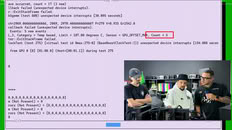
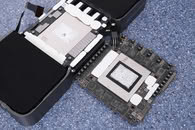
For those who want to access the hotspot sensor on NVIDIA's GeForce RTX 50 series, Paulo Gomes shows that it is possible through the use of MODS, which is an internal tool available only to NVIDIA employees in testing labs. Some builds have been circulating among repair technicians. The tool requires a bootable Linux drive and likely specific packages, making it difficult for the average enthusiast to set up. By connecting the tool from a remote server, the repair crew discovered that NVIDIA's thermal limit of 107°C had been reached five times in some hotspots on the GPU die, despite the average GPU temperature of the tested GIGABYTE GeForce RTX 5070 Ti being around 68°C.
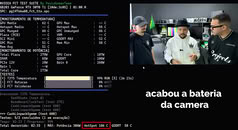
This indicates that the hotspot reading revealed the issue that led to the GPU being brought to the repair shop, while the average GPU temperature did not highlight these problems. Our RTX 5090 review also highlighted that the hotspot sensor was useful in situations like this, where a misaligned cooler or water block was causing trouble that couldn't be detected otherwise. It's important to note that hotspot readings are still available on older GeForce RTX 40 series "Ada Lovelace" graphics cards.
Source: Paulo Gomes on YouTube
Add your own comment

35 Comments on NVIDIA GeForce RTX 50 Series Hotspot Sensor Can Be Accessed with NVIDIA's Internal Tool

#26
evernessince
JustBenchingVram at 88C is definitely cooking and degrading itself. Ask me how I know. Ok, with amd you know about it. Now what? What are you going to do? All of their cards as you can see have the same issue. Are you gonna RMA it and get an identical card with the same issues?
Just a reminder that the topic of this article and the discussion is the GPU hotspot sensor. Not VRAM temps.
JustBenchingAre you going to repaste it yourself or swap the pads and lose warranty?
Routine maintenance does not void warranty. Even if it did, this would not strengthen your off-topic VRAM argument. It'd just mean the world is even more screwed than it already is in terms of right to repair and not actually owning anything anymore. Lose lose for everyone.

If a company wants to void your warranty, it goes without saying that it should have to prove you did something that damaged the product.
Posted on Reply
#27
freeagent
Hecate91This isn't about RX6000 series
But yet here you are talking about AMD.. again.. or crying about Nvidia.. again.. pick one :D
Hecate91At least bring up a GPU more recent than 6 years ago lol.
At least do something other than crying in the news section daily lol.

You might as well just buy an Nvidia GPU and get it over with already.

The closet is open, you can come out now.
Posted on Reply
#28
jnv11
A hotspot of 107 degrees Celsius is over water’s boiling point.

This made me think that someone needs to make a meme of one of these hot GPUs heating up a Utah teapot as seen in en.wikipedia.org/wiki/Utah_teapot because the Utah teapot is used as a test 3D model, making it a fitting 3D model for something related to a GPU that is supposed to render 3D images.

The high hotspot temperature makes me think about the meme of Fermi GPUs grilling food when they proved to be super hot as well.
Posted on Reply
#29
JustBenching
Hecate91manually tuning fans,
Nobody has time for that. Things should work out of the box, 99% of people won't do that. :D
Posted on Reply
#30
LittleBro
So hotspot reading is present but not shown. Deliberately.

Who would have thought that RTX 5000 series could be overheating when they
are same process as RTX 4000 with just scaled up transistors count and no IPC gains.

The smaller area in which heat is produced (concentrated), the worse heat menagement (cooling).
RTX 5090 has funny PCB. Yep, it's tiny and sexy, but for electronics it's a royal nightmare.

Average GPU temp reading is bullshit, that one should be completely removed instead of hotspot.
You should always take the highest temperature of a chip as baseline for cooling, not average one.

On my RX 9070 XT, when GPU temp is around 50°C, that means hotspot is +15...20°C more. And so is VRAM.
But piece of shit heat management will not start fans even in lowest pwm duty cycle, when they are inaudible
and it's enough rpms to drop hotspot and VRAM temps to ~60°C.

GPU manufacturers are fighting for quietest cards, not giving shit about hardware lifespan.
Why go passive and let temps reach 70-80°C when you can spin fans in inaudible speeds
and at the same time lower temps significantly (and extend lifespan and reduce possibility of paste pump-outs).
Posted on Reply
#31
Krit
JustBenchingNobody has time for that. Things should work out of the box, 99% of people won't do that. :D
Out of the box you will get only vacuum cleaner for ~90% of all gpus. I'm talking about ~1050-1200rpm peak speeds 30dBA or lower for whole system. Usually gpu fans are runing in ~1400-2000+ rpm range on average in closed pc case out of the box.
LittleBroBut piece of shit heat management will not start fans even in lowest pwm duty cycle, when they are inaudible
Asus Prime model was working fine at silent 700rpms if i remember correctly.
Posted on Reply
#32
W4tchd0g
Sol_BadguyYeah buddy!!!

Now let's see that stock price go down, way down! 👎👎👎
This fucking company needs to burn! 🔥💣
Jensen being deported is the cure for cancer!⚕️

Every decision (hotspot reading removal, the 12V-2x6 connector, the ASUS flip connector, the 5090 FE PCB design etc.) reeks of very aggressive planned obsolescence.
nVidia is at the forefront of innovation enshittification. Now having begun the takeover of Intel we can expect even more shitty products.
And remember the more you buy the faster we get there.

The antiquity had The Midas Touch now we have The Jensen Touch 💩 -> what he touches turns into this:
images.hothardware.com/contentimages/newsitem/59972/content/small_reggie-burned-12vhpwr-connector.jpg
Mate, 7% max
Posted on Reply
#33
notoperable
ChaitanyaJensen clearly is lacking funds for his leather jackets so what if more GPUs die.
Rumor goes that he is nowadays more into leather pyjamas

So Jensen hid the HotSpot readout to hide the fact that a GPU core at 67C is a fully cooked 107C instead.

Next week NVidia will press release that Hotspot readouts have a serious rounding Error lol
Posted on Reply
#34
SnoutBaron
AleksandarKIt seems that NVIDIA's removal of the hotspot temperature sensor from the GeForce RTX 50 series "Blackwell" GPUs is not permanent, as the sensor data can still be accessed and the actual sensor is physically present. However, this is only possible with NVIDIA's internal tool called Modular Diagnostic Software (MODS), which isn't available to the public. According to Brazilian repair specialist Paulo Gomes, NVIDIA's MODS tool can still access the hotspot sensor. Readers may recall that back in January 2025, when the GeForce RTX 5090 GPU was reviewed, it was confirmed that NVIDIA had indeed removed the hotspot sensor reading API from "Blackwell." However, the company has kept access to "GPU Temperature" and "Memory Temperature" features for measuring the overall GPU temperature and its memory, making up for the absence of the hotspot sensor by keeping other features available.

For those who want to access the hotspot sensor on NVIDIA's GeForce RTX 50 series, Paulo Gomes shows that it is possible through the use of MODS, which is an internal tool available only to NVIDIA employees in testing labs. Some builds have been circulating among repair technicians. The tool requires a bootable Linux drive and likely specific packages, making it difficult for the average enthusiast to set up. By connecting the tool from a remote server, the repair crew discovered that NVIDIA's thermal limit of 107°C had been reached five times in some hotspots on the GPU die, despite the average GPU temperature of the tested GIGABYTE GeForce RTX 5070 Ti being around 68°C.

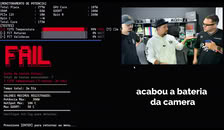
This indicates that the hotspot reading revealed the issue that led to the GPU being brought to the repair shop, while the average GPU temperature did not highlight these problems. Our RTX 5090 review also highlighted that the hotspot sensor was useful in situations like this, where a misaligned cooler or water block was causing trouble that couldn't be detected otherwise. It's important to note that hotspot readings are still available on older GeForce RTX 40 series "Ada Lovelace" graphics cards.
The first to find it seems to not be these Brazilian repair streamers and most likely copied these Russian guys who found the hotspot value by trial and error eventually trying GPC_AVG_MUNGED.

Posted on Reply
#35
Wasteland
LittleBroSo hotspot reading is present but not shown. Deliberately.

Who would have thought that RTX 5000 series could be overheating when they
are same process as RTX 4000 with just scaled up transistors count and no IPC gains.

The smaller area in which heat is produced (concentrated), the worse heat menagement (cooling).
RTX 5090 has funny PCB. Yep, it's tiny and sexy, but for electronics it's a royal nightmare.

Average GPU temp reading is bullshit, that one should be completely removed instead of hotspot.
You should always take the highest temperature of a chip as baseline for cooling, not average one.

On my RX 9070 XT, when GPU temp is around 50°C, that means hotspot is +15...20°C more. And so is VRAM.
But piece of shit heat management will not start fans even in lowest pwm duty cycle, when they are inaudible
and it's enough rpms to drop hotspot and VRAM temps to ~60°C.

GPU manufacturers are fighting for quietest cards, not giving shit about hardware lifespan.
Why go passive and let temps reach 70-80°C when you can spin fans in inaudible speeds
and at the same time lower temps significantly (and extend lifespan and reduce possibility of paste pump-outs).
I don't disagree with your main point; zero RPM mode is in my opinion highly overrated. Constantly turning the fans on/off, rather than keeping them on full time, is arguably worse for the fans themselves, too.

But we did get along just fine, for decades, with cooling behavior tuned to average temperature. Though I'm not a fan of Nvidia hiding the hot spot reading, I can see why they did it: more often than not, such readings are little more than an attractive nuisance, needlessly alarming people.

Also, FWIW, I'm not seeing crazy deltas between average/hotspot on my 9070xt under zero RPM mode. The delta increases under full load, but in that situation the fan's already at well over audible levels. If you want to address the 9070xt's high hotspot/memory temps, dialing down the power limit by 10-15% is the way to go. The perf difference will be negligible, but if you're worried about perf, you can also toss on a small (under-)voltage offset (say, -20 or -30 mV), to compensate.
Posted on Reply
Add your own comment
Nov 12th, 2026 10:45 PST change timezone

New Forum Posts

Popular Reviews

TPU on YouTube

Controversial News Posts