Sunday, July 12th 2026

NVIDIA GeForce RTX 50 Series Hotspot Sensor Can Be Accessed with NVIDIA's Internal Tool
It seems that NVIDIA's removal of the hotspot temperature sensor from the GeForce RTX 50 series "Blackwell" GPUs is not permanent, as the sensor data can still be accessed and the actual sensor is physically present. However, this is only possible with NVIDIA's internal tool called Modular Diagnostic Software (MODS), which isn't available to the public. According to Brazilian repair specialist Paulo Gomes, NVIDIA's MODS tool can still access the hotspot sensor. Readers may recall that back in January 2025, when the GeForce RTX 5090 GPU was reviewed, it was confirmed that NVIDIA had indeed removed the hotspot sensor reading API from "Blackwell." However, the company has kept access to "GPU Temperature" and "Memory Temperature" features for measuring the overall GPU temperature and its memory, making up for the absence of the hotspot sensor by keeping other features available.
For those who want to access the hotspot sensor on NVIDIA's GeForce RTX 50 series, Paulo Gomes shows that it is possible through the use of MODS, which is an internal tool available only to NVIDIA employees in testing labs. Some builds have been circulating among repair technicians. The tool requires a bootable Linux drive and likely specific packages, making it difficult for the average enthusiast to set up. By connecting the tool from a remote server, the repair crew discovered that NVIDIA's thermal limit of 107°C had been reached five times in some hotspots on the GPU die, despite the average GPU temperature of the tested GIGABYTE GeForce RTX 5070 Ti being around 68°C.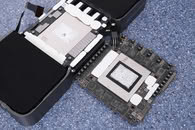
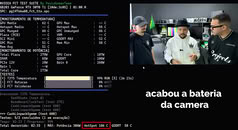
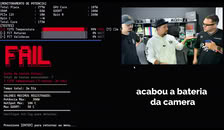
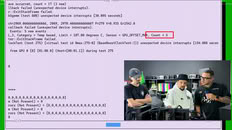 This indicates that the hotspot reading revealed the issue that led to the GPU being brought to the repair shop, while the average GPU temperature did not highlight these problems. Our RTX 5090 review also highlighted that the hotspot sensor was useful in situations like this, where a misaligned cooler or water block was causing trouble that couldn't be detected otherwise. It's important to note that hotspot readings are still available on older GeForce RTX 40 series "Ada Lovelace" graphics cards.
Source:
Paulo Gomes on YouTube
For those who want to access the hotspot sensor on NVIDIA's GeForce RTX 50 series, Paulo Gomes shows that it is possible through the use of MODS, which is an internal tool available only to NVIDIA employees in testing labs. Some builds have been circulating among repair technicians. The tool requires a bootable Linux drive and likely specific packages, making it difficult for the average enthusiast to set up. By connecting the tool from a remote server, the repair crew discovered that NVIDIA's thermal limit of 107°C had been reached five times in some hotspots on the GPU die, despite the average GPU temperature of the tested GIGABYTE GeForce RTX 5070 Ti being around 68°C.


35 Comments on NVIDIA GeForce RTX 50 Series Hotspot Sensor Can Be Accessed with NVIDIA's Internal Tool
As Nvidia said that it won't show hotspot I thought that it was cause of temperatures, that are not comfortable to look at.
Now let's see that stock price go down, way down! 👎👎👎
This fucking company needs to burn! 🔥💣
Jensen being deported is the cure for cancer!⚕️
Every decision (hotspot reading removal, the 12V-2x6 connector, the ASUS flip connector, the 5090 FE PCB design etc.) reeks of very aggressive planned obsolescence.
nVidia is at the forefront of
innovationenshittification. Now having begun the takeover of Intel we can expect even more shitty products.And remember the more you buy the faster we get there.
The antiquity had The Midas Touch now we have The Jensen Touch 💩 -> what he touches turns into this:
images.hothardware.com/contentimages/newsitem/59972/content/small_reggie-burned-12vhpwr-connector.jpg
But yes, AMD has the same problem—that’s probably one of the reasons there isn’t a better card than the 9070 XT and why the “hotspot” is (still) visible on their cards.
And you know they can do no wrong when some people would rather be disingenuous than take this news seriously.
How many people would have returned their 4000 USD 5090, after having 68 C GPU temp and 107 C Hotspot?
But hiding the 107 C and only exposing the 68 C makes feel people more comfortable, even if their GPU operated in a near to death zone all the time...
Edit: Hopefully HWinfo will implement reading this Sensor at some point...
EG1. High hotspot temps are caused by bad paste appliance or uneven pressure (wrong sized pads). Why would it be an issue on a specific gen of cards like you are implying is beyond me. One of the reasons people with the actual cards don't take the complaints seriously.
The NDS is quite strong indeed, instead of objectively discussing, you're spinning this off of the topic lol.This could be a temp problem, since the 4090 was a 400W card, 50 series topping out at 600W causes an issue with cables melting as well.
I think this is a more of a case of Nvidia treating their users as being too dumb assuming they'd be alarmed by a 107C hotspot, it also saves them money and their AIBs on RMA's on incorrectly applied thermal paste. Although if the 60 series has even high power draw, Nvidia may as well hide temp sensors altogether, and I'm sure they'd still get defended for it with the same survivorship bias that the 12vhpwr cable gets.
But I think at this point we're so far from "Gaming king Nvidia" that their stock would actually rise if they suddenly completely abandoned the small Gaming sector, a subsector of their "Edge Computing" that brings in only a couple of percent of revenue, but distracts from their real mission of making AI, takes away engineers and precious fab allocation that AI would pay at several times the rate gamers are paying (even if it's paid by imaginary dollars that might never actually appear anywhere).
1) To increase the rate of out of warranty failures, increasing GPU sales.
2) Nvidia thinks it's customers are too dumb to understand hotspot and hides it to prevent people from freaking out over the higher temp (which doesn't make much sense given only enthusiasts will bother checking hotspot and those individuals tend to know the hotspot will typically be at a notable delta compared to the core).
3) They are trying to hide a hotspot issue. It wouldn't be the first temp issue the series has encountered: www.tomshardware.com/pc-components/gpus/igors-lab-uncovers-hotspot-issue-affecting-all-rtx-50-series-gpus-says-it-could-compromise-graphics-card-longevityYeah, well corning the market with CUDA and anti-competitive practices will do that for you. Amazon is still the number 1 online retailer and once they had enough leverage over the market the cost of items went up and their shipping speed and quality when down while changing policies for the worse.
Sound like the GPU market? Yes, yes it does. Nvidia hasn't made a power delivery system since the 2000 series that's been issue free. 3000 series had massive transient spikes and fed noise back into the 12V sense pin, 4000 series dropped load balancing and pushed too many watts on the high end through 1 connector, 5000 series is just a progression of the 4000 series regression. It's not because they can't do better, that's basic compared to GPU design. It's because they don't want to.Which you won't be able to tell on an 5000 series Nvidia card at all. You just have to trust the card is managing that for you, even though it obviously has no ability to repaste itself if it were out of line. Surely Nvidia wouldn't let the card slowly cook itself over time right? Surely not, they wouldn't put another ticking time bomb on your card in addition to the 12VHPWR / 12V2X6 connector!
VRAM running at 88C isn't cooking itself, however a GPU hotspot temp of 107C without any easy method of checking temps is cooking and degrading itself. That is obviously another method of planned obsolesce, where Nvidia has already placed planned obsolesce in the power connector that can melt at any time even with a cable designed to protect the connector from melting.
Go back to work lol.
And when that happens, it’s best for the user to know that there is dry thermal paste only on the hotspot.
You can't fix RTX 50 series hot spot sensors being hidden unless you know a hardware repair tech willing to share the tool, or trust a sketchy download site claiming they have the tool.It isn't, VRAM is usually safe to 100C, high VRAM temps on 9000 series cards can be mitigated enough to get down into 70-75C by manually tuning fans, though it's a non-issue compared to not knowing at all.
With a Radeon card I know why the card is either causing the PC to shut down or throttling, a RTX 50 series card would leave you guessing until you disassemble the card to check the original thermal paste. Would you rather not know why the card is overheating or not performing as advertised? I would rather know what the hotspot temps are, and it's insulting for a company to assume its users are too dumb to be trusted knowing what the GPU hotstpot temp is.
But I'd rather swap paste and pads myself, a manufacturer can't deny warranty if I've opened up the card without damaging it, companies denying warranties and the use of a "warranty seal" sticker violates the US Magnuson Moss Warranty Act. I would assume most countries in the EU have consumer protection policies or allow you to return the card to the retailer for a replacement or warranty service.