Tuesday, July 14th 2026

HWMonitor v1.65 Brings Back Hotspot Reading for NVIDIA RTX 50 Series
CPUID has just released HWMonitor version 1.65, which reintroduces the previously abandoned hotspot temperature reading for NVIDIA's GeForce RTX 50 series "Blackwell" GPU. When NVIDIA originally launched its "Blackwell" GPU lineup, the company removed the ability for popular utilities like GPU-Z and HWMonitor to access hotspot sensor data, even though the sensor was present on the die. We initially thought it was impossible to access this data again without using NVIDIA's internal tool, Modular Diagnostic Software (MODS), which is not publicly available. However, the latest HWMonitor update has restored this capability. Although we are unsure how the update accomplishes this without public API exposure, which NVIDIA restricted with the RTX 50 series, the software reportedly bypasses this limitation and successfully performs a normal hotspot reading.
An extreme overclocker known as "Madness" on X has already tested the latest HWMonitor version 1.65 on a shunt-modded and water-cooled RTX 5090 GPU, which is drawing over 900 W from the wall. Under the water block, the GPU's hotspot sensor measures around 68°C, while the normal temperature reporting shows a delta of about 17°C, indicating that the reported GPU temperature is around 51°C. Although this delta between the overall GPU die temperature and hotspot temperature isn't ideal, it provides overclockers with more detailed information about their GPUs.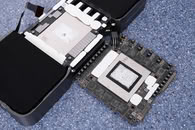
 Yesterday, we reported that NVIDIA's internal tool, Modular Diagnostic Software (MODS), detected a hotspot of 107°C on an RTX 5070 Ti GPU, while regular tools only registered temperatures of about 67°C to 68°C through the public tool API. This suggests significant discrepancies between hotspot temperatures, which might explain why the GPU is thermal throttling, even when normal temperature readings appear fine.
Sources:
HWMonitor, via VideoCardz
An extreme overclocker known as "Madness" on X has already tested the latest HWMonitor version 1.65 on a shunt-modded and water-cooled RTX 5090 GPU, which is drawing over 900 W from the wall. Under the water block, the GPU's hotspot sensor measures around 68°C, while the normal temperature reporting shows a delta of about 17°C, indicating that the reported GPU temperature is around 51°C. Although this delta between the overall GPU die temperature and hotspot temperature isn't ideal, it provides overclockers with more detailed information about their GPUs.


40 Comments on HWMonitor v1.65 Brings Back Hotspot Reading for NVIDIA RTX 50 Series
I wanna see what mine is when I get home.
EDIT: Oh wait... I can't. CPUID doesn't have a Linux supported version? bummer
EDIT EDIT: Tried installing anyways and discovered I had Wine that could adapt it anyways. Sadly, HWM only showed clock speeds and not temperatures. And my GPU didn't even show up as a part, odd.
But i'm curious how HW monitor is revealing the sensor, previously it was apparently hidden when the GPU driver loads.
______
Linux, when? :D
With hot spot reading I was getting such high numbers on GPU most of the time it was hard to really create a meaningful case fans curve... And it was spiking up to high values for rather mundane tasks which just isn't realistic or useful. Regular temperature makes more sense so I just use that instead.
I wonder if there wasn't any reverse engineering, but Nvidia actually provided info how to read the sensors now that we knew they exist and can be read.
www.hwinfo.com/beta/hwi64_851_6025.zip
I would personally rather have the data available that not, however I agree focusing on the hotspot delta temp alone isn't something to be worried over, still useful info to have though.So it's an issue that nobody should care about with Nvidia, but when it comes to AMD it was, the whole tech media blew up a 20C or less delta temp as something important.
The double standards people have for the green brand is always interesting.
Oh, and no one doesn't buy a 5000 series GPU over the 12vhwpr connector either, doesn't mean they have to like an awful connector.
- Where in the GPU is it?
- How long did it last?
Because if the hotspot temperature is just floating around the GPU more or less randomly and it only lasts for say milliseconds at a time, then is this something to really worry about?And another thing is, that nobody seems to want to answer, is we know temperature degrades electronics, but we don't have any practical indicators of the relationship. There might be some theoretical formula, but not a bunch of real-world sample points.
Again, you are crying wolf when there is nothing there, don't be surprised when people ignore you even when there is a wolf.
It's always important to understand the data as much as possible, otherwise it may do more harm than good. I had a problem when I used to work for an airplane manufacturer where the autopilot aborted a take off, but none of the flags indicated a reason. It turns out, the abort trigger happened for much less than a second, and the flag was only captured once a second. Without understanding this, we might've chased down a ghost.