Tuesday, July 28th 2026

SK hynix LPDDR6 Enters Mass Production in Second Half of 2026

SK hynix is preparing for the mass production of its next-generation LPDDR6 memory, according to the South Korean outlet Herald. While this information isn't surprising, the timeline is now set for the second half of 2026, which began in July. Earlier rumors suggested mass production would occur in the first half of the year, as testing and trial production were completed in March. Previously, SK hynix announced that its LPDDR6 memory modules would feature a 16 Gb capacity on the sixth-generation 10 nm node, known as 1c. Although the exact speed of LPDDR6 is not yet known, it was previously reported that SK hynix is preparing modules capable of running at speeds up to 14.4 Gbps, offering a significant throughput boost over the previous-generation LPDDR5X memory. The company claims a 33% improvement over LPDDR5X, which topped out at 10.7 Gbps, aligning with the 14.4 Gbps figure for LPDDR6.

LPDDR6 will bring numerous improvements, particularly in density, power efficiency, and speed. SK hynix is also expecting significant power efficiency optimizations exceeding 20% thanks to the new technologies enabling LPDDR6 to operate. This generation of low-power DDR memory uses a sub-channel structure that allows the memory channels to operate selectively, processing only the necessary data paths. This means not all channels need to be engaged when they are not required. Additionally, LPDDR6 incorporates Dynamic Voltage and Frequency Scaling (DVFS), which optimizes power consumption and performance by dynamically adjusting the voltage and frequency depending on the scenario.
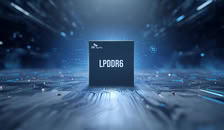
Source: Herald
Add your own comment

16 Comments on SK hynix LPDDR6 Enters Mass Production in Second Half of 2026

#1
azrael
This is all good and well, but right now the world needs DDR5 more than (LP)DDR6. At least that's my understanding.
Posted on Reply
#2
AndyGawg
Well, this all sounds very good, thanks.

I'm afraid to speculate as to the prices though. Any word on that?
azraelThis is all good and well, but right now the world needs DDR5 more than (LP)DDR6. At least that's my understanding.
Yes, very much so.
Posted on Reply
#3
R0H1T
azraelThis is all good and well, but right now the world needs DDR5 more than (LP)DDR6. At least that's my understanding.
It still needs DDR4 as well, heck in a lot more quantities comparatively as the big 3(4?) allegedly stopped production!
Posted on Reply
#4
thestryker6
azraelThis is all good and well, but right now the world needs DDR5 more than (LP)DDR6. At least that's my understanding.
As much as I'd like to see more DDR5 production LPDDR5X is a much bigger concern for the consumer electronics markets. The sooner LPDDR6 is in volume production the better because that may give consumer electronics companies a chance to buy it before the enterprise suppliers start gobbling it up. Should this happen then hopefully it will also end up allowing for some pricing stabilization. Once enterprise shifts to LPDDR6 this should also free up LPDDR5X supply.
Posted on Reply
#5
AndyGawg
R0H1TIt still needs DDR4 as well, heck in a lot more quantities comparatively as the big 3(4?) allegedly stopped production!
Yep, DDR4 still needed too.
Posted on Reply
#6
WonkoTheSaneUK
Let me guess...

The A.I. techbros have already bought the first 5 years worth.
Posted on Reply
#7
AndyGawg
thestryker6As much as I'd like to see more DDR5 production LPDDR5X is a much bigger concern for the consumer electronics markets. The sooner LPDDR6 is in volume production the better because that may give consumer electronics companies a chance to buy it before the enterprise suppliers start gobbling it up. Should this happen then hopefully it will also end up allowing for some pricing stabilization. Once enterprise shifts to LPDDR6 this should also free up LPDDR5X supply.
Good point. But heck, we will have to be quick. Time to put in pre-orders at Amazon or where ever as soon as possible. Might beat them that way?
Posted on Reply
#8
Denver
I'm tired, boss. If you're going to charge us so much for RAM, at least give me DDR6.
Posted on Reply
#9
Red Hood
WonkoTheSaneUKLet me guess...

The A.I. techbros have already bought the first 5 years worth.
I heard they got an email from Sam Altman saying he wants to buy all their RAM for the stargate project

Posted on Reply
#11
Athena
thestryker6As much as I'd like to see more DDR5 production LPDDR5X is a much bigger concern for the consumer electronics markets. The sooner LPDDR6 is in volume production the better because that may give consumer electronics companies a chance to buy it before the enterprise suppliers start gobbling it up. Should this happen then hopefully it will also end up allowing for some pricing stabilization. Once enterprise shifts to LPDDR6 this should also free up LPDDR5X supply.
Pretty much this, if DDR6 can have higher performance and higher density, and lower energy, then lots of those enterprises will switch ASAP, so they can squeeze out more performance

I also bet that pre-orders have already bought out all the DDR6 that they can produce
Posted on Reply
#12
Let3r
limewirefreedownloadDon't expect to get ahold of this until maybe like 2030
No, because by then we will be streaming our games from F*cking Microslop or NVIDIA. So never.
Posted on Reply
#13
AusWolf
thestryker6As much as I'd like to see more DDR5 production LPDDR5X is a much bigger concern for the consumer electronics markets. The sooner LPDDR6 is in volume production the better because that may give consumer electronics companies a chance to buy it before the enterprise suppliers start gobbling it up. Should this happen then hopefully it will also end up allowing for some pricing stabilization. Once enterprise shifts to LPDDR6 this should also free up LPDDR5X supply.
What makes you think that enterprise hasn't gobbled it up years in advance?
AndyGawgGood point. But heck, we will have to be quick. Time to put in pre-orders at Amazon or where ever as soon as possible. Might beat them that way?
What makes you think that you'll even see it on Amazon? Datacentres don't use consumer RAM. They make deals with memory makers to allocate chip production to datacentre units, so consumer modules aren't even made.
Posted on Reply
#14
Random_User
AthenaPretty much this, if DDR6 can have higher performance and higher density, and lower energy, then lots of those enterprises will switch ASAP, so they can squeeze out more performance

I also bet that pre-orders have already bought out all the DDR6 that they can produce
Meaning there will be no DDR6, DDR5, and DDR4 for consumer segment, either way.
AusWolfWhat makes you think that enterprise hasn't gobbled it up years in advance?


What makes you think that you'll even see it on Amazon? Datacentres don't use consumer RAM. They make deals with memory makers to allocate chip production to datacentre units, so consumer modules aren't even made.
This is correct! DC use HBM instead.

However, the ones, who try to run LLM locally on own workstations, gobble up all consumer DRAM.

These ones are the people of the same mentality, that tried to run local crypto-farms, to get from a crisps of BC. And got burnt, and keep doing the same with AI.
AndyGawgGood point. But heck, we will have to be quick. Time to put in pre-orders at Amazon or where ever as soon as possible. Might beat them that way?
Quick is too slow. You had to do it day before yesterday.

Even the local market of used DRAM is basically equal in price to the new sticks. the used DDR4/5 16/32GB can cost from $330 to $1200 accordingly. The garbage SODIMM, that was supplied with laptops, and taken out for an upgrade, now costs "as low" as >$270 for a pair of 8GB 4800MT sticks, with zero warranty and testing evidences.
Posted on Reply
#15
demirael
Random_UserThis is correct! DC use HBM instead.
You misunderstand. Yes, some devices use HBM. But what that "data centers don't use consumer memory" was getting at was that consumer RAM doesn't use ECC or registered DIMMs. In the enterprise servers those are _required_.
Posted on Reply
#16
thestryker6
AusWolfWhat makes you think that enterprise hasn't gobbled it up years in advance?
There are no enterprise platforms announced that can use it and they need high density packages. That makes it something which is unlikely to see any support before 2028-2029. This presents a narrow window where there may be an opportunity for consumer products.

If we were talking a hypothetical DDR6 then yes capacity would likely have already been bought out.
Posted on Reply
Add your own comment
Nov 12th, 2026 04:40 CST change timezone

New Forum Posts

Popular Reviews

TPU on YouTube

Controversial News Posts