Tuesday, September 1st 2026
Sony Legally Argues That Digital Game Ownership Is Not Plausible
Sony has filed its response to a proposed class action lawsuit over how the PlayStation Store discloses its digital licensing terms. The company's stance is that no reasonable buyer expects to actually own a digital game. The suit, Heycock v. Sony Corporation of America, was filed on June 18 by four PlayStation owners in the Northern District of California. It alleges that Sony's checkout violates AB 2426, a California law requiring clear disclosure when a digital purchase only grants a license. Sony's August 21 response argues that "reasonable consumers would not be misled" into believing they own their games, since buyers agree to the Software Product License Agreement (SPLA) before purchase, which states plainly that "the software is licensed to you, not sold."
To support the point that digital ownership "is not plausible," Sony's lawyers cite two of the plaintiffs' own purchase histories: Jason Mendoza bought Resident Evil Requiem on February 14, 2026, and Edward Heycock bought the same digital copy for $69.99 just 11 days later. If ownership was genuinely transferred at purchase, Sony argues that Heycock's transaction couldn't have occurred, since Mendoza would already own it. Judge Vince Chhabria is set to hear both the arbitration motion and Sony's fallback dismissal argument on October 1 in San Francisco. Sony has confirmed it will stop producing physical PlayStation discs for new releases starting January 2028, leaving digital licenses as the only option for future titles.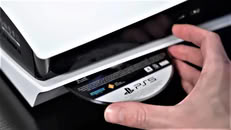
Source:
The Game File
To support the point that digital ownership "is not plausible," Sony's lawyers cite two of the plaintiffs' own purchase histories: Jason Mendoza bought Resident Evil Requiem on February 14, 2026, and Edward Heycock bought the same digital copy for $69.99 just 11 days later. If ownership was genuinely transferred at purchase, Sony argues that Heycock's transaction couldn't have occurred, since Mendoza would already own it. Judge Vince Chhabria is set to hear both the arbitration motion and Sony's fallback dismissal argument on October 1 in San Francisco. Sony has confirmed it will stop producing physical PlayStation discs for new releases starting January 2028, leaving digital licenses as the only option for future titles.


151 Comments on Sony Legally Argues That Digital Game Ownership Is Not Plausible
These Clowns are acting as if ownership means NFTs.
Any game shop, especially the EPIC GAME Store annoys me quite often withj the buy process. IT states clearly buy.
German and English translated Game Shops always have the word buy and not the word rent.
When I rent something, I expect my money is gone to the landlord, it is timelimited.
Sony is below a1 Level of English, or rather below the level of an AI. AI also has no concept of language and fails on it. AI can also not read.
The epic game store also show me a fraud everytime, every thursday at least over the years. Buy implies you own it. I buy a bread, not from borchert. I buy a car. I pay for the house insurance or the car insurance.
Sony can not read. Such simple.
I never saw in the epic game store, steam, amazon the terminology, "Rent". It always show Buy. I never saw "Buy a time limited license". There is plenty of space for it on the button.
-- I know for sure the epic game store has BUY quite often.
Continue to payment is also a way to not use the word buy, what STEAM does on the current ubuntu based, not linux, client for gnu gentoo linux.
--
I do not like Sony and i do not own a PAYStation or a BUYstation from Sony. A screenshot in the game shop would explain cearly if it shows buy, rent, continue to payment or something else.It does. I did not think about the lease.
WLAN also tells me for a while, I lease something and i do not buy an amount of wlan spectrum.
I think it is clear when I say i rent a room or I buy a room. That has clear differences in german and english. You would fail TOEIC on such things. The hole TOEIC test was about specifics and english terminology where non native speakers would assume something else what i remember from 16 years ago.
The ausrian law also has different stuff inside, that the money amount should be reasonable etc. so a rent is much lower in the money amount than buying a room than gifting a room.
gift is such a word where native german speakers would assume something else. (afaik i remember fabric they used in a nasty way in the toeic magnetic band listening comprehension 16 years ago)
-- I am well aware of many can not read. It makes a difference if my nvme has 2048 or 2000 MB. or if i pay a price with or without tax, with or without shipping. The argument it is the norm, is not an argument. IT is the wrong usage of words and units, etc. MiB vs MB, and it is not Men in Black vs Martin Baum. It is base 2 vs base 10.
-- game console wise.
AFAIK in the past, when I was young, etc. bla bla bla, you bought a physical media which could be used offline, could be passed on to the next guy and used.
Same for computer games. I bought a physical disc, can use it, and pass it on. That is buy
when you pay for a dvd case where a code is inside and it downloads a big update package and it needs an internet line regularly to play it, it is a time limited rent. and it is also not bought because it downloads an update package.#
the gog example is kinda good. you buy it and you can instantly download offline installers. you walk away with offline installers.
i do remember the gameboy, you put in a mechanical game cartrdige and it works. that is buy. but i think some shops offered renting services where you could physically rent game cartridges.
libraries also only rent books and do not sell books. you rent a book and do not buy a book in a library. The same for german and english.You can not steal a rent.
Afaik i returned late books. but I never stole rented books. They are just returned late. The ownership is clear. the book copies, yes copies, are owned by the library
Digital distribution is both convenient and now more problematic depending on the behavior of the producers and/or distributors when they can exercise control on the product after you have purchased the license to play/use it. This is where the rub is moving away from physical media. The laws governing behaviors of producers and/or distributors control of products after the sale are perhaps not nearly enough to protect the consumer's "fair use" which results in an easily abused relationship over the consumer which the consumer's purchase value can be liquidated instantly under the terms of click though and changing agreements. Add on top of that the data harvesting and profiteering off the user metadata. Not only did the user have to pay for the license there is no disclosure how much money a company is making off reselling the users metadata.
or it is just leasing and it's scam to say they sell games
and just to be clear ... remembering some years ago buying physical discs, the difference is that sony or any other store COULD NOT BAN US/PREVENT TO USE WHAT WE PAID FOR
we shouldn't even tolerate to pay the same price from the start .. but yeah .. it seems we never been tought how to say no to this overconsuming system... they create the need, with the médias, and we are frustrated when we don't possess, based on that need they created .. the only way to regain the power is to learn to detach from their superficial disgusting world .. i like gaming , but i don't game anymore , and that's all their fault, i found other things to do , that's all .. we live in a world, and nature 1000% more interesting to observe, sensible, alive not artificial, they try to make us forget while they destroy it, and to replace it with the artificial world/system they create and lock up our minds where they can control us
If I forced in to digital only on consoles, I will go full in on pc and not look back. No game on consoles I bought in last 2~3 gen was ever digital, my whole collections in physical and have zero reason to next gen system even if has BC with those games cause I wont be able play any of cause there on disc.
Even iF digital on consoles become more like steam and it all works on PC, I rather say on PC where it alot easier to fix and get things working then on consoles once no longer supported.
What a great look to have when your current console sells for $1,300 and its replacement, if it even exists before 2029, will probably cost well over $1,000. Pay us for the right to pay us.
Well, kiss my ass, Sony, my tricorn hat and eyepatch are a hell of a lot cheaper.
In short, they're specifically stating that they don't want you to own anything.
With digital stuff, what do you own? You don't even own the 1s and 0s that make up the game, because the developer/publisher are the ones that own that specific sequence of 1s and 0s. They are the ones that own the code that hids behind those 1s and 0s. It'll be interesting to see how this plays out, and how that will impact things like piracy rules.
With physical software, you really only actually own the physical material (i know some tos don't even allow this and that itself is bs). Like the plastic or circuit board. The software company still owns the code. This is why burning discs or flashing chips with this code is illegal. The code isn't yours. Just the plastic disc and access.
Seems like a good compromise is the keys. Back in the day with physical media on like PC, even though I own the physical material and key (usually on a piece of paper or something) I own access to the software with the key. WIth the key on a piece of paper, I own the rights to access perpetually.
IMO, this is what digital software needs to be. A perpetual license. If the access to utilize my key is removed (no longer able to get a copy of it), I should be refunded. So it wouldn't matter if I take that PS3, PS4, PS5 game and play it on my PC with an emulator. I own ACCESS. But if the access use prevents me from playing it on my emulator, and I can no longer download the game on my PS5, REFUND.
Someone actually made the game, and they hold the IP, they are the owners
now, someone will buy a license to play the game, but, that doesn't mean that just because they bought a license that they now own the IP as well
It's the same with movies and music, sure, you can run out and buy whatever, but, that doesn't mean you own it, you only own a license to view/hear it
that said, I wish Sony to fail just because their argument is stupid
And the biggest difference is that the disc will be there long after the developer / publisher / digital store went tits up. Because I own it.Well...My opinion exactly.The difference is that with physical media, your licence never runs out. With digital, your licence lasts only until the publisher wants it to last, or until they stay in business.
The issue isn't whether or not I own the IP. It's whether or not access to it is retained. And often in digital storefronts (at least those without offline installers like GOG), it is not. Attack the correct issue people.
Now, consider along that fact that, as far as digital distribution of video game goes, no one is selling the "video game", and no one is buying the "video game." Everyone, including GOG itself, is selling (or rather, mediating the sale of) a license to play them, with an added bonus of access. So in the hypothetical scenario that you somehow force a more descriptive labelling - which would make "renting" inaccurate as well, save for subscription-based services - you'd suddenly have all store fronts switching their "buy" to some other compliant term. You, user #1337 (side note: who has that ID?), and I would throw a fit, make some threats and then move on to rationalising why GOG's "NotBuy" is better than Valve/Sony/Microsoft/Nintendo's version because the former has more perks.
But the xyz billion other users? They are already locked in to their Playstations, Xboxes, and Switches. And PC users, even despite having more "choice", were actually the first to embrace the new order that emulated what netflix did to the good ol' disk.Precisely!
I want a perpetual, unrevokable, and transferable license, and the choice of using the product to the full extent of its intended utility without worrying about the second party going bellyup or deciding to stop serving me for whatever reason. Which is pretty much the same rights you get when you "buy" a physical copy. The issue is the terms of the agreement and how the licensor sets up the transaction, e.g. the bloody DRMs!
You folks need to get a clue. None of us care about your opinions. When we pay for a game and make a PURCHASE, we consider that we OWN that copy of that game. Your interpretation means less than nothing to us. This is THE prevailing opinion among software buyers and gamers.
Basic idea here? Our money, our rules. End of discussion.
If you don't want to respect us and our rights(perceived or otherwise), then you don't get our money.
Don't like that dynamic? Too bad, so sad, sucks to be you.