Monday, September 21st 2026

Samsung to Double HBM4 and HBM4E Capacity in 2027 Amid Strong Demand
Samsung is reportedly increasing its orders for materials to boost high-bandwidth memory (HBM) production, with plans to double the production capacity of its current HBM4 and HBM4E manufacturing by 2027. According to SE Daily, the manufacturing capacity for HBM4 and HBM4E is expected to grow from around 20,000 wafers per month in 2026 to 50,000 wafers per month in 2027. This data is derived from the use of glass carriers, which are temporary glass panels placed over thin DRAM wafers to prevent warping or breaking as they are prepared for packaging. Since HBM involves stacking many thin DRAM modules, glass carriers stabilize these wafers until the packaging process begins and the glass is removed. As the unit is one glass carrier per wafer, this provides an estimate of how many HBM4 and HBM4E wafers are produced each month.
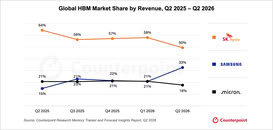
Additionally, Samsung's overall HBM production, which includes older generations like HBM3 and HBM3E, currently averages around 180,000 wafers this year and is expected to grow to about 250,000 HBM wafers next year, with 80% dedicated to HBM4 and HBM4E. Samsung began mass production of HBM4 on its sixth-generation 10 nm-class 1c node in February, with HBM4E customer samples available by mid-2026. Future production increases will focus on HBM4 and HBM4E, as customers seek higher densities and bandwidth for their AI accelerators.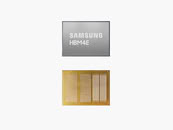 The company has reportedly allocated half of its 4 nm SF4 node production to HBM4 base die manufacturing. Demonstrating Samsung's strong HBM output, the company has rapidly increased its market share, growing from about 15% in Q2 2025 to 33% in Q2 2026, effectively doubling its market share in just a year. With more customers coming on board and plans to double production capacity, Samsung appears to be on a promising path to capturing even more market share.
Source:
SE Daily
Additionally, Samsung's overall HBM production, which includes older generations like HBM3 and HBM3E, currently averages around 180,000 wafers this year and is expected to grow to about 250,000 HBM wafers next year, with 80% dedicated to HBM4 and HBM4E. Samsung began mass production of HBM4 on its sixth-generation 10 nm-class 1c node in February, with HBM4E customer samples available by mid-2026. Future production increases will focus on HBM4 and HBM4E, as customers seek higher densities and bandwidth for their AI accelerators.


1 Comment on Samsung to Double HBM4 and HBM4E Capacity in 2027 Amid Strong Demand