Thursday, September 24th 2026

Forced Physics DCT and Noctua Announce Research Partnership on Micro-channel Array Cooling
Noctua, the Austrian manufacturer of premium quality quiet cooling components, and Forced Physics DCT today announced a joint research partnership to explore how Forced Physics' patented JouleForce micro-channel array technology can be brought to desktop PCs and workstations. The collaboration is a long-term research and development effort that is not tied to a specific product or release date.
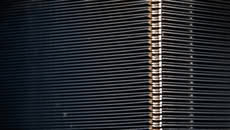
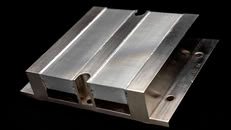
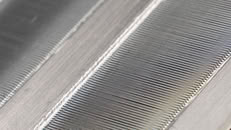
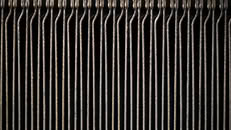
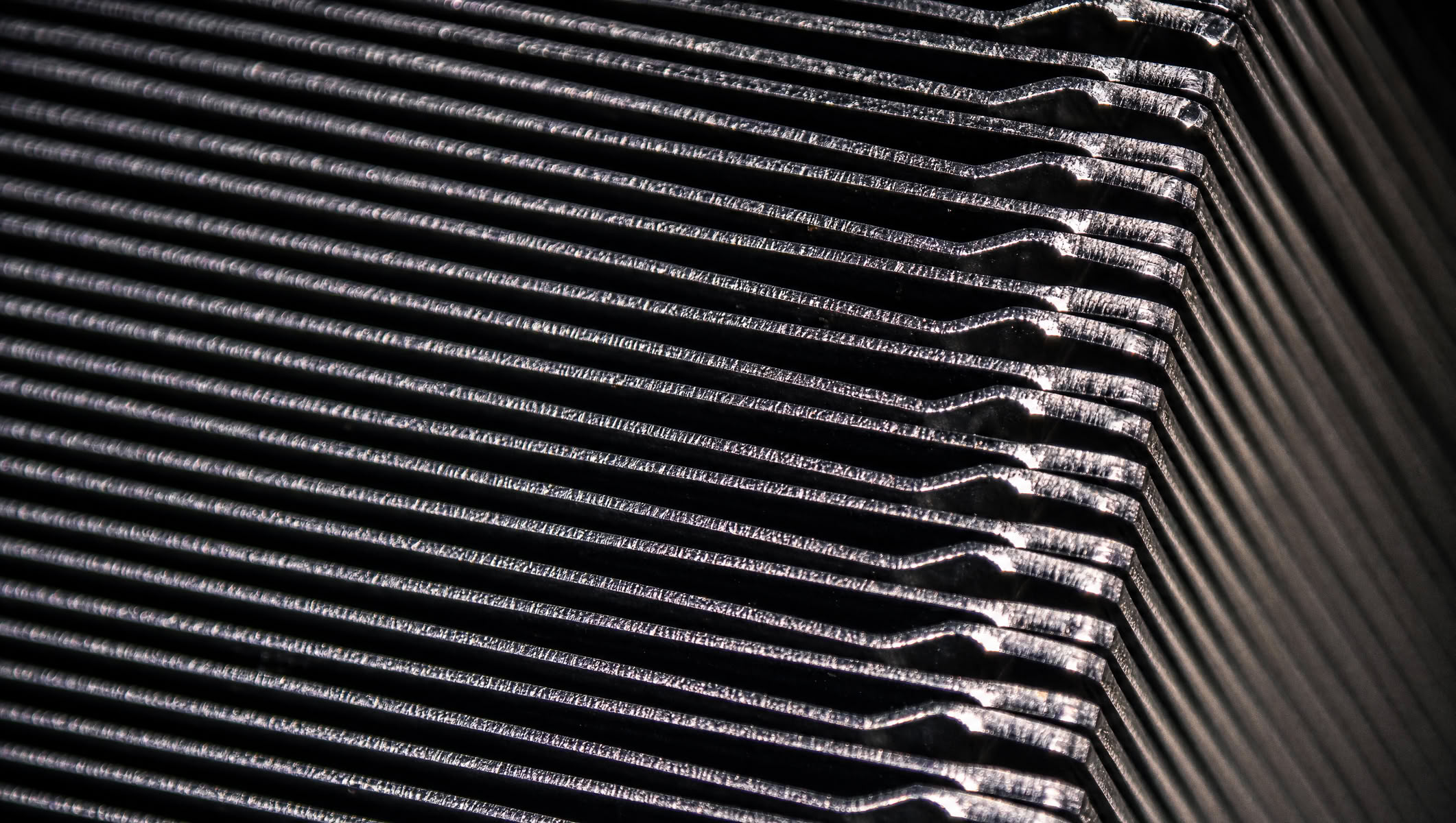
JouleForce arrays leverage geometry-driven molecular collisions at the channel walls: the boundary layer that limits conventional air cooling never fully forms, so heat is extracted along the entire length of each micro-channel. This allows large amounts of heat to be removed using air alone, without the pumps, tubing and liquid loops of water cooling, at power levels that are becoming difficult to manage with conventional air coolers.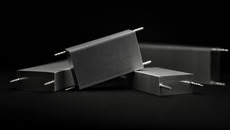
 "Forced Physics are advancing the limits in terms of fin-to-air heat transfer, and we are excited to explore what it would take to make that work in a quiet desktop system. The pressure levels this technology requires in today's implementations are currently supplied by equipment nobody would want on or under their desk, so this is a demanding, long-term engineering task - and one that we are eager to tackle," said Roland Mossig, CEO of Noctua.
The central challenge is the operating point. At this stage, the micro-channel geometry that gives the arrays their thermal performance also produces a steep system impedance curve, with a pressure drop an order of magnitude and more above the range covered by conventional axial PC fans; current implementations therefore duct the arrays to industrial blowers, high-speed centrifugal fans or vacuum pumps. The established means of reaching such pressures—much higher rotational speeds or multi-stage impellers - are ruled out for desktop use by acoustic requirements, and the sealing required to prevent bypass leakage at these pressure levels is difficult to reconcile with the modularity and size constraints of PC cases. Investigating how the necessary static pressure levels can either be reduced or generated within these constraints is the focus of the partnership.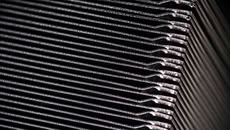
 "Desktop and workstation systems pose airflow challenges that differ fundamentally from our data centre deployments. Noctua's expertise in quiet, high-pressure air movement makes them the ideal partner to solve them with us," said Scott Davis, Founder & CEO of Forced Physics DCT.
Both companies will report on the collaboration as significant milestones are reached.
JouleForce arrays leverage geometry-driven molecular collisions at the channel walls: the boundary layer that limits conventional air cooling never fully forms, so heat is extracted along the entire length of each micro-channel. This allows large amounts of heat to be removed using air alone, without the pumps, tubing and liquid loops of water cooling, at power levels that are becoming difficult to manage with conventional air coolers.


The central challenge is the operating point. At this stage, the micro-channel geometry that gives the arrays their thermal performance also produces a steep system impedance curve, with a pressure drop an order of magnitude and more above the range covered by conventional axial PC fans; current implementations therefore duct the arrays to industrial blowers, high-speed centrifugal fans or vacuum pumps. The established means of reaching such pressures—much higher rotational speeds or multi-stage impellers - are ruled out for desktop use by acoustic requirements, and the sealing required to prevent bypass leakage at these pressure levels is difficult to reconcile with the modularity and size constraints of PC cases. Investigating how the necessary static pressure levels can either be reduced or generated within these constraints is the focus of the partnership.

Both companies will report on the collaboration as significant milestones are reached.
11 Comments on Forced Physics DCT and Noctua Announce Research Partnership on Micro-channel Array Cooling
Because of DUST.
This would be more of a commercial product for data centres trying to replace liquid cooling.
Using compressed air as a medium.
Trying to get liquid cooling-like performance without the hassle of buying, replacing and maintaining expensive fluids
Edit: Sorry it was 2006 - www.noctua.at/en/news/3dmark06-reg-cpu-score-world-record-with-noctua-nh-u12