Friday, October 30th 2026

Intel Confirms "Nova Lake" Uses 18A-P Internal Node, More Details at CES
During the Q3 2026 earnings call, Intel CEO Lip-Bu Tan confirmed that the company's upcoming flagship client CPU, codenamed "Nova Lake," will be produced by Intel Foundry using its 18A-P node. Initially, Intel planned to outsource the main compute tile production for "Nova Lake" to TSMC, utilizing its 2 nm N2 node. TSMC was expected to handle about 60-70% of the production, with the remainder produced in-house by Intel Foundry on the 18A node. This meant Intel would dual-source production for its next-generation chip. However, later supply chain information suggested that the company intended to bring the majority of "Nova Lake" compute tile production in-house, with these compute tiles being made on the Intel 18A-P node. Today, we received confirmation directly from the Intel CEO: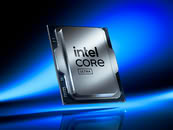 Intel is set to release SKUs with either one or two compute dies, each featuring up to 8 "Coyote Cove" P-Cores and 16 "Arctic Wolf" E-Cores, alongside 4 LPE-Cores that are integrated as part of the I/O die. Depending on the SKU, Intel can include a single compute die for a total of up to 28 cores or two compute dies for a 52-core CPU SKU. It's currently rumored that the single compute die version will be released first, with the dual compute die variants to follow. However, Intel will share more details at CES in January, so we'll have to be a bit more patient.
Source:
Intel Q3 2026 Earnings
Intel CEO Lip-Bu Tan"Nova Lake," our first Intel 18A-P client product, is tracking ahead of schedule, with design wins expected to be twice those of "Panther Lake" at launch. We look forward to sharing more at CES in January.

10 Comments on Intel Confirms "Nova Lake" Uses 18A-P Internal Node, More Details at CES
but, 18a isn't way behind anything.
It's a good node
Do you have any evidence of this?Not really. Their Xeon vs client revenues are quickly approaching 50-50%. Xeons are predicted to surpass client in Q4. The only reason this has not happened so far is because they sell all wafers they could possibly produce. They will dedicate even more wafers to Xeons and take more of Panther Lake offline, as indicated in the article below.
www.techpowerup.com/354291/intel-reports-third-quarter-2026-financial-results
www.pcgamer.com/hardware/processors/intel-shifts-panther-lake-capacity-to-data-center-chips-while-the-memory-crisis-wreaks-havoc-on-pc-market-still-sold-out-of-budget-wildcat-lake-chips/
TSMC N2 offers 15% more transistor density along with clocks that goes beyond 6.1 GHz. Intel's 18A cannot do 6 GHz. Also, power characteristics are in favor of TSMC N2.
That's why many companies treat Intel's 18A as Intel 3 node.
Nevertheless, Intel's fab capacities are unsufficient to compete with TSMC ones.
Gelsinger reserved quotas at TSMC N2 fabs back in 2024 for a reason.
With limited 18A quotas, Intel must use TSMC, as most of 18A is used for data center division. Data centers are most important for Intel, as there's the biggest chunk of money.
This is going to be a hot take, but I doubt Zen 6 desktop will clock any higher than 6.1-6.2GHz given Venice's clocks. I even think there is a decent chance clocks will be "only" 5.9-6.0GHz for Zen 6 desktop, at least at stock. I expect Nova Lake to be not far behind in clocks.
EPYC 9996 has 256 cores with 400-600W TDP limit. Regular Zen6 desktop CPU with 24 cores might easily reach 250W TDP.
For servers, cores count matters much more than cores clocks. On regular desktops, it's the opposite. You need less and higher clocked cores.
It all depends on how OS and running apps can do parallel processing. Games can usually utilize 4-8 cores, with one being used for main loop.
With upcoming Zen6 and also Nova Lake, clocks are of less importance than generational IPC uplift.
If Nova lakes promises +16% than Arrow Lake in gaming, that's not a big deal, as even Raptor Lake is faster in gaming than AL.
In other words, Arrow Lake's successor has to beat Arrow Lake's predecessor first (in gaming).
Intel themselves say that 18A-P is in between N2P and N3 in PPA, and 14A is within 5% of A14.
Intel aims to reach parity with TSMC with 14A, and that's coming from a biased first party evaluation.I mean all of this is just speculation.They do gain turbo clocks. But comparing server chip Fmax is always just weird. The server generation with the largest Fmax gain from AMD for most of its lineup is not N7 to N5 zen 4 from zen 3, but zen 5 from zen 4, which gained no Fmax on client.
But if you want you can also check out all the mobile chips on N2 which gain Fmax over their predecessors.Venice Fmax vs Turin Fmax has nothing to do with client vs client Fmax.
If they were connected, we would have seen a nice bump for the 9950x fmax vs the 7950x fmax.