Monday, November 2nd 2026

Intel "Larrabee" GPU System Surfaces with Working Drivers
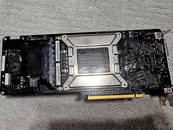
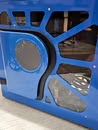
Recovered drivers have reportedly restored 3D acceleration to an Intel "Larrabee" prototype, offering the community a rare chance to test the company's abandoned graphics project. Reddit user "pkellythompson" discovered the hardware in equipment purchased at a storage auction, along with two USB drives containing Intel's development software. The Intel Visual Adrenaline system includes a DX58SO motherboard, a C0 stepping "Larrabee" sample, and a diagnostic board. Getting it running required using DVI instead of HDMI and adjusting the storage controller's BIOS settings, so Windows 7 could boot. The recovered archives, approximately 82 MB and 728 MB, include drivers, documentation, development utilities, and VBIOS instructions.
First publicly detailed in 2008, the "Larrabee" project aimed to challenge NVIDIA and AMD's dedicated graphics cards. Larrabee handled much of its graphics processing through software running on simple in-order x86 cores with wide vector units, assisted by dedicated texture hardware. Intel canceled its consumer graphics launch in December 2009 after development fell behind expectations, although the architecture later powered Xeon Phi accelerators. The restored prototype reportedly ran Crysis at 1280×720p with Medium settings and antialiasing disabled. Initial results exceeded 17 FPS, with another recovered driver boosting performance to around 36 FPS.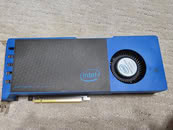
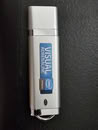
 The important aspect here is that the files have been preserved and uploaded to the Internet Archive. These recovered files provide a starting point for further experiments, but working Xeon Phi gaming support and predictions of higher performance still need to be demonstrated.
Source:
Reddit
First publicly detailed in 2008, the "Larrabee" project aimed to challenge NVIDIA and AMD's dedicated graphics cards. Larrabee handled much of its graphics processing through software running on simple in-order x86 cores with wide vector units, assisted by dedicated texture hardware. Intel canceled its consumer graphics launch in December 2009 after development fell behind expectations, although the architecture later powered Xeon Phi accelerators. The restored prototype reportedly ran Crysis at 1280×720p with Medium settings and antialiasing disabled. Initial results exceeded 17 FPS, with another recovered driver boosting performance to around 36 FPS.


22 Comments on Intel "Larrabee" GPU System Surfaces with Working Drivers
I always wondered if the Larrabee architecture would have been absurdly good (for its time of course) at one or two seriously niche uses.
This pretty much is a whole dev box including the software required to actually use it, and play games.
17FPS on crysis shows why it was abandoned to begin with.
Yes, Intel has had a lot of delays. But these things aren't easy to build from scratch.
We'll eventually see DirectX 12 and Vulkan working on Larrabee samples now that these tools are out there. There's a lot of promise in doing some very cool things with early Xeon Phi as well now. Lots to look forward to.
(did a quick search with AI to compare some data, but i can see now why it flopped, was abandoned and so on.)
Larrabee didn't necessarily fail, either. It became an entirely new product line for Intel that lasted a decade. It wasn't released as a GPU, but the majority of the design was successful in other roles that GPGPUs were good for.
Edit to mention that while everyone was tearing into these software packages the idea did come up that there is fundamentally nothing stopping the Larrabee driver from being recompiled to function on something like a modern x86-64 processor, with the example of running it on one of the extremely high core count EPYC processors. Some effort in rewriting the driver model would be required but not really as much as you'd think.
Phi, on the other hand, seems like the ideal use for that kind of architecture (although presumably, software had to be manually coded to take advantage?)
www.slashgear.com/1863701/intel-project-larrabee-gpu-why-development-discontinued-explained/
Granted, these show 1080p + 1440p results, but by my estimates, 36 FPS @ 720p would be more in line w/ something like a GTX 280 perf., no? Which was nVidia's top-of-the line card around the time the Larrabee project was originally supposed to go to market, no?From conversations w/ folks who were involved at the time, the first phase of the Larrabee project was indeed a total disaster (think not low FPS but rather SPF (seconds per frame) LOL!).
At some point, management decided to pull the plug on existing productization plans that were based on original targets to release a "graphics" product by a certain date (around summer 2009 IIRC?). But, they did keep a smaller team of hardcore developers internally to continue work on an internal alternative driver prototype which showed more promise than the bloated monster that had been developed during the first phase mentioned above.
I was told that by the end of what I would call that "second phase", the new prototype driver's performance was actually showing some competitiveness against the original targets (e.g. GTX 280??) and additional performance optimizations in software and improvements in hardware (Knights Corner + Knights Landing) were still being planned to continue on the perf. improvement trajectory.
From what I gathered, there were some nasty internal politics involved in the final decision to ultimately pull the plug entirely on the whole "graphics" thing (think internal competition where the "Xe Graphics" team felt threatened by the prospect of becoming obsolete would the Larrabee project succeed), this despite what was demonstrated at the end of the second phase as mentioned above.
My guess is the "36 FPS" we're seeing here would be the results of a driver stack built during the end of the "second phase" (circa summer/fall of 2010 IIRC).
:)