Monday, November 23rd 2026

TCL Debuts 120 Hz IPS LCD Drawing Just 1 W in Lenovo Yoga Prototype Laptop
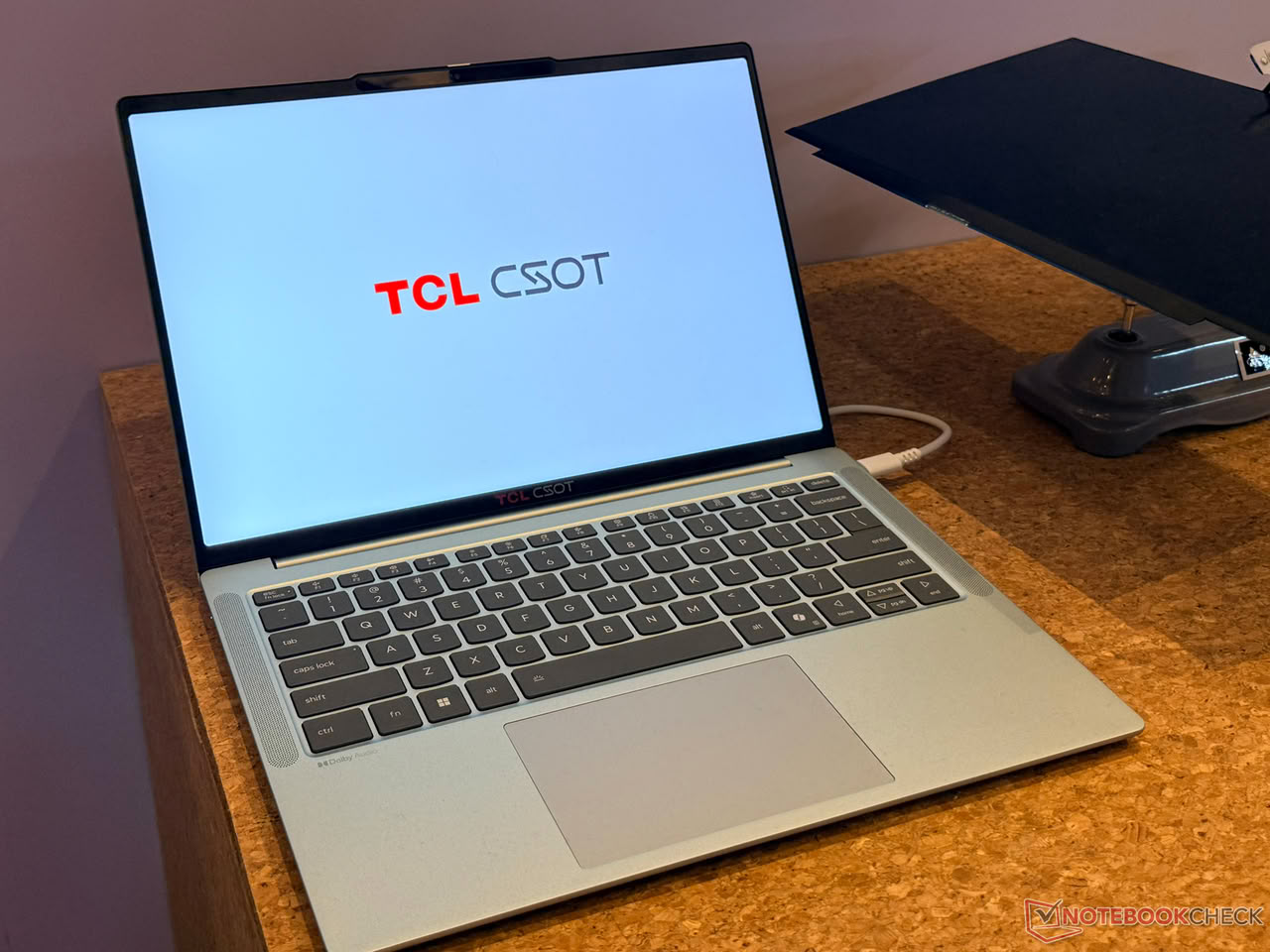
TCL CSOT has been working on some significant display innovations recently, including its recent announcement of 1250 Hz QHD OLED monitors at DTC 2026. Also at DTC 2026, TCL has reportedly (via Notebookcheck) shown off a new 14-inch LCD prototype drawing as little as 1 W of power in a new Lenovo Yoga Pro laptop prototype. While it's unknown exactly what luminance settings and refresh rates are used to bring the power down so significantly, the display is said to reach a peak brightness somewhere between 300 and 400 nits.
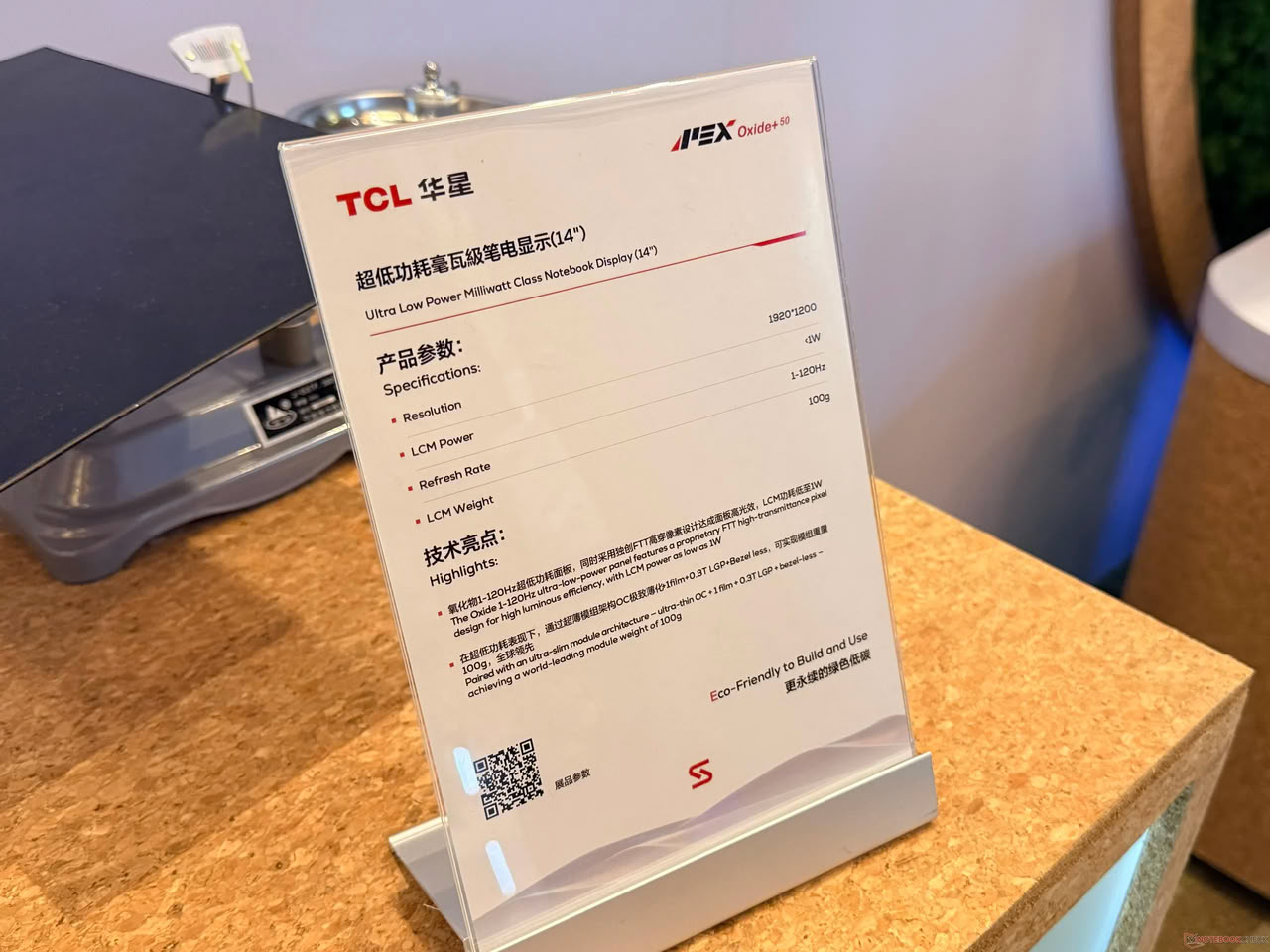
The display itself is called an Ultra Low Power Milliwatt Class Notebook Display, and TCL CSOT says that it uses an oxide panel with an "FTT high-transmittance pixel design for high luminous efficiency," allowing it to reach such low power draw. The display has an adaptive refresh rate range of 1-120 Hz, which could theoretically be used in conjunction with technology like FreeSync or G-Sync to enable more efficient mobile gaming in laptops—especially now that iGPUs like the one in Intel's Arc G3 Extreme are capable of high-speed gaming away from the wall.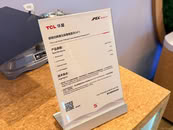
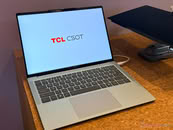 The LCD panel is also surprisingly lightweight, weighing in at just 100 g, which could make it an attractive option for thin-n-light laptops, like the Lenovo Yoga Pro it was previewed in. Also of note is that the display uses IPS tech, not OLED, so it will be less likely to flickering, which can be an annoying side effect of PWM dimming commonly used on OLED displays. That should also theoretically make it easier to color calibrate than OLED using traditional calibration tools.
Source:
Notebookcheck
The display itself is called an Ultra Low Power Milliwatt Class Notebook Display, and TCL CSOT says that it uses an oxide panel with an "FTT high-transmittance pixel design for high luminous efficiency," allowing it to reach such low power draw. The display has an adaptive refresh rate range of 1-120 Hz, which could theoretically be used in conjunction with technology like FreeSync or G-Sync to enable more efficient mobile gaming in laptops—especially now that iGPUs like the one in Intel's Arc G3 Extreme are capable of high-speed gaming away from the wall.
5 Comments on TCL Debuts 120 Hz IPS LCD Drawing Just 1 W in Lenovo Yoga Prototype Laptop
The XPS 14 Pantherlake with VRR enabled gets 43 hours with a 70WHr battery under WiFi Web browsing, whereas it gets ~20 hours on Youtube. Meaning on a cutting edge system most of the increase is due to silicon, not the display itself. Youtube would have much more active portions of the display thus it cannot take advantage of PSR2 and VRR that could be enabled more frequently under web browsing workloads. Meanwhile, the brightness is same between the two, so pure display(luminous output) wise, its pretty low power.
VRR and PSR2 both cut down on the graphics and display circuitry power needed for actually showing content.
43 hours with 70WHr means 1.5W combined, average power use, meaning idle power is even lower, probably around 1.2W. You need a 1080p IPS display for that, and you won't get that if you have OLED 1800p(high power and burn in is why I'll NEVER recommend OLEDs), but it shows you 1W is not a difficult metric to reach. Out of that 1.2W, not all is display. Guesstimate is at least 0.5W is platform. That leaves you only 0.7W for the display.
20.4 hours with 70WHr under Youtube means 3.5W. Now it takes some power on the compute to run Youtube, but not 2W worth on Pantherlake. Something over 1W is purely due to display. On my 7th Gen Y Yoga, it takes maybe an additional 1W on Youtube. So not being able to have PSR2 and VRR as often costs 1W alone!
The one TCL is demonstrating is an even more recent development on a display. We're looking at 0.5-0.7W for displays here. 1W displays aren't even new. They were talking about 1W displays since 2016-2018! You are saying it has advanced zero since then?If they were to bring the original Intel Ultrabook vision of having a true 2-in-1 Tablet, it would be possible now. A 1080p 11.6-inch display + Core Ultra 3 and 40WHr battery from the likes of NEC would be possible to have a 2-in-1 getting more than 15 hours of battery life in office usage scenarios easily while the combined weight of the magnesium alloy chassis would be 1.5lbs.
Heck, if it was efficient as the XPS, they could fit in a tiny 24WHr battery and you'd still get 15 hours in office scenario workloads, and get weight down to 1.3lbs! It would become a full viable Tablet.
I'm still blown away that my 2nd Gen Kindle Paperwhite from 2013 is still giving me weeks of reading with a backlit screen on a single charge.
I know e-ink isn't fast enough for a monitor, but any effort to improve battery life on handhelds and laptops is always very welcome.