News Posts matching #DIY

Return to Keyword Browsing

Tuxedo Nano Pro Gen15 Mini PC Launches With Intel Core Ultra X7 358H and Linux Preinstalled

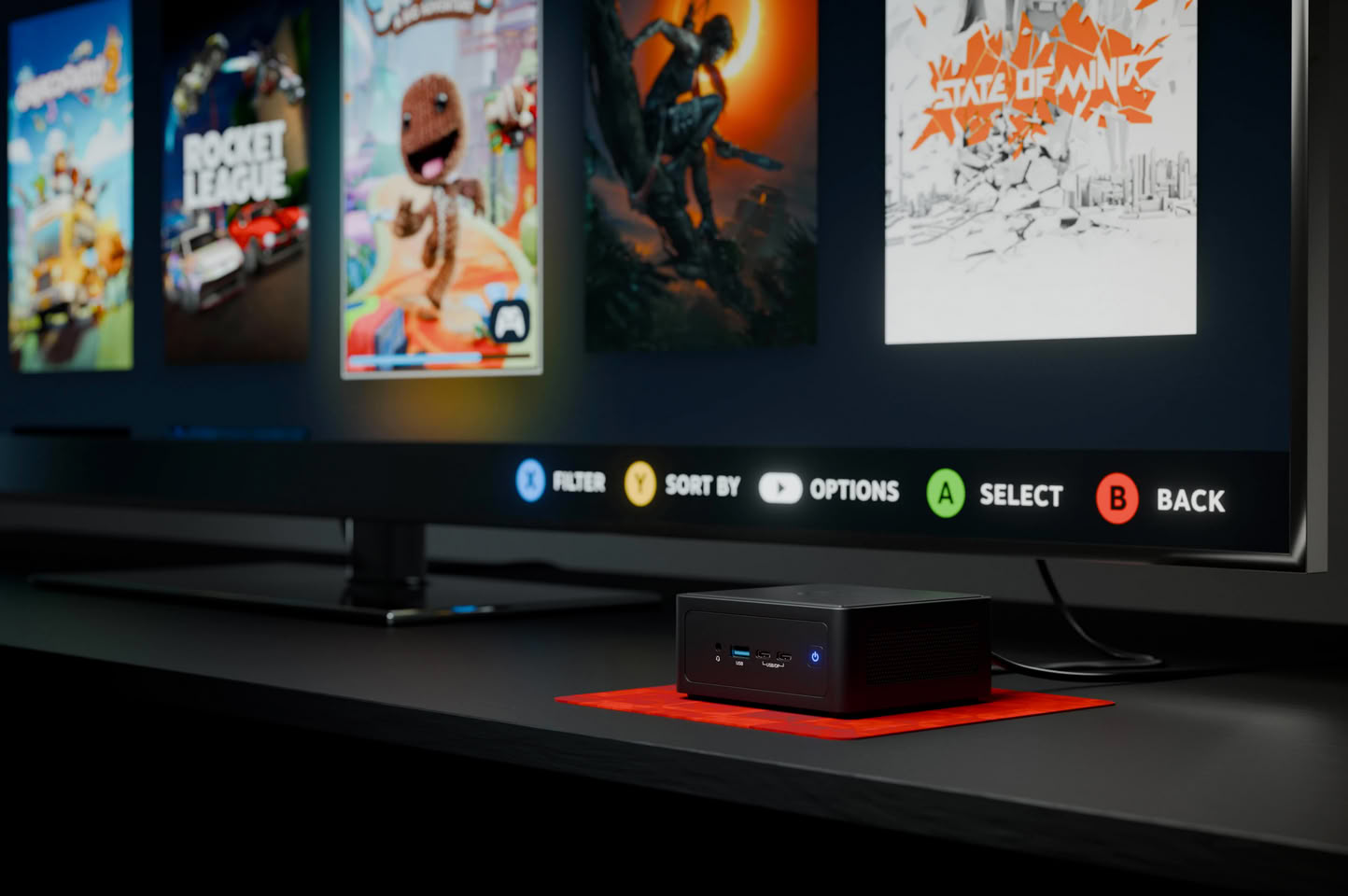
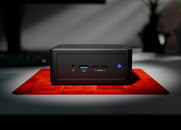
Tuxedo Computers has just announced its Nano Pro Gen15, a new mini PC powered by Intel's Panther Lake Core Ultra X7 358H CPU and its capable Arc B390 iGPU. The mini PC is a workstation targeting developers and home lab enthusiasts who want to run "local, secure, sovereign" LLMs, but Tuxedo also fully acknowledges that it can be used as a no-fuss mini gaming PC, thanks to Intel's graphics integrated into the Linux kernel of the pre-installed TuxedoOS. Physically, the Nano Pro Gen15 measures in at just 110 × 117.5 × 49 mm, and it features a plastic chassis, although Tuxedo has maintained a repair-friendly design, with just four screws required to access the internals, where the upgradeable RAM, storage, and wireless cards are easily accessible.

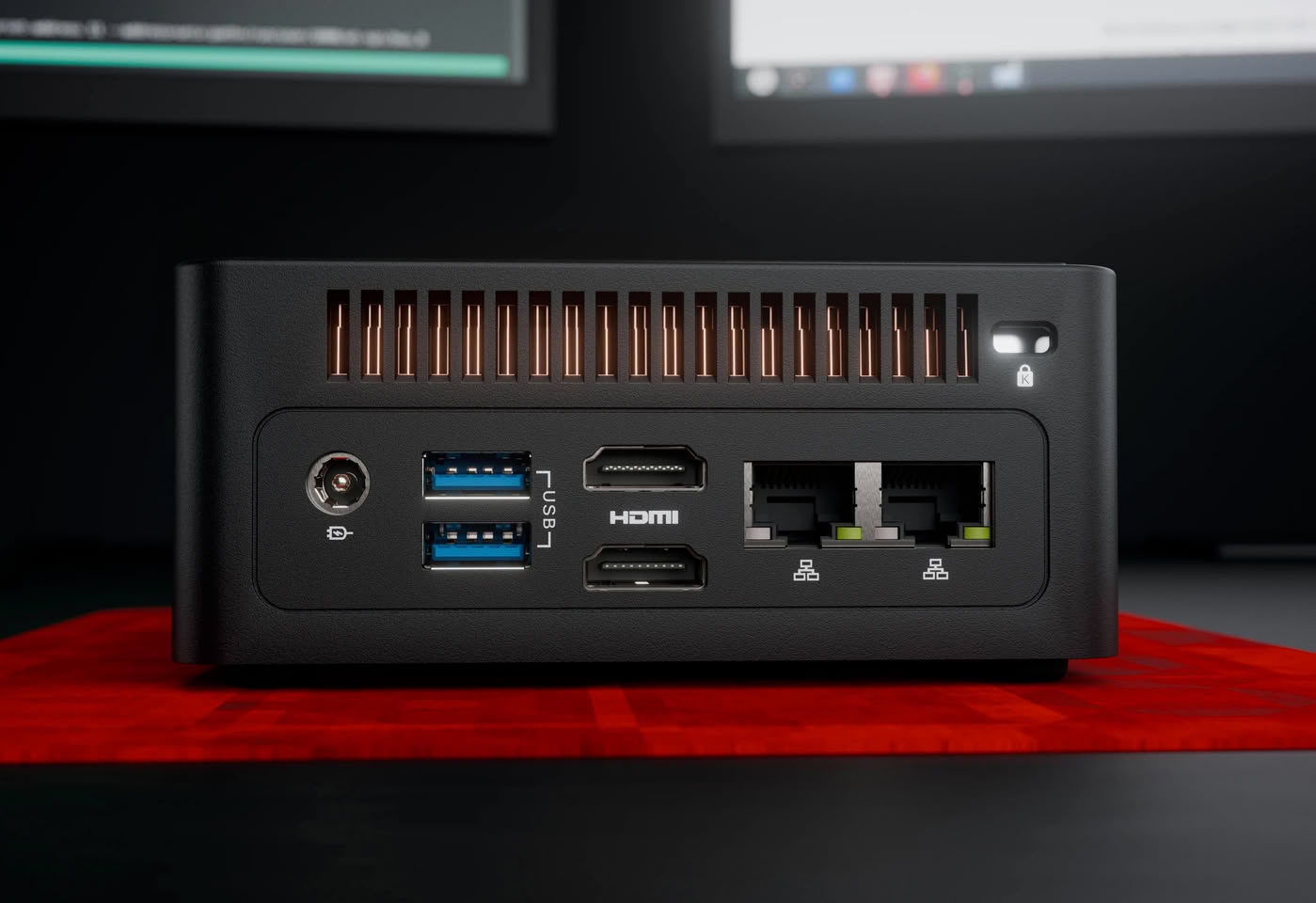
Tuxedo supplies a 120 W external power supply that connects via a barrel adaptor, but it makes no claims about the actual maximum TDP of the Intel CPU inside. Connectivity on the Nano Pro Gen15 is reasonable, if not stellar, with Wi-Fi 7 and dual 2.5 GbE for networking, alongside Bluetooth 6 for peripheral connectivity. On the back of the mini PC, there is a DC-in power port, the aforementioned 2.5 GbE ports, 2× USB 3.2 Gen 2 Type-A ports, 2× HDMI ports with HDMI 2.1 support on Windows and 2.0b support on Linux (for now). On the front of the mini PC, there is a USB4 port, 1× USB 3.2 Gen 2×2 Type-C port with DP 1.4a Alt Mode, and a USB 3.2 Gen 2 Type-A port alongside a 3.5 mm audio combo jack. Tuxedo says that, between the USB Type-C ports and the dedicated HDMI ports, the Nano Pro Gen15 can support up to four simultaneous displays.


Dell CEO Says the Memory Shortage Will Get Worse in 2027

Michael Dell doesn't think the memory shortage is anywhere near over. Speaking with The Wall Street Journal, Dell's chairman and CEO said things will get worse next year, as the AI data center buildout keeps soaking up DRAM and HBM supply. According to him, the bottleneck for Dell isn't demand, since the company is sitting on roughly $95 billion worth of AI server orders it hasn't delivered yet, the largest backlog in its history. Memory is what's holding those shipments back, as AI accelerators need plenty of HBM, while the servers around them still rely on conventional DRAM.

Relief also looks quite far away. New memory fabs take around four years to build, so Dell apparently doesn't expect meaningful new supply until 2029 or 2030. That aligns with Micron's CEO, who recently said supply will be much tighter in 2027 and 2028 than it is this year. Interestingly, SK hynix's CEO said something similar, expecting the memory shortage to last through 2030. Dell is reportedly coping by buying DRAM only when final assembly is close and by locking in long-term supply agreements, though there's no word on how much of that applies to its consumer products.

Modder Builds "Slurptop" Cyberdeck with Full Height Keyboard, Swappable Tool Batteries, and Trackball

The concept of a cyberdeck is to customize hardware to better suit your specific needs and use cases, and a modder who goes by "Slurp Burgers" online has taken the concept to something of an extreme, with their take on a laptop, the Slurptop. Unlike many DIY cyberdeck builds, which are based on Raspberry Pi computers, the Slurptop uses a full-fat AMD Ryzen 7 7730U in the motherboard from a GMKtec M5 Ultra mini PC. As a result, it has somewhat better I/O than a traditional laptop, although the mini PC's three front USB Type-C ports were all used to connect the display and peripherals internally.

The modder took the GMKtec innards and built a custom 3D printed shell around them, replete with a columnar-stagger ergonomic keyboard using MX-style switches and SA profile keycaps, a central num pad, and a trackball mounted at the bottom of the cyberdeck. Perhaps more interesting, the modder designed custom circuitry to be able to run the device off a 24 V Kobalt power tool battery, which is swappable in the event that you need an emergency charge. The modder says that, with light productivity use, like word processing, the battery lasts around five hours, but that could be increased with a bigger 8 Ah battery.

Valve Publishes Steam Frame CAD Files for DIY Accessories and Tweaks

Valve has finally released the CAD files for its Steam Frame VR headset and VR controllers, officially allowing modders and creators to create and publish their own Steam Frame accessories—as long as they're published under the correct Creative Commons Attribution Non-Commercial Share Alike 4.0 International license. The CAD files are published on GitLab, and they include both 3D models and technical drawings and documentation for reference when designing accessories.

The CAD files also include documentation on the electronics of the Steam Frame, including an example project documenting a USB 3.0 expansion port that could be adapted for other electronics projects. While Valve hasn't granted a sweeping explicit license to create commercial projects for the Steam Frame, it notes on the Frame's GitLab repo that "if you wish to pursue a commercial license please reach out to us at steamframecompatible at valvesoftware com," ostensibly opening the door for licensing partnerships.

AMD Ryzen AI Max+ Pro 495 Framework Desktop Batch 1 Sells Out Despite Sky-High Prices

Framework officially launched pre-orders for its AMD Ryzen AI Max+ Pro 495-powered Desktop mini PCs on September 30, as previously announced. Launch pricing started at $6,799 for the DIY Edition with 192 GB of unified memory and no pre-installed storage. A pre-built version with a 2 TB NVMe 4.0 SSD and Fedora Linux pre-installed comes with a $7,449 price tag.

It was revealed hours before launch that the OEM would only be offering one batch of the new Desktop SKU due to limited RAM quantities. Despite the eye-watering price, the first batch of Ryzen AI Max+ Pro 495 mini PCs sold out within hours of the start of pre-orders. However, in a post on X, Framework confirmed that it had managed to secure another batch of RAM for the Gorgon Halo systems, and it subsequently opened a second limited batch of pre-orders, which remain available at the time of writing and are slated to start shipping in November. Framework added in a separate post on X that prices for the Framework Desktop PC will only increase in the coming months.

Lian Li Debuts Edge Hub Adv With Automatic Shutdown for 12V-2x6 Cable Thermal Events

There is no shortage of horror stories about misbehaving 12V-2x6 power connectors, whether they be on AMD Radeon or on NVIDIA GPUs. The ongoing drama with the GPU connector has prompted manufacturers of other PC gaming hardware to come up with solutions, like ASUS's ROG Equalizer, Cooler Master's GPU Shield technology, or ASRock's protected, right-angled 12V-2x6 cable. The latest to join the GPU power race with active protection is Lian Li, except it does things a little differently.

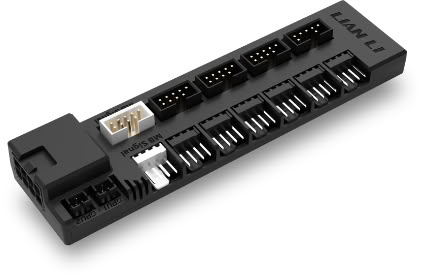
The Lian Li Edge Hub Adv is the latest iteration of the brand's USB-controlled fan hub, and the new model includes two sensor ports for temperature sensing using NTC (negative temperature coefficient) sensors built into an included 650 mm 12V-2x6 GPU power cable. The power cable connects the GPU to the PSU, and the NTC cable plugs directly into the Lian Li Edge Hub Adv, which connects to Lian Li's L-Connect 3 monitoring software on Windows. By default, L-Connect is set up to monitor the temperature of the NTC sensor and start an emergency shut-down once the connector temperature reaches a certain threshold. In addition to an on-screen pop-up alerting the user to an imminent shutdown and giving them the chance to trigger the shutdown manually instead, Lian Li will also send the user an email when a shutdown is triggered by a misbehaving GPU power connector.

Raspberry Pi Confirms Boards Are Locked to Factory RAM Size via Firmware

Raspberry Pi has confirmed its boards are firmware-locked to their factory RAM configuration, closing off a popular DIY upgrade path. The disclosure came from PhilE, a Raspberry Pi engineer and forum moderator, responding to a user who couldn't get a newly soldered-in 4 GB chip to register on a Compute Module 5. Apparently, the lock isn't new. According to the forum thread, it has been in place for some time, just not spelled out this plainly before. The lockdown reportedly dates back to late 2024, before this year's RAM price surge, so it's not a reaction to the current memory crunch either. That part obviously doesn't sit well with the repair and modding crowd, a community Raspberry Pi has usually supported.

PhilE explained the reasoning candidly. Apparently, some resellers were buying boards with cheaper RAM, swapping in higher-capacity chips "of dubious origin," and reselling them as factory 8 GB units. Those boards were never tested by Raspberry Pi, so when buyers ended up with unreliable hardware, support headaches landed on the company. Locking devices to their original RAM size removes that incentive, PhilE said. The firmware also reads other device attributes tied to the RAM part, so even a same-capacity swap from another board may not work, thus complicating repairs. It seems the tinkerer culture Raspberry Pi built its reputation on has unfortunately run into a hardware lock.

Modder Builds Split Keyboard With Integrated Joysticks and One-Handed Gaming Functionality

The Tiwaz is an open-source split keyboard product that started as a DIY project and morphed into something a little more concrete and comprehensive. Unlike traditional split ergonomic keyboards, like the MoErgo Go60 and ZSA Voyager, which generally eschew any thoughts of gaming prowess in favor of ergonomics, the Tiwaz was designed with gaming in mind. Specifically, its designer, Timo Strube, explains in the project's GitHub that "each half works standalone as a one-handed controller or macro pad," allowing it to be used by left-and right-handed users. The keyboard uses hot-swap sockets compatible with standard MX-style mechanical switches, giving it a wider degree of customization.

The Tiwaz uses a split ortholinear layout, meaning the keys are arranged in straight rows and columns, instead of the offsets present in both columnar stagger and row stagger layouts. Another interesting feature in the Tiwaz is that it features two thumb joysticks—one on the inner side of the keyboard itself. These can be configured to output cardinal directions, analog directions like a gamepad, or even mouse movements. The actual layout of the keyboard is also rather unorthodox, even for a split keyboard, with a total of 76 keys (38 per side), which is already a lot for a split keyboard, which usually hover around 50-60 keys at most. It also has a gasket-mounted case design, which also runs counter to many split ergonomic keyboards that forego features like gasket mounts in search of thinner cases for ergonomics purposes.

Cooler Master GPU Shield Adapter Gets 3-Year Warranty in United States

Cooler Master officially launched its GPU Shield Adapter in the United States a few days ago. Initially, the product came with a one-year warranty, as stated on both the website and product packaging. However, Cooler Master has since reached out to confirm that the company is extending the warranty coverage to three years. This is a significant improvement, as the adapter is designed to protect the controversial 12V-2×6 power connector found in NVIDIA and some AMD GPUs. The GPU Shield first appeared in China in August with a three-year warranty, and this extension is now being applied to the North American region as well.

This update applies to GPU Shield Adapters purchased through authorized channels within the region, and Cooler Master is working with its partners to update all relevant materials. If you still see the old one-year warranty claim, note that product websites, specification sheets, data sheets, documentation, and support questionnaires in North America will be updated in the coming weeks as Cooler Master processes the change. The company has informed us that customers can consider this information as official confirmation that a three-year warranty will be in place while everything is being updated.

Cooler Master GPU Shield Adapter Officially Launches in the US

Cooler Master previously showed off the GPU Shield adapter cable at CES 2026, demonstrating the small 12V-2×6 adapter that is able to not only alert the user with a visual and auditory warning when there are anomalies in the current in the GPU power cable, but also actively intervene and reduce current when higher-than-normal current is detected. GPU Shield has officially launched in the US after showing up in China in early August 2026, and it is available on the Cooler Master online shop for $49.99.

In addition to monitoring high current, which is often the cause of the melted 12V-2×6 GPU connectors, GPU Shield also attempts to mitigate the meltdowns in the first place with dual-color connector tips that are an easy indicator to ensure proper cable insertion in the GPU and PSU. The adapter itself comes with 200 mm of total cable length, which should be enough for most DIY PC cases with conventional PSU placement, and it improves on Cooler Master's GPU Shield tech that is built into the PSU itself, since that is often not visible in many modern PC cases.

Framework Kills One Key Module Customizable Laptop Keyboard Program

Framework's One Key Module is a project that Framework announced when it launched the Laptop 16 2nd-gen with the goal of creating an ecosystem for developers to design their own keyboard layouts that tinkerers could put together from parts and schematics, or that could be turned into commercial products. Unfortunately, Framework has just announced that it would be ending the One Key Module program, citing manufacturing complexity and yield issues for the cessation.
First, despite heroic efforts from our engineering and supply chain team members along with their counterparts at our partner Lite-On, we weren't able to bring material and assembly costs along with manufacturing yield to a place where the product economics worked. The per-key costs resulted in breakeven pricing too high to reasonably enable high volume sales, and neither we nor our suppliers can take on the overhead of manufacturing a product of this complexity at low volumes.

FEVM Intros New Mini PCs With Desktop AMD or Intel CPUs and RTX 5090 Mobile GPUs

The latest mini PC maker to get in on the high-powered mini PC trend is FEVM, who, to its credit, previously launched a mini PC powered by AMD's impressive Strix Halo platform, with the new FA80G packing up to both an AMD Ryzen 9 9950X3D and an NVIDIA GeForce RTX 5090 Mobile into a mere 2.6 L chassis, while the FN80G swaps out the AMD Ryzen CPU for up to an Intel Core Ultra 7 270KP. What's more, the mini PC maker says that the cooling solutions in the FN80G and FA80G are capable of keeping both versions at below 85 °C on the CPU and 80 °C on the GPU while generating less than 42 dB of noise.

The new FEVM mini PCs, which measure 180 × 168 × 88 mm, both start with NVIDIA's RTX 5060 GPUs, with other configs including the desktop RTX 5060 Ti and 5080 Laptop GPUs. In the 5090 Mobile variants, the GPU is limited to 150 W, with combined CPU and GPU power topping out at 250 W. Both models ship as barebones unit, meaning buyers will need to bring their own RAM and SSDs, but the rest of the mini PC is also nothing to scoff at.

Modder Creates Affordable Open-Source Hall Effect Split Ergonomic Keyboard

Aside from the pricey ASUS ROG Falcata and Sunder keyboard line-up, there are very few split, ergonomic, Hall effect keyboards for gamers who either want the comfort of a split keyboard for everyday use or want a small form factor that allows them to keep just one half of the keyboard on the desk at a time. Now, thanks to a new open-source project, there is at least one third option available in the Silakka54 HE project, which is an adapted version of the popular, affordable Silakka54 split mechanical keyboard.

The Silakka54 HE features an identical layout to the original Silakka54, meaning it has 54 keys in total, arranged in a grid of six columns and four rows, with two three-key thumb clusters. It is built on the RP2040 Zero MCU, and runs on open-source QMK firmware with support for the VIAL browser-based configuration tool. The keyboard is fully wired, and the two halves connect to each other via TRRS cable, which might limit the polling rate, although reports claim the mechanical Silakka54 is capable of at least 1 kHz.

Xeron Shows Off C Lab Semi-Open-Air PC Cases At Gamescom 2026

After its launch at Computex earlier this year, Xeron has made an appearance at Gamescom 2026, launching a line-up of reasonably priced, flashy, ARGB AIO coolers for DIY PC builds. Also at Gamescom, the new hardware outfit showed off its line-up of C Lab cases, this time displaying builds in both the white and black models.

The Xeron C Lab cases are full ATX mid-tower cases that have support for up to 405 mm long GPUs and 280 mm or 360 mm CPU AIO coolers in the top position. The C Lab case uses modular curved sheet metal components to suspend the motherboard compartment for a unique look, with exposed brass screws and replaceable materials and color options for each individual panel, and separate cooling compartments that allow the PSU, GPU, and CPU cooling access to their own fresh air supply. The PSU is hidden in its own compartment behind the motherboard tray and has access to its own ventilation.

Acer Nitro 30 PC Launches With Radeon RX 9070 XT and Ryzen 7 8700F for $3,700

Acer has officially launched the Nitro 30 PC in Japan, a 28 L gaming PC powered by the AMD Ryzen 7 8700F and the AMD Radeon RX 9070 XT, as the latest in its line-up of Nitro pre-built gaming desktops. The chassis features a semi-closed front panel with an edgy Nitro logo emblazoned on the front, and it has a tempered glass side panel to show off the internals. For now, it seems as though the Nitro 30 is exclusive to Japan, but a global launch may be planned for a later date, given the presence of the Nitro 85 and Nitro 60 in international markets.

The internals feature the aforementioned AMD Ryzen CPU, 32 GB of DDR5-5600 RAM in dual channel, a 1 TB PCIe Gen 4 NVMe SSD, and a built-in wireless card with Wi-Fi 7 and Bluetooth 5.4 connectivity. The compact desktop chassis comes with an 850 W 80 Plus Gold PSU and two pre-installed 120 mm RGB case fans and another 120 mm RGB fan on the top-flow CPU cooler. The front intake has space for another 120 mm fan, but it does not look like there is additional space for more intake or exhaust fans.

Intel's New CPU Cores Debut on "Nova Lake-S" Desktop Before Xeon Servers

Intel's approach to releasing the latest CPU technology differs significantly from AMD's. Robert Hallock, the company's VP and general manager of the enthusiast business, confirms that desktop PC DIY enthusiasts are the first to experience the latest CPU cores. In an interview with Tom's Hardware, Hallock emphasized that Intel prioritizes bringing its newest CPU cores to desktops first, subtly hinting at the upcoming "Nova Lake-S" processor generation. Unlike AMD, which introduces its latest core designs in the server segment first, Intel debuts them on the desktop. While these cores will eventually be used in Xeon server processors, they initially appear on the desktop platform. This means that the "Coyote Cove" P-Cores and "Arctic Wolf" E-Cores will first be available for desktops, in contrast to AMD's Zen 6 CPU technology, which debuts with the EPYC "Venice" and only later appears in desktop CPUs.
Intel's Robert HallockWhat I would say is, as we think about our own roadmap, I have a new core. It's coming to desktop first. I mean, I hope enthusiasts do the math about that one, and that's all I'm going to say.

Corsair Reports Strong Second Quarter 2026 Profit Growth and Cash Generation

Corsair Gaming, Inc. (Nasdaq: CRSR) ("Corsair" or the "Company"), a leading global provider and innovator of high-performance products for gamers, streamers, content-creators, performance PC builders, and Sim Racing enthusiasts, today announced financial results for the second quarter 2026, guidance for the third quarter 2026, and updated guidance for full year 2026.

Second Quarter 2026 Select Financial Highlights (compared to second quarter 2025 unless otherwise stated)
  • Gross profit increased 21% year-over-year to $104.3 million. Gross margin expanded by 635 basis points year-over-year and 45 basis points sequentially to 33.2%, a company record.
  • GAAP operating income improved to $7.6 million from an operating loss of $16.9 million, while net income improved to $9.1 million from a net loss of $20.3 million.
  • Adjusted EBITDA increased 279% year-over-year to $30.8 million, nearly double the high end of the Company's guidance of $15.5 million. Adjusted EBITDA margin expanded by 730 basis points to 9.8%.
  • GAAP diluted earnings per share was $0.06, compared with a loss of $0.16 a year ago; non-GAAP diluted earnings per share was $0.23, compared with $0.01 a year ago, which was more than three times the high end of the Company's guided range of $0.05 to $0.07.
  • Net revenue was $314.3 million, down 2% year-over-year, above the assumed midpoint of the Company's guided range of $295 million to $320 million.
  • Direct-to-consumer business was 20% of total net revenue.
  • Net cash provided by operating activities increased 148% year-over-year to $74.8 million. Cash and restricted cash increased $74.1 million sequentially to $193.9 million at quarter-end.

GIGABYTE Reportedly Hikes GPU Pricing by Up to 40% in Japan

GIGABYTE is reportedly implementing a round of GPU price hikes ranging from 20% to 40%, depending on the model. According to Japanese hardware distributor CFD-BIZ, these price increases have been officially in effect since August 1st. While the specific GPU models affected by this pricing strategy are not yet known, CFD-BIZ noted that some existing orders might not be shipped. Any outstanding orders that haven't been shipped are at risk of being canceled, and CFD-BIZ may contact customers individually to discuss cancellations depending on the order. Since each order is unique, the distributor might be able to fulfill some at current prices, but new prices are now in place for future orders.

PC DIY hardware enthusiasts in Asia are facing challenges, as NVIDIA GeForce RTX 50 graphics card prices have reportedly increased by up to 30% in South Korea, depending on the model. The falling value of the Japanese Yen might be contributing to an additional 10% price difference, as the supply of GIGABYTE GPUs may have been delivered when USD/JPY exchange rates were at historical levels, bringing the Yen to new lows. However, the US and Japan have jointly intervened to support the currency, suggesting that the 40% increase might not be entirely sustained, and we may see a similar 30% price increase as rumored for the rest of the industry. What actually happens at the retail level remains to be seen, as CFD-BIZ handles wholesale shipping, not direct consumer sales. Therefore, we still have some time to determine which GPU models are affected and by how much.

Dbrand Reveals Steam Machine Skins After Companion Cube Debacle

Less than a month after Dbrand was taken to task by Valve for using its IP without permission in the now-discontinued Companion Cube Portal-themed Steam Machine mod, the accessory maker has revealed a host of Steam Machine skins to customize the aesthetics of the Steam Machine beyond what Valve offers with the DIY

There are 51 skins in total, with designs ranging from classic Dbrand colorways and textures, like the Swarm and Matrix designs, to more extravagant looks, like the X-Ray and retro Terminal designs, as well as various glow-in-the-dark variants. Given the wide range of use cases for the Steam Machine, it makes sense to have a variety of options. The skins are available as kits for just the faceplate or to cover the whole Steam Machine.

DDR5 Prices Surge 7% in July, Reaching New Highs

DDR5 pricing in Germany has been picking up pace again, according to the latest report by 3D Center. Unfortunately, this July has seen a 7% monthly price increase for DDR5 kits, on top of the already elevated prices, pushing DDR5 to new all-time highs. Despite stagnation between February and slight price decreases in March and June, July has continued the upward trend, now placing the average cost of DDR5 memory at a 448% increase over the prices recorded back in July 2025. In a single year, prices have more than quadrupled, mostly driven by massive price hikes between October 2025 and January 2026. PC enthusiasts have already faced significant affordability issues due to these price hikes, and there doesn't seem to be an end to this trend.

Even ADATA's Chairman, Chen Li-bai, suggested that it might take another 10 years for the DRAM supply chain to stabilize. This is a grim outlook for PC DIY enthusiasts who want to build their own PCs or make upgrades, as DRAM is driving up the prices of GPUs as well as DDR5 memory kits. Only after 2030 might there be some preliminary estimations on whether the demand for more DRAM, more NAND Flash, and more computing power will be sustained until 2040 or 2050. For now, we are bracing for the impact of sustained price hikes, which have become the new norm for months.

Jsaux Previews 3 Steam Machine Display Faceplates

Jsaux, the maker of a smorgasbord of functional and decorative Steam Deck accessories, has just provided an update on its previously announced Steam Machine faceplate project, which it has revealed to potentially be coming in three separate iterations. On the brand's Discord, it recently held a poll asking for community feedback on three separate versions of the faceplates: one with a large monochrome e-ink display akin to Valve's initial prototype, another with a smaller color e-ink display with a knob and additional buttons on the front, and another with a large color dot matrix display.

It's unclear whether Jsaux will release all three versions of the display, but judging by the response on Discord, both versions of the e-ink faceplate were popular, although the full-size monochrome e-ink display ended up winning the popular vote with 49% of the votes preferring that version. It's worth noting that Jsaux's Discord poll simply asked which version of the display faceplate the accessory maker should launch first, and not which version it should launch at all, suggesting there is at least some intention to launch all three versions.

Valve Dev Launches DIY "Inkterface" Steam Machine E-Ink Front Panel

One of the details that got gamers excited around the time Valve announced the Steam Machine was the inclusion of an e-ink panel that was shown off in the console's announcement video, which we later discovered would not be commercially available. Following the e-ink panel hype and the official launch of the Steam Machine, NaKyle Write, a Valve contractor, has officially published a GitLab page detailing a DIY Inkterface panel, which gives gamers the ability to build the e-ink panel as long as they have access to parts and a soldering iron, and the ability to combine the two. The GitLab post lists all the necessary parts, but it requires some knowledge of the Linux AppImage packaging format and building and flashing firmware for the e-ink panel.

Valve says that it has In total, the BOM cost comes out to around $88.15 using the sources Valve lists in the GitLab instructions, although it's likely that the parts or 1:1 alternatives could be acquired more affordably on sites like AliExpress. The most expensive component is the 5.83-inch e-ink display, at $49.95. The Steam Machine Inkterface panel is technically an independent peripheral in that it does not need the Steam Machine to display an image. As such, it connects to the Steam Machine with a BLE connection, and it is controlled by the Steam Machine using an app, which currently needs to be compiled as an AppImage but will later be shipped on Steam. The Inkterface panel can display a number of system stats or custom layouts and images created in Lunacy, an open-source Figma alternative.

Intel Restarts 13th and 14th Generation Core Processors Production for Chinese PC Market

Demand for CPUs is at an all-time high right now, and the PC sector has been absorbing every CPU it can get. According to the latest reports from ChannelGate, Intel has announced that the company is restarting the production of its 13th and 14th Generation Core processors, which will be used to supply OEMs and DIY PC enthusiasts in mainland China. What is particularly interesting is that these "Raptor Lake" and "Raptor Lake Refresh" CPUs can use both DDR4 and DDR5 memory on their platforms. Since memory is in great shortage, re-launching a platform with decent performance like the 13th and 14th Generation Core processors is a great way to reuse some of the current DDR4 capacity, while offering gamers in China a good platform on the LGA-1700 socket.

Initially, Intel launched its 13th Generation Core "Raptor Lake" processors in late 2022, with up to 24 cores and 32 threads on the LGA-1700 socket. This generation lasted for a year until Intel shipped a refreshed 14th Generation Core "Raptor Lake Refresh" processors on the same socket, with the same number of cores but slight tweak to the CPU core base and boost clock. For example, the flagship Intel Core i9-13900KS ran at a 6.0 GHz boost frequency, while the refreshed silicon inside the Intel Core i9-14900KS managed to squeeze out a 6.2 GHz boost frequency.

Memory Price Hikes Will Become a New Norm, Claims Lenovo

A very grim picture is being painted over the consumer PC space as Lenovo is now claiming that memory price increases will become the new norm. According to the latest report from Wall Street News China, Lenovo stated at ISC 2026 that the upward trajectory for memory prices has just begun, meaning that these increases will become a standard expectation. This is disappointing news for the majority of PC enthusiasts who were hoping for stabilization in DRAM and NAND Flash pricing, as these increases are pushing the cost of consumer electronics beyond previous levels of affordability.

Lenovo, one of the largest PC OEMs, frequently conducts channel checks with its DRAM and NAND Flash suppliers. The company is adept at projecting demand, allowing it to understand where the demand and supply ratio is heading. According to the company's analysis, even though Samsung, SK hynix, and Micron are accelerating the construction of new semiconductor fabs to expand capacity, this is simply not enough to meet demand. It is unclear whether this means that the new capacity coming online is insufficient or if the current capacity projections are inadequate. Either way, Lenovo projects that shortages of DRAM and NAND Flash will last longer than originally anticipated.

LDLC "PC Box" Targets Steam Machine Pricing with RDNA 4 Performance

With launch pricing putting a damper on the hype for Valve's Steam Machine, it's no surprise that gamers are looking to more affordable or better value alternatives to the Steam Machine. One French PC vendor, LDLC, has officially announced its pre-built answer to the Steam Machine in the new "PC Box" pre-built PC. Somewhat comically, the PC was previously being referred to as the "Stim Machine" but has seemingly been rebranded as the PC Box in the meantime. The LDLC PC Box appears to be almost perfectly optimized to edge out the Steam Machine in performance, even if pricing is somewhat higher in the pre-built configuration.

The PC Box is available from LDLC as a pre-built PC for €1039.99 or as a DIY kit you can assemble yourself for €999.99, and its basic specs include an AMD Ryzen 5 8400F, 16 GB of dual-channel DDR5 memory, an AMD Radeon RX 9060 XT 8 GB, a 512 GB SSD, and a 350 W 80+ Bronze certified PSU, all built into a small form-factor SilverStone Sugo SG13B case. The most noticeable performance difference between the Steam Machine and the PC Box is that the latter has a significantly more powerful and modern GPU, which should deliver around 70% better GPU performance in many cases, based on currently available data on the Steam Machine hardware. One obvious drawback to the more powerful hardware is that, even though it is a Mini ITX case, the SilverStone Sugo SG13 is larger than the Steam Machine, at 222 (W) x 181 (H) x 285 mm), compared to the Machine's 152 × 162.4 × 156 mm.
Return to Keyword Browsing
Nov 11th, 2026 03:08 CST change timezone

New Forum Posts

Popular Reviews

TPU on YouTube

Controversial News Posts