Monday, July 20th 2026

DRAM Shortage Will Last Another 10 Years, Warns ADATA Chairman
DRAM is currently one of the few "commodities" in the computing world that is so supply-constrained it might take another 10 years for the supply chain to stabilize. According to ADATA Chairman Chen Li-bai, the AI bubble is far from bursting, as the demand for DRAM is outpacing supply so significantly that even with new manufacturing capacity expansions from memory makers worldwide, DRAM will remain in dire shortage for another decade. Chen Li-bai's statement was prompted by a recent decline in TSMC's stock, which fell despite posting record earnings. While some suggested this might indicate a burst in the AI hype, the ADATA chairman issued a contrary statement, suggesting we are another decade away from seeing the bubble pop.
According to Chen Li-bai, the industry can only begin discussing the potential burst of the AI bubble after 2030. After that, preliminary estimations could be made about whether the demand for more DRAM, more NAND Flash, and more computing power will be sustained until 2040 or 2050. The current demand growth is causing the entire vertical of memory, storage, computing, power infrastructure, and other areas to grow exponentially. The overall trend suggests that demand will continue to outpace supply for years to come.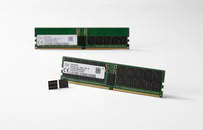 Another point to consider is that the current expansion projects at SK hynix, Samsung, Micron, and even CXMT are not enough to satisfy demand. These companies are being cautious not to add too much supply and remain reserved, understanding that significantly increasing DRAM manufacturing capacity could potentially hurt their business and profit margins.
Source:
Commercial Times
According to Chen Li-bai, the industry can only begin discussing the potential burst of the AI bubble after 2030. After that, preliminary estimations could be made about whether the demand for more DRAM, more NAND Flash, and more computing power will be sustained until 2040 or 2050. The current demand growth is causing the entire vertical of memory, storage, computing, power infrastructure, and other areas to grow exponentially. The overall trend suggests that demand will continue to outpace supply for years to come.

55 Comments on DRAM Shortage Will Last Another 10 Years, Warns ADATA Chairman
www.marketscreener.com/news/chinaa-s-cxmt-abandons-price-war-ce7f5edadf88f524
Yes Mythos is impressive, nothing else is.
And.. what the hell do they do with the hardware? run chess simulations like IBM's Deep Blue supercomputer did & boasted with 25 tarts ago?
Remember, it's not RAMpocalypse, RAMageddon if we collectively agree to stop reminding ourselves what the prices were before all the AI goodness! You can't afford the new prices? Well, you're obviously not using AI right, as Sam Altman would say...
Adata is one of the companies that had to take out a loan to buy memory chips, then again the CEO's and c-suite suits in this RAMpocalypse are making an insane profit.
www.tomshardware.com/tech-industry/taiwanese-memory-module-makers-raise-880-million-to-stockpile-chips
Fucking liars. Someone who is a journalist should do more than just repeat the lie.
If the manufacturer were to supply more products to regular retailers, the price would fall, as demand can only be met once customers are buying the goods at an acceptable price.
If the price is high, fewer customers will buy, so I might end up with just 5 items on the shelf instead of the usual 30–100. And the retailer won’t stock 30–100 items on the shelf at a higher price either, as they know they’d only be able to sell them at a loss.
In the end, you find yourself looking into a shop window with just a few products, arranged in such a way that it looks as though the shelves are overflowing.
Yes, I know that's just a pipe dream, no I don't give a shit.
And even if you could get one of those machines delivered next week, you’d have to build a facility to house it and supply the machine with the necessary materials. Good luck with that!
So, purely hypothetically speaking, even if you could set it up in 6–12 months, as the Chinese do, you’d most likely only be able to deliver the first chips by the end of 2027 at the earliest. After all, we still haven’t discussed staffing and distribution channels.
And as long as the key factors are time and money, and no one is prepared to simply pull tens of billions out of thin air for a factory like that – knowing that if they want to conquer the market through price and make hardly any profit in the process – then there won’t be anyone willing to do it. And with that in mind, everyone involved can sit back and relax. What’s the worst that could happen? World peace?
Who else thinks this is not a perfect example of a Cartel, pure and simple??