News Posts matching #Gaming

Return to Keyword Browsing

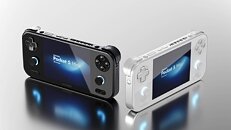
Ayaneo Pocket S Mini 4:3 Retro Handheld Officially Debuts

Many retro gaming enthusiasts have been seeking a handheld that delivers an uncompromising 4:3 gaming experience. Ayaneo understands this dedication and passion, and responds with the same pursuit of perfection, creating a true "graduation-level" 4:3 retro handheld—the Ayaneo Pocket S Mini. This highly anticipated premium handheld is now officially unveiled.

Ayaneo focuses on crafting high-end, boutique gaming handhelds, adhering to the core philosophy of exceptional design, top-tier craftsmanship, and flagship-level performance. The goal is to deliver a purer, more extreme portable gaming experience for players worldwide. The birth of the Pocket S Mini is a concentrated expression of this philosophy in the world of retro handhelds.


Boosteroid Adds Official ROG Ally Series Support for Optimized Handheld Cloud Gaming

ROG Ally gaming handhelds offer tons of ways to play your favorite games. But cloud streaming continues to up the ante, with Boosteroid boasting high-resolution, high-refresh cloud-streamed games optimized for your ultimate gaming handheld. Boosteroid, the world's biggest independent cloud gaming service, has optimized its infrastructure to better serve ROG Ally series handhelds. Boosteroid has partnered with ROG to make the most of the Ally's architecture for uniquely powerful gaming experiences, including up to 4K, 120 FPS cloud-streamed games.

"We have deepened our strategic cooperation with ASUS to ensure that our software utilizes the capabilities of the ROG Ally series to deliver a highly responsive and visually rich experience that sets a new standard for handheld cloud gaming," said Ivan Shaichenko, CEO of Boosteroid.

Keychron Q0 HE TMR Num Pad Launches at $139.99

The latest in Keychron's endeavor to put Hall effect and TMR tech into every keyboard form factor under the sun sees the keyboard maker launch the Q0 HE, a wireless standalone num pad featuring the same TMR sensors and features as the rest of the Q HE line-up. It's not a typical num pad, though, since the Q0 HE also has five macro keys and a programmable knob in a column along the left side of the num pad and a row of customizable keys above the main num pad cluster. The idea seems to be to provide an option for those who want something like the compact 60% Keychron Q4 HE for gaming but need the num pad for other tasks and want to maintain the same look and feel across their keyboard and num pad. The Q0 HE is available via the Keychron online store at a price of $139.99, and it comes in white and black, although the black version curiously only has black keycaps on the macro column, while the actual num pad keys are topped with white keycaps. Meanwhile, the white version has matching white keycaps with dark green accent keycaps on the macro column.

In terms of hardware, the Q0 HE matches the rest of the Q HE series. This means the same Gateron Double-Rail magnetic Nebula switches, e-coated aluminium chassis, and double-shot PBT keycaps in Keychron's OSA profile, as well as the same in-depth customization via Keychron Launcher. Given the Hall effect tech on-board, the Q0 HE has adjustable actuation distance, DKS, SOCD, Rapid Trigger, and analog input. It also supports macro creation, opening up the possibility of setting up different layers so that it can be used as both a productivity tool and a gaming-focused macro pad. The internal design is likewise identical to that of the regular Q HE series keyboards, which means the Q0 HE has a Poron foam gasket mount, internal case foams for sound damping, and an MCU with QMK firmware. The polling rate also remains at 1,000 Hz for both the USB-C and 2.4 GHz connections, and it supports Bluetooth, with 90 Hz polling, for convenience. This wireless connectivity is powered by a 1,800 mAh battery, which Keychron says should deliver 56 hours of use on a single charge with the backlighting disabled.

Marathon Surprises With Low-Spec Minimum Hardware Requirements for PC

After a lengthy delay involving a trip back to the drawing board, Marathon is finally headed for release on March 5. Shortly after the release date was announced, Marathon's minimum and recommended PC hardware specifications appeared on the game's Steam store page, revealing an impressively low barrier to entry. There's no word about whether gamers will need to enable TPM 2.0 or Secure Boot for anti-cheat compatibility reasons, but the minimum specifications call for low-end GPUs dating back to nearly a decade ago.

At minimum, those looking to play Marathon will need an NVIDIA GeForce GTX 1050 Ti 4 GB, AMD Radeon RX 5500 XT, or Intel Arc A580, the latter of which requires ReBar to be enabled. This needs to be paired with 8 GB of RAM and an Intel Core i5-6600 or AMD Ryzen 5 2600. Meanwhile, the recommended specifications call for an NVIDIA GeForce RTX 2060 6 GB, AMD Radeon RX 5700 XT 8 GB, or an Intel Arc A770 16 GB, again with the latter calling for ReBar. The CPU required to meet the recommended specifications is an Intel Core i5-10400 or AMD Ryzen 5 3500 paired with 16 GB of RAM. There are no target frame rates or resolutions mentioned in the minimum and recommended specifications tables, but it's generally assumed that minimum specifications should get you somewhere around 60 FPS at low quality settings. This also means that gamers on handhelds like the ASUS ROG Ally and others with similarly powerful iGPUs should be able to get playable frame rates at slightly lower resolutions.

Steam Adds "Complete the Set" Gifting Feature

Despite having what can only be considered an effective monopoly as far as game storefronts go, Steam doesn't seem to be resting on its laurels, with new features popping up for Valve's game store every so often. The latest feature to show up on Steam is "complete the set" gifting, which allows players to gift parts of a game bundle to friends. If you're buying a game bundle as a gift, Steam will now automatically detect which whether the intended recipient already owns part of the bundle and remove that item from the bundle. The bundle price will change in accordance with the removed content, and a small notice will appear telling you that the price has changed since you viewed the item.

Curiously, there is no further explanation regarding the price drop to tell buyers that their friend already has the item in their Steam library. There are also a few caveats to this system. For starters, and whether this is unintentional behavior or not is unclear, Steam does not remove the item from your cart if your friend has their library or that specific item in their library set to private. If that is the case, it seems as though it will be on the intended recipient to reject the game when they receive it. This update to Steam's gifting functionality is conceivably useful if you know someone likes a game, and you want to gift them the DLC for a special occasion without letting them know your plans.

Stellar Blade 2 May Cater to Vast Chinese Audience with Cyberpunk Chongqing Setting

There was a lot of discussion about the real-world inspiration for the world of Stellar Blade when the hit game came out. While it was set in a post-apocalyptic world, and there were clear real-world inspirations in terms of aesthetics, but the actual references were more vague references to North Africa and the Middle East. This doesn't seem to be the case for Stellar Blade 2, whose development seems to be in full swing. The official @StellarBlade account on X posted a teaser about the upcoming location for its "next title," and it looks as though the game will be set in a futuristic post-apocalyptic China, seemingly with an emphasis on Chongqing city. The city itself, which was identified by u/jamiebaby on Reddit, is known for its multi-layered construction.

The first Stellar Blade was famous for its performance in China, with as many as 70% of the game's PC sales coming from the country, and it has been speculated that the location selection may have been at least somewhat influenced by its popularity in China. It has been more or less confirmed that Stellar Blade 2 is not too far out, when the developer behind the game, Shift Up, invested in large-scale hiring effort for "Stellar Blade's next work." It will likely be at least a few years before Stellar Blade 2 launches, though, especially if the location scouting teaser is to be believed.

VXE Launches 55 g Dragonfly R1S Gaming Mouse At $18.99

VXE, an ATK Gear sub-brand, is known for making affordable, lightweight alternatives to some big-brand gaming mice, and the brand seems to be taking things to a new level with the latest entry into its Dragonfly R1 series. The VXE Dragonfly R1S, announced in a post on X, takes the same lightweight shape as the existing R1 series, swaps the sensor for the Xhero AI and the MCU for the HiSilicon BS20, drops the refresh rate to 1 kHz, and uses the basic Huano Blue Shell White Dot mechanical switches. As a result, you get a 55 g wireless gaming mouse with tri-mode connectivity—USB-C, NearLink a new standard introduced by Huawei in 2024, and Bluetooth 5.2—150 hours of battery life, and a symmetrical design built for small- to medium-sized hands. The mouse measures in at 120.6 mm × 64.1 mm × 37.6 mm, and it has a slightly rearward low hump with gradually sloping main clicks, two customizable side buttons, and effectively vertical sidewalls—a shape very similar to the Pulsar X2 series or the Endgame Gear OP1 8k we reviewed previously.

Aside from the obvious weight increase and hardware changes, VXE has had to cut some corners to get to the low MSRP of $18.99. For instance, although it has a matte texture, the shell has no coating, so it may become shiny over time and with regular use. The mouse is also only available in black and white, while the other models in the R1 line-up are available in more colors. Regardless of the price, the VXE R1S is officially the new low-end variant of the R1 series, but it is still customizable and remappable in the brand's driver, as long as you're on Windows.

Ubisoft Leak Tips Rainbow 6 Turn-Based Tactics Game

According to a new leak out of Insider Gaming, Ubisoft is currently developing a turn-based-tactics game based on the Rainbow Six universe. While it appears as though the game is still in early development, with the launch date at least two years out, it will launch for the current generation of console hardware. The insider sources who leaked the tip said that the game would be very reminiscent of Diablo 4 or an "updated version" of XCOM, but with cinematic cut-scenes. It's also specifically mentioned that it will feature top-down gameplay.

The development team is said to be aiming for 25-30 hours of gameplay, and the gameplay loop will supposedly be very similar to Rainbow Six Siege, with players taking command of Rainbow Six operators in teams of six, and tackling similar hostage, bomb, extraction, and protection game modes to those found in Rainbow Six Siege. It's unclear whether the game will be strictly PvP, PvE, or a mix of both, although the latter seems likely. The leak suggests that a Nintendo Switch 2 port of the game may be on the cards, as well, which aligns with previous comments from Ubisoft executives and developers about the game studio being prepared to launch more games on the handheld console.

Angry Miao Unveils AM Infinity .97 Gaming Mouse: 47 g Magnesium Alloy, Viper V3 Pro Shape

Angry Miao, the peripherals brand typically known for its premium mechanical gaming keyboards, has announced a new version of its first wireless mouse. The Angry Miao AM Infinity .97 is a smaller version of the company's first gaming mouse, the AM Infinity, which launched in March 2025. Aside from the magnesium shell, the original AM Infinity mouse's claim to fame is its hot-swap battery system that Angry Miao markets as "infinite battery life." As was revealed in a recent X post, with the Infinity .97, Angry Miao has shrunk down the original design by 3%, which has resulted in a minor reduction in weight as well as size. The main goal of the smaller version of the Infinity mouse seems to be comfort for players with slightly smaller hands who otherwise like the shape of the Razer Viper V3 Pro. A previous project log published by Angry Miao explained that almost half of the people the design team polled preferred the smaller size, while those who had hands measuring 17.5-18.5 cm in length found it to be the ideal size. The new design also reduced discomfort caused by the hump design of the previous model.

After the reduction, the AM Infinity .97 weighs in at 47 g, which is around 2 g less than the original Infinity mouse, and it seems to be using the same capacity battery as the original, meaning 340 mAh, which should deliver 43 hours of use at 1000 Hz polling or 17 hours at 8000 Hz polling while used wirelessly. If you're striving for even more weight reduction, you can run it wirelessly, which should drop another 10 g. It will feature the same PixArt 3950 sensor as the original version, as well. It also stands to reason that the Infinity .97 will use the same TTC Optical Micro switches as the original. One of the other changes coming to the .97 mouse is the addition of a transparent plastic panel that covers the large hole in the rear of the mouse and provides a little more support for palm and claw grip players. In a similar vein, the sides of the .97 version will also be solid, instead of honeycomb. The Angry Miao AM Infinity .97 mouse is slated to officially launch on February 26 on Kickstarter. Pricing is as-yet unknown, but the original AM Infinity mouse starts at $129 with the 2.4 GHz receiver and two battery packs.

Razer Intros Blackpink Gaming Gear Collection

Razer, the leading global gaming lifestyle brand for gamers, today reveals the full BLACKPINK X Razer Collection, bringing its collaboration with global superstars BLACKPINK to life with a complete range of gaming gear and lifestyle accessories.

Power, Performance, and Pink
Inspired by BLACKPINK's electrifying World Tour <DEADLINE>, this collection blends the band's signature aesthetics with gaming-grade performance. From sleek peripherals to statement-making accessories, every piece is designed for fans who play to shine whether on stage, on stream, or in everyday life.

Logitech Pro X2 Superstrike Gaming Mouse Gets Official Pre-Order Date

Logitech announced the Pro X2 Superstrike gaming mouse back in September 2025, claiming to be an industry-first gaming mouse with haptic feedback and adjustable click actuation distance, the latter achieved via induction switches. However, while the price was revealed at $179.99, an exact availability date was not revealed. Now, though, Logitech has finally announced that the Pro X2 Superstrike will be available for pre-order on January 19 on the Logitech online store.

There is still no official shipment date, despite the pre-order announcement date, although there have been supposed leaks that claimed the mouse would be available as of February 24. Given that that's about a month away from the pre-order opening, it seems reasonable that this could be the official launch date. It seems as though pre-orders will only be available on the Logitech site, but it would not be surprising to see sites like Amazon or Best Buy offer pre-orders, as well.

WLMouse Teases Bright Red Limited Edition Huan Year of the Horse Wireless Gaming Mouse

The WLMouse Huan is a premium, lightweight magnesium alloy gaming mouse with a solid shell that takes after the Razer Viper Mini and weighs in at just under 50 g (48 g ±2 g) and features flagship internals. As a celebration for Chinese New Year, WLMouse has announced a limited edition Year of the Horse colorway of the Huan mouse. The Huan Year of the Horse mouse will officially become available for purchase on February, although pricing has not been announced yet. There also appears to be a matching mousepad for the Huan Year of the Horse edition, and it will ship with all the typical accessories, like extra wide skates and dot skates, a USB-C cable, and likely two sets of grips.

The Huan Year of the Horse Limited Edition mouse will have a striking red body with a custom graphic on the shell, and it will include a matching red base station and included grips with intricate printing. The internals will likely remain unchanged compared to the regular Huan, which means the Year of the Horse mouse will be built around a Nordic 54HM MCU and a tuned PixArt PAW3950HS sensor with an optional 20K FPS lock. The main click switches are Omron Optical switches, and the mouse uses a TTC Silver Dust-Proof encoder for the scroll wheel. If the $155 pricing of the original WLMouse Huan is anything to go by, potential buyers should prepare to drop a pretty penny on the limited edition variant. The Nekko colorway, for example, increases the price to $169, and that isn't a limited edition.

ASUS Revises PCIe Q-Release Design Yet Again, Claims "Users Were Confused" By Buttonless Mechanism

When it first launched the Q-Release Slim PCIe mechanisms on its high-end gaming X870 Gaming motherboards, the new connector ended up causing scratches on the PCIe contacts of GPUs after repeated insertion and removal cycles. The connector was later quietly revised in March 2025 to remove the metal bracket that was blamed for the scratched contacts. Now, ASUS has once again revised the Q-Release Slim PCIe mechanism design for the latest Neo series motherboards, once again requiring a button to release PCIe cards from the motherboard.

In a video previewing the updated 2026 motherboard line-up, ASUS North America explains that the Q-Release mechanism was revised because "some users were confused" by the connector, which didn't require any intervention beyond pulling the GPU out of the slot to remove it, while others simply wanted a button to be present—likely those who had heard about the aforementioned scratched PCIe connectors and didn't want the added risk. The new motherboard PCIe retention mechanism will be present on all of the new NEO motherboards ASUS announced for 2026, which includes more affordable gaming motherboards, like the ASUS TUF Gaming B850-Pro WiFi7 Neo and the creator-focused ProArt B850-Creator WiFi Neo and goes all the way up to the premium ROG Crosshair X870E Glacial motherboard.

Rust Studio COO Offers Amazon $25 Million for New World Aeternum: "Games Should Never Die"

Alistair McFarlane, the COO and director of Facepunch Studios, the game studio behind survival shooter Rust, has seemingly offered Amazon $25 million to buy New World: Aeternum after Amazon announced that the MMO would be decommissioned on January 31, 2027. The executive made the offer in a short public post on X, but he seems to be serious about it, with a follow-up post simply stating that "Games should never die." Given that Amazon is still planning on keeping New World alive for nearly a year, it seems unlikely that we'll get any updates about any potential IP transfers before then.

The post was, expectedly, followed up by questions from Facepunch and Rust fans, and in response to one fan, McFarlane said that "As with everything we do at Facepunch, empower the community. Give them control, make servers publicly hostable. A game will live forever in the hands of a dedicated community," seemingly stating that if Amazon took him up on his offer, Facepunch would take over development and turn the game into a community-driven MMO following the classic self-hosted model.

Brook Gaming Unveils Wingman P5 Wireless Game Controller Adapter

Brook Gaming, the global leader in cross-platform controller solutions, today announced the global launch of the Wingman P5. This high-performance converter allows PlayStation enthusiasts to use their preferred professional controllers—including the Xbox Elite Series 2, PS4, and Switch Pro—on the PS5, PS4, and PC (X-Input) across all game genres with uncompromised precision.

While many market solutions rely on "Remote Play" workarounds that require complex network setups and introduce significant lag, the Wingman P5 utilizes proprietary Direct Connection Technology. By connecting directly to the hardware, it delivers a near-zero latency experience suitable for both casual and competitive play.

Gigabyte CEO Wants 'Differentiation' Before Committing to Gaming Handheld

Handheld PC gaming has long been a niche category, but the launch of devices like the Valve Steam Deck and the subsequent ASUS ROG Ally and Lenovo Legion Go have resulted in the niche skyrocketing in popularity. Regardless, you'd have to be blind to not notice that a lot of the gaming handhelds on the market are eerily similar, aside from a few ergonomic tweaks, different color options and visual design, or slight variations in display size and specs. In a recent interview with PCWorld, Gigabyte's CEO, Eddie Lin, has identified this monotony as the reason Gigabyte has not yet launched an Aorus gaming handheld.

According to the executive, Gigabyte is considering a gaming handheld, but he doesn't want whatever gaming handheld Gigabyte might release to follow the same template that has been adopted by many handheld makers. He specifically calls out Chinese gaming handheld brands, likely referring to the likes of Ayaneo, OneXPlayer, and GPD, and suggests that it's easy to make a gaming handheld and meet demand if you are able to follow that template. To his point, even some of the more unorthodox gaming handheld designs, like the GPD Win 5 and the OneXPlayer OneXFly Apex are fairly similar, with the exception of the latter's optional liquid cooling kit.

Amazon's New World Aeternum To Shut Down in January 2027

After it was announced in October 2025 that Amazon was making a shift away from AAA gaming and had stopped development of new content for New World: Aeternum, we speculated that the game was slowly being sunset. Originally, Amazon said that the game would be supported "through 2026," suggesting that it would not make it long into 2027. A new announcement from Amazon itself on the New World news page has confirmed this theory, stating that New World will officially go offline in January 2027. The post specifies that users will still be able to play New World: Aeternum until January 31, but the game will be delisted from all storefronts on January 15, 2026. As of the time of writing, New World: Aeternum is no longer available for purchase on Steam. Shortly before the aforementioned announcement that no new content would be released for New World, its player count on Steam peaked at an impressive 51,031 players, but that number has since fallen to around 1,200 daily concurrent players.

As part of the shutdown plans, the Nighthaven season will be extended to January 31 as well, effectively sending New World players off with a last hurrah. While all in-game features will remain active until January 31 2027, players will no longer be able to make in-game purchases after July 20, 2026. Amazon encourages players who unwittingly bought New World: Aeternum ahead of the shutdown news to contact support if they would like a refund, although there is no specific cutoff for refunds provided in the announcement. It's likely Steam will stick to its regular rules, which allow automatic refunds as long as players haven't spent more than two hours playing the game or didn't purchase it more than two weeks before the refund request.

Schenker Teases Element 16 Modular Gaming Laptop Slated for 2026 Launch

Schenker isn't exactly a household name, but the company is known for making decent enthusiast-class gaming laptops that often come with a reasonable price point and without too much fuss when it comes to design. With its latest design, the Element 16, Schenker seems to be leaning into the recent resurgence in upgradeable and repairable laptops—not unlike the Framework 16, although with less of an emphasis on customization. Schenker designed the Element 16 in collaboration with Intel, and although it has not yet launched properly, it is based on Intel's new Panther Lake Core Ultra Series 3 CPUs. This means that when it eventually launches sometime in 2026, the Element 16 will be powered by Intel's Core Ultra 7 356H CPU and up to 64 GB of RAM.

The Element 16 features the components that are typically upgradeable or replaceable in gaming laptops—RAM, SSD storage, fans, and the battery—but it makes those upgrades easier with a toolless bottom panel and minimal screws to access and replace those internal components. The Element 16 also takes things a step further with a replaceable keyboard and a modular port design not entirely unlike that of the Framework laptops but with its own twist: instead of replacing one port at a time, the side-mounted ports on the Element 16 are part of a single module that can be replaced with a different module that has different ports. Schenker also says the motherboard is designed to be replaced when necessary, as well, although it's unclear if both AMD and Intel CPUs will be supported or if those motherboard replacements will be limited to Intel CPUs. There are still questions surrounding pricing, parts availability, and just how open Schenker will be about the parts on the Element 16, but for now we know that it will be sold by Bestware in the EU.

Forza Horizon 6 Release Date Spotted In Predecessor

It was previously revealed that Forza Horizon 6 would launch sometime in 2026, although an official launch date has yet to be revealed beyond that. However, the release date for the next instalment in the open-world racing game series has been reportedly spotted inside Forza Horizon 5, of all places. According to @XBOXF10 on X, an in-game pop-up appeared in Forza Horizon 5 after leaving the garage that presented a pre-order offer for Forza Horizon 6. The aforementioned pre-order offer would grant early access to Forza Horizon 6 and allow players to "play 4 days early starting May 15," suggesting that the official release for Forza Horizon 6 is on May 19.

Incidentally, the pre-order bundle would also give players access to two post-launch expansions, a welcome pack, a VIP membership, and the Car Pass and Time Attack Car Pass. Pre-orderers will also receive an exclusive pre-tuned Ferrari J50 when Horizon 6 launches. The screenshot also reveals that Forza Horizon 6 will have a total of 550 vehicles and claims that Horizon 6 will have the biggest open world of any Forza game to date.

ASUS ROG Harpe Ace Mini Core Gaming Mouse Officially Launches at $49.99

The ASUS ROG Harpe Ace Mini Core has officially been listed on Amazon at $49.99, and some of the specifications seem to have changed or been updated since ASUS announced the diminutive lightweight gaming mouse back in October 2025. For starters, the product page now lists the ROG Harpe Ace Mini Core at 52 g, which is 3 g (or 6% heavier than previously claimed), and ASUS has clarified that the ROG Harpe Ace Mini Core has a paracord cable. At the time of writing, the mouse is still temporarily out of stock on Amazon, although it's unclear if there was stock when the product page went live.

In addition to the aforementioned weight increase, ASUS has also revealed that the ROG Harpe Ace Mini Core is compatible with the new ASUS Gear Link web-based driver software that has also been available for the company's latest HE keyboard launches. Another specification that has been clarified is the polling rate, which remains at 1 kHz instead of the 4 kHz and 8 kHz options offered by much of the competition these days. The rest of the mouse's specifications and features remain unchanged, as does the hot-swap switch design.

Keychron Launches Lemokey P3 HE Gaming Keyboard with Quick-Disassembly

Keychron has officially announced the P3 HE under its gaming sub-brand, Lemokey. The Lemokey P3 HE is a new TKL gaming keyboard with an aluminium case and toolless disassembly. The case is also stuffed with the standard sound absorbing foams, both between the PCB and aluminium plate and between the PCB and the bottom case. The case, which comes in black or white with matching keycaps, is finished with an electrophoretic coating and has a silicone bean gasket mount to cut out unwelcome reverberation between the plate and case. Unlike Keychron's newer Q HE 8K series keyboards, which user north-pole HE switches—meaning wider compatibility with other HE switches, like the Gateron Jade Pros and Wooting Lekker Tikkens—the P3 HE still relies on the Gateron Double-Rail Magnetic Nebula switches, which limits switch compatibility to other Gateron KS-37 magnetic switches. On a more positive note, the Lemokey P3 HE is priced at $169.99, which is significantly less than the $239.99 you'd pay for an equivalent HE keyboard from Keychron.

While the Lemokey P3 HE is somewhat similar in many ways to the Keychron Q3 HE, there are some distinct differences. For starters, that quick-release toolless disassembly feature is only found on the Lemokey keyboard, and the P3 HE uses Cherry profile double-shot PBT shine-through keycaps instead of the KSA and OSA profile keycaps that Keychron usually opts for. There is also a double-shot PBT option without shine-through legends, for those who prefer the more subtle look. The backlighting on the P3 HE is north-facing, for improved compatibility with regular shine-through keycaps. Unlike the 75% and 65% P1 HE and P2 HE, the P3 HE doesn't have a customizable rotary encoder. The Lemokey P3 HE has both wired and wireless connectivity, with the 2.4 GHz and USB-C connections offering 1,000 Hz polling, while the Bluetooth 5.2 connection is limited to 125 Hz and can connect to up to four devices. Being an HE keyboard means that Lemokey Launcher offers features like customizable actuation point, SOCD, rapid trigger, DKS, and analog input in addition to the standard remapping and macro capabilities.

Valve To Loosen Steam Machine Verified Program Requirements

Whether you're on Linux or Windows, it's become impossible to ignore Valve's SteamOS in the gaming space in the last few years, but in order to make the Arch-based Linux experience work well enough for most users, Valve had to come up with a way to tell PC gamers which games could run on its hardware. Thus, the Steam Deck Verified program was born, giving users that information right on the game's Steam Store page, so they would know if they could run it before purchasing it. However, the Deck Verified program had some strict requirements. According to Lawrence Yang, a Valve designer, in a new interview with Game Developer, the Steam Machine Verified program will be less strict. Yang goes on to explain that, as a general rule of thumb, games that are already verified on the Steam Deck would also receive Steam Machine verification. Part of this comes down to the technical capabilities of the Steam Machine, which is slated to be significantly more powerful than Valve's gaming handheld.

It's unclear which of the requirements might be adjusted, but it's easy to imagine the 800p or 720p default resolution requirement might be ditched. Valve's other compatibility requirements are all related to its Proton compatibility layer and controller compatibility, so it's unlikely those will change. Correctly summoning the on-screen keyboard at the correct time will also likely remain a requirement, especially if users are expected to use the Steam Machine as a living room console. Yang also touched on VR support for the Steam Frame, where developers can expect their games to also be thoroughly tested by Valve before earning Steam Frame verification. During the same interview, Valve engineer, Steve Cardinali, said that Valve's goal with all of its current and upcoming hardware products is that it "just works," explaining that this is also the reason why Valve designed the Controller Puck, which is effectively a wireless controller extender. The goal with this the Puck was to ensure universal compatibility with the Steam Controller and to reduce wireless interference that otherwise may cause problems for users when using Bluetooth connectivity.

Many Game Devs Reject AI in Gaming

It appears as though the divide between game developers jumping head-first into generative AI and those who oppose it is growing yet again. While brands like EA, Ubisoft, and Xbox are leaning further into the tech, several smaller and indie studios have recently gone on the record to state their displeasure with generative AI and its use in games. In a recent turn Larian Studios, of Baldur's Gate fame, has announced that it will no longer be relying on generative AI for concept art or in-game assets for its upcoming Divinity game. The studio's CEO, however, clarified in a Reddit AMA that he still sees some potential use for AI in optimizing workflows and trying to "improve the speed with which we can try things out."

The development team that worked on Bandai Namco's Code Vein 2 also confirmed in an interview with PCGamesN that there would be no generative AI in Code Vein 2, citing cohesiveness as part of the justification for avoiding the tech. The game's producer, Keita Iizuka, also commented that the team is "creating a very original world" and because they "value art style" and the aesthetic of the game. This extends to publishers, too. In a recent interview with Kotaku, Tim Bender, CEO of Hooded Horse, the publisher behind games like Manor Lords and Endless Legend 2, has officially banned AI from the company as a policy. The CEO said "It is now written into our contracts if we're publishing the game, 'no f**king AI assets.'" Bender also touched on using generative AI in early development or to generate placeholder art, expressing concern that developers could easily fall into the same trap as Sandbox Interactive did with Clair Obscur: Expedition 33, which ultimately resulted in the game being stripped of its Indie Game Awards Game of the Year award.

Thunderobot Launches ZERO Air Gaming Laptops with Intel Panther Lake at CES 2026

Thunderobot is well known in the Chinese market and in recent years seems to be determined to make its way worldwide with products that stand out from the usual ones. At CES 2026, Thunderobot officially unveiled its ZERO Air gaming laptop series, something the company had already teased in the weeks leading up to the show. The new lineup focuses on thin-and-light gaming systems built around Intel Core Ultra Series 3 "Panther Lake" processors and NVIDIA RTX 50 Laptop GPUs. Measuring just 15.9 mm thick and weighing around 1.58 kg, the ZERO Air is clearly a lightweight gaming laptop. It is powered by an Intel Core Ultra 9 386H (16-core, 16-thread) CPU with boost clocks up to 4.9 GHz. For graphics, it sports the GeForce RTX 5070 GPU. As for cooling, it features a dual-fan cooling system and a vapor chamber. The laptop has a 15.3-inch QHD+ OLED display with a 165 Hz refresh rate. Memory support goes up to 32 GB of DDR5, alongside dual PCIe Gen 4 SSD slots for storage expansion.

Alongside the ZERO Air, Thunderobot also showed the ZERO 18 Pro, its high-end flagship model. This larger system uses Intel Core Ultra HX Series processors and can be configured with up to a GeForce RTX 5090 Laptop GPU. It features an 18-inch QHD display running at 240 Hz, supports up to 64 GB of DDR5 memory, PCIe Gen 5 storage up to 2 TB, and includes RGB lighting and a 99 Wh battery.
More pictures follow.

Tianma Introduces 27-inch QHD 610 Hz Oxide Display at CES 2026

Tianma, a leading global manufacturer of flat panel displays, is introducing a 27-inch Oxide TFT-LCD display with QHD resolution (2560×1440) and an industry-leading 610 Hz refresh rate for ultra-smooth motion in competitive gaming. Leveraging advanced Oxide technology, this Tianma display reaches its ultra-high refresh rate through three core panel enhancements: positive-mode liquid crystal material; an optimized alignment layer; and a refined TFT structure.

Tianma's 27" QHD 610 Hz Oxide Display delivers 1 ms GTG response time to minimize motion blur and an anti-glare, anti-reflection design for visual comfort during extended use. This panel offers 350 nits brightness, a 1200:1 contrast ratio, and 100% DCI-P3 wide color gamut, ensuring vivid color and sharp detail for high-performance gaming.
Return to Keyword Browsing
Nov 13th, 2026 23:02 CST change timezone

New Forum Posts

Popular Reviews

TPU on YouTube

Controversial News Posts