News Posts matching #KDE

Return to Keyword Browsing

Bazzite 45 Launches With Start of Linux EAC V2 Support and Wider Handheld Compatibility

Shortly after the official Fedora 45 launch, Bazzite 45 has launched, with a rebase to Fedora 45, Gnome 51.1, and KDE Plasma 6.8.2. The new Bazzite version lists updated OGC Linux kernels—7.2.15 for AMD and Intel, and 6.18.60 for NVIDIA users—and additional hardware support, including for the Acer Predator Atlas 8 and ASUS ROG Xbox Ally X20, but also for more peripherals, including the Logitech TrueForce racing wheel hardware. The Mesa driver version has also been updated to 26.2.6, InputPlumber has been updated, and CoolerController has been moved to the official docker container, while XWaylandVideoBridge has been removed in the name of stability and squashing KDE bugs. The rest of the actual updates are minor back-end changes, save one.

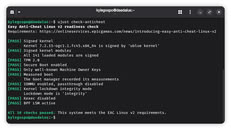
As per the announcement post on the Universal Blue Discourse page, as of Bazzite 45, Bazzite has become accepted by Epic Games as a signing key provider, and the development team behind Bazzite has added a Linux EAC V2 readiness checker to Bazzite 45. The checker automatically updates the latest Linux EAC V2 requirements and compares the requirements to the current kernel and BIOS configurations—specifically kernel and module signing, Secure Boot, TPM 2.0, measured boot, IOMMU, kernel lockdown, kexec, and BPF LSM. If there are any incompatibilities, the user will be notified by the readiness checker.

PS5s Become Steam Machines with Unofficial Bazzite Linux Installer

While the PS5 Linux project appears to be moving ahead despite the original creator's departure, an enterprising group of developers has adapted that project and Bazzite to turn the PlayStation 5 into something approximating a Steam Machine. Being that it is built on the same foundations as the PS5 Linux loader, the same limitations apply, meaning that it will only work on jailbroken PlayStation 5 consoles running on firmware versions 3.00-13.60, and there are other compatibility limitations documented in the installation guide on GitHub.

The particular variant of Bazzite being used is Bazzite-deck, which was originally built as an alternative to SteamOS for other x86 gaming handhelds, like the Lenovo Legion Go and ASUS ROG Ally, so by default it boots into Steam Gaming Mode on the PS5. It also offers an optional desktop mode running a full installation of KDE Plasma, which would conceivably allow the PS5 to work as a desktop workstation, as well. Between the desktop mode and Bazzite's handheld gaming mode, consoles running this software mod would have access not only to Steam games but to other game libraries, like GOG and Epic Games.

Fedora 45 Gets Official Launch Date After Bugs Caused Delays

Fedora Linux 45 has been under development for some time, with the distribution having been delayed twice, the latest delay due to blocker bugs resulting in a no-go decision by the development team as recently as last week. Now, following a recent developer meeting, Fedora 45 has officially been given the stamp of approval for a November 3 release date, according to the public meeting minutes.

Fedora 45 is a fairly tame update, coming from Fedora 44, although there are a number of notable updates to the included software and configuration, including an update to Gnome 51, support for new Qualcomm Snapdragon X Series laptops, and the implementation of the new DRM Panic front-end. The KDE versions of Fedora will now also fully adopt the KDE Plasma Login Manager, and they will feature a unified KDE out-of-the-box experience. For a full run-down of new features and changes in Fedora 45, check the Fedora 45 beta changelogs. Following the launch of Fedora 45, we will likely see Fedora spins and Fedora-based distros, like Bazzite and Nobara Linux also release a major version update to match.

SteamOS 3.9.0 Preview Launches With KDE 6.7.3 and Linux Kernel 7.2

Following a recent small patch to the beta branch of SteamOS, which heralded fixes to many of the Linux distribution's desktop and gaming mode features, Valve has announced the SteamOS 3.9.0 Preview, which upgrades the Desktop Mode to KDE 6.7.3, from 6.4.3, and updates to the Linux kernel version 7.2.

Both the updates to KDE and the Linux kernel bring noteworthy improvements—from improved Krunner search functionality, clipboard pinning, and better support for drawing tablets, to Linux 7.2's Intel Arc B390 performance improvements and USB4Stream support for device-to-device sharing over USB4—But Valve has apparently also made some changes to the configuration that make SteamOS easier to live with.

Update Oct 26th: SteamOS 3.9 has officially released to the Stable SteamOS update channel, bringing the aforementioned updates and expanded hardware compatibility to those who prefer a stable system over being on the bleeding edge. Full update notes here.

KDE Plasma 6.8 Officially Launches with UI and Performance Tweaks

KDE Plasma is arguably one of the most widely used desktop environments in the Linux world, especially since the Valve Steam Deck introduced many gamers to the world of Linux using KDE Plasma in SteamOS when it launched the Steam Deck. Now, KDE has officially announced Plasma 6.8, the latest iteration of the Plasma DE, which comes with a number of improvements, including better accessibility options, a new system monitoring tool, the next step in the KDE Union theming engine, and new tricks to make misbehaving app windows look more aesthetically pleasing.

One of the smaller, but more impactful UI updates in KDE Plasma 6.8 is support for window rules that allow users to add rounded corners, shadows, and outlines to client-side-decorated applications that can't otherwise obey KDE's themes. In the blog detailing the updates in Plasma 6.8, the development team says that the Union theming engine is designed to look identical to the standard KDE theming, but with the ability to theme Qt Widgets applications, making it easier to achieve a unified look across different applications and frameworks. KDE also notes that Wayland has now been fully adopted, but that KDE will continue to work with X11 apps thanks to XWayland. Additionally, Plasma 6.8 will use less memory and load faster, and NVIDIA GPUs now use triple buffering by default with KWin. There are also under-the-hood improvements to HDR and ICC profile handling that will make HDR content look better when using ICC profiles.

KDE Begins Drafting AI Guidelines: "Don't Be a Meat Proxy"

Despite the immense popularity of LLMs and AI coding agents in software development, the open-source community seems to be quite divided on the topic at times. On the one hand, you have projects like GIMP banning AI from its codebase entirely, while other projects, like Nobara Linux and Omarchy, are very much all-in on AI coding. There is, however, a middle ground, like the Linux Kernel project, which allows AI-assisted and -generated code in the codebase, but all code requires human review and a proper merge request write-up that demonstrates an understanding of the actual code submitted. This appears to be where KDE Plasma will land as a project, if the recent proposed KDE LLM guidelines are anything to go by.

The draft of KDE's LLM guidelines was submitted for discussion by project lead, Nate Graham, and it outlines rules that effectively summarized by the golden rule: "Don't be lazy." In the KDE LLM guidelines discussion post, the proposed draft explains that "contributions with obvious and lazy LLM usage may be ignored or closed," and that "nobody should know if you use an LLM," because the output should be indistinguishable from what you could produce yourself without an LLM. It also places rules on AI-generated text, forbidding AI-generated text for merge requests, commit messages, or replying to a question or comment. The current draft also seeks to prevent additional work being placed on maintainers by limiting vibe-coded changes to that maintainers are expected to clean up and implement—an issue faced by Godot maintainers not long ago.

KDE Plasma 6.8 Gets Performance and UI Updates Ahead of September Beta

KDE Plasma is by far one of the most popular and recommended desktop environments in the Linux world, and it seems as though the development team has no plans to slow down. In the latest KDE Plasma 6.8 release, which is building to a September beta 1, there are numerous improvements to both performance and user interface that should be included in the eventual October stable launch of Plasma 6.8. The upcoming changes were detailed in the weekly This Week in KDE blog post.

The first change that most people will notice when they first update is that the lock screen now features selectable authentication types and better button alignment. Automatic brightness now also intelligently learns brightness preferences when users manually adjust their brightness. Performance improvements come by way of significantly reduced RAM usage by the Discover background notifier process, improved Plasma login speed, better speed and efficiency of the KWin screenshot functionality, improved screen recording smoothness when recording high-refresh displays.

GNOME Barely Beats KDE in Gaming Benchmark Comparison—Xfce With X11 Dead Last

KDE and Gnome are by far two of the most popular Linux desktop environments, and each has its own advantages and disadvantages that may sway users in either direction. Gnome is less customizable but widely recommended to Linux beginners, while KDE goes all-in on GUI-based customization and a smorgasbord of features. However, recent testing by Phoronix reveals that there may be an objectively better desktop environment for gaming on Linux.

In a comparison between Gnome 50.3 (technically Gnome Shell 50.3), KDE Plasma 6.7.2, and Xfce 4.2.0, Gnome surprisingly held a small, but measurable lead over KDE in the performance division. Both Gnome and KDE were running on the Wayland display protocol, while Xfce was running on X11, and that difference alone led to Xfce falling far behind the Wayland alternatives, especially in Vulkan rendering applications. The testing was all conducted on CachyOS and with an NVIDIA GeForce RTX 5090 GPU graphics, and each desktop was tested with default configurations.

KDE Plasma 6.7 Launch: More Performance, Features, and UI Polish

Just on time, following the recent beta launch, which saw the addition of the new KDE Plasma Bigscreen view, KDE Plasma 6.7 has officially launched for public download and is now available from the KDE site. Unlike many previous versions, version 6.7 of the Plasma desktop environment for Linux doesn't have any real ground-breaking features, instead delivering a host of small changes that elevate the desktop environment to new heights and enable more versatile use cases. One such example is improved support for simultaneous HDR and ICC color profiles, making managing a desktop that pulls double duty as a media creation and consumption machine simpler. It also has expanded support for the Wayland protocol and its portals, and the new per-screen virtual desktop switching system has also been implemented. There are also performance improvements at hand across the board, with a focus on power usage and systems with Intel iGPUs.

Perhaps the only major change is the new Union theming system, which is still in its infancy but allows for easier theming of Plasma, QtQuick apps and QtWidget theming via CSS document editing. A much-awaited update to the Oxygen theme also makes its debut in KDE Plasma 6.7. On the UI side, Plasma 6.7 now has a toggle to switch the global theme to and from night mode from the control panel. The Application Menu, Dashboard, and Launcher widgets now also feature drag and drop to add apps to favorites; a system tray update now shows how many jobs are in the print queue on hover, and there is now support for more apps in the Background Apps system tray entry; the built-in calendar widget shows the time difference between the different time zones configured in the widget. For a full list of the tweaks and changes, check out the full changelog on the KDE site or the KDE Wiki.

KDE Plasma 6.7 Beta Introduces Plasma Bigscreen Mode for HTPCs

The KDE Plasma Linux desktop environment is already a feature-rich desktop for both productivity and gaming, but the KDE development team has been hard at work adding ever more features to the DE and polishing the experience. One of the newest additions to KDE, apparently coming in Plasma 6.7 and now available for testing in the Plasma 6.7 Beta, is the introduction of Plasma Bigscreen, which is a new desktop UI built specifically for home theater PC setups, and it looks to be a more open alternative to Steam's Big Picture mode or the SteamOS desktop. Those looking to test out KDE Plasma 6.7 ahead of release can download the beta from KDE.org.

KDE Plasma Bigscreen is fully open source and is designed around a controller friendly desktop interface that uses a similar row-based layout and quick access to settings as SteamOS, but, unlike Valve's SteamOS, you don't need to rely on adding apps to Steam to launch them from the Bigscreen UI. It uses the same Kwin, Qt, KDE Frameworks, and Kirigami underpinnings as desktop Plasma, meaning Plasma Bigscreen users can install just about any apps that are offered by their distribution's package manager or via Flathub. It also works with KDE's customization and theming from within the settings app, which will make Bigscreen highly customizable where SteamOS's fullscreen UI more or less makes you use a plugin to make any significant aesthetic changes. KDE Plasma 6.7 is slated for a full-scale launch in June 2026, and Plasma Bigscreen is expected to be included with Plasma 6.7 as long as nothing goes catastrophically wrong during the beta.

KDE Plasma 6.6.5 Fixes NVIDIA Performance Regressions and Fixes Many Bugs

In preparation for the release of the upcoming release of KDE 6.7, KDE 6.6.5 has officially launched, bringing with it some fixes for performance regressions introduced with the recent NVIDIA driver 595 update. Release 6.6.5 isn't a massive release for KDE, instead an update focused entirely on bug fixes, with the full list available in the official changelog. However, some of the biggest updates include improved color handling on NVIDIA GPUs and the removal of the CI/DCI external display option when users have HDR enabled—HDR, by definition, should be in control of brightness in order to function properly.

Another bug that was squashed with KDE 6.6.5 is a bug relating to the latest NVIDIA 595 driver, which appeared to be affecting users on Wayland and KWin across multiple distributions, with the Bugzilla thread on the matter featuring comments from users on both CachyOS and Fedora. The issue seemed to be related to multi-GPU setups, and such issues are not expected to happen on KDE 6.7, because the multi-GPU copy code has been rewritten to use Vulkan instead of OpenGL. Another issue that could be bothersome was that Spectacle, the KDE screenshot utility, would not properly copy screen captures. To correct this, the KDE developers changed the utility to stay open for a brief moment after taking a screenshot, allowing the system to correctly copy the image to the clipboard. Plasma 6.7 is slated to launch on June 16, 2026, and it is expected to be a much more substantial launch, with a new Union style engine based on CSS, the reintroduction of the famous Air and Oxygen themes, and improved session restore under Wayland.

Arch Linux May ISO Debuts Linux 7.0 Support and Improved Installer

Arch Linux has released its May 2026 ISO snapshot, version 2026.05.01, the first Arch ISO to ship with the Linux 7.0 kernel series, version 7.0.3 to be more precise. The new kernel brings improved hardware detection, particularly useful on newer machines but also on older hardware where previous ISOs sometimes failed to detect certain components. Linux 6.18.25 LTS is still available for those who prefer to remain on the long-term support branch. The updated Archinstall 4.3 installer introduces a new "Additional Fonts" section in the Applications menu. From there, users can pick from Noto Unicode for broad language coverage, Noto Emoji for color emoji support in browsers and apps, and Noto CJK variants for Chinese, Japanese, and Korean characters. The installer now also automatically enables power management services after package installation, fixes bugs with encrypted partition selection and file copying, and adds a completed Hindi translation locale.

On the desktop side, KDE gets updated to Plasma 6.6.4 with KDE Frameworks 6.25 and KDE Gear 26.04, while GNOME is at version 50.1 across Shell, Mutter, and core components. Other environments include Cinnamon 6.6.8, Hyprland 0.54.3, and COSMIC 1.0.11. Graphics and audio come through Mesa 26.0.6, PipeWire 1.6.4 and BlueZ 5.86. Firefox 150, LibreOffice 26.2.3 and Blender 5.1.1 are among the updated apps in this new Arch Linux ISO snapshot. Worth mentioning that this is not a reinstallation situation for existing Arch users, a full system upgrade getting everything from the new ISO. The snapshot is mainly useful as a current starting point for fresh installs, with all packages updated through April 2026.

Bazzite Staggers Fedora 44 Roll-Out: Desktops First, Handheld Users To Wait

Following the official release of Fedora 44, Bazzite's lead developer Kyle Gospodnetich has announced the release of Bazzite 44, the atomic gaming-focused distribution based on Fedora, which brings Gnome 50 and KDE Plasma 6.6, as well as many of the same improvements as the workstation OS. However, there are some notable differences for the atomic distribution—namely, the Linux kernel is still on version 6.19.x. Other notable changes and updates to Bazzite 44 include an update to the KDE Plasma Login Manager for KDE versions, a new version of the Bazaar app store, improved image security for ISOs, built-in support for Elgato 4K capture cards, and the removal of QEMU and ROCM, Bazzite 44 also includes the latest ASUS Linux patches for ASUSCtl, which provides access to LED customization, fan control, and various BIOS, boot, and power settings.

While the desktop images of Bazzite 44 are already available, the handheld versions have been delayed, with the developer stating that "we are slow-rolling this update due to the nature and amount of changes present in it to ensure that the vast majority of our existing users have a good experience." He also indicates that there will be more news about Bazzite 44's handheld images "in the coming weeks," so it seems like the delay will be more than just a few days. While this may be somewhat disappointing to hear, it also means that the developers will have more time to test and validate Bazzite 44 ahead of release, hopefully delivering a more stable OS as a result. Bazzite's development team has also promised to ship the new VRAM management patch that recently made a buzz in the Linux gaming world when it releases kernel version 7.

Fedora Linux 44 Launches With Gnome 50, KDE Plasma 6.6

Just on time, according to the recent launch date announcement, Fedora 44 has officially left the gates, with both Fedora KDE Plasma Desktop 44 and Fedora Linux 44 Workstation (with Gnome), seeing significant user-facing and behind-the-scenes updates. The biggest changes come by way of the addition of Gnome 50 on Fedora Workstation and KDE Plasma 6.6 on Fedora KDE Plasma Desktop 44. Both versions can now be downloaded from the Fedora website, and existing users can perform in-place upgrades following the official guidance. The full Fedora Linux 44 patch notes are available here.

While Gnome 50 and KDE 6.6 both feature neat UI tweaks, bug fixes, and accessibility and performance improvements, Fedora Linux itself also saw a few notable changes. For starters, Fedora 44 now includes the NTSync driver, and it is enabled by default, enabling some impressive performance and stability improvements in certain games and with the most recent Proton and Wine versions, as we covered previously. All Fedora KDE versions will now all use the same out-of-the-box experience, making initial setup feel more familiar and enabling hardware vendors to sell hardware with Fedora KDE pre-installed with a proper user greeting and setup wizard. Fedora Atomic Desktops have also dropped FUSE2 library support, which may be of import to some users using AppImage applications. Both Fedora Workstation and Fedora KDE Plasma Desktop use Wayland by default, but in the case of Fedora Workstation, Gnome 50 no longer includes any code for X11 compatibility. X11 can still be installed, but it is not officially supported and may result in issues. Fedora KDE Plasma Desktop 44 also switches to KDE Plasma Login Manager by default, which may be unfamiliar to some users and may actually have fewer features.

KDE Update Adds Optional Per-Display Virtual Desktop Support

KDE has long served as a powerful, customizable Linux desktop environment for those who want more flexibility and faster feature support than the likes of Gnome. Contrary to that notion, though, KDE has just merged a feature request that has been hanging around for over two decades—per-monitor virtual desktop support. Currently, and in every previous release of the KDE desktop, switching to another virtual desktop on one monitor meant switching virtual desktops on all monitors. After the new Kwin feature merge, though, users will have the option to switch between different virtual desktops on a per-monitor basis.

This would make KDE the only one of the big two—KDE and Gnome—to support per-monitor workstations, although it still has some limitations, the least of which is that it will not work in X11 sessions, although it should work with XWayland apps, since those are usually handled like Wayland apps by the compositor. The new feature is expected to arrive in KDE Plasma 6.7, which is slated for a June 2026 launch, with public beta testing slated to go live on May 14. The developer's full explanation for the new functionality follows.

SteamOS 3.8 Preview Brings Initial Support for Steam Machine

Valve has just introduced a preview of its SteamOS 3.8 operating system, designed for the Steam Deck and other upcoming hardware. This version marks a significant step toward enabling the future Steam Machine, as the SteamOS 3.8 preview build includes initial support for it. This update comes with a host of improvements, such as better support for third-party handhelds, reduced input latency of handheld controllers, optimized graphics drivers with performance and stability fixes, a new KDE desktop environment build, and support for a wider range of Intel and AMD SoCs. For the upcoming Steam Machine, we anticipate optimizations for a semi-custom six-core AMD "Zen 4" processor with 28 compute units of RDNA 3 graphics. Valve claims the PC can achieve 4K gaming at 60 FPS with ray tracing and FSR support. It features 16 GB of DDR5 system memory and 8 GB of GDDR6 VRAM, powering a semi-custom GPU that may be closer to AMD's RDNA 3.5 than pure RDNA 3.
A complete changelog of added features follows.

Fedora 44 Beta Goes Live With Updated Gnome and KDE Desktops and Linux 6.19 Kernel

The full release of Fedora Linux 44 is drawing near, and, as such, the Fedora Project has officially made Fedora 44 Beta available for download for those who want to test the upcoming version of the workstation Linux distribution. Fedora 44 has a long changelog, but some of the biggest changes are simply newer versions of the included defaults, like the move to Gnome 50 and KDE Plasma 6.6 as well as an update to Linux 6.19. Like many distributions that use KDE, the Fedora 44 KDE Desktop edition officially makes the move from SDDM to Plasma Login Manager as the default. In general, Fedora 44 also improves things like the installer, which no longer automatically and unnecessarily creates network profiles for devices not involved in the initial configuration. This makes it easier to configure these devices later when necessary.

Fedora 44 also adds support for Budgie 10.10, which is itself migrating from X11 to Wayland, Fedora changes the build infrastructure to make package builds more predictable and reproducible. Wayland support and the built-in emojis are also now better supported thanks to the upgrade to IBus 1.5.34, and various other frameworks and programming languages have been updated to improve security and modernize the OS. Fedora 44 launches officially on April 14, 2026, but beta ISOs for Fedora Workstation (with Gnome) and Fedora KDE Plasma Desktop can be downloaded ahead of the official launch. There are also the usual ISOs for server, cloud, and IoT versions.

KDE Plasma 6.6 Officially Released

KDE released Plasma 6.6 today, the latest version of the popular Linux desktop environment, also used in Steam Deck desktop mode. The biggest addition is the new Plasma Login Manager, a potential replacement for Simple Desktop Display Manager (SDDM) in distributions like Fedora Linux 44, CachyOS, and EndeavourOS. Note that it requires systemd, so it won't work on systemd-free distros. The Spectacle screenshot tool gains OCR capabilities, and a new USB portal lets sandboxed apps request access to USB devices. Users running Linux kernel 6.19 can now adjust the visual sharpness of all on-screen content. You can also turn your current Plasma setup into a global theme. KDE Plasma 6.6 adds XRandr emulation in KWin for better XWayland app compatibility, per-DRM-plane color pipeline support, and custom screen mode support in Wayland sessions. Screen mirroring is improved, and a new "Slow Keys" accessibility feature has been added.

Windows games with HDR running through Wine or Proton also get a color accuracy workaround. Wi-Fi passwords can now be stored in a root-owned location for better security, and a QR code in the Networks widget makes connecting easier. Battery handling on laptops is improved, ambient light sensor support enables automatic brightness adjustment, and colorblind user support has been enhanced. Windows can now be selectively excluded from screen recordings.

Windows PowerToys To Get "Command Palette Dock," a Top Bar À La macOS and Linux

Windows 11 may not be the most beloved version of Microsoft's OS to date, but Microsoft's PowerToys is a favorite UI tweaking tool among power users, and for good reason. The latest feature to debut in PowerToys is a docked top bar—called the Command Palette Dock—which is part of the Command Palette feature set. The Command Palette Dock is an optional, configurable dock that can be pinned to any screen edge and be used to display a number of extensions and widgets. In the feature announcement on GitHub, the PowerToys team shows off features like a system monitor, file browser, and a clipboard history—all of the existing PowerToys Command Palette extensions should work in the Command Palette Dock, according to Microsoft. The dock functions similarly to that of the Windows Task Bar, in the sense that it shows a small shortcut icon, with more information available via a pop-up when clicked.

The Command Palette Dock is part of the previously introduced Command Palette, which is effectively Windows's version of KDE's Krunner or macOS Spotlight, and the Command Palette Dock is, likewise, a feature on many Linux distributions and on Apple's macOS. It's also unclear if the PowerToys Dock will become quite as customizable as the docks in KDE, which allows you to add secondary docks to different screen edges and change the icons and display styles of each of the extensions in the dock. PowerToys has previously played host to features that eventually made it to Windows 11, like the updated window tiling UI, for example. It's thus entirely possible that some version of the top bar and command palette may become part of Windows itself in the not-too-distant future. As for now, though, the feature is still in the testing and hasn't even been added to PowerToys yet. It will likely be launched soon after feedback is gathered by development build testers.

KDE Plasma Linux DE Drops X11 Support in 6.8 Release

KDE Plasma 6.5 recently launched, bringing with it a host of fixes and quality of life updates, along with some visual tweaks to make the desktop experience feel more polished. Now, however, KDE has officially announced that it will officially stop supporting the X11 session as of the release of KDE Plasma 6.8, which is slated to launch sometime in late 2027 or 2028. KDE has confirmed that the X11 session will still be supported until 2027. Anyone who still relies on X11 for legacy app or feature support at that point in time will be required to use XWayland for those apps. KDE says that dropping X11 support will allow the development team to "move faster to improve stability and functionality," without the bloated X11 protocol holding back development.

At the time of writing, there are still compatibility issues with XWayland, and performance is a common complaint for Linux users, especially those who game on their Linux PCs using tools like Proton or WINE. One other major point of contention when it comes to Wayland is compatibility and performance on NVIDIA GPUs, and in cases where the proprietary NVIDIA driver doesn't offer support for Wayland—almost exclusively an issue with very old NVIDIA GPUs—KDE recommends using the open-source Nouveau driver. Curiously, KDE's in-house applications, like Kate and Kdenlive, will continue to support X11, although it's unclear how long this support will be offered. In the meantime, KDE plans to fill in some of the other gaps in its Wayland session, like incomplete accessibility options, and encourages users to submit bug reports for missing features or special requirements.

KDE Releases Plasma 6.5

How do you make a great desktop into a fantastic desktop? Easy—chip away at the rough bits, polish the good stuff, and add awesomeness. After 29 years of development, KDE's got the foundation nailed down. Plasma 6.5 is all about fine-tuning, fresh features, and a making everything smooth and sleek for everyone. Ready to see what's new? Let's dive into Plasma 6.5!

New Features
Plasma 6.5 includes a number of highly-requested features:
First up: rounded bottom window corners! Breeze-themed windows will now have the same level of roundness in all four corners. If you don't like this, you can un-round them, too.

SteamOS Update 3.7.15 Brings Slew of QoL Updates For Deck and Third-Party Gaming Handhelds

Since the launch of the Steam Deck, Valve has been hard at work polishing its Arch-based Linux distro, SteamOS, for both its own gaming handheld and, more recently, third-party gaming handhelds. With the launch of the SteamOS 3.7.15 update, Valve has taken steps to correct a handful of gaming handheld issues. Most of the updates are bug fixes and quality of life updates, rather than new features, but there are also a number of security updates included that patch out known CVEs. This follows recent news about the official full release of the new Steam Store redesign and the Steam beta that adds support for detecting Secure Boot and TPM states for modern anti-cheat solutions. Overall, Valve seems to be working towards getting SteamOS in a state that is both user-friendly and stable in an attempt to attract and keep as many users on its platform as possible.

For the Steam Deck, the clock and power limits and Wi-Fi connection should more reliably return to their configured states after the device wakes from sleep, and the battery charge estimation has been improved. Wake-on-Bluetooth support has also been returned to all versions of the Steam Deck with support for BLE peripherals—which should prove handy when the handheld is docked. The built-in screen reader also now has multi-language support, and there are a number of audio improvements. For starters, the Steam Deck's volume will no longer jump to 100% when removing wired headphones, the Deck will now also automatically switch to USB audio devices when detected, and audio distortion in the built-in microphone has also been removed. Valve has also removed the Pro Audio profile from the KDE desktop mode—an anti-feature many Linux users will be aware of because it simply disables audio when you select it.

KDE Releases Plasma 6.4

A new version of Plasma is here, and it feels even more like /home, as it becomes smoother, friendlier and more helpful. Plasma 6.4 improves on nearly every front, with progress being made in accessibility, color rendering, tablet support, window management, and more. As this is going to be a long read, let's get right into it…

Window Management
Plasma already offers Virtual Desktops to help organize your windows and activities; and customizable Tiles you can stick windows to so they don't overlap, allowing you to see everything important at a glance.

KDE Plasma 6.3 Officially Released

One year on, with the teething problems a major new release inevitably brings firmly behind us, Plasma's developers have worked on fine-tuning, squashing bugs and adding features to Plasma 6—turning it into the best desktop environment for everyone! Read on to discover all the exciting new changes landing in this release…

Digital Art
We want to make Plasma the best platform for creativity, and Plasma 6.3 takes the next step in that direction by providing features that help artists optimize and customize their graphics tablets to their liking.

KDE Plasma 6.2 Released, Offering a More User-Friendly and Intelligent Experience

Plasma 6 has come into its own over the last two releases. The wrinkles that always come with a major migration have been ironed out, and it's time to start delivering on the promises of the new Qt 6 and Wayland technology platforms that Plasma is built on top of. One of the outstanding issues has been to make Plasma a more artist-friendly environment by providing full support for the hardware that creative people need to get their work done.

For Digital Artists
Plasma 6.2 includes a smorgasbord of new features for users of drawing tablets. Open System Settings and look for Drawing Tablet to see various tools for configuring drawing tablets.
Return to Keyword Browsing
Nov 11th, 2026 07:09 CST change timezone

New Forum Posts

Popular Reviews

TPU on YouTube

Controversial News Posts